Your Phone Is Ringing. Again. Still. Forever.
If you manage a medical office, you already know the sound. That relentless ringing that starts the moment your doors open — and somehow continues even after they close. Patients calling to schedule appointments, confirm appointments, cancel appointments, ask what insurance you accept, ask where you're located (it's on your website, Karen), and occasionally ask something that actually requires a human being.
The average medical office receives over 200 phone calls per week, and studies suggest that a significant portion of those calls are for tasks that could be handled without ever involving a staff member. That's a lot of interruptions, a lot of hold music, and a lot of frazzled front-desk staff who were hired to help patients — not to recite your parking instructions for the forty-seventh time this month.
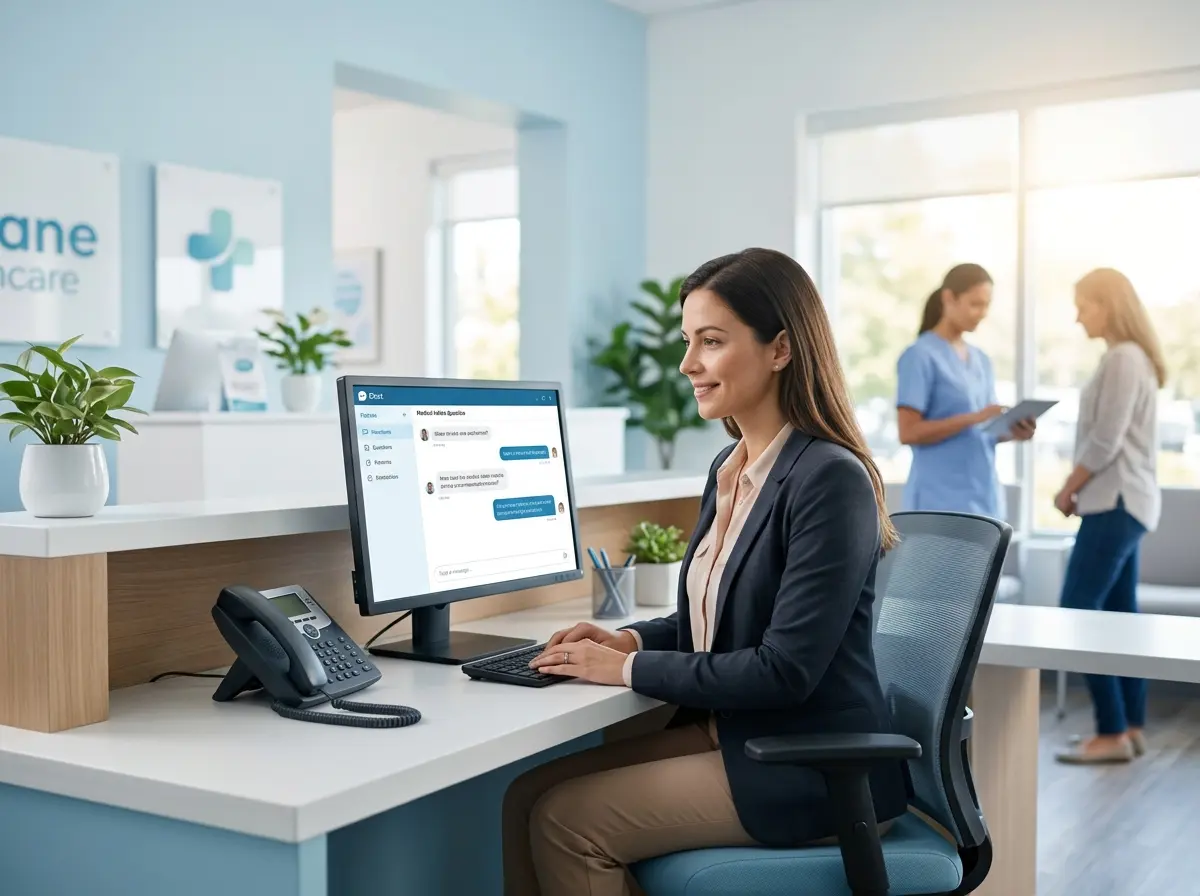
Enter chat-based intake: the quietly revolutionary approach that lets patients give you their information, preferences, and questions through a conversational interface before they ever pick up the phone. When done right, it doesn't just reduce call volume — it makes your entire intake process smarter, faster, and surprisingly pleasant for everyone involved. Here's how to make it work for your practice.
Understanding Chat-Based Intake in a Medical Context
What It Actually Is (and Isn't)
Chat-based intake refers to the use of conversational tools — whether on your website, a patient portal, or an AI-powered system — to collect the information you'd normally gather over the phone or through a stack of paper forms on a clipboard. Think of it as a smart intake conversation that meets patients where they are: on their couch, on their lunch break, or anywhere that isn't on hold with your office.
It's worth being clear about what this isn't. Chat-based intake is not a chatbot that responds with "I'm sorry, I didn't understand that" every other message. It's not a glorified FAQ page. And it's definitely not a replacement for the genuine clinical conversations that require a licensed professional. It's a structured, conversational flow that collects the right information — demographics, insurance details, reason for visit, symptom history, preferred appointment times — in a format that patients actually find less stressful than a phone call.
Why Patients Actually Prefer It
Here's something that might sting a little: a growing number of patients, particularly those under 45, would genuinely rather fill out an intake chat at 11pm than call your office at 10am. It's not personal. It's just that phone calls require real-time availability, create anxiety for many people, and involve waiting on hold listening to a smooth jazz rendition of a song they used to like.
According to data from Salesforce and various healthcare UX studies, over 60% of patients prefer digital-first communication options for non-urgent healthcare interactions. That preference is even higher among millennials and Gen Z patients, who are fast becoming your primary patient demographic. Giving them a way to communicate on their terms isn't just convenient — it's a competitive advantage.
The Information You Can Collect Before the First Callback
A well-designed chat-based intake flow can collect nearly everything your front desk currently gathers over the phone. This includes full name, date of birth, and contact information; insurance provider and member ID; reason for visit and relevant symptom history; preferred appointment windows; physician preferences; and any urgent flags that would bump a patient to immediate staff attention. When your staff does make a callback — or when a patient does call in — your team already knows who they are and why they're reaching out. The call goes from five minutes to ninety seconds. That adds up fast.
How AI-Powered Tools Can Streamline Your Intake Process
Letting Technology Handle the Routine, So Your Staff Can Handle the Rest
One of the smartest ways to reduce phone volume isn't to tell patients to stop calling — it's to give them a better alternative. AI-powered intake and phone tools can intercept the routine, repetitive interactions that clog your phone lines and handle them automatically, while routing genuinely complex or urgent needs directly to your team.
Stella is an AI robot employee and phone receptionist designed to do exactly this. On the phone side, she answers calls 24/7, collects patient information through conversational intake forms, and provides intelligent summaries to your staff — so your team walks into every interaction already informed. She can forward calls to human staff based on conditions you configure, or handle routine inquiries entirely on her own. For practices with a physical location, she also operates as an in-store kiosk, greeting patients as they arrive and gathering intake information before they even reach the front desk. Her built-in CRM stores patient contact data with custom fields, tags, notes, and AI-generated profiles — turning every interaction into a record your team can actually use. At $99/month with no upfront hardware costs, the math is pretty friendly.
Building a Chat-Based Intake Flow That Actually Reduces Call Volume
Map Your Highest-Volume Call Reasons First
Before you build anything, spend one week logging why patients are calling. You'll almost certainly find that the same five or six reasons account for the majority of your inbound call volume. New patient scheduling, appointment confirmations, insurance verification questions, directions and parking, prescription refill requests, and basic test result inquiries tend to dominate most practice phone logs.
Once you know your top call drivers, you can build chat flows specifically designed to deflect them. A new patient intake chat can collect everything needed to get someone scheduled without a phone call. An appointment confirmation flow with a simple yes/no/reschedule option eliminates an entire category of reminder calls. An insurance FAQ integrated into your chat can answer the questions your front desk is tired of answering. Start with the high-volume items and work your way down — you'll see results faster and build confidence in the system before rolling it out more broadly.
Design for Patients, Not for Your Filing System
This is where many medical offices go wrong. They build intake flows that mirror their internal data structure rather than the natural way a patient thinks about their own visit. Nobody wakes up thinking "I need to provide my ICD-10-adjacent symptom category." They think "my knee has been bothering me for a few weeks and it's getting worse."
Your intake conversation should use plain, warm language. It should ask questions in a logical, human sequence. It should acknowledge what the patient just said before moving to the next question. And it should be short enough that patients actually complete it — aim for under four minutes of total interaction time. If your intake flow feels like a tax form, patients will abandon it and call you anyway, which defeats the entire purpose.
Integrate With Your Existing Scheduling and EHR Systems
A chat-based intake tool that exists in isolation is only half as useful as one that feeds directly into your scheduling software or EHR. When intake data flows automatically into your existing systems, you eliminate the double-entry work that would otherwise fall on your staff. That means the intake chat actually saves time rather than creating a new pile of information that someone has to manually transcribe.
Most modern intake platforms offer integrations with common EHR systems like Epic, Athenahealth, and others. When evaluating tools, prioritize ones that either integrate directly or offer data export formats your current systems can ingest. The less manual work required, the faster your staff will actually adopt the new workflow — and adoption is everything when it comes to making this kind of operational change stick.
Quick Reminder About Stella
Stella is an AI robot employee and phone receptionist that works for businesses of all kinds — including medical offices like yours. She answers calls around the clock, collects intake information through conversational forms, manages contacts through a built-in CRM, and keeps your team informed with AI-generated summaries and push notifications. She's professional, she's always available, and she has never once called in sick on a Monday.
Time to Stop Dreading the Phone
Reducing phone volume in a medical office isn't about pushing patients away — it's about giving them a better path to the information and appointments they need. When that path is smooth, conversational, and available at any hour, most patients will take it gladly. Your front desk staff gets to spend their energy on the interactions that genuinely require a human touch: the complex questions, the anxious patients, the moments where empathy and clinical knowledge actually matter.
Here's what you can do starting this week. First, audit your inbound call log and identify the top five reasons patients are calling. Second, research chat-based intake tools that integrate with your current scheduling system — many offer free trials, so you can test before you commit. Third, design or request intake flows built around those top call drivers, keeping the language warm, brief, and patient-friendly. Finally, promote the new intake option prominently — on your website, in your email communications, and in your office — so patients actually know it exists.
The phones won't go silent entirely, and honestly, you wouldn't want them to. But with the right intake tools in place, every call that does come through will be one that actually needs to be there. And that's a medical office that runs a whole lot better.