When Your Phone Becomes Your Worst Enemy During the Dinner Rush
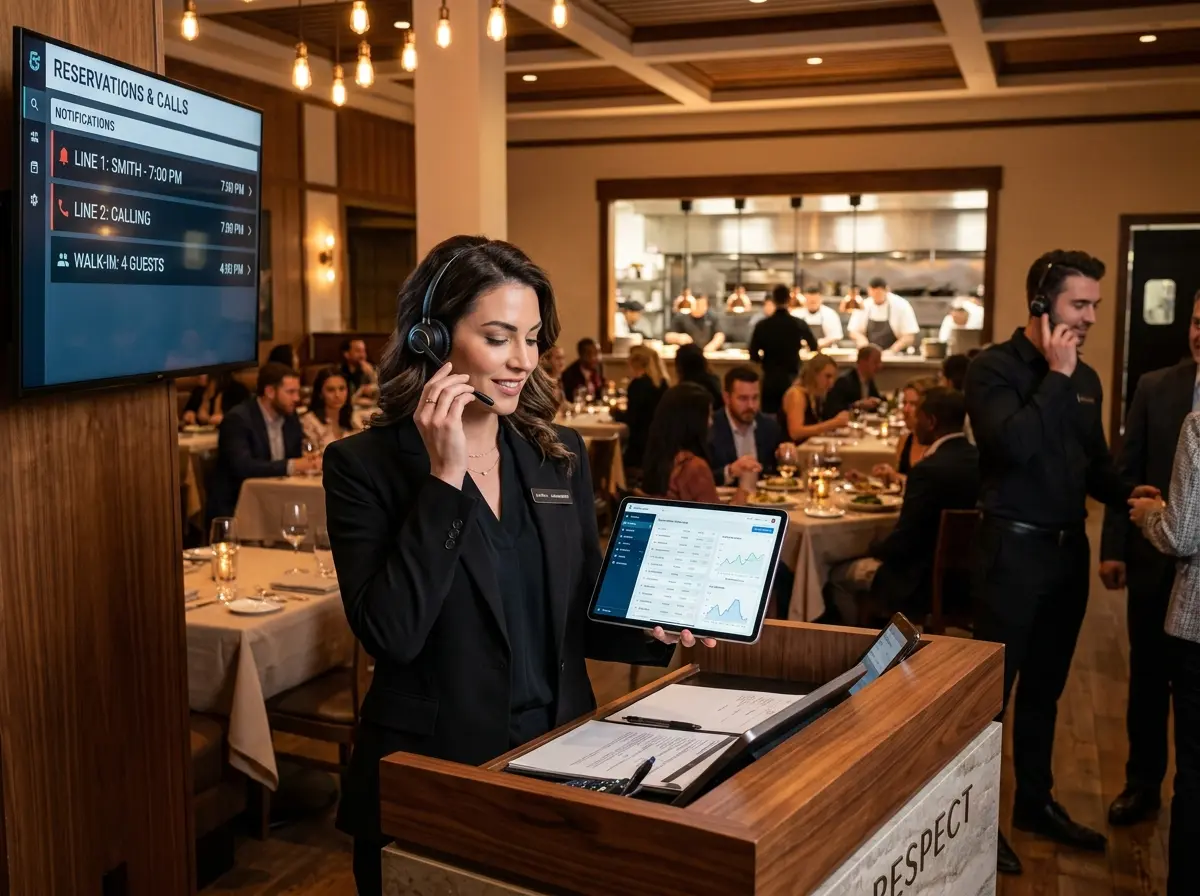
Picture this: it's 6:47 PM on a Friday. Every table is full, your kitchen is running at full capacity, your best server just dropped a tray of drinks, and your phone has been ringing — without stopping — for the past forty-five minutes. Reservations, takeout orders, questions about whether you have gluten-free options, and at least one person who just wants to know your hours (which, by the way, are on your website, your Google listing, and the window of your front door).
If this sounds familiar, congratulations — you're running a successful restaurant. The bad news? Success is actively making your life harder, and your phone is leading the charge.
High call volume is one of those "good problems to have" that nobody actually wants. Missed calls mean missed revenue. According to research from BIA/Kelsey, over 60% of customers prefer to call a local business before visiting, and if nobody picks up, a significant portion of them simply move on to the next option. In the restaurant industry, where margins are already razor-thin, that's not a statistic you can afford to shrug at.
The good news is there are real, practical ways to manage call volume without hiring a dedicated phone receptionist or forcing your staff to choose between serving a table and answering a call. Let's dig in.
Why High Call Volume Is a Bigger Problem Than It Looks
The Hidden Cost of a Ringing Phone
Most restaurant owners understand that a missed call could mean a missed reservation. What's less obvious is the compounding effect it has on your in-house operation. Every time a server, host, or manager stops what they're doing to answer the phone, there's a cost — and it's not just the thirty seconds it takes to answer a basic question. Research on task-switching suggests that interruptions can cost workers anywhere from a few minutes to over twenty minutes of productive focus time before they return to full efficiency. Multiply that across a busy dinner service with phones ringing every few minutes, and you're bleeding productivity without even realizing it.
Then there's the customer experience angle. When your front-of-house staff is stretched thin and still fielding calls, something has to give. Usually, it's either the phone caller (who gets rushed, put on hold, or ignored entirely) or the in-person guest (who notices their server has disappeared). Neither outcome is great for your reputation or your reviews.
Why "Just Let It Go to Voicemail" Isn't a Strategy
The voicemail defense is a tempting one. Let calls stack up, listen to them when things slow down, and call people back. Simple, right? Not quite. Studies consistently show that most callers won't leave a voicemail at all — they'll just hang up and try somewhere else. And even for those who do leave a message, a callback two hours later for a same-night reservation request is usually too little, too late.
Voicemail is a passive strategy in an industry that rewards speed and attentiveness. Customers calling restaurants are typically looking for immediate answers or quick bookings — not a callback tomorrow morning when you finally get a moment to breathe.
The Staffing Math Doesn't Add Up
Hiring a dedicated phone receptionist sounds appealing until you run the numbers. You're looking at wages, payroll taxes, benefits, training time, and the inevitable turnover that comes with entry-level hospitality roles. For many independent restaurants, that's simply not financially viable — and for those who try it, the ROI often falls flat because phone traffic isn't consistent enough to justify full-time coverage.
Part-time coverage helps, but it introduces gaps — exactly the gaps that tend to align with your busiest hours. It's almost impressive how reliably that works out.
Smarter Tools for Managing the Phone Flood
Where AI Comes In (Without the Awkward Robot Voice)
This is where technology has genuinely caught up with the problem. Stella is an AI robot employee and phone receptionist that handles calls on behalf of your restaurant around the clock — answering questions, sharing specials and hours, collecting customer information through conversational intake, and even forwarding calls to a human when the situation truly calls for it (pun intended). She knows your menu, your policies, your promotions, and how to have a natural conversation without sounding like she's reading from a script.
For restaurants with a physical location, Stella also operates as an in-store kiosk — greeting walk-in customers, highlighting current deals, and fielding questions so your staff doesn't have to. It's the rare solution that actually addresses two problems at once: the phone and the floor. Her built-in CRM also captures and organizes customer information automatically, complete with AI-generated profiles and intake forms — which means your team builds a real customer database without any extra effort.
At $99/month with no upfront hardware costs, she costs a fraction of what a part-time employee would run you, and she doesn't call in sick on Super Bowl Sunday.
Practical Strategies to Reduce and Manage Call Volume
Optimize Your Online Presence to Deflect Simple Calls
A significant chunk of restaurant calls are entirely preventable. Hours, location, parking information, menu details, allergy accommodations, reservation availability — if customers can find this information easily online, many of them will. The key word is easily. Your Google Business Profile should be fully filled out and regularly updated. Your website should load quickly on mobile, feature a clear menu, and include a prominent reservations link if you take them. If you have a FAQ section, make it actually useful instead of a list of questions nobody is asking.
This doesn't eliminate call volume, but it meaningfully reduces the number of calls that are coming in purely because your information is buried or outdated. Every call you deflect is one your staff doesn't have to interrupt service to handle.
Use Online Ordering and Reservation Platforms Strategically
If you're not already using an online ordering system for takeout and delivery, the business case is pretty straightforward — customers who can place an order through your website or an app won't need to call in that order. Similarly, integrating a reservation platform like OpenTable, Resy, or even a simple booking widget into your website gives customers a self-service option that works for them at any hour.
The investment in these tools pays off not just in reduced call volume, but in operational efficiency. Online orders tend to be more accurate (because the customer entered the details themselves), and digital reservations give you better visibility into your evening's flow. It's a win on multiple fronts.
Train Your Team on Call Triage and Scripting
Even with the best tools in place, some calls will always need a human. The difference between handling those calls efficiently and letting them derail your service often comes down to preparation. Equip your team with simple scripts for the most common call types — reservation requests, hours and directions, menu questions, and catering inquiries. When staff know exactly what to say without having to think too hard, calls get resolved faster, customers feel more confident, and service disruptions are minimized.
You should also establish a clear protocol for who answers the phone during peak hours and when it's appropriate to put someone on a brief hold versus taking a message for a callback. Small operational decisions like these, made in advance, save a surprising amount of chaos during a busy service.
Quick Reminder About Stella
Stella is an AI robot employee and phone receptionist built to handle exactly the kind of high-volume, repetitive customer interactions that slow restaurants down. She answers calls 24/7, greets in-store customers, promotes your current deals, and captures customer information — all on a simple $99/month subscription. If your phones are running your team ragged, she's worth a serious look.
It's Time to Stop Letting the Phone Win
High call volume is a symptom of a thriving restaurant, but it doesn't have to be a source of chaos. The businesses that handle it best aren't necessarily the ones with the biggest teams — they're the ones that have been intentional about where technology and process can do the heavy lifting.
Here's a practical starting point: spend one week tracking how many calls come in during your peak hours, what those calls are about, and how many go unanswered or to voicemail. The data will probably be uncomfortable, but it will tell you exactly where to focus your energy first.
From there, the path forward typically looks like this:
- Audit and update your online information so customers can self-serve on the basics.
- Add or improve your online ordering and reservation options to reduce transactional call volume.
- Establish clear call-handling protocols for your team during peak service windows.
- Consider an AI phone solution to cover the calls that happen outside business hours, during peak rushes, or when your staff simply can't get to the phone.
None of these steps require a massive investment or a complete operational overhaul. They're incremental improvements that, stacked together, can meaningfully change how your team experiences a busy service — and how your customers experience your restaurant before they even walk through the door.
Your phone should be a tool that supports your business, not a second kitchen fire you're constantly trying to put out. With the right systems in place, it genuinely can be.