Your Phone Is Ringing. You're Asleep. Congratulations, You Just Lost a Booking.
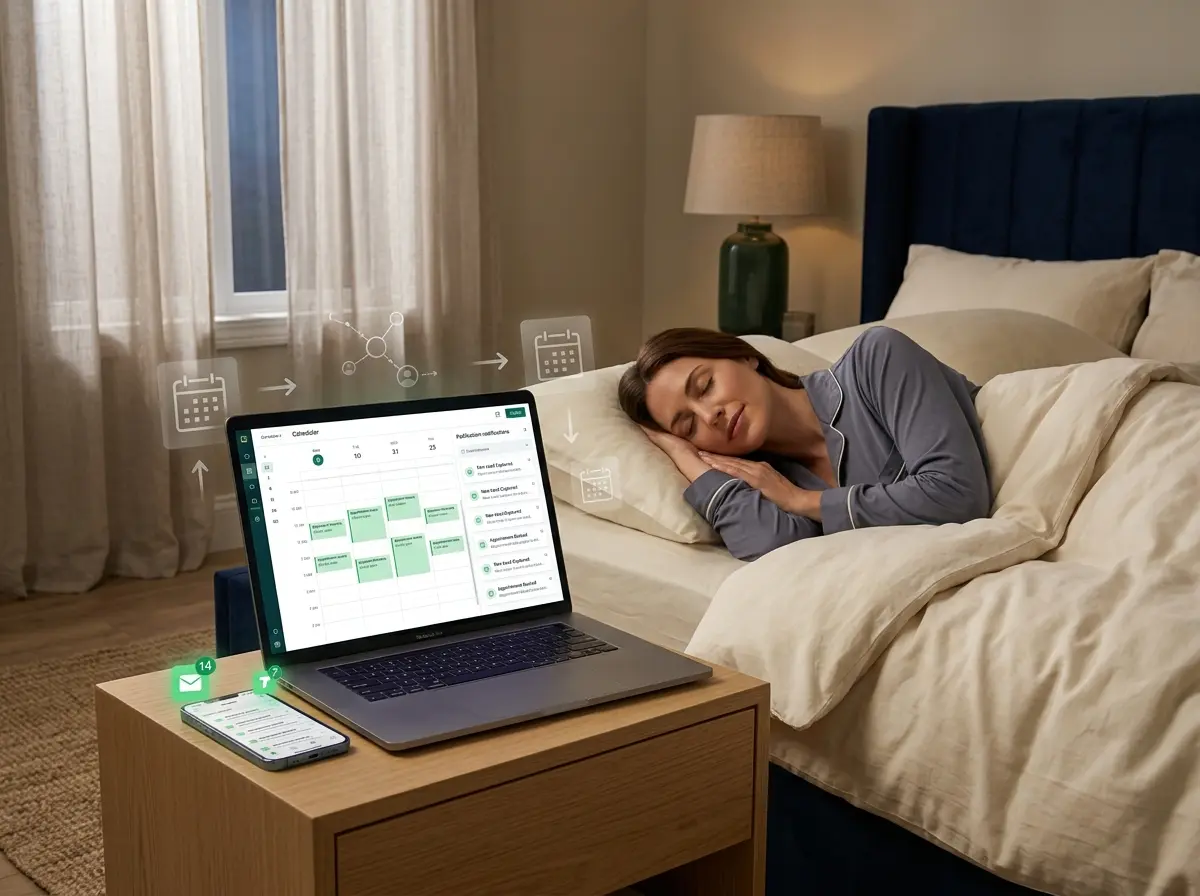
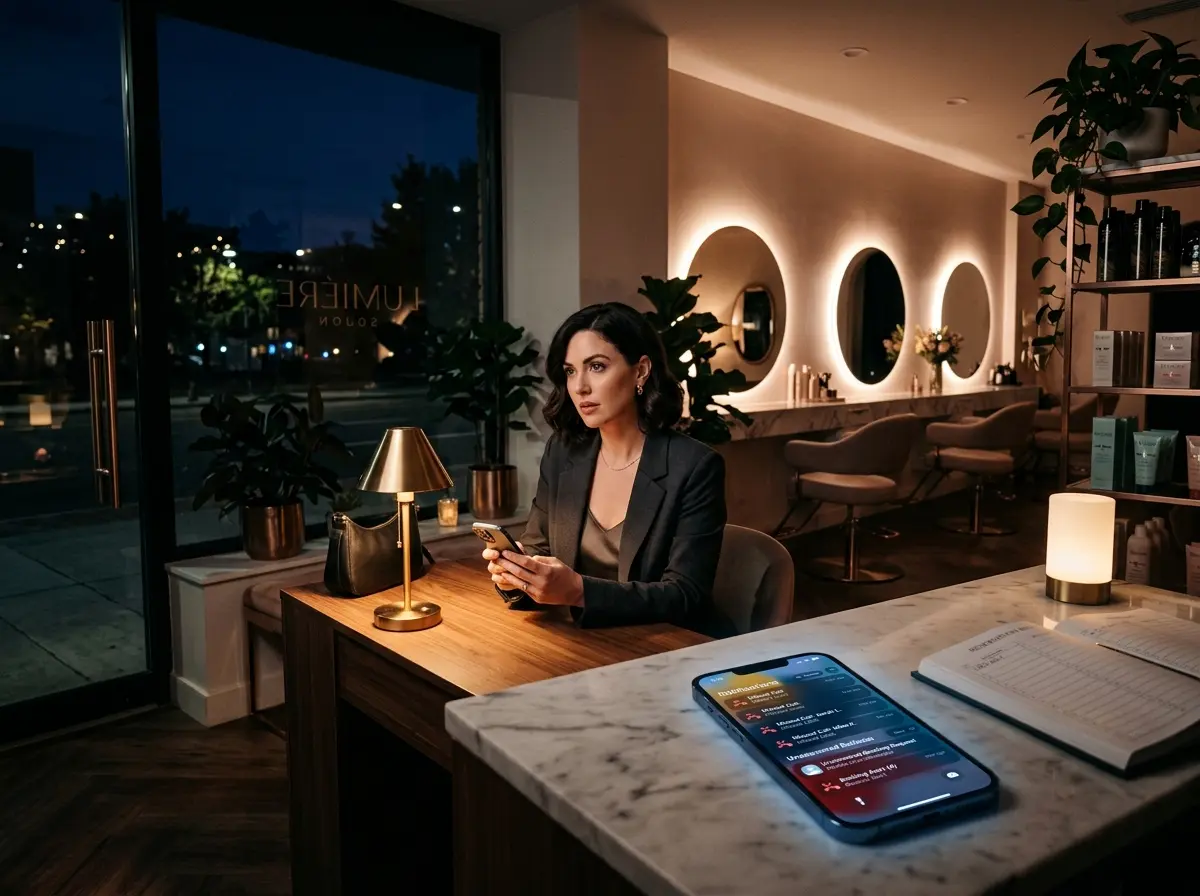
Picture this: It's 11:47 PM on a Tuesday. Someone just got home from a dinner party, caught a glimpse of themselves in the mirror, and had a full-blown hair emergency. They want to book an appointment — right now — before they talk themselves out of it. They pick up their phone, dial your salon, and get... voicemail. So they hang up, scroll Instagram for forty minutes, and book with your competitor who had an online scheduler or, better yet, someone available to answer.
You never even knew they called.
This isn't a rare edge case. It's happening every night, every weekend, and every holiday. The hard truth is that the traditional salon model — where bookings happen during business hours, managed by a human at the front desk — is quietly hemorrhaging revenue in the background. Clients don't keep business hours anymore. Their schedules are chaotic, their attention spans are short, and their loyalty is surprisingly thin when a competitor makes it easier to book.
So let's talk about the after-hours call problem: why it costs salons more than they realize, what most owners do about it (spoiler: not enough), and what actually works.
The Real Cost of a Missed Call
Most salon owners know missed calls are bad. What they don't fully appreciate is how bad. The numbers, when you actually look at them, are a little uncomfortable.
You're Losing More Than One Appointment
According to various studies on consumer behavior, roughly 85% of people whose calls go unanswered will not call back. They move on. And in the beauty industry, a single new client isn't just worth one appointment — she's worth a relationship. A loyal client who comes in every six weeks for color, adds on a gloss treatment, buys retail, and refers two friends? That's potentially thousands of dollars in lifetime value, all of which evaporated because nobody picked up at 10:15 PM.
Now multiply that by five missed calls a week. Or ten. The math gets ugly fast, and it's all invisible because it shows up as revenue you never earned rather than money you visibly lost.
Voicemail Isn't the Solution You Think It Is
Many salon owners feel reasonably covered because they have a professional voicemail greeting. That's sweet. Unfortunately, studies suggest that a majority of callers — particularly younger demographics — will simply hang up rather than leave a voicemail. Voicemail feels like shouting into a void. Callers don't know when you'll respond, whether you'll have availability, or if their message even registered. It creates friction, and friction kills bookings.
And even among the clients who do leave a message, there's the follow-up problem: by the time you call them back the next morning, they've already booked elsewhere, forgotten why they called, or simply don't pick up — beginning a charming game of phone tag that serves nobody.
The Competition Is Not Sleeping
Here's what makes the after-hours call problem particularly urgent right now: your competition is actively solving it. Larger salon chains have invested in booking platforms, automated texts, and after-hours support. Independent salons in your market are experimenting with AI tools. Online booking has become table stakes, not a differentiator. If your salon still relies primarily on phone calls handled only during open hours, you're not just missing a feature — you're playing a different, slower game than the salons actively stealing your clients while you sleep.
Why Most "Solutions" Fall Short
To be fair, most salon owners aren't ignoring this problem. They've tried things. Unfortunately, the most common fixes come with their own set of frustrations.
Online Booking Tools Help — But Don't Cover Everything
Online booking platforms are genuinely useful, and if you don't have one, you should. But they don't answer questions. They don't explain the difference between a balayage and a highlight to someone who's new to your salon. They don't handle calls from clients who prefer to speak to a human, don't know what service they actually need, or have a complaint they want addressed before they cancel. A booking link solves one slice of the problem while leaving the rest of the pie untouched.
There's also the reality that a significant portion of your clients — particularly those in older demographics — simply prefer calling. Sending them to a booking widget they're unfamiliar with is a friction point of its own.
Hiring for After-Hours Coverage Is Usually Impractical
The idea of having someone cover phones after hours sounds great until you do the math on what that actually costs in wages, benefits, training, and turnover. Most salons don't generate enough after-hours call volume to justify a dedicated person — but they generate more than enough to make missed calls a real problem. It's an awkward middle ground that traditional staffing doesn't solve elegantly.
How AI Receptionists Are Changing the Game for Salons
This is where things get genuinely interesting, and no, this isn't just another pitch for a chatbot that answers "What are your hours?" and calls it a day.
Meet the After-Hours Receptionist Who Never Sleeps
Stella is an AI robot employee and phone receptionist designed specifically for businesses like salons. She answers calls 24 hours a day, seven days a week, with real conversational ability — not just scripted responses. She knows your services, your pricing, your current promotions, and your policies, and she can talk about all of it naturally with a caller who's never visited before or a loyal client with a quick question.
For salons with a physical location, Stella also operates as a friendly in-store kiosk — greeting walk-ins, answering questions, and proactively engaging customers who might otherwise drift out the door without booking. She can collect customer information through conversational intake forms, and everything feeds into a built-in CRM with AI-generated customer profiles, custom tags, and notes — so your team walks into every interaction with context, not guesswork. At $99/month with no upfront hardware costs, she's accessible for independent salons, not just big chains.
What This Actually Looks Like in Practice
Imagine a new client calls your salon at 9:30 PM asking about pricing for a keratin treatment. Instead of voicemail, she has a real conversation — gets her questions answered, learns about a current promotion, and either books directly or is set up for a seamless follow-up the next morning. Meanwhile, you receive an AI-generated summary and a push notification, so you're informed without being interrupted. That's not a futuristic scenario. That's just a Tuesday night with the right tools in place.
Practical Steps to Stop Losing After-Hours Bookings
Whether you implement an AI receptionist tomorrow or work toward it gradually, there are concrete steps you can take right now to plug the leak.
Audit Your After-Hours Call Experience
Call your own salon after hours and listen to what a potential client hears. Is the voicemail greeting professional and specific? Does it tell callers when to expect a callback? Does it mention your online booking option? Shockingly often, the after-hours experience is an afterthought — a generic default greeting that communicates exactly nothing about your brand. Fix that today. It takes fifteen minutes and immediately improves the experience for anyone who does leave a message.
Combine Online Booking with a Real Follow-Up Process
If you're already using an online booking tool, make sure you're actively driving callers toward it. Mention it in your voicemail greeting, link it prominently on your website and Google Business Profile, and include it in your social media bios. Then build a reliable process for returning missed calls within two hours of opening each morning — before clients have solidified their plans elsewhere. Speed matters more than most owners realize.
Track the Problem Before You Solve It
You can't fix what you can't measure. If your phone system doesn't already give you call logs, missed call data, and time-of-call breakdowns, it should. Even basic data — how many calls come in after hours, which days see the most missed calls — will help you understand the true scope of the problem and make the business case for a better solution. Gut feelings are nice, but numbers are more convincing when you're evaluating new tools or explaining a technology investment to a business partner.
A Quick Reminder About Stella
Stella is an AI robot employee and phone receptionist built for businesses that want a professional, always-on presence without the overhead of additional staff. She handles phone calls 24/7, greets in-store customers as a physical kiosk, promotes your services and specials, and keeps everything organized through a built-in CRM — all for $99/month with no upfront hardware costs. She's not a gimmick. She's a front desk that never calls in sick.
It's Time to Stop Donating Bookings to Your Competition
The after-hours call problem isn't glamorous, and it doesn't announce itself loudly. It just quietly costs you bookings, clients, and revenue while you're doing other things — like, say, sleeping, which you should absolutely be allowed to do without your business suffering for it.
The good news is that this is a solvable problem. Start by auditing your current after-hours experience and making quick improvements to your voicemail and booking flow. Build a disciplined callback process and make sure online booking is front and center everywhere clients might find you. And when you're ready to stop patching the leak and actually fix it, explore what an AI receptionist can do for your salon — because the right technology doesn't just answer calls, it converts them.
Your clients are ready to book at 11 PM on a Tuesday. The only question is whether you'll be there when they do — or whether your competitor will.