When "Just a Manicure" Became So Much More
Let's be honest — most nail salon clients walk in knowing exactly what they want and exactly how much they plan to spend. And then they leave having spent significantly more, feeling great about it, and already thinking about their next appointment. That's not a coincidence. That's a well-designed add-on menu doing exactly what it was built to do.
One nail salon owner — let's call her Maya — was tired of watching clients walk out the door after a basic service when they clearly could have benefited from (and enjoyed) so much more. Her staff was talented but busy, and upselling mid-service felt awkward and pushy. Sound familiar? Maya built a structured service add-on menu, trained her team on how to present it naturally, and watched her average ticket size climb 28% in under three months. Not through pressure. Not through gimmicks. Through smart menu design and consistent communication.
Here's how she did it — and how you can steal every bit of it for your own salon.
Building an Add-On Menu That Actually Works
Start With What You Already Have
The most common mistake salon owners make when building an add-on menu is trying to invent something new. Maya didn't. She started by auditing her existing services and asking a simple question: what do clients already ask for after they're already seated? Gel top coat upgrades. Cuticle oil treatments. Extended massages. Nail art on one accent finger. These weren't new services — they were things her team was already doing informally, inconsistently, and often for free just to be nice.
Formalizing these into a menu with clear names, clear descriptions, and clear prices was the first step. When something has a name and a price, it becomes a product. When it's just something a technician throws in as a favor, it's invisible revenue that never hits your books.
Price Architecture: The Art of the Easy Yes
Maya structured her add-ons into three price tiers: small enhancements under $10, mid-tier upgrades between $10 and $20, and premium experiences over $20. This wasn't accidental. The small-tier items — a warm paraffin dip, a nail strengthening treatment, a nail art accent — were priced to feel like a no-brainer. Clients barely noticed the difference on the total bill, but Maya absolutely noticed it in her end-of-day reports.
The mid-tier and premium items were positioned as experiences rather than services. A "Hydration Ritual" sounds considerably more appealing than "lotion and a longer massage." Naming matters. Framing matters. A $25 add-on that feels like a spa moment is an easy sell. A $25 upcharge for "extra time" feels like you're being nickeled and dimed. Same price. Completely different client reaction.
Putting the Menu Where It Can Do Its Job
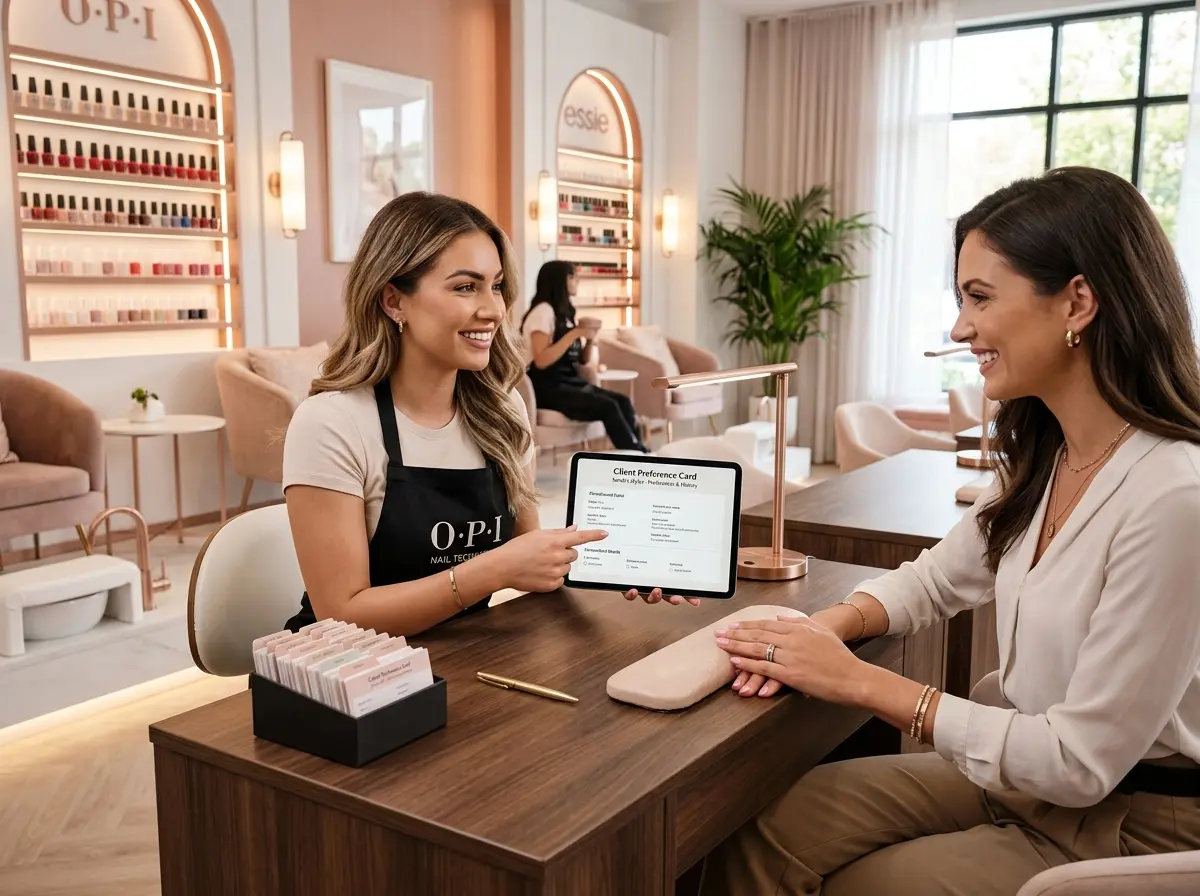
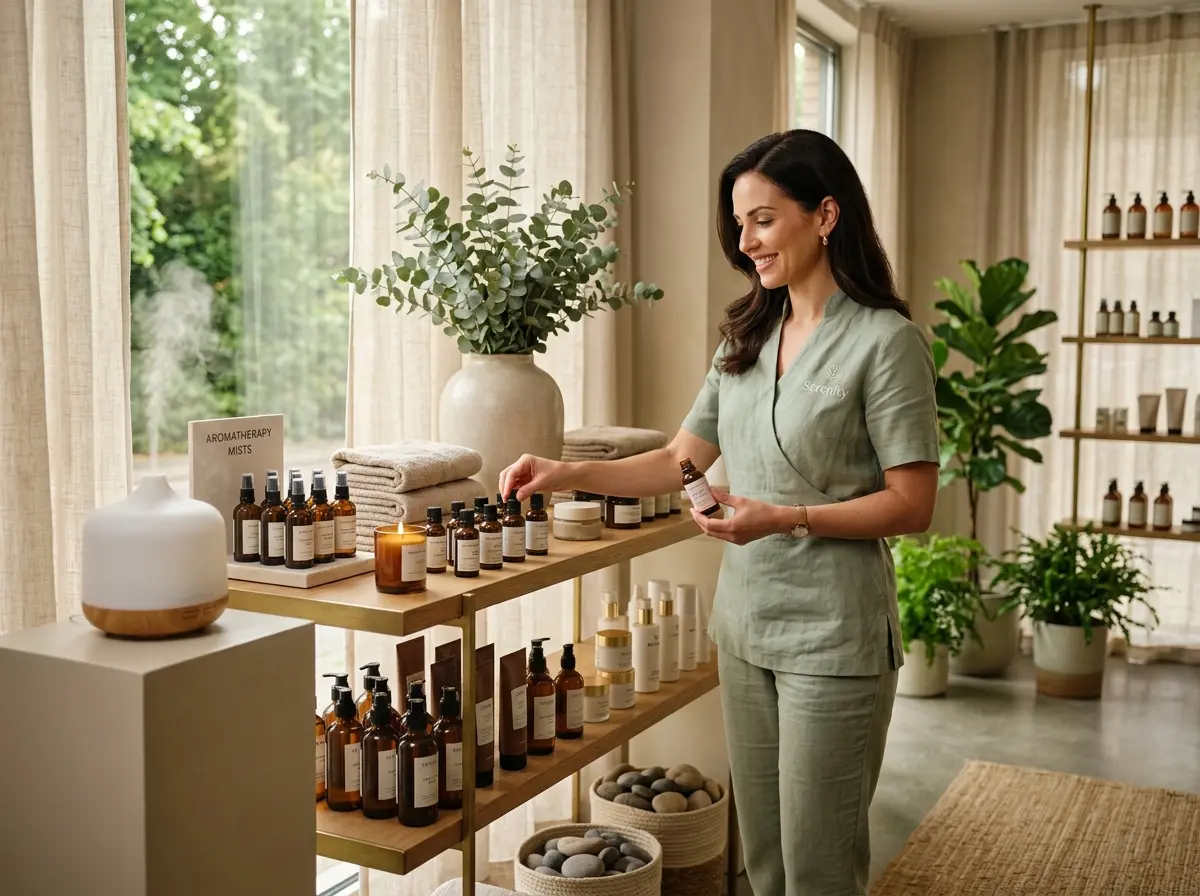
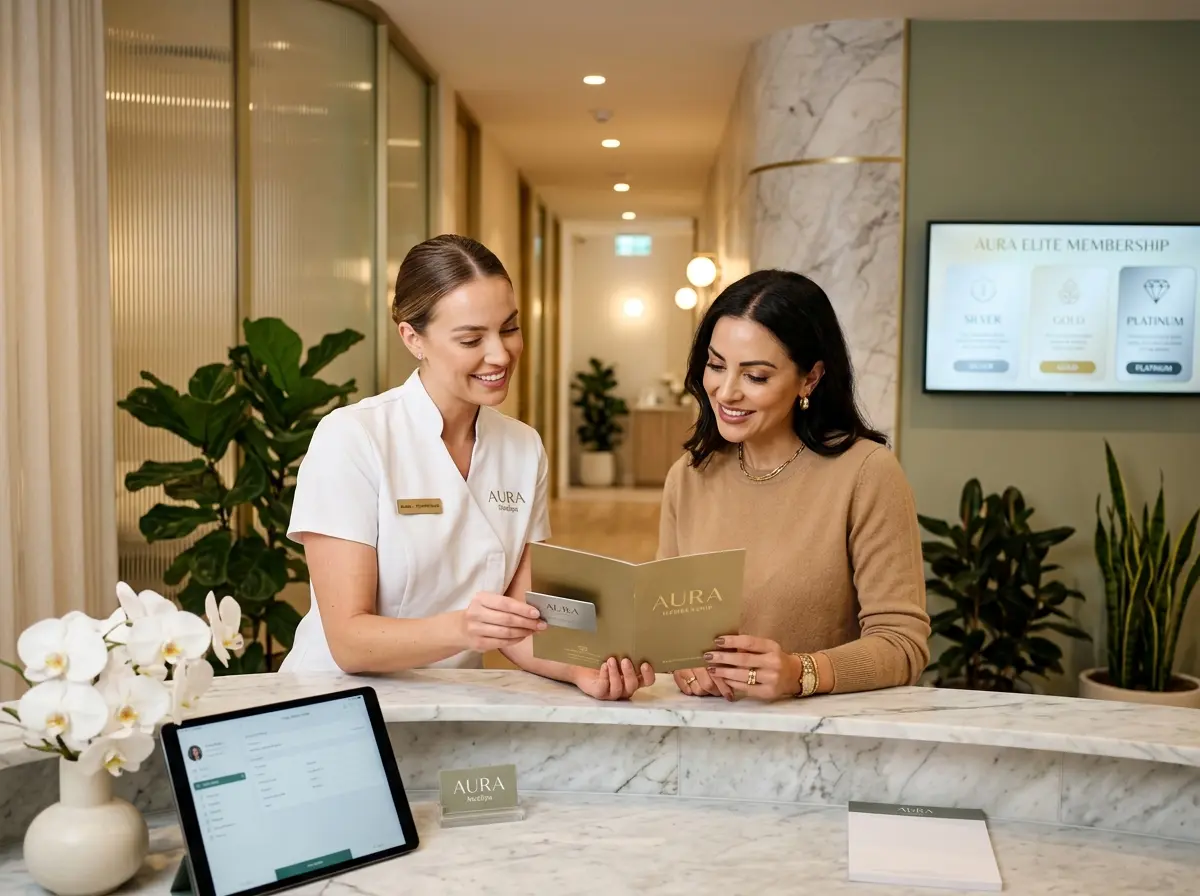
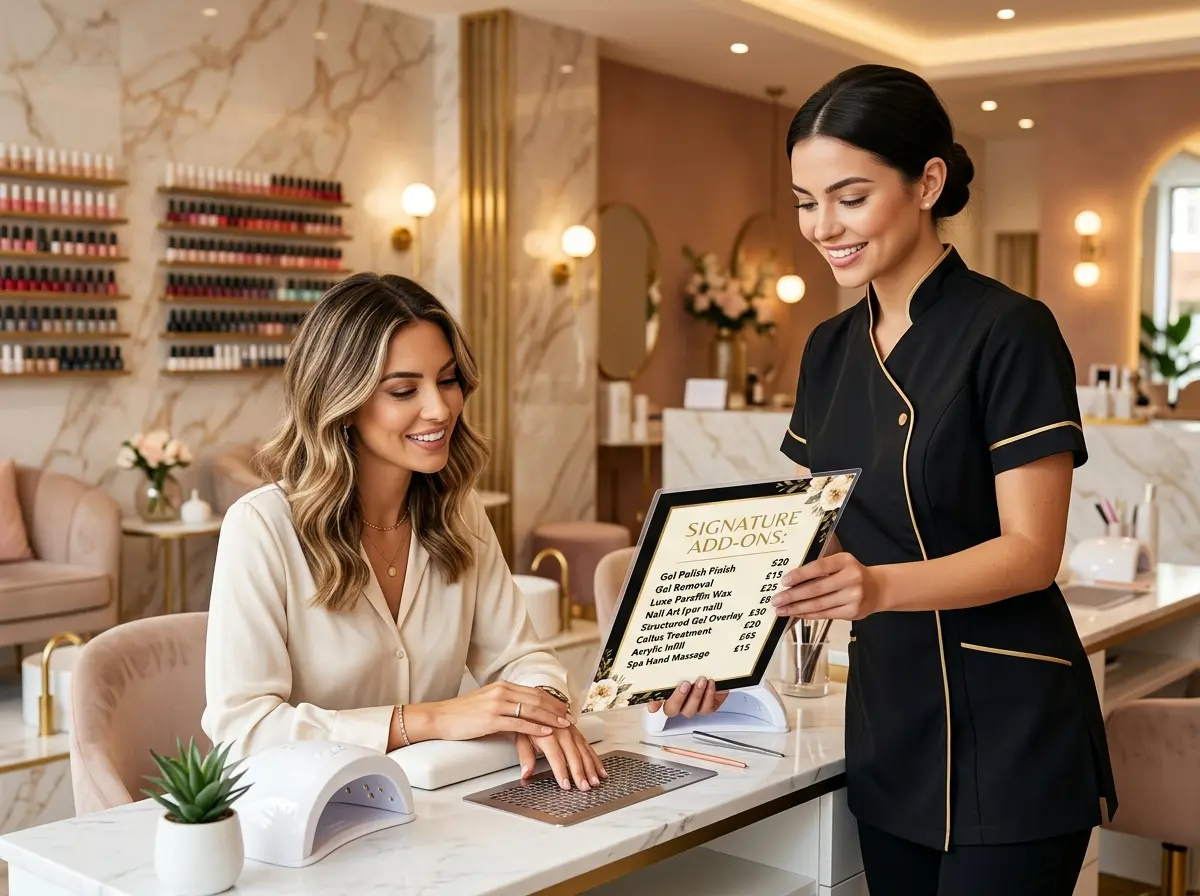
Here's where a lot of salon owners drop the ball: they build a beautiful add-on menu and then stuff it in a drawer. Maya made her menu impossible to ignore. It lived at the reception desk, in a small display at each nail station, on a card inside the service menu clients received at check-in, and on her booking confirmation emails. Clients had multiple natural touchpoints to discover add-ons before a technician ever had to say a word.
This matters because it removes the awkwardness. When a client has already read about a "Cuticle Rescue Treatment" on the card at their station, the technician asking "would you like to add that today?" feels like helpful service — not a sales pitch. The menu did the heavy lifting. The staff just had to follow through.
How Technology Can Quietly Do the Upselling for You
Letting Your Tools Handle the Awkward Part
Not every technician is a natural salesperson, and that's perfectly fine — they're nail artists, not retail associates. But that doesn't mean upselling has to fall entirely on human shoulders. Stella, the AI robot employee and phone receptionist, is built for exactly this kind of consistent, pressure-free promotion. At the kiosk inside your salon, Stella greets walk-in clients, answers questions about services, and naturally highlights current specials and add-on options — every single time, without forgetting, without feeling awkward, and without being distracted by a full set in the other room.
On the phone side, Stella handles incoming calls 24/7, answers questions about services and pricing, and can mention promotions during the conversation — so even a client calling to book a basic manicure hears about your seasonal add-on package before they hang up. It's the kind of consistent, friendly promotion that would take serious staff training to replicate — and even then, it would only happen when someone remembered to do it.
Training Your Team to Sell Without Selling
Reframe It as Personalized Service
The single biggest barrier to effective add-on upselling in salons isn't pricing or menu design — it's the way staff think about the conversation. Most technicians hesitate because they don't want to feel pushy or make a client uncomfortable. The reframe that actually works is simple: recommending an add-on is a form of caring about your client's results.
Maya held one team meeting where she walked through each add-on and explained the genuine benefit to the client. A nail strengthening treatment isn't an upsell for a client with brittle nails — it's a recommendation. A paraffin dip for someone who mentioned dry skin in the winter isn't aggressive selling — it's attentive service. When technicians understand the "why" behind each add-on, the conversation shifts from transactional to consultative, and clients respond completely differently.
Scripts That Don't Sound Like Scripts
Maya gave her team a handful of simple, natural phrases to use — not robotic scripts, but conversational prompts that fit organically into what was already being said. Things like: "I noticed your cuticles are a little dry today — we have a quick treatment that would make a real difference, want me to add it?" Or: "A lot of clients doing this color love adding a matte top coat — it gives it a really editorial look."
These phrases work because they're specific, they reference something the technician actually observed, and they invite rather than pressure. The client feels seen, not sold to. That's the entire game. You're not trying to increase revenue by being pushy — you're increasing revenue by being genuinely good at your job.
Track It, Celebrate It, Repeat It
Maya started tracking add-on attachment rates by technician — not to punish low performers, but to celebrate high ones and figure out what they were doing differently. The technician with the highest attachment rate turned out to be mentioning add-ons during the consultation phase, before the service even started, rather than mid-service when clients were relaxed and less inclined to make decisions. That insight got shared with the whole team. Within a month, the average attachment rate across all technicians had improved noticeably.
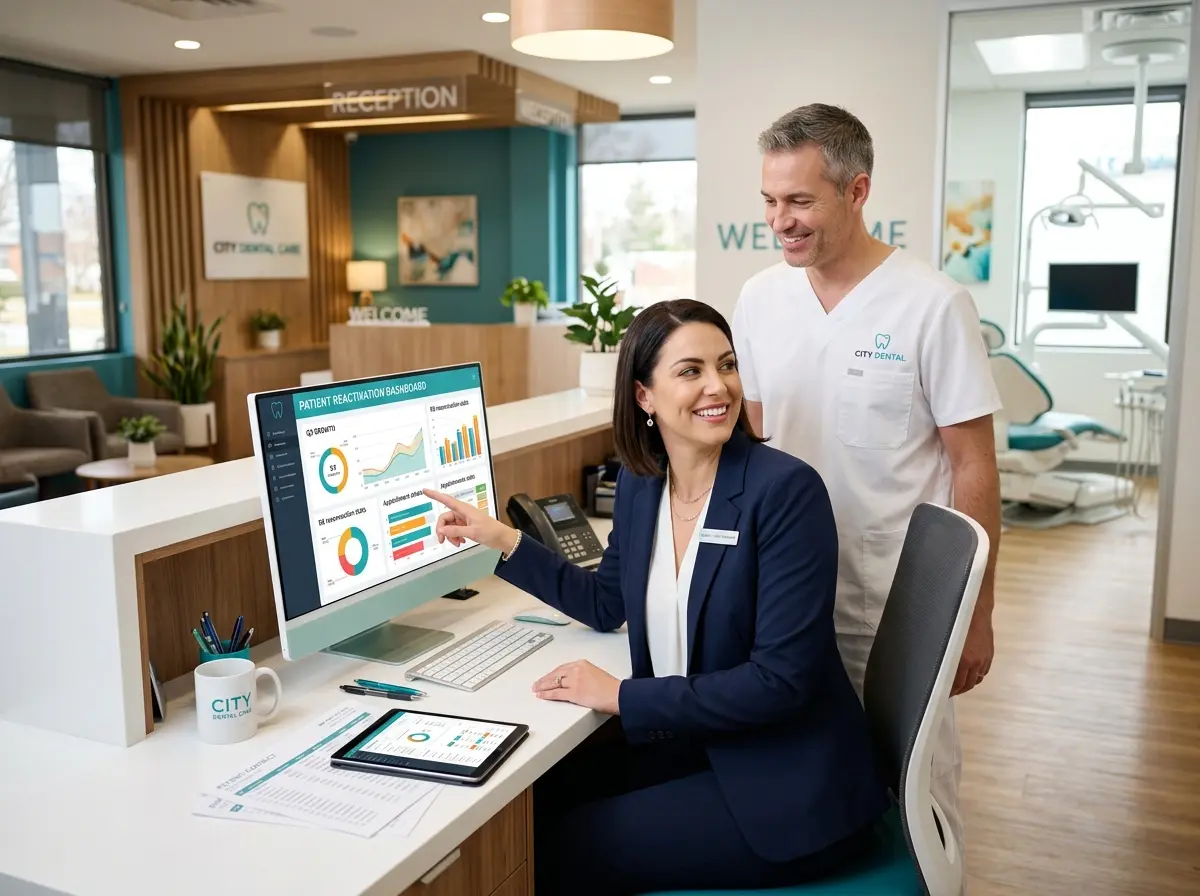
If you're not tracking which add-ons are selling, who's selling them, and at what point in the appointment they're being offered, you're flying blind. Simple tracking — even a manual tally sheet — gives you enough data to improve. A proper POS system with service-level reporting gives you even more.
A Quick Reminder About Stella
Stella is an AI robot employee and phone receptionist designed for businesses like yours — she stands inside your salon to engage clients and answer questions, and she answers your phones 24/7 with the same friendly, informed presence. At just $99/month with no upfront hardware costs, she's the team member who never misses a shift, never forgets to mention your add-ons, and never has an off day. Worth knowing about.
Your Next Steps Toward a Fatter Ticket Average
Maya's 28% increase didn't come from raising her prices or running a big promotion. It came from systematically making it easier for clients to say yes to more — through a well-designed menu, smart placement, staff alignment, and consistent communication. Every one of those levers is available to you right now.
Here's where to start this week:
- Audit your informal freebies. What are your technicians already doing without charging for it? Put those on a menu with a price today.
- Name your add-ons like experiences, not service line items. "Warm Paraffin Ritual" beats "paraffin wax" every time.
- Create three visible touchpoints for your add-on menu before a client sits down — reception desk, station card, and confirmation message minimum.
- Hold one team conversation about the genuine client benefit of each add-on. Watch the hesitation disappear.
- Track weekly. Even a basic spreadsheet will show you patterns within a month.
The clients are already in your chair. They already like and trust you enough to be there. Giving them more ways to enjoy your services isn't pushy — it's just good business. Maya figured that out. Now it's your turn.