Stop Winging It: Why Most Local Businesses Fail at Social Media (And What to Do Instead)
Let's be honest. If your current social media strategy is "post something when I remember to" paired with the occasional blurry photo of your storefront, you're not alone — but you're definitely leaving money on the table. Social media for local service-based businesses is one of those things that seems simple until you realize you've spent three hours crafting the perfect caption for a post that got four likes (two of which were from your mom).
Here's the good news: social media doesn't have to be a chaotic black hole of your time and energy. Local service-based businesses — think salons, gyms, auto shops, restaurants, law firms, spas, and more — have a massive advantage over faceless corporations. You have community, personality, and real stories to tell. You just need a strategy that actually puts those things to work. So let's talk about what that looks like.
Building the Foundation: What Local Businesses Actually Need on Social Media
Before you start worrying about trending audio or whether you need a TikTok account (you might, but let's not get ahead of ourselves), you need to get the fundamentals right. Most local businesses skip this part and go straight to posting — which is a bit like opening your shop without a sign on the door and then wondering why nobody walked in.
Choose the Right Platforms for Your Audience
Not every platform deserves your time. As a local service business, your energy is finite and precious, so spend it where your customers actually are. For most local service businesses, that means starting with Facebook and Instagram. Facebook remains the dominant platform for local community engagement and paid advertising with hyper-local targeting, while Instagram is ideal for visually driven businesses like salons, restaurants, and fitness studios. If you serve a younger demographic (Gen Z or younger millennials), TikTok has become increasingly powerful for local discovery — short-form video content showing your process, team, or transformations can go unexpectedly viral in your own backyard.
Google Business Profile often gets forgotten in social media conversations, but it functions like a social channel in many ways. Regular posts there directly impact how you appear in local search results, and reviews act as social proof that influences purchasing decisions more than almost any other factor. Don't ignore it.
Set Up Your Profiles Like You Mean Business
Your social media profiles are often the first impression a potential customer gets of your business — sometimes even before they visit your website. That means your profile photo should be a clean logo or professional image (not a screenshot of a screenshot), your bio should clearly explain what you do and where you're located, and your contact information needs to be accurate and up to date. Include a link to your website or booking page. Enable the messaging features. Fill out every field available to you.
It sounds basic because it is basic — and yet a staggering number of local businesses have profiles that look like they were set up in 2014 and never touched again. Audit your profiles right now. Seriously. We'll wait.
Define Your Brand Voice Before You Post a Single Thing
Your brand voice is how your business "sounds" online. Are you warm and nurturing (great for spas and wellness businesses)? Authoritative and trustworthy (law firms, medical offices)? Fun and energetic (gyms, family restaurants)? Deciding this upfront means your content will feel consistent and intentional rather than like it was written by five different people on five different days — which, if you have multiple staff members posting, it probably was.
Write down three to five words that describe your ideal brand voice, share them with anyone who touches your social media, and use them as a filter for every piece of content you create. If a post doesn't match those words, rewrite it or scrap it.
From Followers to Foot Traffic: Turning Engagement Into Real Customers
Getting likes and follows feels good, but what local businesses actually need is paying customers walking through the door or calling to book appointments. This is where a lot of social media advice falls short — it's great at telling you how to build an audience but vague on how to convert that audience into revenue. Here's where technology can give you a serious edge.
Use Every Customer Touchpoint as a Conversion Opportunity
Think of your social media presence as the top of a funnel. You attract attention online, but the conversion happens when someone walks into your location or picks up the phone to call you. That's why it's critical that both of those touchpoints are handled professionally and consistently — and this is exactly where Stella, the AI robot employee and phone receptionist, earns her keep. For businesses with a physical location, Stella stands inside your store, proactively greets every customer, promotes your current deals, answers questions, and even upsells — so the warm lead that your social media campaign brought in doesn't get ignored because your staff is busy. For any business, she also answers phone calls 24/7 with full knowledge of your services, hours, and promotions, ensuring that no inquiry goes unanswered regardless of when it comes in. At just $99/month with no upfront hardware costs, Stella makes sure the customers your social strategy attracts actually get converted.
Content That Works: What Local Service Businesses Should Actually Be Posting
Now for the part everyone wants to jump straight to — what to actually post. The best-performing content for local service businesses tends to fall into a few reliable categories, and once you understand them, building a content calendar becomes a lot less painful.
Show the Work (Behind-the-Scenes and Transformations)
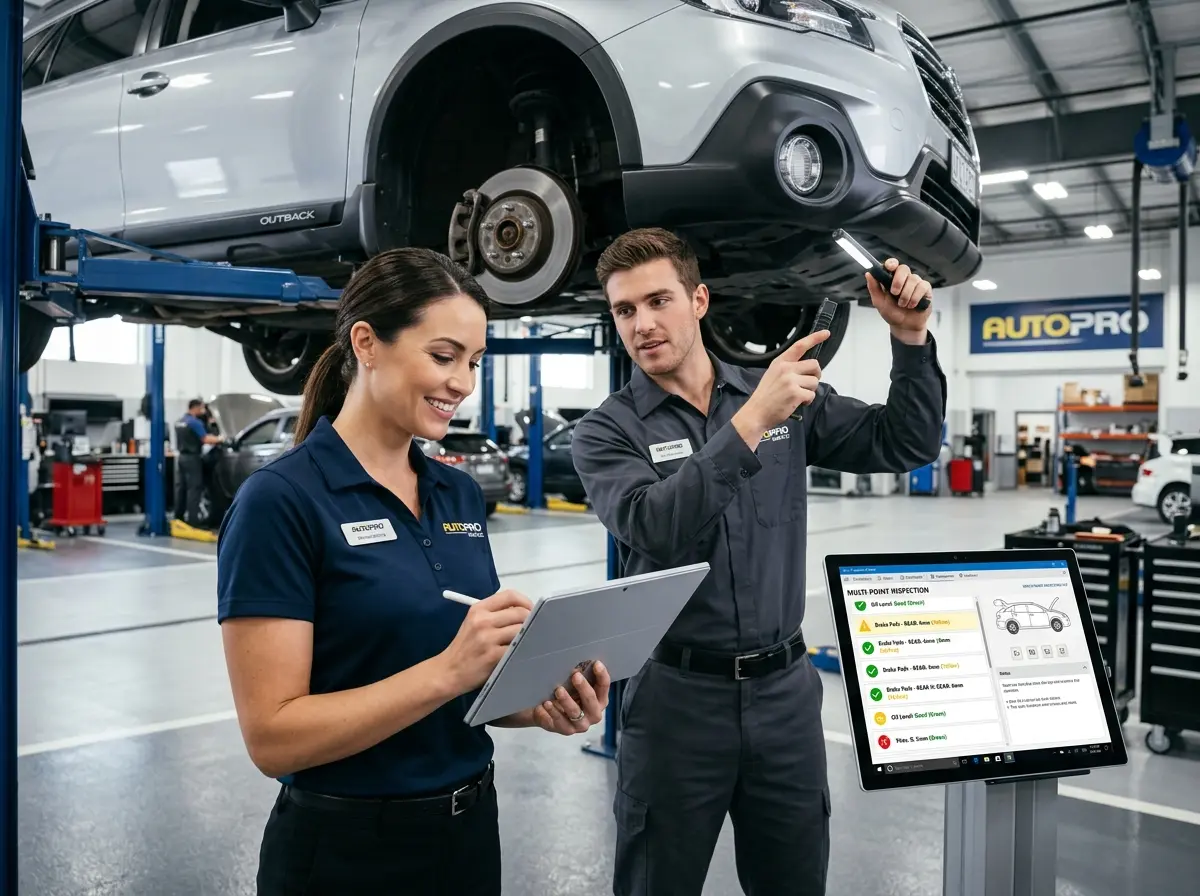
People are endlessly fascinated by process. Before-and-after photos from a salon, a mechanic explaining a repair, a chef prepping the evening's special — this type of content performs exceptionally well because it's authentic, relatable, and demonstrates your expertise without feeling like a sales pitch. According to Sprout Social, content that feels genuine and human consistently outperforms polished brand content in terms of engagement. You don't need a film crew. Your phone and decent lighting are enough.
Short-form video is particularly powerful here. A 30-second clip showing a massage therapist setting up a treatment room, or a personal trainer demonstrating proper form, builds trust and familiarity with potential customers who have never set foot in your business. When they finally do walk in, they already feel like they know you — and that's an enormous advantage.
Leverage Local Community and User-Generated Content
As a local business, your biggest differentiator from the national chains is that you're actually part of the community. Lean into that. Share content about local events you're participating in, shout out neighboring businesses, repost when customers tag you, and run simple campaigns that encourage people to share their experiences. User-generated content — photos and reviews that your customers create themselves — is essentially free advertising with a built-in credibility boost that no paid ad can replicate.
A straightforward approach: offer a small incentive (a discount, a free add-on service, entry into a monthly drawing) for customers who tag your business in a social post or leave a Google review. Many businesses are surprised at how many people are happy to do this when simply asked.
Post Consistently With a Content Calendar (Not Inspiration)
Consistency beats perfection every single time on social media. Posting three times a week with decent content will outperform posting once every two weeks with something "really good." The algorithm rewards consistency, and so do your followers, who start to recognize and expect your content when it shows up regularly.
Build a simple monthly content calendar — even a basic spreadsheet works — that maps out what you'll post, on which platform, and on which day. Batch your content creation so you're not scrambling daily. Tools like Buffer, Later, or Meta's built-in scheduler can automate posting so you can set it and largely forget it. Reserve real-time posting for truly spontaneous moments: an unexpectedly busy Saturday, a customer win worth celebrating, or a promotion you just decided to run.
Quick Reminder About Stella
Stella is an AI robot employee and phone receptionist designed specifically for businesses like yours. She greets customers in-store, answers phones around the clock, promotes your deals, handles intake forms, and manages customer contacts through a built-in CRM — all for $99/month. While you're busy executing your social media strategy, Stella makes sure every customer who responds to it gets a professional, knowledgeable welcome, whether they walk through your door or pick up the phone.
Put It Into Practice: Your Next Steps Toward a Social Media Strategy That Actually Works
Here's the reality: there's no single magic post that's going to transform your business overnight. What does work is a consistent, intentional strategy built on understanding your audience, showing up authentically, and making sure the experience matches the promise once a customer decides to reach out. The businesses that win at local social media are not the ones with the biggest budgets — they're the ones that show up reliably, engage genuinely, and convert efficiently.
Start with these concrete next steps:
- Audit your existing social profiles this week. Update photos, bios, contact info, and links.
- Pick two platforms to focus on for the next 90 days rather than spreading yourself thin across five.
- Define your brand voice in writing and share it with anyone involved in your content.
- Build a simple content calendar for next month using the three content pillars: behind-the-scenes, community, and consistency.
- Set up a review generation process — ask every satisfied customer for a Google review, and make it easy with a direct link.
- Close the loop on your conversions by ensuring every phone call and in-store visit is handled as professionally as your social media looks.
Social media won't save a bad business, but it absolutely can grow a good one. You've already got the product, the expertise, and the community connection. Now you just need the strategy to match. Go get it.