Introduction: The Future of Paying for Things Is Already Here (And It's Tapping)
Remember the days when paying for something required a physical card, a signature that looked nothing like your actual signature, and approximately forty-five seconds of awkward eye contact with a cashier while the terminal thought about whether it felt like processing your transaction today? Those days are fading fast — and good riddance to them.
Contactless payments have quietly become one of the most significant shifts in retail commerce in the past decade. We say "quietly" because it happened so gradually that many business owners haven't fully grasped what's at stake. Customers are tapping their phones, watches, and cards at checkout faster than ever before, and businesses that haven't embraced this technology are increasingly being left behind — sometimes literally, as customers walk out the door and head to a competitor who actually accepts Apple Pay.
The numbers don't lie: according to Mastercard, contactless transactions have grown over 300% in the last three years, and over 50% of consumers now say they prefer contactless payment options when shopping in person. If your point-of-sale setup still requires a chip dip and a prayer, this article is your wake-up call.
Let's break down what contactless payments actually are, why they matter more than you might think, and how to implement them without turning your entire operation upside down.
Understanding Contactless Payments: The Basics and the Big Picture
What Are Contactless Payments, Exactly?
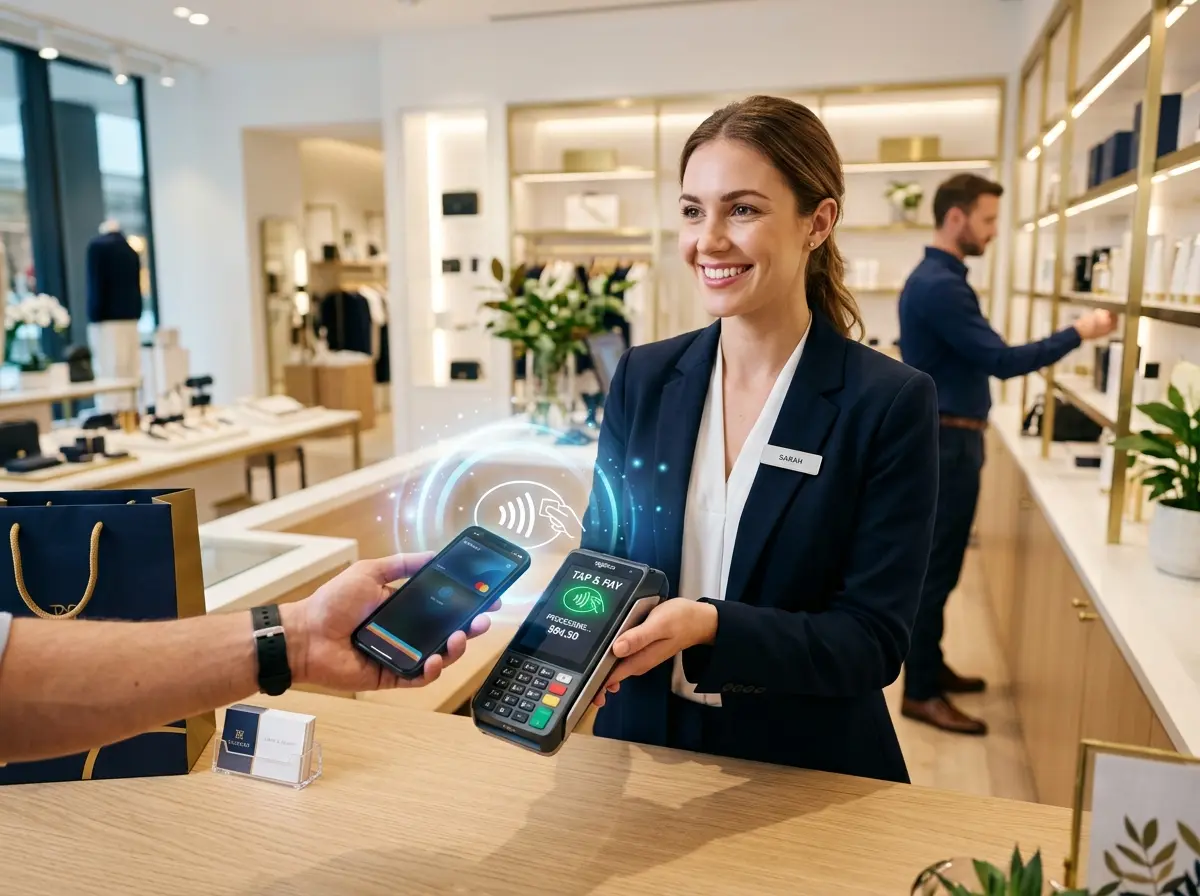
Contactless payments allow customers to complete a transaction by simply tapping or waving a payment-enabled device — a smartphone, smartwatch, or NFC-enabled credit or debit card — near a compatible payment terminal. The technology behind this is called Near Field Communication (NFC), which allows two devices in close proximity to exchange data securely and almost instantaneously.
This includes popular digital wallets like Apple Pay, Google Pay, and Samsung Pay, as well as contactless chip cards issued by Visa, Mastercard, and American Express. The transaction typically completes in under two seconds, which might be the only time in the retail world where the phrase "it's that simple" is actually true.
The Security Argument: Is Tapping Your Phone Actually Safe?
Skeptical business owners sometimes worry that contactless means careless — as if speed somehow compromises security. The opposite is true. Contactless payments are actually more secure than traditional magnetic stripe swipes. Each transaction generates a unique, one-time encrypted token, meaning that even if someone intercepted the data, it would be completely useless for any future transaction.
Compare that to a magnetic stripe, which transmits the same static card data every single time, and suddenly the "old way" doesn't seem quite so safe anymore. Add in the biometric authentication required by most smartphones (Face ID, fingerprint), and you've got a payment method that's harder to compromise than the padlock on your storage room.
The Customer Experience Factor
Beyond security, there's the simple truth that contactless payments make the checkout experience significantly better. Shorter lines, less fumbling, no pin pads that haven't been cleaned since the Obama administration — customers notice these things. In a world where customer experience is the primary competitive differentiator for most retail businesses, shaving thirty seconds off a checkout interaction and eliminating friction is genuinely meaningful. A seamless payment experience tells customers, without words, that your business is professional, modern, and worth coming back to.
The Real Business Case: Revenue, Retention, and Getting With the Times
How Contactless Payments Affect Your Bottom Line
There's a direct correlation between payment convenience and spending behavior. Research from the Journal of Retailing found that consumers using contactless payments tend to spend more per transaction than those using cash or traditional cards. The psychology is fairly straightforward: when paying feels effortless, the mental "pain" of spending decreases, and customers are more likely to add that extra item to their purchase or opt for the premium option.
Additionally, faster checkout means higher throughput — particularly relevant during peak hours. If your coffee shop, boutique, or service counter can process five more customers per hour because checkout takes two seconds instead of thirty, that adds up over the course of a week, a month, and a year. This is what business people call a "no-brainer," which is ironic given how many businesses still haven't made the switch.
Staying Competitive in a Tap-First World
Consumer expectations have shifted dramatically, and they're not shifting back. Younger demographics — Millennials and Gen Z, who collectively represent an enormous and growing share of consumer spending — have grown up with smartphones in their pockets and now expect to be able to pay with them. Refusing to accept contactless payments in 2024 is roughly equivalent to refusing to accept credit cards in 1995. Technically your prerogative, but commercially a bit of a disaster.
The good news is that adopting contactless payment capability is no longer expensive or complicated. Most modern POS systems — Square, Stripe, Clover, Toast, and others — support NFC payments out of the box, and upgrading an existing terminal is often as simple as a software update or a modest hardware investment.
How Modern Technology Tools Are Reshaping the Retail Experience
Integrating Payments Into a Broader Customer Experience Strategy
Contactless payments don't exist in a vacuum. They're part of a broader movement toward frictionless, tech-forward retail experiences — and the businesses winning today are the ones thinking holistically about every customer touchpoint, not just the moment of payment.
This is where tools like Stella, the AI robot employee and phone receptionist, fit into the picture. While Stella doesn't process payments directly, she plays a meaningful role in optimizing the customer journey that leads to payment. As an in-store AI kiosk, Stella greets customers proactively, answers questions about products and pricing, highlights current promotions, and upsells relevant items — all before a customer ever reaches the checkout counter. That means better-informed customers, higher average order values, and staff who aren't constantly pulled away from their work to answer the same questions for the hundredth time this week.
On the phone side, Stella handles incoming calls around the clock, answers questions about hours, services, and policies, and collects customer information through conversational intake forms — feeding everything neatly into a built-in CRM. For retailers managing loyalty programs, promotional campaigns, or appointment-based services, that kind of organized customer data is genuinely valuable. At $99 per month with no upfront hardware costs, it's the kind of upgrade that pays for itself before your next monthly statement.
Implementing Contactless Payments: A Practical Roadmap
Choosing the Right Payment Hardware and Software
The first step is assessing your current setup. If you're already using a modern POS system, there's a good chance NFC capability is already built in — you may simply need to enable it. If your hardware is older, most payment processors offer affordable terminal upgrades, and the cost is typically recovered quickly through increased transaction efficiency.
When evaluating options, look for terminals that support NFC, EMV chip, and traditional swipe to cover all your bases. Popular choices include the Square Terminal, Clover Flex, and Stripe Reader M2, all of which support contactless transactions and integrate with a wide range of business management software. Avoid the temptation to go with the cheapest possible option — reliability at the point of payment is not the place to cut corners.
Training Staff and Communicating the Change to Customers
Implementing new payment technology is largely a non-event for customers — most of them will be delighted — but it does require a brief staff training exercise. Your team needs to know how the new terminal works, how to troubleshoot a failed tap, and how to confidently guide customers through the process if needed. This takes about twenty minutes, not twenty days.
On the customer communication side, consider adding a small sign near your checkout area noting that you now accept Apple Pay, Google Pay, and contactless cards. It sounds minor, but customers who prefer these methods often scan for this information before they even start shopping. A simple sticker or counter card can actually influence where someone chooses to spend their money.
Measuring Impact and Optimizing Over Time
Once your contactless payment capability is live, track the metrics that matter: average transaction value, checkout time, customer return rate, and any changes in peak-hour throughput. Most modern POS systems provide this data automatically, and reviewing it monthly gives you a clear picture of the real-world impact on your business. If you're also using a tool like Stella to track customer interactions and promotional engagement, you'll have an even richer dataset to work with — giving you the kind of operational insight that used to require a dedicated analytics team.
Quick Reminder About Stella
Stella is an AI robot employee and phone receptionist designed to help businesses of all sizes deliver a smarter, more consistent customer experience — whether that's greeting walk-in customers at a physical kiosk, answering calls at 2 a.m., or managing customer contacts through her built-in CRM. She's available for $99 per month with no upfront hardware costs and is built to work across virtually any industry. If you're modernizing your retail operation, she's worth a serious look.
Conclusion: Stop Waiting, Start Tapping
Contactless payments aren't a trend to watch from a safe distance — they're a standard that's already been set by the market, and the businesses thriving right now are the ones who embraced that standard early. The benefits are real: faster checkouts, higher transaction values, improved customer satisfaction, and a professional image that signals to customers you actually pay attention to how commerce works in the modern era.
Here's your practical next step checklist:
- Audit your current POS hardware — find out if NFC is already enabled or if an upgrade is needed.
- Contact your payment processor to enable contactless capabilities or explore terminal upgrade options.
- Train your staff on the new process — keep it brief, keep it practical.
- Signal to customers that contactless is available with simple signage at checkout.
- Track your metrics over the first 60–90 days to measure impact on transaction volume and average order value.
The customers are ready. The technology is ready. The only question is whether your business is ready to meet them where they already are — which is, for the record, tapping their phone impatiently near a terminal that doesn't support it.
Don't be that terminal.