From Gutters to Viral: How One Roofing Company Accidentally Cracked the YouTube Code
Let's be honest — when you think of "viral YouTube content," roofing probably isn't the first industry that comes to mind. Cat videos, yes. Cooking tutorials, sure. A guy explaining how to properly flash a chimney? Not exactly prime-time entertainment. And yet, a growing number of roofing contractors across the country are quietly building YouTube channels that are outperforming their Google Ads, their door-knocking campaigns, and their referral programs — combined.
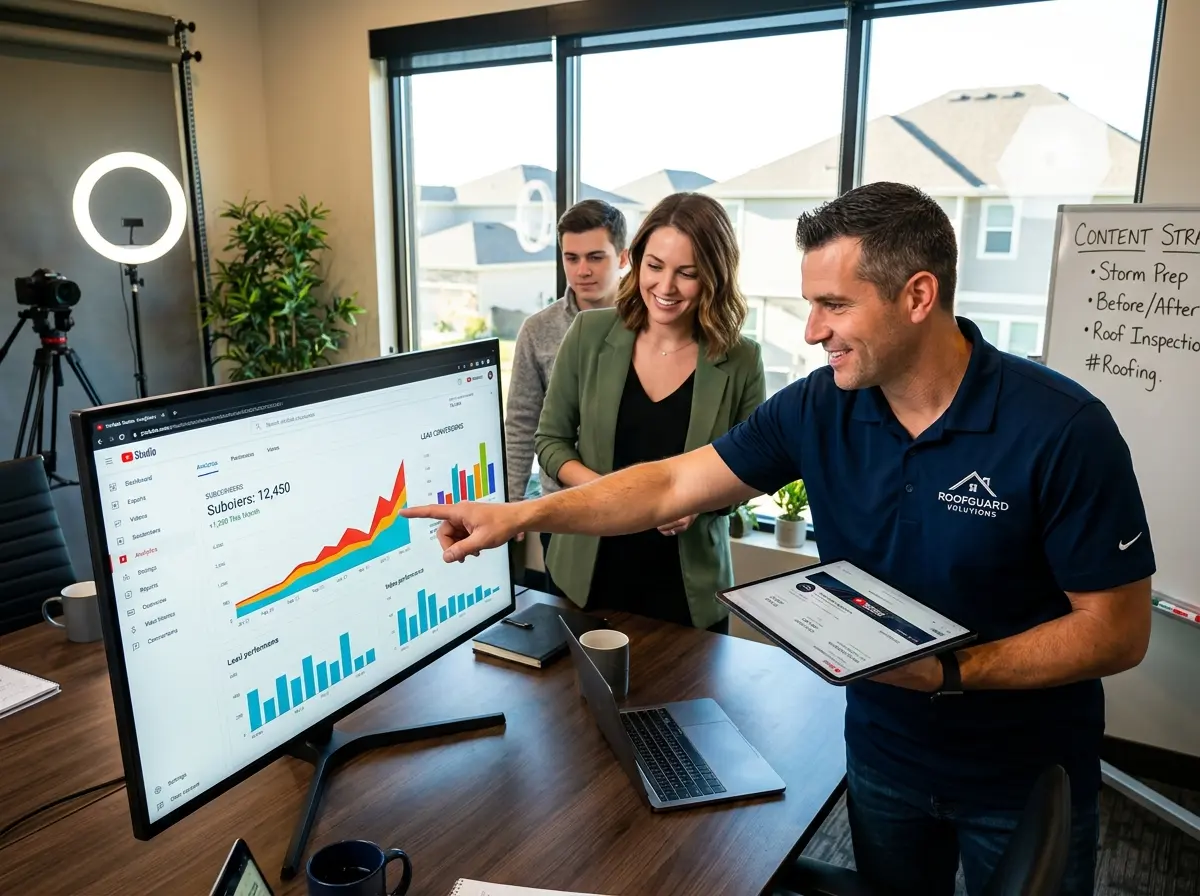
This isn't a fluke. It's a strategy, and it's one that any home service business owner can replicate with a smartphone, a basic understanding of what homeowners actually worry about, and a willingness to show up on camera without a Hollywood production budget. The roofing company at the center of this story — a regional contractor based in the Midwest — went from zero subscribers to over 14,000 in 18 months, and more importantly, they started attributing roughly 30% of their closed jobs to YouTube viewers who found them organically. No paid ads. No agency. Just consistent, useful video content.
So how did they do it, and what can you steal from their playbook?
The YouTube Strategy That Actually Worked
They Answered Questions Nobody Else Was Answering Honestly
The biggest mistake most service businesses make when they try YouTube is treating it like a commercial. Nobody logs onto YouTube to watch a two-minute ad about how a roofing company has "been serving the community for over 20 years." What homeowners do search for is things like "how do I know if my roof needs to be replaced," "why is my roof leaking around the chimney," and "how much does a new roof actually cost." Real questions. Urgent questions. Questions that people type into search bars at 11pm when they notice a water stain on their ceiling and start quietly panicking.
This roofing company made a conscious decision to be radically transparent. Their most-viewed video — a 12-minute breakdown titled "What Roofing Companies Don't Want You to Know Before Signing a Contract" — has over 200,000 views and still drives inbound calls years after it was published. The key was that they led with education, not sales. They answered the uncomfortable questions. They explained what corners some contractors cut. They told viewers exactly what to look for and what to avoid. The result? Viewers trusted them before ever picking up the phone.
They Optimized for Search, Not Virality
Here's where a lot of business owners get tripped up: they chase views instead of leads. Going viral is great for ego and terrible for ROI if the wrong people are watching. This roofing company took a fundamentally different approach — they treated YouTube like a search engine (because it is one, second only to Google) and built their content around high-intent, locally relevant keywords.
Their process was simple but disciplined. Before filming anything, they'd research what their target customers were actually searching for using free tools like Google's autocomplete, YouTube's search suggestions, and AnswerThePublic. They'd build each video around a specific question or problem, include that search phrase in the video title, description, and spoken content, and then consistently publish on a schedule. They weren't trying to trend — they were trying to show up when someone in their service area searched for roofing help. That's a much more winnable game.
They Turned Viewers Into Calls With a Repeatable CTA
Great content without a clear next step is just a hobby. At the end of every single video, the owner would appear on camera, introduce himself by name, and invite viewers to call the office for a free inspection. Same message. Every video. Without fail. It sounds almost painfully simple, but consistency in your call-to-action builds familiarity, and familiarity builds trust. By the time someone picked up the phone, they felt like they already knew him. Cold calls became warm conversations. Close rates on YouTube-sourced leads were measurably higher than any other channel — because the education had already happened before the first hello.
Keeping the Phones Ready When the Leads Start Rolling In
YouTube Leads Call at All Hours — Is Someone Picking Up?
Here's the part of the YouTube success story that doesn't get talked about enough: what happens when it works. Because when your videos start ranking and the calls start coming in, they don't arrive neatly between 9am and 5pm. Someone watches your "signs your roof is failing" video at 7:30 on a Saturday morning, gets sufficiently alarmed, and calls immediately. If nobody answers, they move on to the next contractor in the search results — who probably doesn't have a YouTube channel, but does have someone picking up.
This is exactly the kind of problem that Stella was built to solve. Stella is an AI robot employee and phone receptionist that answers every call, 24/7, with full knowledge of your services, pricing, seasonal promotions, and booking process. For a roofing company running an active YouTube channel, that means every inbound lead — whether they call at noon on a Tuesday or midnight on a Sunday — gets a professional, informed response immediately. Stella can also handle intake, collect job details conversationally, and even flag high-priority calls for a human follow-up, so no qualified lead ever disappears into voicemail limbo. She also brings that same energy to in-store or office walk-ins as a physical kiosk presence, greeting customers proactively and keeping the conversation going when your team is busy.
Building a Content Engine That Compounds Over Time
Why Old Videos Keep Paying Dividends
One of the most underappreciated advantages of YouTube over paid advertising is that your content doesn't expire when your budget does. A Google Ad stops showing the moment you stop paying. A YouTube video that ranks well can continue driving views, trust, and inbound calls for years — sometimes decades. The roofing company in our example has videos from 2022 that still generate several calls per month. That's compounding ROI at its finest, and it's essentially free after the initial time investment of filming and editing.
The compounding effect also works algorithmically. The more videos you publish, the more YouTube's algorithm learns what your channel is about, and the more likely it is to recommend your newer content to people who watched your older content. Channels that publish consistently — even just once or twice a week — build algorithmic momentum that sporadic publishers never achieve. Think of each video as a sales rep that never calls in sick, never asks for a raise, and works every shift for the foreseeable future.
Repurposing YouTube Content Across Every Channel
Smart business owners don't just publish a video and call it done. Every YouTube video your team produces is raw material for a content ecosystem. The audio can become a podcast episode. Key points can become a blog post (hello, SEO). Short clips can become Instagram Reels, TikTok videos, or Facebook posts. A single 10-minute video, properly repurposed, can generate a week's worth of social content across multiple platforms — all pointing back to your YouTube channel and your phone number.
The roofing company in question started doing quarterly "roofing tip" email newsletters built almost entirely from YouTube video summaries. Their open rates were well above industry average because their subscribers already knew them from video and actually looked forward to hearing from them. That's the compounding power of building a content brand — your marketing starts to feel less like interruption and more like a relationship.
Measuring What Actually Matters
Views and subscribers are vanity metrics unless they translate into revenue. The most successful YouTube-driven service businesses track source attribution rigorously. Ask every single caller how they found you. Add a YouTube-specific landing page or phone number to your video descriptions so you can track call volume directly. Monitor which videos drive the most calls versus just the most views — they're often not the same videos. A 500-view video that generates 20 calls is infinitely more valuable than a 50,000-view video that generates none.
Once you know which content converts, you make more of it. Simple, logical, and the kind of data-driven thinking that separates businesses that grow from businesses that just stay busy.
Quick Reminder About Stella
Stella is an AI robot employee and phone receptionist available for just $99/month with no upfront hardware costs. She answers calls around the clock, greets walk-in customers proactively as an in-store kiosk, handles intake, promotes your services, and never has a bad day. For any business running an active marketing strategy — including a YouTube channel that's starting to generate real inbound volume — Stella makes sure no lead goes unanswered and no opportunity slips through the cracks while your team is focused on doing the actual work.
Your Action Plan: Start Small, Stay Consistent, Win Big
You don't need a film crew, a ring light setup worthy of a late-night talk show, or a marketing degree to make YouTube work for your service business. What you need is a clear understanding of your customers' most pressing questions, a smartphone with a decent camera, and the discipline to show up consistently over time.
Here's where to start:
- List the 10 questions your customers ask most often. These are your first 10 video topics. Congratulations, your content calendar is done.
- Film in natural light, keep it conversational, and stop waiting until it's perfect. Done is infinitely better than perfect, and your 50th video will be dramatically better than your first regardless of when you start.
- Optimize every video for search. Put your target keyword in the title, the first line of the description, and say it out loud in the video. YouTube's algorithm is listening — literally.
- End every video with a consistent, direct call-to-action. Tell viewers exactly what to do next and make it easy to do it.
- Make sure your phones are covered. All of this effort means nothing if calls go to voicemail. Have a plan for every hour of the day, not just business hours.
The roofing company that inspired this post didn't stumble into success. They made a deliberate decision to educate their market, show up consistently, and treat every video like an investment rather than a chore. Eighteen months later, YouTube became their best salesperson — and unlike most salespeople, it never asked for a commission.
Your industry might not seem like obvious YouTube material either. That's exactly why you should start.