One Star. One Customer. One Very Bad Day.
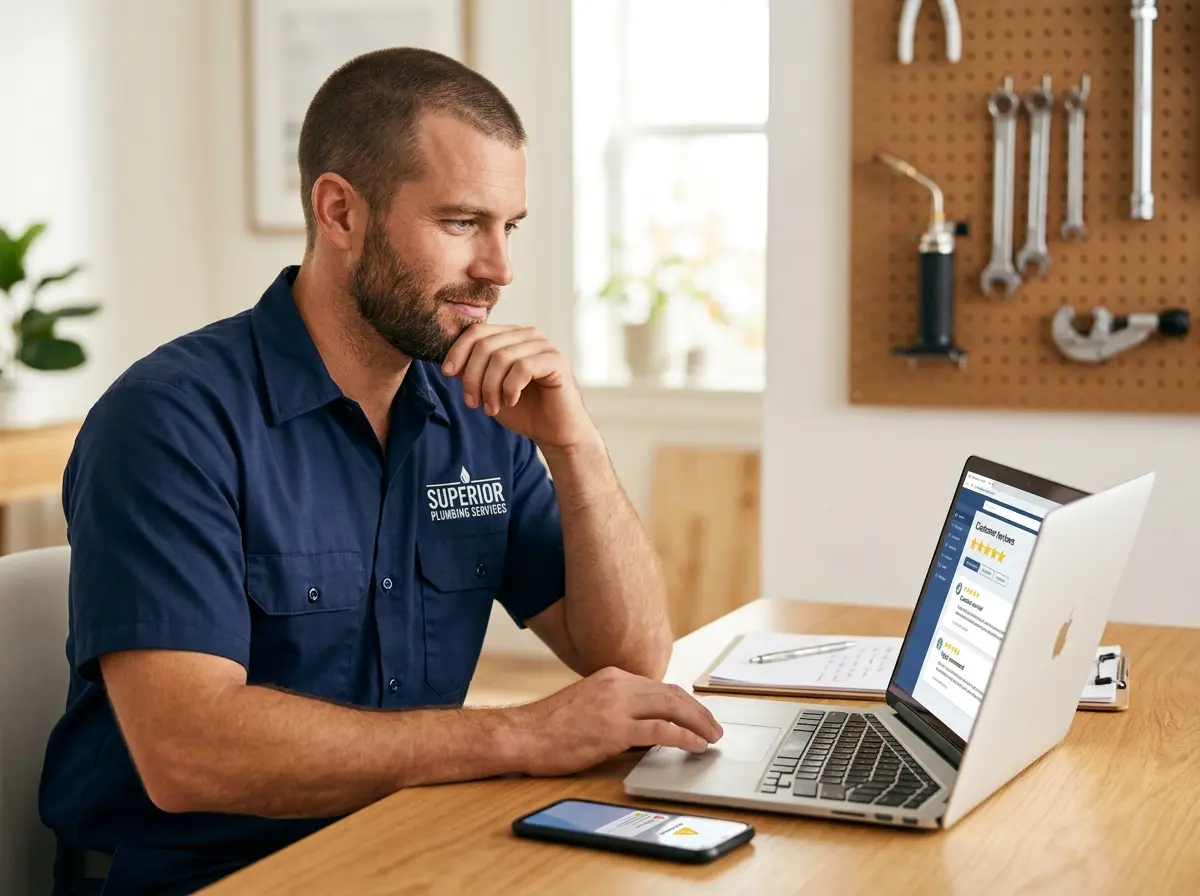
You've spent years building your plumbing business. Early mornings, late nights, crawling under houses that no sane person would voluntarily enter. You've fixed burst pipes at 2 AM, saved holiday dinners from flooded kitchens, and earned the trust of hundreds of happy customers. Then one day, you wake up, check your Google Business profile, and there it is — a one-star review from someone who apparently expected you to also repair their marriage while unclogging their drain.
Welcome to the modern age of online reputation management, where a single disgruntled customer can potentially undo years of hard work if you let it. The good news? You don't have to let it. A bad review isn't a death sentence for your business — it's actually an opportunity in disguise, if you know how to handle it. And statistically speaking, 93% of consumers say online reviews impact their purchasing decisions, so yes, this stuff genuinely matters. But don't panic. We've got a game plan.
Understanding the Damage — and Why It's Not as Fatal as It Feels
The Psychology of the One-Star Review
First, take a breath. A single bad review hurts, but context is everything. Research from Harvard Business School found that a mix of positive and negative reviews actually builds more trust than a suspiciously perfect five-star record. Customers aren't naive — they know no business is flawless, and an all-positive profile can feel about as authentic as a used car salesman's smile. What people are really evaluating is how you respond to criticism, not just whether it exists.
The real danger isn't the review itself — it's ignoring it. A review that sits unanswered sends a message: either you don't care, or you have no defense. Neither option is a great look when a potential customer is deciding between you and the three other plumbers in your area.
Know the Difference Between a Bad Review and a Fake One
Not all negative reviews are created equal. Some are legitimate complaints from real customers who had a genuinely bad experience — and those deserve a thoughtful, honest response. Others are fake reviews from competitors, bots, or the occasional internet troll who has never set foot near your business. Knowing the difference matters because your response strategy will be completely different.
For potentially fake reviews, platforms like Google allow you to flag and request removal if the review violates their content policies. Document your case, provide evidence that the reviewer was never a customer, and submit it through the appropriate channels. It's not a guaranteed win, but it's worth pursuing. For legitimate complaints, your path forward is transparency and professionalism — not defensiveness.
Turning a Crisis Into a Credibility Booster
The Art of the Professional Response
Responding to a bad review is one of the highest-leverage things you can do for your online reputation — and most plumbers either skip it entirely or make it dramatically worse by going on the defensive. Your response isn't just for the person who left the review. It's a public performance for every future customer who reads it.
Keep it short, professional, and human. Acknowledge the concern without necessarily admitting fault, express genuine regret that their experience didn't meet expectations, and offer to resolve it offline. Something like: "We're sorry to hear this didn't go as expected, [Name]. We hold ourselves to a high standard and would love the chance to make this right — please reach out to us directly at [phone/email]." That's it. No lengthy justifications. No passive-aggressive jabs. Just class.
Build a Review Moat With Happy Customers
The single most effective defense against a bad review is a flood of good ones. If you have 200 five-star reviews and one angry one-star, that one star is a blip. If you have four total reviews and one is negative, you have a problem. The math is simple: the more positive reviews you accumulate, the less power any single negative one holds.
The challenge is that happy customers rarely feel urgency to leave a review, while unhappy ones are highly motivated. You need to close that gap. Ask satisfied customers directly — right after a successful job, while the good experience is fresh. A simple text message or follow-up call with a direct link to your Google review page can dramatically increase your response rate. Studies show that 70% of customers will leave a review when asked. Most plumbers just never ask.
How Smart Systems Help You Stay Ahead of Reputation Problems
Never Miss a Customer Interaction Again
Here's a dirty secret about negative reviews: many of them happen because a customer felt ignored. They called, got voicemail, never heard back. They had a question that went unanswered. They felt like just another number. In the plumbing business, where emergencies are common and trust is everything, a missed call isn't just lost revenue — it's a future one-star review waiting to happen.
That's where Stella comes in. Stella is an AI robot employee and phone receptionist that answers calls 24/7 — including at 11 PM when a panicked homeowner has water gushing from under their sink and you're not available. She handles inquiries, collects customer information through conversational intake forms, forwards urgent calls to the right person based on your rules, and takes AI-summarized voicemails so nothing slips through the cracks. For plumbing businesses with a physical location or showroom, Stella also operates as a friendly in-store kiosk, greeting visitors and answering questions about your services without pulling your staff away from their work. Happy, well-served customers simply don't leave bad reviews as often — and Stella helps make sure every customer interaction starts on the right foot.
Building a Long-Term Reputation Strategy That Actually Works
Claim and Optimize Every Platform That Matters
Google Business Profile is the obvious priority, but your reputation lives in more places than one. Yelp, Angi (formerly Angie's List), HomeAdvisor, Facebook, and even neighborhood apps like Nextdoor play a real role in how customers find and evaluate local plumbers. Claim your profiles on every relevant platform, keep your information accurate and consistent, and make it easy for customers to leave reviews across multiple channels. Consistency in your business name, address, and phone number across all platforms also directly improves your local SEO — so it's a double win.
Set up Google Alerts for your business name so you're notified whenever someone mentions you online. The faster you know about a negative comment, the faster you can respond — and speed matters. A review that gets a professional response within 24 hours signals an engaged, accountable business owner. A review that sits unaddressed for three weeks signals the opposite.
Make Reputation Management a Weekly Habit, Not a Yearly Panic
Most plumbers think about online reviews twice: when they're excited about a glowing one, and when they're furious about a terrible one. What actually builds a strong reputation is the boring, consistent middle ground — checking your profiles weekly, responding to reviews promptly, asking for feedback after every job, and tracking patterns in what customers praise or complain about.
Set aside 20 minutes every Friday to review your online presence. Look at new reviews across all platforms. Respond to anything that's been left unanswered. Check if your business information is still accurate. This small habit, compounded over time, is worth more than any one-time reputation cleanup campaign.
Use Negative Feedback as Operational Intelligence
Here's the perspective shift that separates good business owners from great ones: negative reviews are free market research. If multiple customers mention that your technicians are late, that's not a reputation problem — that's an operations problem wearing a reputation costume. If people keep mentioning poor communication about pricing, that's a signal to revisit how you quote jobs and set expectations upfront.
Read your negative reviews with curiosity rather than defensiveness. Look for patterns. The ones that sting the most are often the ones with a grain of uncomfortable truth in them — and fixing the underlying issue will do more for your reputation over the long run than any response strategy ever could.
Quick Reminder About Stella
Stella is an AI robot employee and phone receptionist built for businesses like yours — available at an affordable $99/month with no upfront hardware costs. She answers calls around the clock, greets walk-in customers at your location, manages a built-in CRM, and ensures no customer ever feels ignored. For a plumbing business where missed calls and poor communication are among the top drivers of negative reviews, Stella is the kind of quiet upgrade that pays for itself fast.
Your Reputation Is Built One Interaction at a Time
A bad review is not the end of your business. It's a test of your professionalism, your systems, and your commitment to customer experience. Handle it well, build a strategy around consistent excellence, and you'll find that your online reputation becomes one of your strongest competitive advantages — not a source of anxiety.
Here's your action plan to start this week:
- Respond to any unanswered reviews — good and bad — on every platform you're listed on.
- Start asking every satisfied customer for a review immediately after a successful job, with a direct link.
- Claim and audit your profiles on Google, Yelp, Angi, and Facebook for accuracy.
- Set up a weekly 20-minute review habit to stay ahead of your reputation rather than chasing it.
- Evaluate where customer interactions are falling through the cracks — missed calls, slow responses, unanswered questions — and fix the systems behind them.
You didn't build your plumbing business by ignoring leaks. Don't ignore this one either.