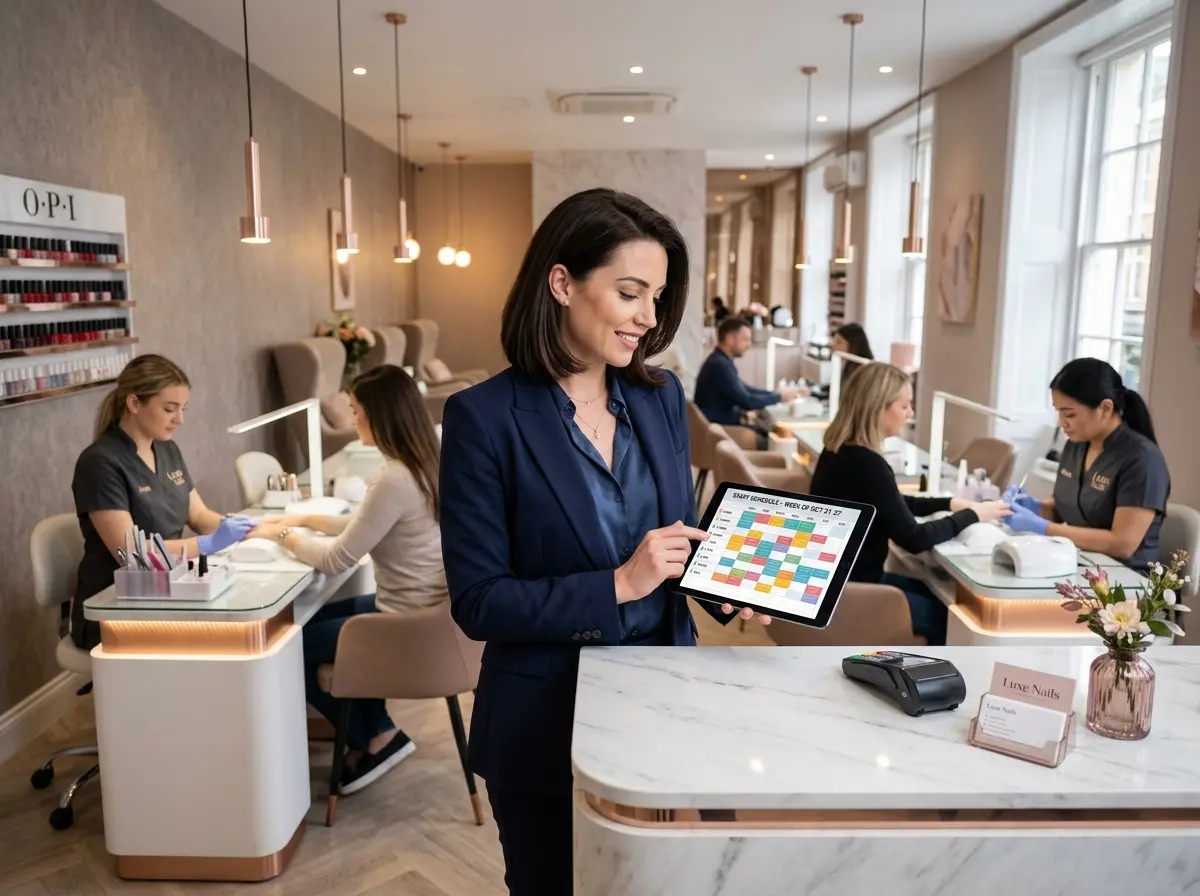
Introduction: Because "Wing It" Is Not a Scheduling Strategy
Congratulations — your nail salon is growing. Clients are booking out weeks in advance, your team has expanded beyond just you and your best friend with a gel lamp, and you're starting to realize that the sticky note system you've been using to track appointments is… not scaling well. Shocking, we know.
Managing a multi-staff scheduling system is one of the most critical — and most underestimated — operational challenges a growing nail salon faces. When it's just you, scheduling is simple. When you have five technicians, each with different specialties, availability windows, certification levels, and vacation requests, things get complicated fast. Double bookings happen. Clients get frustrated. Staff morale takes a hit. And suddenly you're spending more time managing a spreadsheet than actually running a business.
The good news? Building an efficient, scalable scheduling system is absolutely achievable — and it doesn't require a degree in logistics or a second mortgage to implement. This guide walks you through the key components of a multi-staff scheduling setup that actually works, so you can spend less time firefighting and more time doing what you love: building a salon your clients can't stop talking about.
Building the Foundation of Your Scheduling System
Define Your Service Menu and Time Blocks First
Before you can schedule anyone effectively, you need a crystal-clear understanding of how long each service actually takes — not the optimistic estimate you tell clients, but the real number, including setup and breakdown time. A basic manicure might take 30 minutes in theory, but factor in consultation, polish dry time, and cleaning the station, and you're looking at 45. Nail art? That could be anywhere from an additional 15 minutes to an additional two hours depending on complexity.
Map out every service you offer with realistic time blocks and assign them to the technicians who are certified or experienced enough to perform them. This is the backbone of your scheduling architecture. Without it, you'll have clients booking a 3D acrylic nail set with a technician who only does basic pedicures, and everyone will have a bad day.
Create Staff Profiles with Specialties and Availability
Each member of your team should have a detailed profile in your scheduling system that includes their working hours, days off, service specialties, and any constraints — like a technician who can only do back-to-back appointments for a maximum of four hours before needing a break. Most modern scheduling platforms allow you to build these profiles in and use them to automatically filter which staff members appear as available for a given service type and time slot.
This isn't just about efficiency — it's about fairness. When scheduling is transparent and rule-based, staff feel less like they're getting the short end of the stick on bookings, and more like the system is working with everyone equally. That matters for retention, and in the nail industry, keeping good technicians is everything.
Choose the Right Scheduling Software for Your Salon
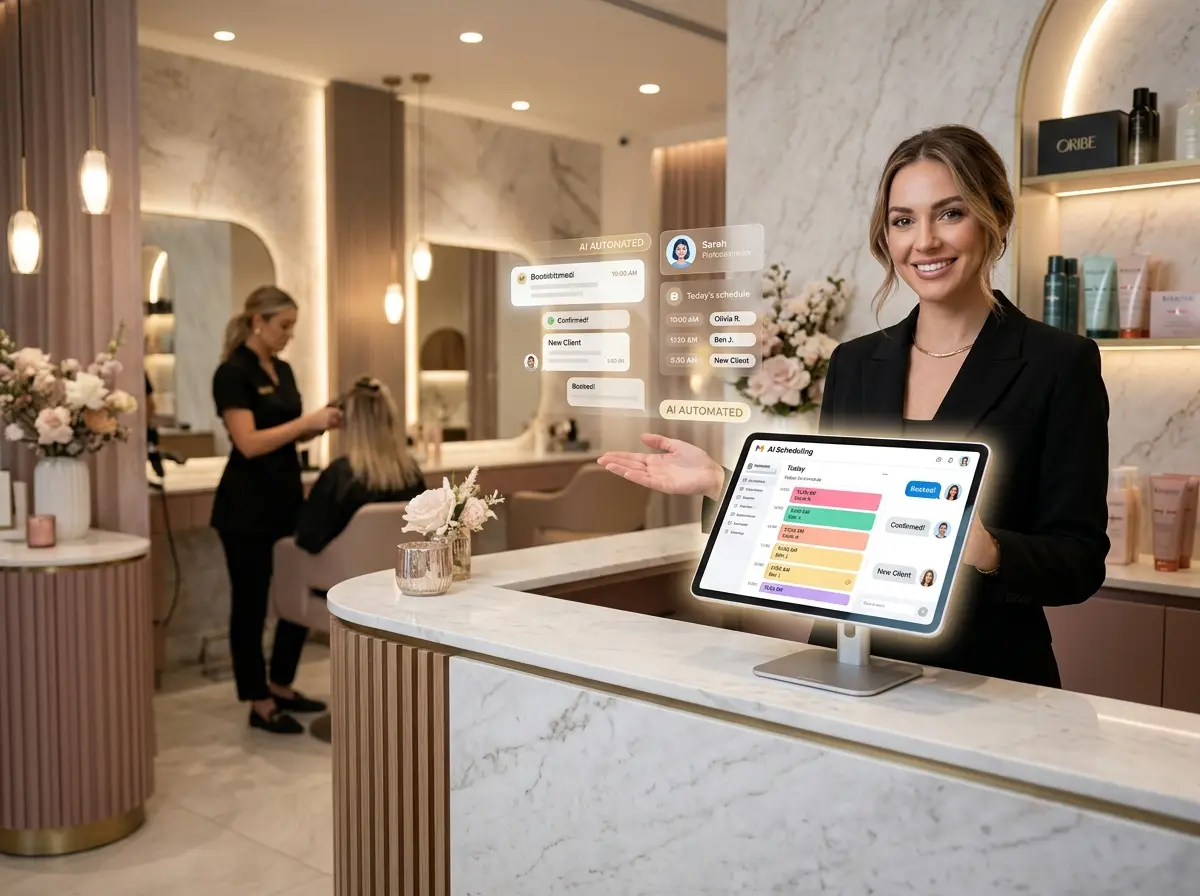
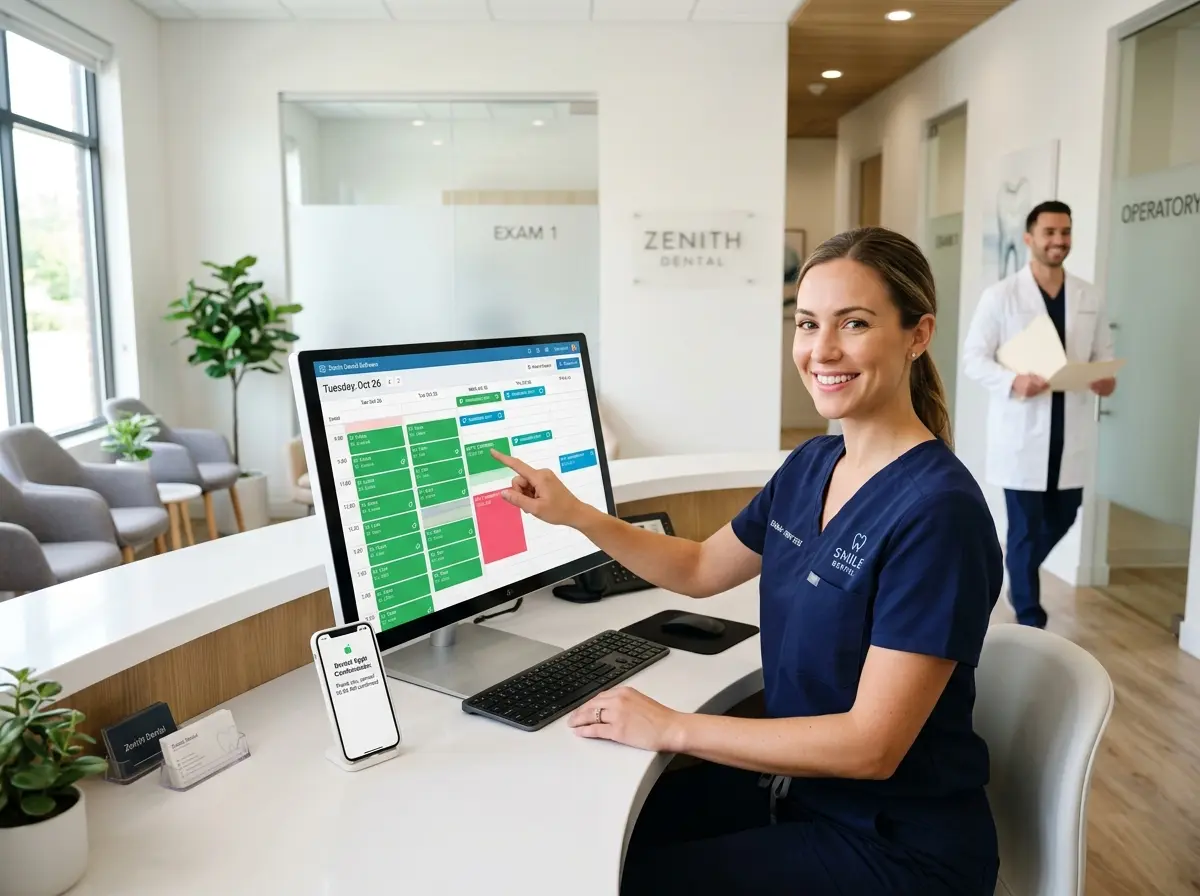
There's no shortage of scheduling platforms built specifically for salons and spas. Tools like Vagaro, Fresha, Boulevard, and Acuity Scheduling are popular options that support multi-staff environments, online booking, and automated reminders. When evaluating your options, prioritize features like: individual technician calendars, client history tracking, automated appointment confirmation and reminder texts, waitlist management, and integration with your point-of-sale system.
Don't just grab the cheapest option or the one with the prettiest interface. Think about where your salon will be in two years and choose a platform that can grow with you. Many salon owners regret switching platforms mid-growth because migrating client data is about as fun as it sounds.
Reducing Friction at Booking and Front Desk
Automate the Appointment Confirmation Loop
One of the biggest time-wasters in a busy salon is the back-and-forth of confirming appointments. Phone tag is a productivity killer. Automated confirmation texts and emails — sent immediately at booking and again 24–48 hours before the appointment — dramatically reduce no-shows and eliminate the need for a staff member to spend an hour calling clients every morning. Salons that implement automated reminders report no-show rate reductions of 30–50%, which is not a number to take lightly when each appointment slot represents real revenue.
How Stella Can Take Pressure Off Your Front Desk
Here's where things get interesting for salon owners juggling reception duties alongside everything else. Stella is an AI robot receptionist that can handle both walk-in greetings at your physical location and phone calls around the clock. If a client walks in and your front desk is buried, Stella is right there to engage them, answer questions about services, share current promotions, and keep the experience feeling professional and welcoming — not chaotic.
On the phone side, Stella answers calls 24/7 with the same knowledge your team uses in person. She can field common questions about hours, pricing, and availability, forward calls to a human when needed, and even take voicemails with AI-generated summaries pushed directly to you. For a growing salon where the phone rings constantly and someone always seems to be elbow-deep in an acrylic set, this kind of coverage is genuinely game-changing. Her built-in CRM also lets you track client interactions and build detailed profiles, which pairs nicely with a solid scheduling setup.
Managing Scheduling Conflicts and Staff Dynamics
Establish a Clear Protocol for Booking Conflicts
Even the best scheduling systems hit snags. A technician calls in sick. A client requests a specific person who's already fully booked. An appointment runs long and throws off the entire afternoon. The difference between a salon that handles these situations gracefully and one that descends into chaos is a pre-established conflict protocol — not improvisation in the moment.
Define your rules in advance: How far in advance can staff request time off? Who has the authority to reassign a client? What's the communication chain when someone calls out sick? When these answers exist before the problem occurs, your team can execute without waiting on you to make every micro-decision. That's how you stop being the bottleneck in your own business.
Balance the Books Fairly Across Your Team
If you have a star technician who gets 80% of the premium bookings while newer staff sit idle, you'll start losing people — and eventually, you'll lose that star technician too, because burnout is real. Scheduling equity is about more than fairness; it's about building a sustainable team culture. Use your scheduling software's reporting features to regularly review booking distribution across staff. Are certain technicians consistently overbooked? Are others underutilized? Adjust how you weight online booking availability to create a more even distribution where possible, while still honoring client preferences.
Train Your Team to Participate in the System
A scheduling system is only as good as the people using it. Train your staff to update their own availability, flag scheduling conflicts early, and follow the booking protocols you've established. When team members feel ownership over the process rather than being passive recipients of a schedule that appears out of nowhere, compliance improves dramatically. Consider holding a short monthly check-in where scheduling friction points are discussed openly — what's working, what isn't, and what tweaks might help. This keeps the system evolving with your business instead of calcifying into something everyone works around.
Quick Reminder About Stella
Stella is an AI robot employee and phone receptionist that greets customers in-store, answers calls 24/7, promotes deals, handles intake forms, and manages a built-in CRM — all for just $99/month with no upfront hardware costs. She's the reliable front-of-house presence that never calls in sick and never misses a call. For a growing nail salon where every client interaction matters, she's worth knowing about.
Conclusion: Stop Scheduling by Vibes, Start Scheduling by Design
Building a multi-staff scheduling system for your growing nail salon isn't glamorous work, but it is foundational. The salons that scale successfully aren't necessarily the ones with the best nail artists — they're the ones with the strongest operational infrastructure supporting those artists. When your scheduling is airtight, your staff is less stressed, your clients are better served, and you can actually focus on growth instead of damage control.
Here's where to start this week:
- Audit your current service menu and assign realistic, consistent time blocks to every offering.
- Build out staff profiles in your scheduling software with specialties, availability, and constraints clearly defined.
- Activate automated reminders if you haven't already — your no-show rate will thank you.
- Document your conflict protocols so your team knows exactly what to do when things go sideways.
- Review booking distribution monthly to keep workloads balanced and your team happy.
Your clients chose your salon because of the experience you provide. Make sure your back-end operations are strong enough to deliver that experience consistently — even when things get busy, complicated, or just plain unpredictable. Because in a growing salon, unpredictable is basically just Tuesday.