You've Got a New Subscriber — Now What?
Congratulations! Someone just handed over their email address to your retail business. That's not nothing — in a world overflowing with promotional emails, spam, and newsletters nobody remembers signing up for, earning a subscriber is a small but meaningful victory. The question is: what do you do with it?
If your answer is "send them a coupon and hope for the best," you're leaving serious money on the table. A well-crafted email welcome series is one of the highest-ROI tools available to retail businesses, and yet most small business owners either skip it entirely or throw together something so forgettable it might as well be digital wallpaper. According to research from Omnisend, welcome emails generate 4x more opens and 5x more clicks than standard promotional emails. That's not a typo.
The good news? You don't need a marketing degree or a team of copywriters to build an effective welcome series. You need a plan, a little personality, and about three to five emails. This guide walks you through exactly how to do it — practically, professionally, and without putting your new subscribers to sleep.
Building Your Welcome Series From the Ground Up
Email 1: The Warm Welcome (Send Immediately)
The first email should go out the moment someone subscribes — ideally within minutes. This is your first impression, so don't waste it on a wall of text about your company's founding story. Nobody asked for that yet.
Keep Email 1 focused on three things: a genuine welcome, delivery of whatever you promised (a discount code, a free guide, early access — whatever incentivized the signup), and a brief, human introduction to what your brand is about. Think of it like greeting a new customer who just walked into your store. You wouldn't immediately launch into a 10-minute monologue about your inventory history. You'd smile, say hello, and make them feel like they're in the right place.
A good subject line for Email 1 might be something like "Welcome! Here's your 15% off — plus a few things you should know." Keep the tone warm, the design clean, and the call-to-action obvious. One CTA. Not six. One.
Email 2: The Brand Story (Send 1–2 Days Later)
Now you've earned a little more of their attention. Email 2 is your chance to tell your story — but briefly and with purpose. Why does your business exist? What makes you different from the big box store down the street or the endless scroll of online retailers? This doesn't have to be dramatic or overly polished. In fact, authenticity tends to outperform perfection here.
Maybe you're a family-owned boutique that sources locally. Maybe you started your shop because you couldn't find what your customers needed anywhere else. Whatever your story is, make it real and make it relevant to the subscriber. End with a soft CTA — invite them to browse a category, follow you on social, or check out your bestsellers. You're nurturing the relationship, not closing a sale.
Email 3: Social Proof and Best Sellers (Send 3–4 Days Later)
By Email 3, a well-engaged subscriber is warming up. This is the time to show them what your community already loves. Feature your top-selling products, highlight a few glowing customer reviews, or share a user-generated photo if you have them. Social proof is remarkably persuasive — people want to know that others have made the same leap and loved it.
You can also use this email to address common hesitations upfront: your return policy, shipping speed, or any guarantees you offer. Removing friction before the first purchase is a smart move that many retailers overlook entirely.
Tools and Support That Make the Whole Thing Easier
Automating Your Series Without Losing Your Mind
Most email marketing platforms — Klaviyo, Mailchimp, ActiveCampaign, and others — make it straightforward to automate a welcome series. You set it up once, and it runs on its own every time someone new subscribes. That said, the challenge for many retail business owners isn't the email platform itself. It's finding the time and bandwidth to build the series while also running an actual business.
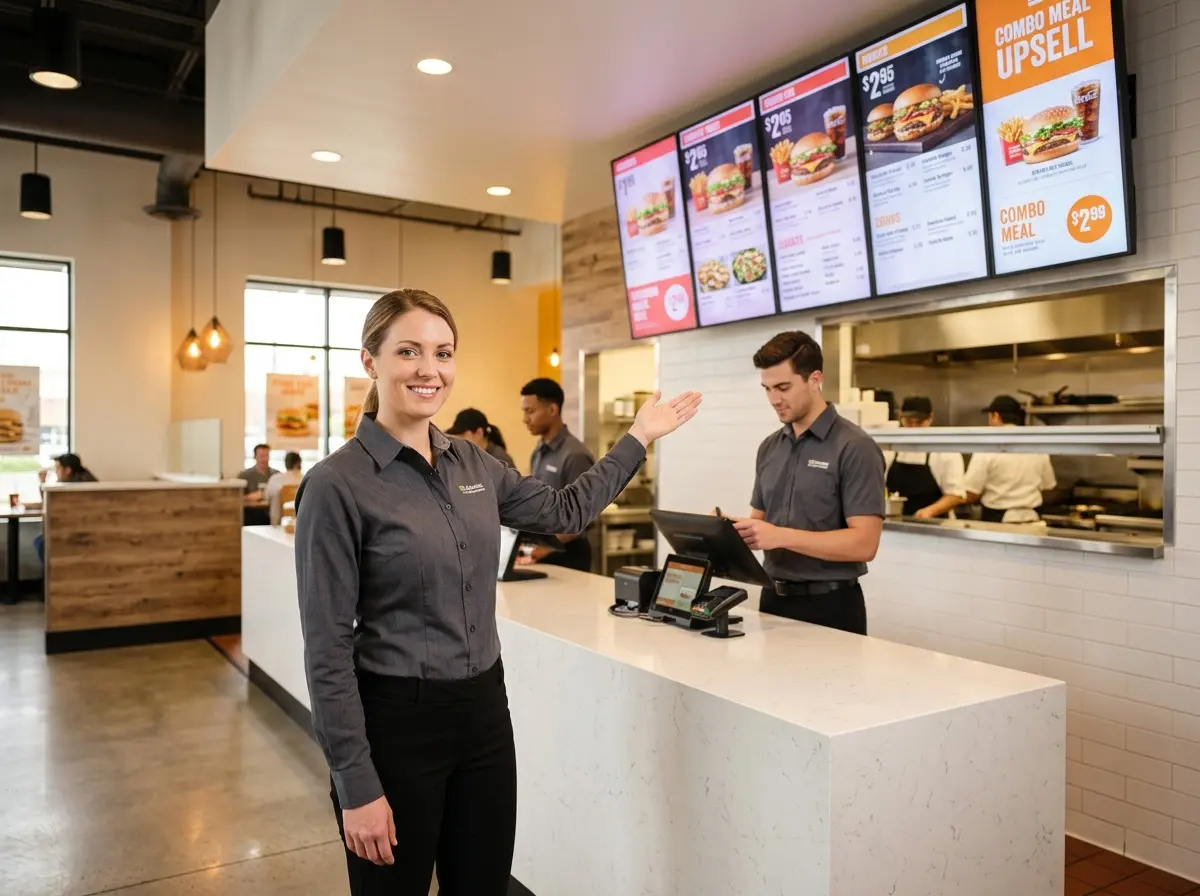
That's where smart tools come in. Stella, the AI robot employee and phone receptionist, can help retail businesses collect subscriber information directly — whether through conversational intake forms at her in-store kiosk, on your website, or during phone calls. New contacts are automatically organized in her built-in CRM, complete with custom fields, tags, and AI-generated profiles. So instead of scrambling to manually collect and sort customer data, your list builds itself while Stella handles the front-line interactions. That's one less bottleneck between you and a thriving email list.
Writing Emails That Actually Get Read
Subject Lines Are Half the Battle
You could write the most brilliant email in the history of retail marketing, and it won't matter if nobody opens it. Subject lines are the gatekeepers, and they deserve more attention than most business owners give them. The sweet spot is a subject line that's specific, curiosity-inducing, and honest — without resorting to ALL CAPS desperation or the dreaded "Open Me!!!" energy.
A few principles worth following: keep subject lines under 50 characters for mobile readability, use the subscriber's first name when it feels natural (not robotically), and test two versions when your list is large enough to make testing worthwhile. Even small improvements in open rates compound significantly over time.
Tone, Length, and the Art of Not Being Boring
Here's the uncomfortable truth: most retail welcome emails are boring. They're generic, over-designed, and read like they were written by a committee. The emails that perform best tend to have a distinct voice — something that feels like a real human wrote them with a specific reader in mind.
For length, shorter is almost always better in a welcome series. Aim for emails that take under two minutes to read. Use short paragraphs, a clear visual hierarchy, and one strong call-to-action per email. If you find yourself writing a third paragraph that starts with "Additionally," stop. Cut it. Your subscribers will thank you, even if silently.
Email 4 and 5: The Gentle Nudge and the Re-Engagement Check
Emails 4 and 5 are optional but effective for businesses that want to extend the series. Email 4 can introduce a time-sensitive offer — "Your welcome discount expires in 48 hours" — which creates urgency without being manipulative. Email 5, sent about a week after signup, is a light re-engagement check: something like "Still browsing? Here's what's new this week." It keeps the conversation going without overwhelming new subscribers who haven't purchased yet.
Not everyone will convert during the welcome series, and that's perfectly fine. The goal of the series isn't just immediate sales — it's building a foundation of familiarity and trust that pays off over months and years of future marketing.
Quick Reminder About Stella
Stella is an AI robot employee and phone receptionist designed for businesses of all sizes — from physical retail stores to online-only operations. She greets customers in-store, answers phone calls 24/7, promotes deals and specials, and collects customer information that feeds directly into her built-in CRM. At just $99/month with no upfront hardware costs, she's one of the more surprisingly affordable ways to keep your business running smoothly at every customer touchpoint.
Your Next Steps: Start Simple, Then Refine
Building an email welcome series doesn't require perfection — it requires a start. If you currently have zero automated welcome emails going out to new subscribers, even a single well-written welcome message is a dramatic improvement. From there, you can layer in the additional emails over time as you learn what resonates with your audience.
Here's a simple action plan to get moving:
- Choose your email platform if you haven't already — Klaviyo is a strong choice for retail, but Mailchimp works well for smaller lists on a tighter budget.
- Map out your 3–5 email sequence with a clear goal for each email before you write a single word.
- Write Email 1 first and get it live. Momentum matters more than a perfect five-email series that never launches.
- Review your subscriber collection points — your website, in-store signage, and phone interactions — to make sure you're capturing contacts consistently.
- Set a 30-day reminder to review open rates and click rates, then adjust subject lines or content based on what the data tells you.
Your new subscribers signed up because they were interested. A thoughtful, well-timed welcome series is simply your way of proving that their interest was well-placed. Do it right, and you won't just have a subscriber — you'll have a customer who sticks around.