When the Phone Rings After Hours, Does Anyone Answer?
Here's a scenario that will feel painfully familiar to anyone running a pediatric practice: it's 6:47 PM on a Tuesday. A worried parent — let's call her Rachel — just got off a long shift, finally sat down to grab five minutes of quiet, and remembered she needs to schedule her son's annual well-visit before the school deadline. She picks up the phone, dials your office, and gets... voicemail. She hangs up, tells herself she'll call back tomorrow, and then absolutely does not call back tomorrow because life happens.
Meanwhile, your practice just lost a patient booking. Quietly. Invisibly. Without a single alarm going off to tell you about it.
This isn't a rare occurrence — it's a daily reality for medical practices across the country. According to research from the healthcare industry, up to 67% of patients who reach a voicemail do not leave a message, and a significant portion of those callers will simply move on to the next provider. For a pediatric practice that depends on new patient acquisition and retention, that's not just a missed call — it's a missed relationship, a missed revenue stream, and a missed opportunity to serve a family that genuinely needed you.
The good news? There's a smarter way to handle after-hours calls. Let's talk about how one busy pediatric practice turned their after-hours phone problem into a well-oiled lead capture system — and what you can steal from their playbook.
The After-Hours Call Problem Is Bigger Than You Think
The Hidden Cost of Missed Calls
Most practice owners know missed calls are a problem in a vague, uncomfortable sort of way. But when you actually sit down and do the math, the numbers get surprisingly uncomfortable. If your practice misses even five new patient inquiry calls per week — a conservative estimate for a busy practice — and your average patient lifetime value is somewhere around $1,200 to $2,000, you're looking at potentially tens of thousands of dollars in lost revenue annually. And that's before you factor in the referrals those patients might have sent your way.
After-hours calls aren't just a volume problem either. They tend to be high-intent calls. Parents calling at 7 PM aren't casually browsing — they're motivated, they've carved out time during the chaos of their evening, and they want to get something done. Failing to capture that moment of motivation is a particularly costly miss.
Why Traditional Voicemail Fails Practices
Voicemail feels like a safety net, but in practice it functions more like a polite suggestion. Even when parents do leave a message, there's no guarantee of a timely callback, no way to triage urgency, and no mechanism to collect the information your front desk team needs to prepare for that conversation. Your staff arrives the next morning to a queue of voicemails, each requiring a full phone tag cycle before a single appointment gets booked.
There's also the emotional side of this equation. Parents calling a pediatric office outside of business hours are often anxious — about a sick child, an upcoming procedure, or a developmental concern. A cold, generic voicemail greeting doesn't exactly inspire confidence that they've landed with the right practice. First impressions matter, and "please leave a message after the tone" is not a particularly inspiring one.
What a Callback System Actually Needs to Do
An effective after-hours callback system needs to do more than just record a name and number. It should capture why someone is calling, collect the information necessary to make the follow-up call productive, set appropriate expectations with the caller about when they'll hear back, and alert the right staff member in real time so nothing slips through the cracks. Ideally, it should also feel warm and human — not like filling out a DMV form at midnight.
How One Pediatric Practice Fixed the Problem
Building a Smarter After-Hours Flow with AI
A mid-sized pediatric practice with three providers and a front desk team of four found themselves in exactly this situation. Their phones were well-staffed during business hours, but from 5 PM onward, they were effectively invisible. Their office manager estimated they were missing 20 to 30 calls per week during off-hours, with no real visibility into how many of those were new patient inquiries versus existing patients versus general questions.
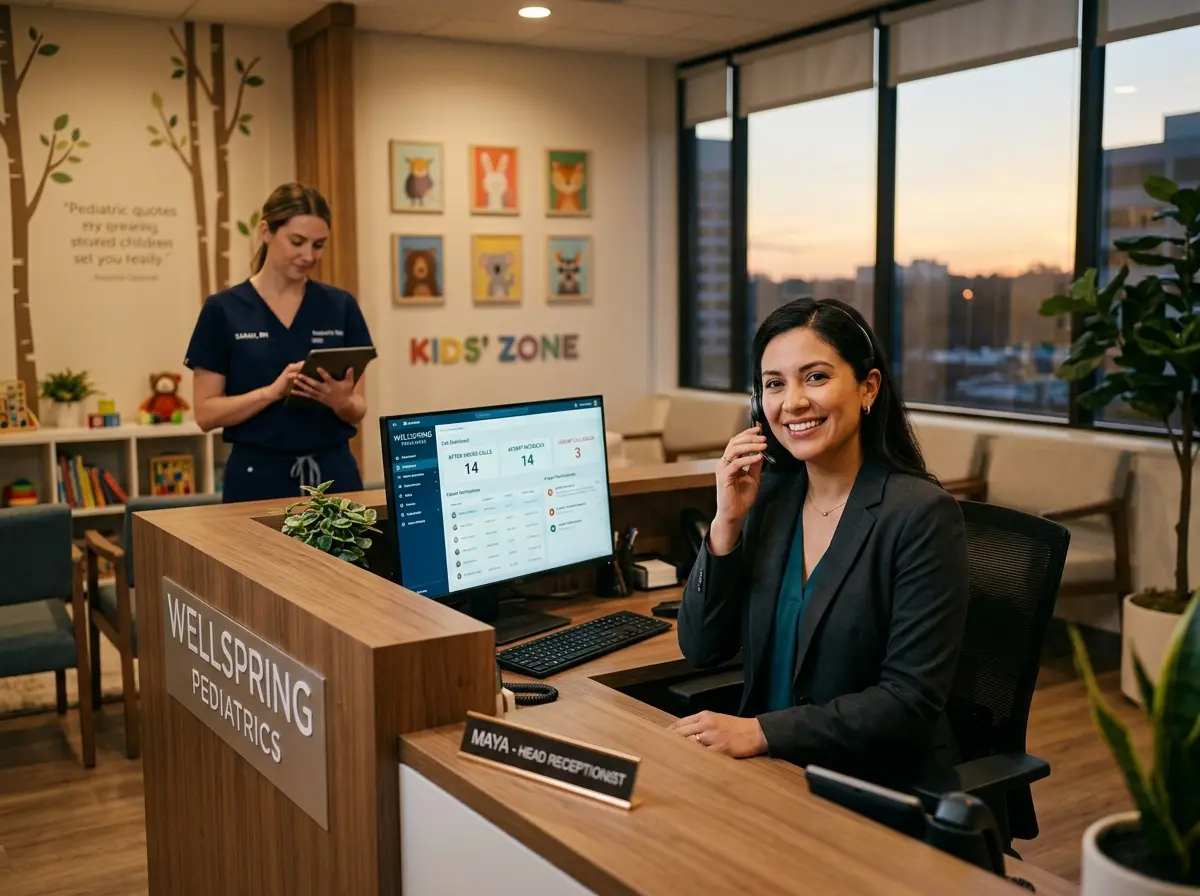
They implemented an AI-powered phone receptionist — Stella — to handle all after-hours calls. Rather than routing callers to a static voicemail box, Stella answers the phone naturally, explains that the office is currently closed, and immediately engages the caller in a conversational intake process. She collects the caller's name, contact information, the nature of their inquiry, and any relevant details (like the child's age or reason for the visit). She generates an AI-powered summary of the interaction and sends an immediate push notification to the designated on-call manager or office lead — even at 9 PM on a Friday.
Stella's built-in CRM automatically creates a contact record for new callers, tags the interaction appropriately (new patient inquiry, billing question, sick visit, etc.), and queues the callback for the next business morning. The front desk team arrives each day with a clean, prioritized list of after-hours contacts, complete with summaries — not a pile of fragmented voicemails to decode.
The Results Were Hard to Argue With
Within the first two months, the practice reported a significant drop in unreturned after-hours contacts and, more importantly, a measurable increase in new patient conversions from callbacks. The reason wasn't magic — it was simply that the callbacks were faster, better informed, and more likely to actually happen. When your staff already knows that a caller is a parent of a 4-year-old looking to schedule a new patient well-visit before kindergarten enrollment closes, that call gets returned with purpose and confidence rather than uncertainty.
Designing Your Own After-Hours Callback System
Step One: Audit What's Actually Happening Right Now
Before you can fix the problem, you need to understand its shape. Pull your call logs for the past 30 days and identify how many calls came in outside of business hours. If your current system doesn't give you that visibility, that's already a red flag worth addressing. Categorize what you can — missed calls, voicemails left, voicemails that resulted in a callback, and callbacks that converted into appointments. Even a rough picture will be eye-opening.
Step Two: Create a Clear Callback Protocol
A callback system is only as good as the human process behind it. Define exactly who is responsible for returning after-hours inquiries, what the expected response time is (for a pediatric practice, same-morning callback for overnight contacts is a reasonable and achievable standard), and what information your staff needs to make those calls productive. Build this into your onboarding and training so it doesn't depend on any one person's memory or goodwill.
Critically, make sure whoever handles callbacks has access to the intake information collected during the after-hours interaction. A callback where your staff member says "Hi, I'm returning your call from last night — what was this regarding?" is only marginally better than no callback at all. Preparation signals professionalism, and professionalism builds trust with new families.
Step Three: Set Caller Expectations Transparently
One underrated element of a great after-hours experience is simply telling the caller what to expect. If your AI receptionist or after-hours system can communicate something like, "Your information has been captured and a member of our team will reach out by 9 AM tomorrow morning," you've turned a potentially frustrating experience into a manageable one. Parents are reasonable — they don't necessarily expect someone to answer at 8 PM. They do expect to feel heard, and they expect follow-through. Deliver on both, and you're already ahead of most competing practices.
Quick Reminder About Stella
Stella is an AI robot employee and phone receptionist built for businesses of all types — including medical practices that need reliable, around-the-clock phone coverage without adding headcount. She answers calls 24/7, collects caller information through conversational intake forms, generates AI-powered contact summaries, and pushes real-time alerts to your team — all for $99/month with no upfront hardware costs. For practices with a physical location, she's also available as a friendly in-office kiosk that greets patients and answers common questions, freeing up your front desk staff for higher-value work.
Stop Letting After-Hours Calls Disappear Into the Void
The after-hours callback problem is solvable. It doesn't require a massive budget, a staffing overhaul, or some complex enterprise software implementation. It requires a clear-eyed look at what's currently happening to your after-hours calls, a commitment to capturing and acting on that information, and the right tools to make the process consistent and sustainable.
Here's what to do next:
- Audit your last 30 days of after-hours call activity. Get a baseline understanding of the volume and nature of what you're currently missing.
- Define your callback protocol — who owns it, what the timeline is, and what information is needed to make it effective.
- Implement an AI-powered intake system so that every after-hours caller gets a responsive, professional experience and every lead gets captured with the context your team needs.
- Measure the improvement. Track after-hours contacts, callback completion rates, and new patient conversions over a 60-day period and let the data tell the story.
The families calling your practice after hours are motivated, they're trusting you with something important to them, and they deserve better than a voicemail black hole. A well-designed callback system is one of the highest-return, lowest-effort improvements a pediatric practice can make — and the practices that implement it first are the ones that those families will remember and recommend.
Your competition is probably still hoping parents will call back in the morning. You can do better than hope.