Your Phone System Is Either Selling for You — or Against You
Let's be honest: most business phone systems are about as exciting as hold music from 2003. Customers call, they wait, they get transferred, they wait some more, and if they're lucky, they talk to someone who may or may not know the answer to their question. Meanwhile, you're leaving money on the table with every single call that goes unanswered, mishandled, or ended abruptly because your front desk person was juggling seventeen other things.
Here's the uncomfortable truth — your phone system is already a sales tool. The question is whether it's working for you or against you. Every inbound call represents a customer who was interested enough to pick up the phone. That's not nothing. That's a warm lead walking straight into your lap. What happens next is entirely up to how well your system is set up to receive them.
The good news? Turning your phone system into a genuine revenue driver doesn't require a complete overhaul or a dedicated call center team. It requires strategy, consistency, and — increasingly — the right technology. Let's break down exactly how to do it.
The Foundation: What a Sales-Optimized Phone Experience Actually Looks Like
Before you can convert calls into customers, you need to understand what separates a forgettable phone interaction from one that actually moves the needle. Spoiler: it's not about having the snappiest hold music (though please, for everyone's sake, update it).
Answer Every Call Like It's Your Best Customer Calling
According to various customer experience studies, roughly 85% of callers who don't reach you on the first try will not call back. Let that sink in. That's not a lost call — that's a lost customer, possibly a lost referral, and definitely a missed sale. The standard for a sales-optimized phone experience starts with one non-negotiable: answer the phone.
This sounds obvious, but the reality is that most small and mid-sized businesses miss a significant portion of their calls during peak hours, after hours, or simply because the person at the front desk is busy helping someone else. Every one of those missed calls is a competitor's gain. A sales-ready phone system ensures coverage isn't dependent on whether Karen took her lunch break at noon or 1 p.m.
Lead With Value, Not Logistics
Most businesses treat phone calls as a logistics exercise — answer, take a message, transfer, repeat. But every call is an opportunity to reinforce your value proposition. Train your team (or configure your system) to go beyond just answering the question. If someone calls asking about your hours, that's also an opportunity to mention today's special, your loyalty program, or the new service you just launched. Informational calls can become transactional moments if you're intentional about it.
Consistency Is the Silent Salesperson
One of the most underrated aspects of phone-based sales is consistency. A customer who calls on a Tuesday morning should get the same quality of experience as one who calls on a Saturday evening. Inconsistent experiences erode trust, and trust is the currency of sales. Building a reliable, repeatable phone experience — whether through scripting, technology, or both — ensures your brand shows up the same way every time, regardless of who (or what) picks up.
Smart Technology That Does the Heavy Lifting
Here's where things get interesting — and where a lot of business owners are still sleeping on a major opportunity.
Let AI Handle What Humans Shouldn't Have To
Stella, the AI robot employee and phone receptionist, is built specifically for this gap. She answers calls 24/7 with full knowledge of your products, services, hours, promotions, and policies — no training lag, no bad days, no "let me put you on hold." For businesses with a physical location, she also greets customers in-store as a human-sized kiosk, proactively engaging walk-ins and promoting current deals without ever needing a coffee break.
What makes Stella particularly powerful as a sales tool is her ability to upsell and cross-sell conversationally. She doesn't just answer questions — she recommends related products, highlights active promotions, and collects customer information through built-in intake forms during the call itself. That data flows directly into her built-in CRM, complete with AI-generated customer profiles, custom fields, tags, and notes. So even if a call doesn't convert immediately, you've captured the lead and have everything you need for a smart follow-up. All of this starts at just $99/month with no upfront hardware costs — which, frankly, is less than most businesses spend on paper for their front desk.
Turning Inbound Calls Into Conversion Opportunities
Answering the phone consistently is the baseline. Actually converting those calls into revenue requires a more deliberate approach. Here's how to engineer your phone interactions for sales outcomes.
Ask the Right Questions (and Actually Listen)
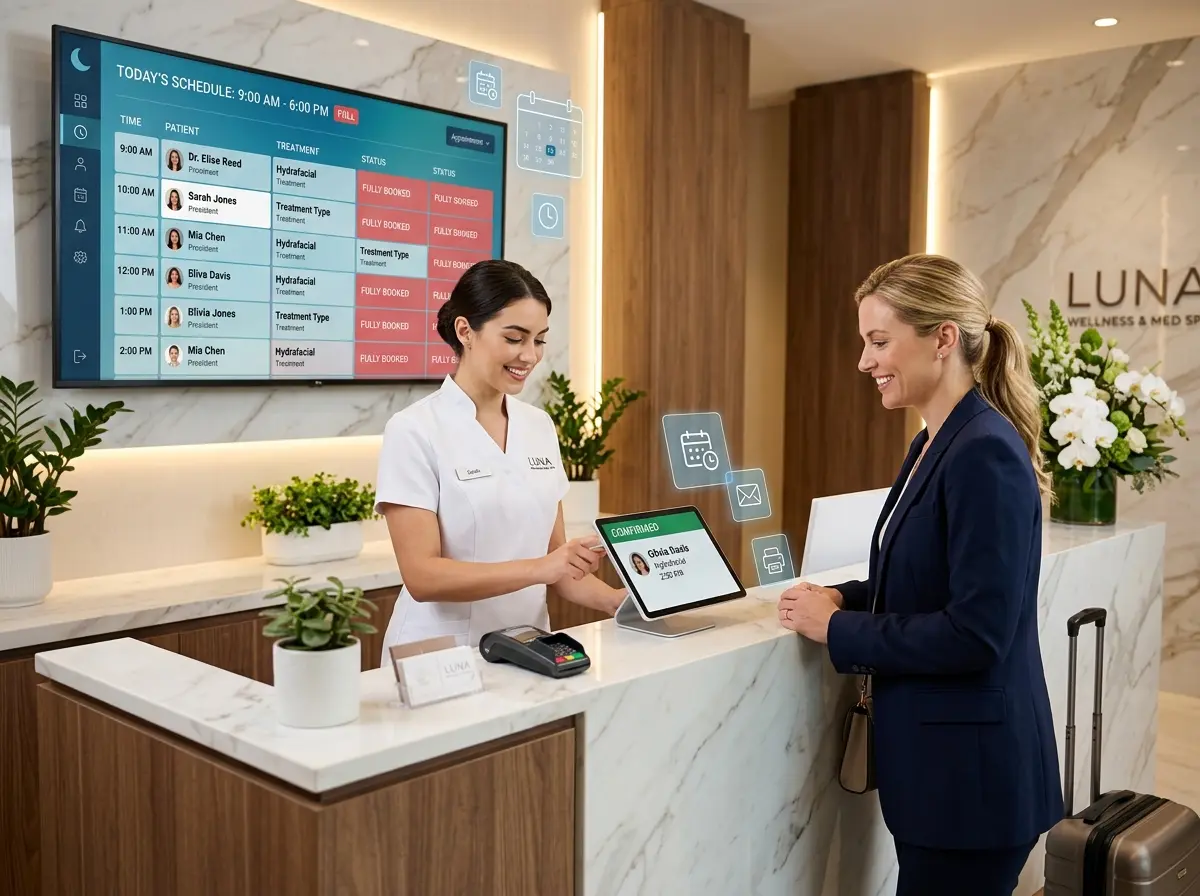
Whether it's a human or an AI handling your calls, the most effective phone interactions are conversational — not transactional. Instead of simply answering what was asked and hanging up, a well-designed call flow asks clarifying questions that uncover deeper needs. A customer calling a spa to ask about a facial might actually be looking for a full relaxation package. A restaurant caller confirming a reservation might be open to hearing about your private dining options. The key is building a natural flow that creates space for these discoveries. This is the difference between order-taking and actual selling.
Use Your Phone System to Promote, Not Just Inform
Your phone greeting is prime real estate. Before a call even connects to a human or AI, a well-crafted message can plant seeds. Mention your current promotion. Tease your newest service. Remind callers about your referral program. Done well, this doesn't feel like an ad — it feels like helpful information from a business that's on top of things. Similarly, during call wrap-ups, a simple "Before you go, did you know we're running a special on X this month?" can meaningfully increase average transaction value over time. Small prompts, repeated consistently, compound into real revenue.
Follow Up Like You Mean It
The fortune, as they say, is in the follow-up — and yet most businesses treat a completed call as a closed chapter. It's not. Whether a call resulted in a booking, a question, or a "I'll think about it," the real sales opportunity often lives in what happens next. Collect caller information (with permission), log notes about the conversation, and build a follow-up sequence that's relevant to what they discussed. A gym that follows up with a prospect who asked about membership pricing — with a timely, personalized message — will close more sales than one that simply waits for the prospect to call back. They won't.
Quick Reminder About Stella
Stella is an AI robot employee who works as both an in-store kiosk and a 24/7 phone receptionist, answering questions, promoting deals, collecting leads, and managing customer data — all for $99/month. She's already being used across retail, restaurants, medical offices, salons, gyms, law firms, and more. If your phone system still relies entirely on human availability, it might be worth a conversation with a robot about that.
Stop Leaving Sales on the Table — Start Here
Transforming your phone system into a sales tool isn't a moonshot project. It's a series of deliberate, practical improvements that compound over time. Start by auditing what's actually happening on your calls today — are they being answered consistently? Are callers getting accurate, helpful information? Are promotions being mentioned? Is follow-up happening? Most businesses, if they're honest, will find gaps in at least two or three of these areas.
From there, take actionable steps:
- Ensure 100% call coverage — whether through staffing, call routing, or AI assistance. Missed calls are missed revenue, full stop.
- Build a call script or flow that naturally incorporates upsell prompts, promotion mentions, and open-ended discovery questions.
- Capture caller data and make follow-up a non-negotiable part of your sales process — not an afterthought.
- Review your call data regularly to understand what questions are being asked most frequently, which promotions are resonating, and where calls are dropping off.
- Leverage technology to remove the human bottlenecks that are costing you calls, consistency, and conversions.
Your phone is ringing right now — metaphorically speaking. The businesses that treat every call as a sales opportunity, not just an interruption, are the ones that grow. The rest are still updating their hold music and wondering why their conversion rates are flat. Don't be the rest.