Stop Flying Blind Into Every Appointment
Picture this: A new client walks into your spa. Your esthetician greets them warmly, sits them down, and then spends the first ten minutes of their appointment asking about allergies, skin conditions, previous treatments, and whether they've ever had a reaction to anything. The client is talking, the esthetician is scribbling, and the actual appointment hasn't even started yet. Meanwhile, the treatment room is sitting empty, your schedule is already running behind, and your client came in to relax — not fill out the equivalent of a medical school intake exam with a pen that's running out of ink.
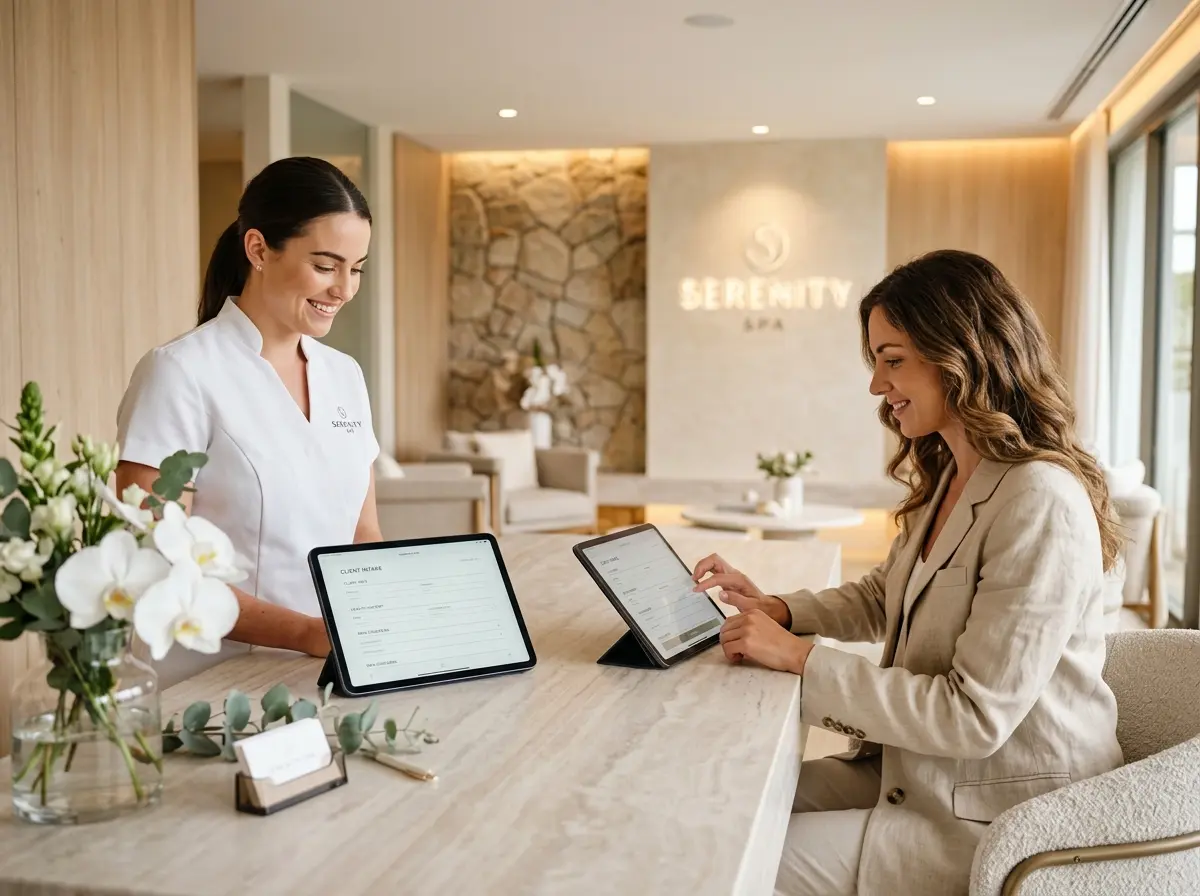
Here's the thing: that scenario is entirely avoidable. Digital intake forms sent before the appointment give you everything you need to know about a client before they ever walk through your door. No scrambling, no clipboards, no deciphering handwriting that looks like it was written during an earthquake. Just clean, organized client data ready for your team the moment the appointment begins.
If you're a spa owner still relying on paper forms or verbal intake at the start of sessions, this post is your gentle — but firm — nudge to modernize. Let's talk about how digital intake forms transform your client experience, protect your business, and make your team's lives significantly easier.
Why Digital Intake Forms Are a Game-Changer for Spas
The Real Cost of Doing It the Old Way
Paper intake forms aren't just inconvenient — they're actively costing you time and money. According to a study by the American Medical Association, administrative inefficiencies cost service businesses an average of 30 minutes per client interaction when intake is handled manually at the point of service. For a spa running eight appointments a day, that's four hours of lost productive time. Every. Single. Day.
Beyond time, paper forms create real liability issues. They get lost, damaged, or misread. A client notes a shellfish allergy in barely legible handwriting, your team misses it, and suddenly a relaxing afternoon becomes a very unrelaxing legal situation. Digital intake forms eliminate that risk by storing information clearly, consistently, and accessibly — where your team can actually read and reference it.
What You Should Actually Be Collecting
A good digital intake form for a spa goes well beyond "name and phone number." Depending on your services, you'll want to capture a range of details that help your team personalize every session. Think about collecting the following before the appointment:
- Health history: Allergies, skin sensitivities, medications, recent surgeries, or conditions like pregnancy, rosacea, or eczema that affect treatment options.
- Previous treatments: What services has this client had before? Where? Any reactions or concerns?
- Current skincare routine: Products they're using at home can affect how their skin responds to professional treatments.
- Goals for the visit: Relaxation? Anti-aging? Targeting a specific concern? Knowing their "why" lets your team deliver a more tailored experience.
- Preferred pressure, scents, or temperature: Small personalization details that turn a good appointment into a memorable one.
- Emergency contact and consent acknowledgments: Because legal protection isn't optional.
Collecting this before the appointment means your esthetician walks in prepared. They already know this client prefers unscented products, had a chemical peel six weeks ago, and is hoping to address hyperpigmentation. That's not just efficient — that's impressive.
How Timing and Delivery Make or Break the Experience
Sending an intake form matters. When and how you send it matters just as much. The sweet spot is 24 to 48 hours before the appointment — far enough in advance that clients have time to fill it out thoughtfully, but close enough that it feels relevant and timely. Sending it the moment they book is also effective, especially for new clients who are already engaged with your brand at that moment.
The delivery method should meet clients where they are. A text with a direct link has a significantly higher completion rate than an email — SMS open rates hover around 98% compared to email's average of 21%. Make the form mobile-friendly, keep it concise, and use plain language. The goal is completion, not comprehensiveness for its own sake. A form that takes 12 minutes to fill out will get abandoned. One that takes three minutes will get done.
Letting Technology Do the Heavy Lifting
Automating Intake Without Losing the Human Touch
The best digital intake systems don't just collect data — they store it, organize it, and make it actionable. When a returning client books their fourth visit, your team shouldn't have to ask whether they still have a lavender sensitivity. That information should already be in your system, tagged, and accessible.
This is where tools like Stella come in handy for spa owners who want a more seamless front-end experience. Stella handles intake forms conversationally — whether over the phone, through a web form, or at an in-store kiosk — and stores everything directly in her built-in CRM with custom fields, tags, and AI-generated client profiles. So when a new client calls to book, Stella can walk them through intake questions naturally during the call, log their responses, and have that information ready for your team before the appointment ever starts. For spas with a physical location, her kiosk presence means walk-in clients can complete intake on the spot without monopolizing your front desk staff. It's a practical way to eliminate the clipboard without sacrificing the data.
Turning Intake Data Into Better Client Relationships
Using History to Personalize Every Visit
The magic of digital intake isn't just the form itself — it's what you do with the information afterward. A well-maintained client history transforms how your team interacts with returning clients. When your esthetician can glance at a profile and see that a client had a deep tissue massage last month, has been managing stress-related tension headaches, and typically books a 90-minute session — they can proactively suggest complementary add-ons, adjust their approach, and create a genuinely personalized experience.
This isn't just good service. It's smart business. Research from Accenture found that 91% of consumers are more likely to shop with brands that recognize, remember, and provide relevant offers and recommendations. Personalization drives loyalty, and loyalty drives revenue. A client who feels seen and understood doesn't just come back — they bring their friends.
Protecting Your Business Legally and Professionally
Client intake forms are also your first line of legal defense. Documented health history, signed consent forms, and clearly acknowledged contraindications protect you if a client ever claims they weren't warned about a potential reaction or risk. Digital records are time-stamped, harder to dispute, and far easier to retrieve than a paper form shoved in a filing cabinet from 2019.
Make sure your digital intake includes explicit consent language for any treatments that carry risk — chemical exfoliants, microneedling, waxing near sensitive areas, and so on. Have your legal language reviewed by a professional, and make sure clients are actively checking a box rather than passively scrolling past it. A checkbox clicked and logged is worth considerably more in a dispute than a signature no one can find.
Using Intake Data to Improve Your Offerings Over Time
Here's an underrated benefit: aggregated intake data tells you a lot about your client base. If you start noticing that a significant portion of new clients list acne or hyperpigmentation as their primary concern, that's a signal. Maybe it's time to expand your targeted treatment menu, train staff on additional techniques, or develop a product bundle that speaks directly to that need. Intake data isn't just useful for individual appointments — it's a window into your market that most spa owners are leaving completely unopened.
A Quick Reminder About Stella
Stella is an AI robot employee and phone receptionist designed for businesses like yours — available as a friendly in-store kiosk and as a 24/7 phone receptionist that answers calls, collects client information, promotes your services, and manages it all through a built-in CRM. She starts at just $99/month with no upfront hardware costs and no learning curve steep enough to require a full IT department. Whether you're running a single-location day spa or managing multiple service providers, she's built to keep your front end running smoothly so your team can focus on what they actually do best.
Your Next Steps Start Before the Next Appointment
If you take nothing else from this post, take this: the client experience begins long before anyone walks through your door. The intake process is your first impression, your legal protection, your personalization engine, and your business intelligence tool — all rolled into one. Treating it like an afterthought is leaving real money, real loyalty, and real professionalism on the table.
Here's a practical action plan to get started:
- Audit your current intake process. How long does it take? Where does the data live? Is it being used after the appointment ends?
- Choose a digital intake tool that integrates with your booking system and stores data in a way your team can actually access and use.
- Build your form thoughtfully. Include health history, treatment goals, consent language, and personalization details — but keep it under five minutes to complete.
- Automate the delivery. Set up automated text or email sends triggered by new bookings so no client slips through without completing intake.
- Train your team to use the data. The form is only as valuable as what happens with it. Make reviewing client history before each appointment a non-negotiable part of your team's workflow.
Your clients are coming in to be taken care of. The least you can do is show up knowing who they are. Digital intake forms make that possible — and honestly, there's no good excuse left for not having them.