Running a Spa With Multiple Service Providers Is Basically Herding Cats — Here's How to Stop
If you own or manage a spa with multiple service providers, you already know the drill. Someone double-books a massage room. A client shows up for a facial and their esthetician called in sick — again. The front desk is fielding six calls while trying to check in a walk-in, and somewhere in the back, two providers are arguing over who gets the 2:00 PM hot stone slot. Fun stuff.
The good news? Scheduling software has come a long way, and when implemented correctly, it can turn your spa's operational chaos into something that actually resembles a well-oiled machine. The better news is that there are tools — both scheduling platforms and front-of-house solutions — that can take significant weight off your team's shoulders without requiring you to hire three more people.
This guide walks you through how to use scheduling software strategically to manage multiple service providers, reduce no-shows, keep your team happy, and ultimately grow your revenue. Let's get into it.
Setting Up Your Scheduling Software the Right Way
Most spa owners install scheduling software, plug in their providers' names, and call it a day. Then they wonder why it's not really helping. The setup phase is where the magic happens — or doesn't. Done right, it becomes the backbone of your entire operation.
Build Individual Provider Profiles With Real Constraints
Each of your providers is a unique human being with unique availability, certifications, specialties, and — yes — quirks. Your scheduling software should reflect all of that. Start by building out complete provider profiles that include their working hours, the specific services they're certified to perform, any room or equipment requirements, and their buffer time between appointments.
For example, if your lead esthetician needs 15 minutes between chemical peel clients to prep the room and herself, that buffer needs to live in the system — not just in her head. If your massage therapist only works Tuesdays through Saturdays and won't take deep tissue after 4:00 PM, that goes in too. The more accurate your profiles, the fewer scheduling conflicts you'll deal with later. Think of it as the difference between a map that shows all the roads and one that just shows the highways.
Configure Services With Accurate Durations and Resource Requirements
One of the most common mistakes spa owners make is underestimating service durations in the system. A 60-minute massage isn't really 60 minutes — it includes the client consultation, setup, the actual service, and the teardown. If you schedule it at exactly 60 minutes, you've already set your provider up to run behind before lunch.
Go through every service you offer and assign realistic durations that account for prep and cleanup. Then attach resource requirements — specific rooms, equipment like steamers or tables, linens, and so on. Good scheduling software will prevent double-booking a room even if two different providers happen to be available at the same time. That alone can save you from some genuinely awkward client encounters.
Use Color Coding and Calendar Views to Spot Problems Before They Happen
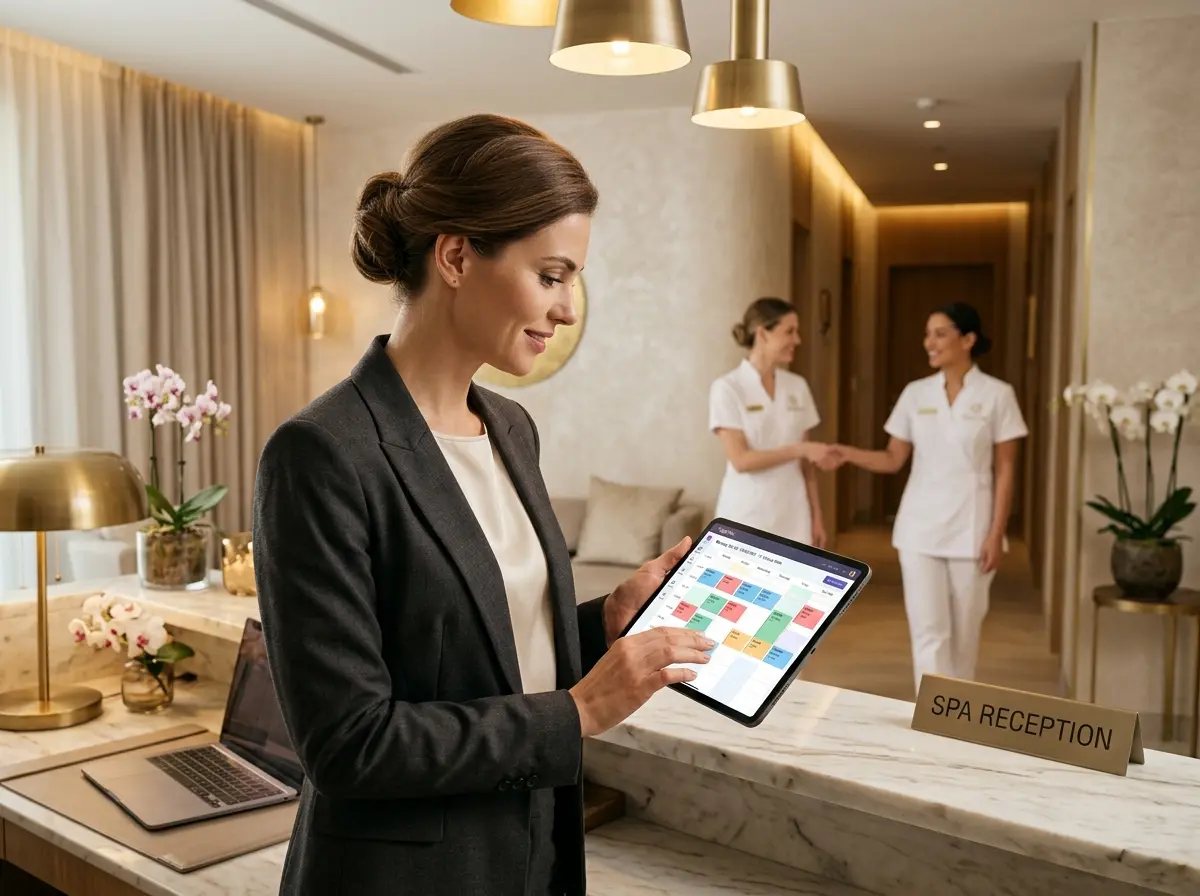
Most robust scheduling platforms offer color-coded views by provider, service type, or status. Use them. A quick glance at a color-coded weekly calendar tells you more in five seconds than scrolling through a list of appointments for five minutes. You can instantly see if one provider is overloaded while another has a suspiciously empty afternoon, or if your most popular treatment room is booked solid while the other sits idle.
Train your front desk staff to review the next day's schedule the evening before — every single day. This habit catches the problems that software can't: the client who mentioned she's bringing her daughter, the provider who requested a specific room but got assigned a different one, or the back-to-back appointments that technically don't conflict but will physically exhaust your newest aesthetician.
Reducing No-Shows and Last-Minute Cancellations
No-shows are the silent revenue killers of the spa industry. According to various industry estimates, appointment-based businesses lose anywhere from 5% to 20% of their potential revenue to no-shows and last-minute cancellations. For a spa with multiple providers, that math gets painful fast — empty slots across three or four practitioners add up quickly.
Automate Reminders and Make Them Multi-Touch
The single most effective thing you can do to reduce no-shows is implement automated reminders — and not just one. A well-structured reminder sequence might include an email confirmation immediately after booking, a text message 48 hours before the appointment, and a final reminder the morning of. Many scheduling platforms let you customize these touchpoints and the messaging within them.
Make your reminders useful, not just informational. Include your cancellation policy, a link to reschedule, directions to your location, and a note about what to expect. Clients who feel informed and prepared are clients who show up. And clients who need to cancel are more likely to do so in advance — giving you time to fill that slot — if you've made rescheduling easy for them.
How Stella Can Help Your Spa Run Smoother
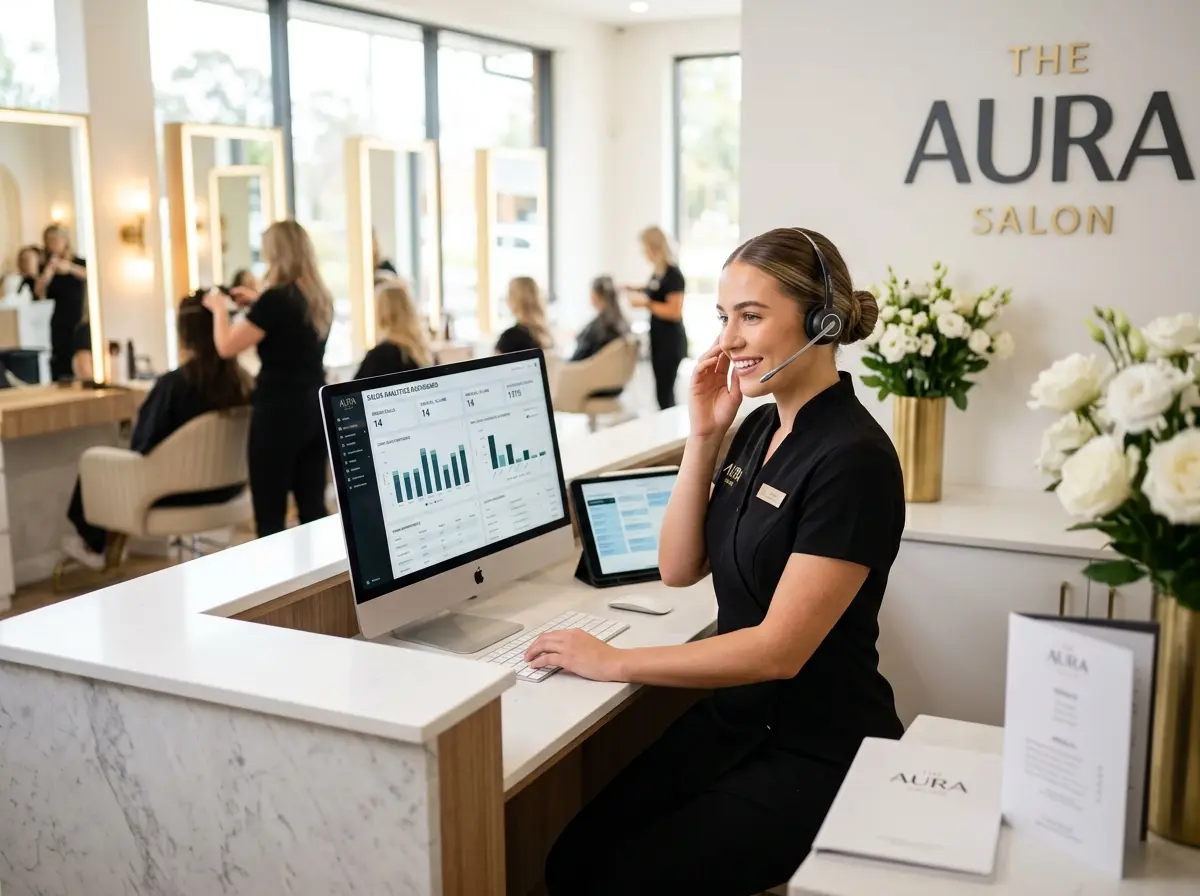
Scheduling software handles the logistics, but someone still has to answer the phone when a client wants to ask seventeen questions before booking. That's where Stella, the AI robot employee and phone receptionist, comes in. Stella handles incoming calls 24/7, answering questions about your services, providers, hours, and policies with the same knowledge your best front desk staff would use — without the burnout or the sick days.
At the kiosk level, Stella greets walk-in clients and can proactively engage them about current promotions, treatment packages, or seasonal offerings — the kind of upselling that usually falls through the cracks when your front desk is slammed. She can also collect client information through conversational intake forms, which feeds directly into her built-in CRM — keeping your client profiles accurate and up to date without anyone having to manually enter data between appointments. For a multi-provider spa where client preferences, skin sensitivities, and service history actually matter, that's not a small thing.
Optimizing Provider Schedules to Maximize Revenue
Once your scheduling system is set up and your no-show rate is under control, it's time to get strategic. Managing multiple providers isn't just about making sure nobody double-books — it's about using your collective capacity intelligently to grow the business.
Analyze Booking Patterns to Identify Revenue Opportunities
Most scheduling platforms come with built-in reporting, and if yours does, actually use it. Look at which providers are consistently fully booked, which services are most requested, which time slots fill first, and where you're consistently leaving gaps. This data tells you where demand is outpacing capacity — and where you have room to grow.
If your lead massage therapist is booked three weeks out while your newer provider has openings tomorrow, that's a signal. Maybe it's time to promote the newer provider more actively, or to have the senior provider mentor them so clients feel more comfortable booking. If your Saturday afternoons are always packed but your Wednesday mornings are ghost towns, consider running a mid-week promotion or adjusting your provider scheduling to shift more availability toward high-demand times.
Cross-Train Providers to Increase Scheduling Flexibility
One of the most underrated strategies for managing a multi-provider spa is cross-training. When providers can perform multiple service types, you gain scheduling flexibility that a specialized-only team simply can't offer. If a client's preferred esthetician is unavailable, a cross-trained provider can step in — and the client doesn't have to wait two weeks or go somewhere else.
Cross-training also protects your business during staff transitions. If your only certified lash tech leaves, you're not suddenly turning away every lash client you have. Think of it as redundancy planning — not the most glamorous concept, but absolutely essential when your revenue depends on human beings who are, unfortunately, human.
Build In Flexibility for High-Demand Periods
Spas have seasons. Valentine's Day, Mother's Day, the holidays, and local events can drive booking spikes that overwhelm even a well-organized schedule. Plan ahead by identifying your peak periods and building temporary capacity — whether that means extending hours, bringing in freelance providers, or creating packages that spread demand across a longer window.
Use your scheduling software to set capacity limits and waitlists during these periods rather than trying to manage overflow manually. A client who gets added to a waitlist and then receives an automatic notification when a slot opens up is a client who feels taken care of — and is likely to book again.
A Quick Reminder About Stella
Stella is an AI robot employee and phone receptionist designed for businesses exactly like yours — she stands in your spa as a friendly, human-sized kiosk and answers phone calls around the clock, so your team can focus on delivering exceptional service rather than managing the front desk chaos. At just $99 per month with no upfront hardware costs, she's one of the more practical investments a growing spa can make.
Your Next Steps Toward a Scheduling System That Actually Works
Managing multiple service providers at a spa is genuinely complex — but it doesn't have to be exhausting. The key is treating your scheduling software as a strategic tool, not just a digital appointment book. That means investing time in setup, keeping your data accurate, automating everything you can automate, and regularly reviewing your numbers to spot opportunities.
Here's a practical starting point to move forward:
- Audit your current setup. Review every provider profile and service configuration in your scheduling platform. Fix inaccurate durations, missing buffers, and outdated availability.
- Implement a reminder sequence. If you're not already sending multi-touch automated reminders, set that up this week. It's one of the highest-ROI changes you can make.
- Pull your booking reports. Look at the last 90 days of data and identify your highest-demand providers, services, and time slots — then make decisions based on what you find.
- Explore front-of-house support. If your front desk is overwhelmed or you're missing calls after hours, consider adding a solution like Stella to handle client interactions without adding headcount.
- Plan for your next peak period. Whatever it is — a holiday, a local event, summer season — map out your capacity now and build a plan before the rush hits.
Your providers are talented. Your services are valuable. The only thing standing between you and a smoothly running, fully booked spa is a system that lets all of that shine — instead of burying it under scheduling conflicts and missed calls. Time to build that system.