Let's Be Honest: Your Store's Lighting Probably Sucks
You’ve spent countless hours sourcing the perfect products. You’ve agonized over the floor plan, crafted the perfect window display, and maybe even alphabetized your spice rack for the third time this week. But let me ask you a question, and I want you to be brutally honest: when was the last time you really looked at your store's lighting?
If you're like most retailers, the answer is probably "the day the electrician left" or "when a bulb burned out." We treat lighting like a utility, a simple necessity to keep people from tripping over things. But here’s the hard truth: your store's lighting isn't just a utility. It's a silent salesperson. And right now, it might be doing a terrible job, costing you sales by making your beautiful merchandise look as appealing as a beige filing cabinet.
Bad lighting can make vibrant colors look dull, luxury items look cheap, and customers feel vaguely uncomfortable for reasons they can't quite pinpoint. But don't despair and start stockpiling fluorescent tubes. Let's shed some light (I’m sorry, I had to) on how you can turn your lighting from a sales-killing liability into a visual merchandising superstar.
The Psychology of Shine: How Light Manipulates Shopper Mood
Before we talk about hardware, let's talk about humans. Lighting has a profound psychological effect on us. It dictates mood, directs our eyes, and influences our perception of value. Getting it right means creating an environment where customers feel comfortable, engaged, and ready to buy. It’s less about lumens and more about emotions.
Setting the Stage: Ambient Lighting as Your Foundation
Ambient light is the general, overall illumination of your store. It's your foundational layer, the mood-setter. Think of it as the baseline soundtrack to the shopping experience. The key here is color temperature, measured in Kelvin (K).
- Warm Light (2700K-3000K): This is the cozy, yellowish, "evening sun" glow. It creates a feeling of comfort, intimacy, and relaxation. It's perfect for boutiques, high-end jewelers, and home goods stores where you want customers to slow down and feel at home.
- Cool Light (4000K-5000K+): This is a crisp, bright, bluish-white light. It feels modern, clean, and energetic. It’s ideal for electronics stores, athletic apparel shops, and galleries where you want to convey precision, cleanliness, and focus.
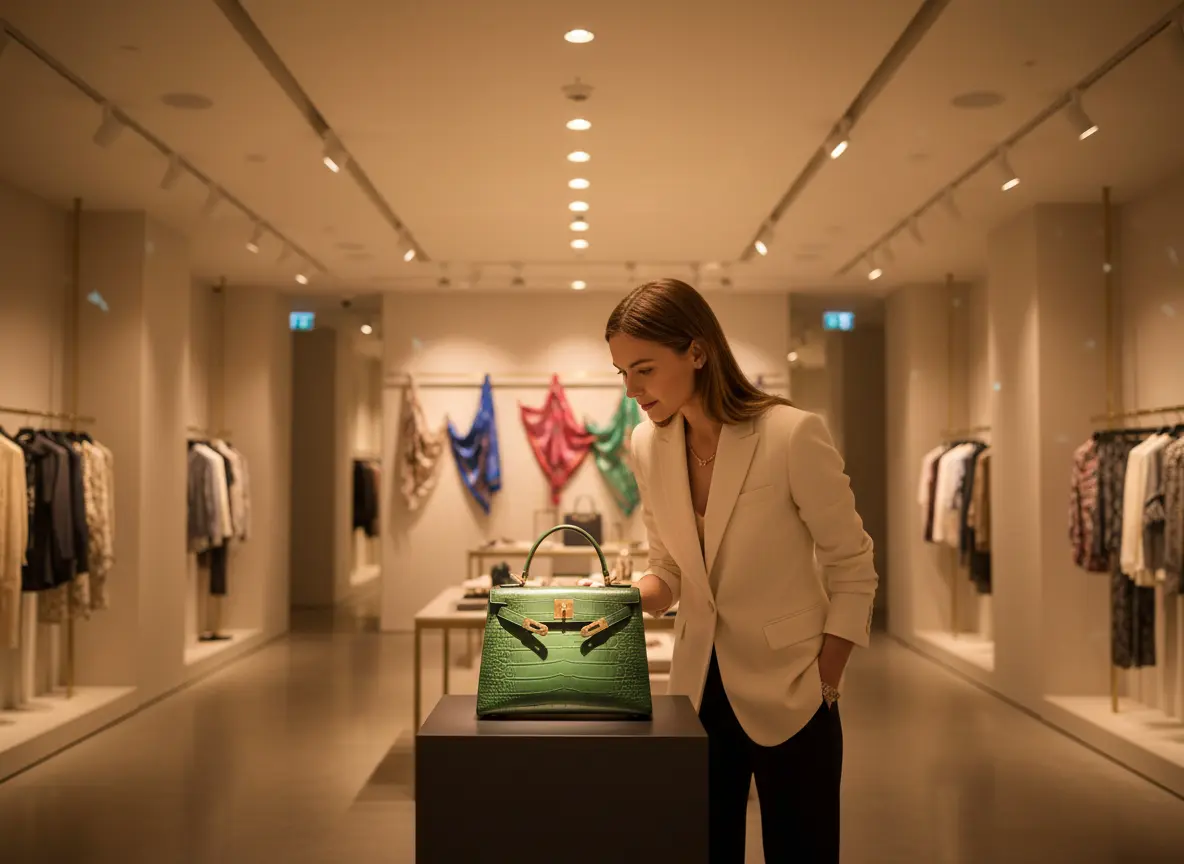
Using the wrong temperature is like playing heavy metal at a yoga retreat. It just feels... off. No one wants to buy a thousand-dollar handbag under the same harsh, sterile light you'd find in a hospital morgue.
Creating Drama: Accent & Task Lighting
If ambient light is the foundation, accent and task lighting are the stars of the show. This is where you get to be a director, telling customers exactly where to look.
Accent lighting, like track lights or spotlights, is used to create contrast and highlight specific products or displays. A general rule of thumb in merchandising is that a featured display should be at least three times brighter than its surroundings. This contrast draws the eye irresistibly. That mannequin showing off your new arrivals? Put a spotlight on it. That high-margin item on the shelf? Give it the VIP treatment with its own dedicated light source.
Task lighting is purely functional, but no less important. This is the lighting for your checkout counter, your fitting rooms, and any area where a specific task is performed. Ever tried to try on a pair of jeans in a fitting room with a single, dim overhead bulb that casts shadows in all the wrong places? It's a soul-crushing experience that leads directly to "I'll just think about it." Your task lighting should be bright, clear, and flattering to prevent customer frustration and abandoned sales.
The Good, The Bad, and The Fluorescent
Let's talk about the villains of the lighting world. The chief offender is, of course, the ancient, flickering fluorescent tube. It hums, it makes colors look sickly, and it screams "discount bin." Glare is another enemy—light bouncing off glass cases or polished floors can obscure the very products you're trying to sell. And then there are shadows, the dark, mysterious voids in your store where products go to be forgotten. A 2018 study found that a well-designed lighting plan can increase sales by up to 12%. It’s time to banish the bad and embrace the light.
Beyond the Bulb: Lighting Meets Customer Engagement
A brilliant lighting strategy does more than just make things look pretty; it actively guides the customer journey. You can use a path of light to draw shoppers from the entrance toward the back of the store, ensuring they see more of your merchandise along the way. A bright, compelling display at the end of an aisle acts like a visual magnet. But what if you could pair that visual cue with a verbal one for a truly powerful one-two punch?
Directing Traffic with Light and… a Robot?
Imagine you’ve just set up the perfect accent lighting on your new seasonal collection. The display is glowing, the products look incredible. Now, imagine a customer walks in, and before they even notice the display, they're greeted by a friendly, helpful voice. That’s where our in-store robotic assistant comes in. Just as a spotlight draws the eye, Stella can draw attention with a perfectly-timed message.
She can greet a shopper and say, "Welcome in! Be sure to check out our new fall collection, beautifully displayed under the spotlights to your left. We’re offering 15% off any item from that collection today only." Suddenly, your lighting plan isn't just a passive guide; it's part of an active, engaging sales strategy. Stella ensures that the promotions you've so carefully illuminated never go unnoticed, bridging the gap between great merchandising and a direct call to action.
Your Actionable Lighting Playbook
Feeling inspired? Or maybe just slightly terrified by the state of your current lighting? Either way, here’s a practical guide to making meaningful changes without needing an engineering degree.
The Lighting Audit: A Terrifyingly Simple First Step
Before you buy a single bulb, you need to assess what you have. Grab a notepad and walk through your store, pretending you've never been there before. Be critical.
- Find the Dark Spots: Are there gloomy corners where products are hiding? These are dead zones where sales go to die.
- Check for Glare: Stand in front of your glass displays and signage. Can you see the product clearly, or are you just admiring the reflection of an overhead light?
- Brave the Fitting Room: Go into a fitting room and look in the mirror. Do you look healthy and confident, or like you’ve just seen a ghost? The lighting should be flattering, not frightening.
- Read the Fine Print: Can you easily read price tags and product information without squinting? If not, neither can your customers.
This simple five-minute exercise will give you a clear "hit list" of the most critical areas to fix.
LEDs: Your New Best Friend (and Money-Saver)
If you haven't already, it's time to join the 21st century and switch to LED lighting. The argument is almost laughably one-sided. LEDs use up to 80% less energy than traditional bulbs, which means significant savings on your electricity bill. They also last 25 times longer, saving you the hassle and cost of constant replacement. But the real magic for retailers is their superior Color Rendering Index (CRI). CRI is a scale from 0 to 100 that measures how accurately a light source reveals the true colors of an object. For retail, you should aim for a CRI of 90 or higher to ensure your products look exactly as they were intended. No more customers returning a "blue" shirt that suddenly looks purple once they get it outside.
Layering Like a Pro
Remember our lighting types? The secret to a professional-looking store is layering them effectively. Let's use a hypothetical clothing boutique as an example:
- Ambient Layer: The owner installs warm (3000K), dimmable, high-CRI LED panels throughout the ceiling to create a welcoming, sophisticated base layer of light.
- Accent Layer: They use flexible track lighting to aim bright, focused spotlights on mannequins in the window, key displays of new arrivals, and high-end handbags on wall shelves.
- Task Layer: They place bright, clean vertical lights on either side of the mirrors in the fitting rooms to eliminate unflattering shadows. A stylish, decorative pendant light hangs over the cash wrap, providing ample light for transactions while also serving as a design element.
By combining these three layers, the store feels dynamic, high-end, and easy to navigate.
A Quick Reminder About Stella
While you’re busy perfecting your store’s ambiance and directing your customers' eyes, don’t forget about perfecting their welcome. Stella, our AI retail assistant, greets every single shopper, promotes your perfectly-lit deals, and frees up your human staff to provide amazing, in-depth service. She’s the reliable, affordable team member who never has a bad day.
Conclusion: It's Time for Your Glow Up
Great lighting isn't an expense; it's an investment with a clear ROI. It's a fundamental pillar of visual merchandising that quietly works to enhance product value, improve customer mood, and ultimately, drive sales. It’s the difference between a store that feels like a destination and one that feels like an afterthought.
So here is your homework. This week, perform that lighting audit. Take five minutes, walk your store with a customer's eyes, and be brutally honest. What story is your lighting telling? Is it a compelling narrative that draws people in, or a dull, poorly-written monologue that puts them to sleep?
Stop letting bad lighting force your prized inventory into the visual equivalent of the witness protection program. Illuminate your products, captivate your customers, and watch your sales begin to shine.