One Afternoon, Ninety Days of Content — We're Not Kidding
If you own a gym, you already know the drill. You're managing memberships, scheduling classes, handling walk-ins, fielding phone calls about pricing, and somewhere in the back of your mind, a tiny voice is whispering, "We really should post something on Instagram today." That voice has been whispering for three weeks. You've been ignoring it. No judgment here.
Marketing consistency is the silent killer of small fitness businesses. You don't close because you're bad at what you do — you stagnate because the people who would love your gym simply never heard about it at the right moment. Studies suggest it takes between 7 and 13 touchpoints before a potential customer makes a buying decision, which means a single Instagram post every two weeks isn't moving the needle for anyone.
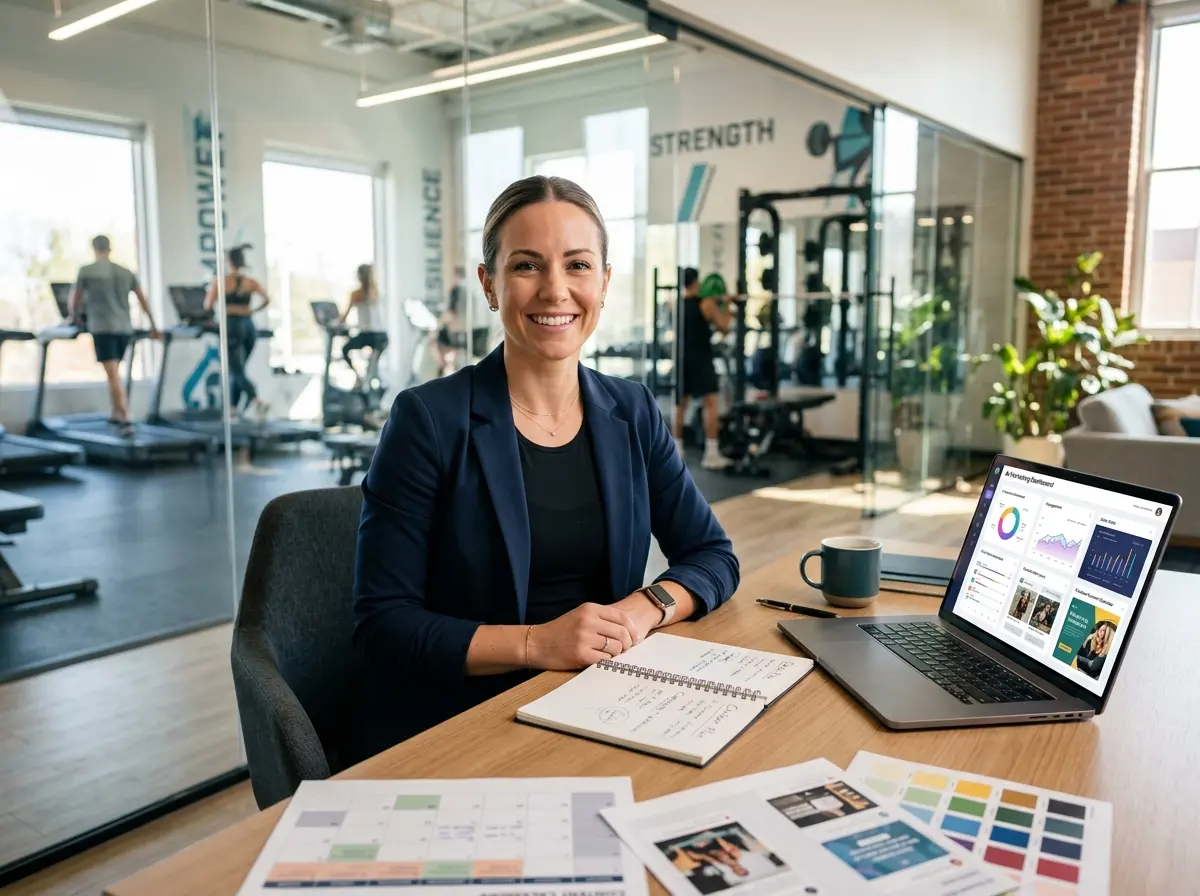
So when a local gym owner decided to spend one focused afternoon building out a full 90-day AI-assisted content system, the results were worth writing about. Here's exactly how it worked — and how you can replicate it for your own gym or fitness studio.
Building the Foundation: How the 90-Day Content System Actually Works
Start With Your Promotional Calendar, Not Your Content Ideas
Most gym owners make the mistake of trying to come up with content ideas in a vacuum. They sit down, stare at a blank screen, and try to think of something clever. This is the content equivalent of grocery shopping while hungry — you end up with chips and regret.
The smarter approach is to start with your promotional calendar for the next 90 days and work backwards. What offers are you running? When does a new class start? Is there a community challenge coming up? A membership drive? A holiday promotion? Once you have six to ten "anchor events" plotted on a calendar, suddenly you have a narrative spine for every piece of content you need to create.
The gym in our case study mapped out just eight promotional anchors across 90 days — a New Year challenge, a referral promotion, two new class launches, a free trial week, a local partnership event, a member spotlight series, and a seasonal pricing offer. Eight anchors. That's it. Everything else flowed from there.
Use AI to Multiply Each Anchor Into a Full Content Suite
Here's where the afternoon got interesting. Using AI writing tools (ChatGPT works perfectly well for this), the gym owner fed each promotional anchor into a simple prompt framework and generated a complete content suite for each one. For every single anchor event, they produced:
- Three social media caption variations (short, medium, and story-style)
- One email to their member list
- One email to their prospect/leads list
- A short SMS message for text marketing
- A Google Business post
- Three to five content hook ideas for Reels or short-form video
Eight anchors multiplied by that content suite equals a staggering amount of ready-to-use material — all generated, reviewed, lightly edited, and organized in a single Google Sheet by the end of the afternoon. The owner didn't write any of it from scratch. They directed, edited, and approved. That's a fundamentally different (and much saner) job description.
Organize It So You'll Actually Use It
A content system that lives in a chaotic folder of half-finished Google Docs is not a system — it's a graveyard of good intentions. The gym owner built a simple master spreadsheet with columns for the date, platform, content type, copy, status, and any visual notes. Each row was a single piece of content. The whole 90-day plan was visible at a glance.
They also scheduled the bulk of it immediately using a free social scheduling tool, and batched the email sends into their email marketing platform with draft status. The result? Marketing was essentially on autopilot for three months. Future-them was very, very grateful.
How Tools Like Stella Can Quietly Amplify Your Marketing Efforts
Turn Every Walk-In and Phone Call Into a Marketing Moment
Here's something that often gets overlooked in the content marketing conversation: the people already inside your gym, and the people already calling you, are your warmest audience. Stella — the AI robot employee and phone receptionist — sits at the intersection of those two opportunities in a way that quietly reinforces everything your content marketing is working to communicate.
For gyms with a physical location, Stella's in-store kiosk presence means every walk-in hears about your current promotions, upcoming classes, and membership options without your front desk staff having to recite the same pitch forty times a day. She proactively engages people, answers questions about hours and pricing, and can upsell or cross-sell relevant services — all while your team focuses on actually coaching and managing the floor. On the phone side, she handles calls around the clock, collects lead information through conversational intake forms, and keeps detailed records in her built-in CRM so no hot lead ever falls through the cracks. When your 90-day content campaign drives a spike in inquiries, Stella handles the volume without breaking a sweat. Literally.
Repurposing, Recycling, and Squeezing Every Drop of Value From Your Content
The "One Piece, Many Formats" Rule
Ninety days of content sounds like a lot until you realize you've been creating the same ideas over and over in slightly different fonts. The smarter move is to commit to the one-piece, many-formats rule: every substantial piece of content you create should be deliberately repurposed across at least three formats before you move on.
That email about your New Year challenge? It becomes a carousel post, a short Reel script, and a Google review prompt for members who completed it. That member spotlight? It's a blog post, a social quote graphic, a podcast clip if you have one, and a testimonial on your website. You're not creating more content — you're extracting more value from the content you've already done the hard work of creating. Most gym owners leave enormous amounts of value sitting in formats nobody ever repurposed.
Build a Swipe File From Your Best Performers
After your first 90-day cycle, you'll have data. Which emails had the highest open rates? Which social posts drove the most direct messages or sign-ups? Which promotions actually converted? Don't let that information evaporate. Build a swipe file — a simple folder or document — where you save your top performers with notes about why they worked.
When you sit down for your next 90-day planning session (which, at this point, should take you an afternoon rather than several anxiety-filled weeks), you'll start with proven frameworks rather than blank pages. Over time, this swipe file becomes one of your most valuable business assets. It's essentially a map of exactly what your specific audience responds to — and no amount of generic marketing advice can replicate that.
Plan for the Gaps Before They Happen
Even the best content calendar will have slow weeks. Maybe a promotion wrapped up early. Maybe a class got cancelled. Maybe you're in that weird no-man's-land between major campaigns where you don't have a clear "thing" to promote. Plan for this in advance by building evergreen content buckets — categories of content that are always relevant regardless of timing. For a gym, this might include training tips, nutrition basics, member motivation, behind-the-scenes clips, staff introductions, or equipment spotlights. Keep a running list of ten to fifteen evergreen ideas you can pull from whenever you need to fill a gap. Future-you will, again, be very grateful.
Quick Reminder About Stella
Stella is an AI robot employee and phone receptionist designed for businesses exactly like yours — she greets customers in-store, promotes your current offers, answers questions, and handles phone calls 24/7 so nothing slips through the cracks. She starts at just $99/month with no upfront hardware costs and no complicated setup. While you're out here building 90-day content empires, Stella's holding down the fort.
Your Next Move: Start With the Afternoon, Not the Year
The biggest takeaway from this gym owner's story isn't that AI is magic or that content marketing is easy. It's that clarity and systems beat heroic effort every single time. They didn't grind harder. They built a smarter process — once — and then let the process do its job.
Here's what your actionable next steps look like:
- Block one afternoon in the next two weeks. Put it on the calendar like a client meeting, because it is one — you're meeting with your future business.
- List your next 90 days of promotional anchors. Don't overthink it. Six to ten events, offers, or themes is plenty.
- Use an AI writing tool to generate your content suite for each anchor. Prompt it specifically: platform, tone, goal, and audience. Edit for your voice.
- Build your master content spreadsheet and schedule what you can immediately. Momentum is a feature, not a bonus.
- Create your evergreen content bucket list so gaps never catch you off guard.
Ninety days of consistent, professional, on-brand marketing doesn't require a full-time content team or a marketing agency on retainer. It requires one focused afternoon, the right tools, and the willingness to let a system do what you've been trying to do manually for years. Your gym deserves that. So does your sanity.