Introduction: The Art of Selling Without Actually "Selling"
Picture this: A customer sits down in your barber chair, you give them the best fade of their life, and as they admire themselves in the mirror — genuinely glowing — you hand them a bottle of pomade and say, "That'll be an extra $22." They blink. You blink. An awkward silence fills the shop like cheap cologne.
Sound familiar? You're not alone. Most barbers are exceptional at their craft and less exceptional at turning that craft into retail revenue. The good news is that selling grooming products in a barbershop doesn't have to feel like a used-car lot experience. In fact, when done right, it doesn't feel like selling at all — it feels like a recommendation from someone who actually knows what they're talking about. (Which, by the way, you do.)
Retail product sales can account for anywhere from 15% to 30% of a barbershop's total revenue, yet most shops leave that money sitting on a shelf — literally. This guide is here to change that, with practical strategies that are low-pressure, high-trust, and surprisingly effective.
Building the Foundation: Trust Before the Transaction
Your Expertise Is Your Greatest Sales Tool
Here's a radical concept: customers already trust you. You just spent 30 minutes working on their hair, discussing their lifestyle, and making them look great. That's not a transaction — that's a relationship. And relationships are the foundation of every successful retail recommendation.
The mistake most barbers make is treating product recommendations as a separate event — something that happens after the haircut, as an awkward add-on. Instead, weave product conversations naturally into the service itself. When you reach for a product during the cut, name it. Explain why you're using it. Say something like, "I'm using this matte clay because your hair has a lot of natural texture — it's going to hold without making it look stiff." That's not a sales pitch. That's education. And customers eat it up.
The Power of the "In-Chair" Moment
The chair is your stage, and you're performing for an audience of one who is completely captive — literally. They can't scroll their phone (well, they shouldn't), they're relaxed, and they're already invested in the outcome of the service. This is prime real estate for a natural product conversation.
Ask questions that invite dialogue: "What do you typically use at home?" or "How long does your style usually hold through the day?" These aren't leading questions designed to corner someone into buying something — they're genuine inquiries that help you understand your client's needs. And when you make a recommendation off the back of that conversation, it lands completely differently than a cold pitch at checkout.
One simple habit that high-performing barbers swear by: show the product, don't just mention it. Put it in their hand. Let them smell it, feel the texture, read the label. The moment a product becomes physical and real to a customer, the purchase decision becomes a lot easier to make.
Create a Shop Culture That Normalizes Retail
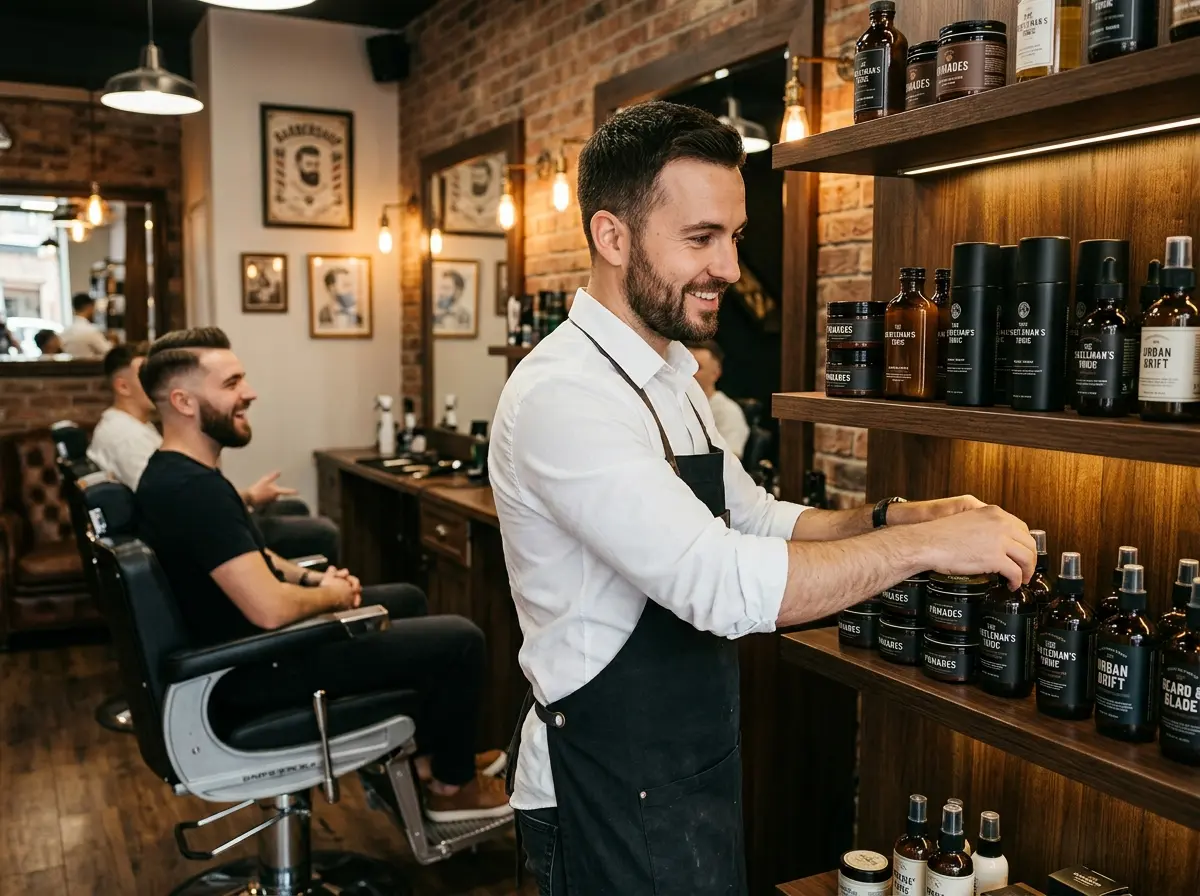
If your products are tucked behind the counter collecting dust, don't be surprised when no one asks about them. Merchandising matters. Display products at eye level, group them by use case (styling, beard care, scalp health), and keep the display clean and intentional. A well-presented retail section signals to customers that these products are part of the experience — not an afterthought.
Small touches go a long way: handwritten shelf talkers explaining what each product does, testers available for customers to try, or even a simple printed card near the register that lists your "Barber-Approved" picks. When the environment does some of the selling for you, your staff doesn't have to.
Let Technology Do Some of the Talking
A Friendly Nudge That Doesn't Come From You
One of the underrated challenges of in-store retail is that barbers can feel awkward recommending products — almost like they're pushing something for personal gain. That discomfort is real, and customers can sense it. One surprisingly effective workaround? Let someone (or something) else introduce the conversation.
Stella, the AI robot employee and phone receptionist, is built exactly for this kind of role. As a friendly, human-sized kiosk that stands inside your shop, Stella can proactively greet customers as they wait, naturally mention current promotions on grooming products, and answer questions about what you carry — all without a trace of awkward salesmanship. She's enthusiastic, consistent, and never has an off day. She can also answer your shop's phone calls 24/7, which means a customer who calls after hours asking about the pomade they tried during their last visit will actually get an answer instead of a voicemail.
The practical result: your barbers can stay focused on the craft while Stella keeps the product conversation alive in the background, both in-store and over the phone.
Tactics That Actually Move Product Off the Shelf
The "Complete the Look" Approach
Nobody wants to be sold to. But everyone wants to look good. Frame product recommendations not as purchases but as the final step in achieving the result they just paid for. "To keep this looking sharp at home, you'll want something with medium hold and a low shine — this one right here is exactly what I used today." Done. You haven't pitched a product; you've offered a solution to a problem they didn't even know they had yet: maintaining the haircut until they see you again.
This approach also reduces the post-haircut disappointment that many clients experience when they try to recreate their barbershop style at home with whatever drugstore product they grabbed on a whim. Sending them home with the right tools is genuinely good customer service — and it keeps them coming back because they look good between visits.
Bundle Thoughtfully and Price Transparently
Bundling is a low-pressure way to increase average transaction value without feeling pushy. A simple "Starter Kit" — a shampoo, a styling product, and a beard oil, packaged together at a slight discount — gives indecisive customers a clear, easy choice. It removes the paralysis of picking from 15 options and positions the bundle as the smart, curated selection from someone who knows best.
Be transparent about pricing. Nothing kills a potential retail sale faster than a customer having to ask "how much is this?" and feeling like they're about to be surprised. Price tags on everything, no exceptions. Customers are far more likely to pick something up and consider it when the price is visible and they don't have to initiate an awkward inquiry.
Follow Up After the Visit
The sale doesn't have to happen the day of the haircut. A simple follow-up text or email a few days later — "How's the styling holding up? Let us know if you want to grab that pomade we used" — is a gentle, non-intrusive nudge that works surprisingly well. Clients appreciate the personal touch, and it signals that you're invested in their experience beyond the 45 minutes in the chair.
If you're not already collecting customer contact information and notes about their preferences, start now. Knowing that a client has a thick beard and mentioned he's tried three conditioners that didn't work is the kind of detail that turns a routine visit into a highly personalized — and profitable — retail recommendation next time he's in.
Quick Reminder About Stella
Stella is an AI robot employee and phone receptionist designed to help businesses like yours run smoother, sell smarter, and never miss a customer interaction. She greets walk-ins, promotes your products and specials, and answers phone calls around the clock — all for $99/month with no upfront hardware costs. If you're serious about growing your retail revenue without burning out your staff, she's worth a look.
Conclusion: Small Shifts, Real Revenue
Selling grooming products in your barbershop isn't about becoming a pushy salesperson — it's about becoming a more complete resource for your clients. You already have the expertise, the trust, and the captive audience. The only thing missing is the intentionality.
Here's where to start:
- Integrate product conversations into every service — name what you're using and why, while you're using it.
- Ask questions that open the door to genuine recommendations, not scripted pitches.
- Merchandise your retail section like it deserves to be seen — because it does.
- Bundle strategically to make buying decisions easier for customers who don't know where to start.
- Follow up after visits to reinforce the recommendation and close the loop.
- Let technology help by using tools that keep product conversations alive even when your hands — and attention — are elsewhere.
Your retail shelf isn't a decoration. It's a revenue stream with a real impact on your bottom line. Treat it that way, build habits around it, and you'll be surprised how naturally the money starts to follow — no hard sell required.