Introduction: Because "We'll Be There Between 8 AM and 5 PM" Isn't Cutting It Anymore
Let's be honest — telling a customer that your technician will arrive "sometime today" is the HVAC industry's version of a bad first date. Vague, unreliable, and almost guaranteed to leave someone frustrated. In an era where people can track their pizza delivery to the exact block, expecting customers to sit home all day waiting for a technician is a fast track to negative reviews and churned clients.
The good news? GPS tracking technology has matured into an affordable, practical solution that HVAC companies of all sizes are using to tighten up dispatch operations, reduce fuel costs, and — perhaps most importantly — actually impress their customers. According to industry research, companies that implement GPS fleet tracking report up to a 25% improvement in response times and significant reductions in overtime costs. That's not pocket change, especially when you're managing a fleet of vans and a team of technicians scattered across a service territory.
This guide breaks down exactly how GPS tracking can transform your technician dispatch operations, what features actually matter, and how to turn faster response times into the kind of customer satisfaction scores that fuel referrals and repeat business.
Understanding GPS Tracking in HVAC Operations
What GPS Tracking Actually Does (Beyond Just Knowing Where Everyone Is)
Sure, knowing where your technicians are at any given moment is useful — especially when Dave says he's "five minutes away" and the GPS tells a different story. But modern GPS fleet tracking platforms go far beyond basic location monitoring. They provide real-time data on vehicle speed, idle time, route efficiency, job duration, and even driving behavior. For an HVAC company, this data becomes the foundation of smarter operations.
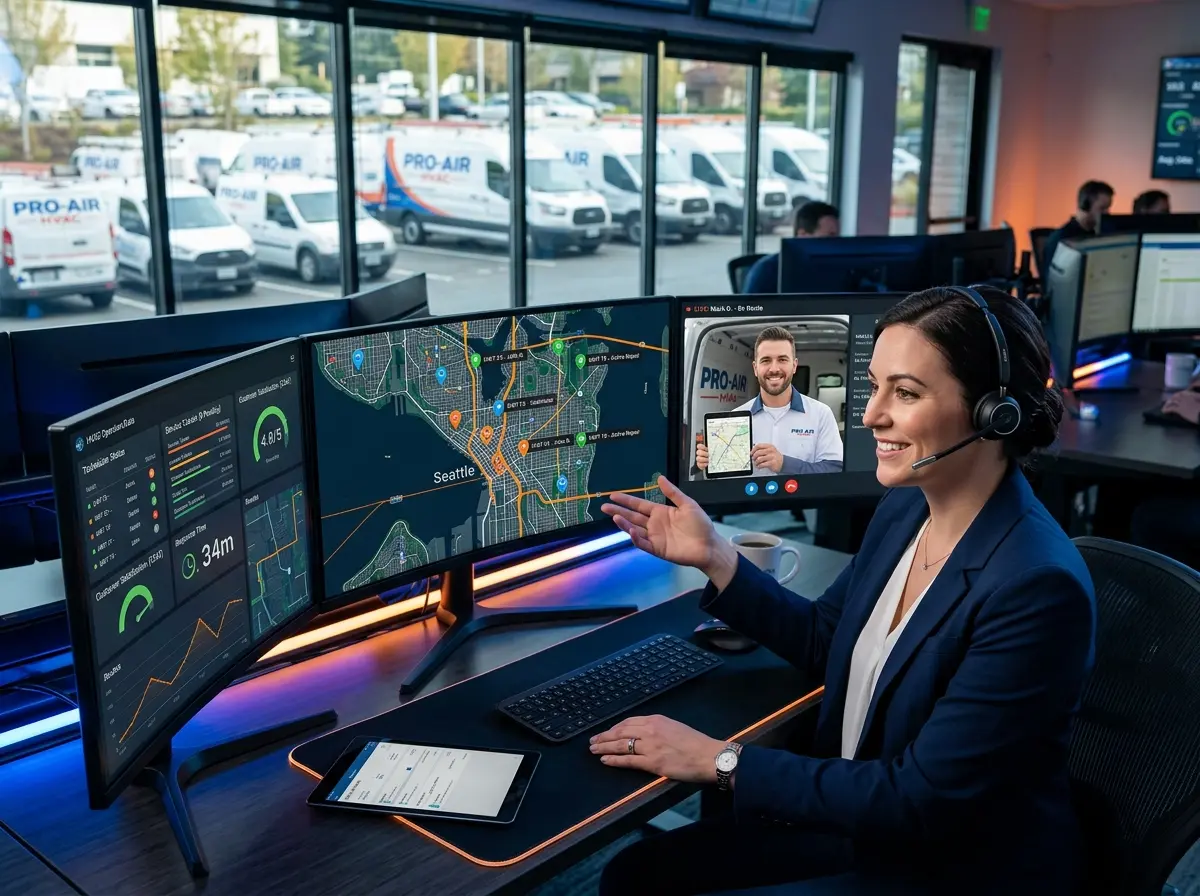
When your dispatcher can see every technician's location on a live map, they can make intelligent decisions about who to assign to an emergency call. Instead of asking each tech to call in their status, the system tells you instantly who just finished a job, who's closest to a new call, and whose vehicle has been idling in a parking lot for 40 minutes (looking at you, Dave). This visibility eliminates the guesswork that causes delays and turns a chaotic dispatch board into something resembling an air traffic control operation — minus the headsets and the stress-induced coffee habit.
Choosing the Right GPS Tracking System for Your Fleet
Not all GPS tracking platforms are created equal, and HVAC businesses have specific needs that generic solutions don't always address. When evaluating systems, prioritize the following features:
- Real-time tracking with minimal latency — updates every 30 seconds or less are the standard for meaningful dispatch decisions.
- Geofencing capabilities — set virtual boundaries around job sites, warehouses, or customer locations to trigger automatic arrival and departure notifications.
- Integration with your field service management software — platforms like ServiceTitan, Housecall Pro, or Jobber work best when your GPS data flows directly into your dispatch and scheduling tools.
- Mobile accessibility — your office manager shouldn't be chained to a desktop to see what's happening in the field.
- Driver behavior reporting — hard braking, speeding, and excessive idling affect your fuel costs, vehicle wear, and liability exposure.
Popular platforms worth evaluating include Samsara, Verizon Connect, Fleetio, and GPS Insight. Many offer free trials, so there's no reason to commit blindly.
Integrating GPS Data Into Your Dispatch Workflow
Technology doesn't fix process problems on its own. Once your GPS system is installed, the real work is building it into your daily dispatch routine. Train your dispatchers to reference the live map before assigning any new job. Create a protocol for emergency calls that defines how GPS data factors into the assignment decision. Review weekly reports with your team — not to play "gotcha," but to identify genuine inefficiencies in routes and scheduling patterns.
A small HVAC company in Phoenix reported that after just three months of integrating GPS tracking into dispatch decisions, they reduced average response times by 18 minutes per call and cut fuel costs by nearly 15%. That's real money back in the business, and real time returned to customers who have better things to do than wait around all afternoon.
Keeping the Front Door Open While Your Techs Are in the Field
How Stella Helps HVAC Companies Stay Responsive Around the Clock
While your technicians are out in the field doing what they do best — wrestling with refrigerant lines and explaining to homeowners why their filter hasn't been changed in three years — your phone still needs to be answered. Missed calls in the HVAC business don't just mean missed opportunities; they mean customers calling your competitor instead. That's where Stella, the AI robot employee and phone receptionist, becomes a genuinely valuable part of the operation.
Stella answers calls 24/7, handles intake questions, collects customer information through conversational forms, and can forward calls to human staff based on your configured rules. For HVAC companies with a physical showroom or parts counter, she also works as an in-store kiosk — greeting walk-in customers and answering product or service questions without pulling your staff away from the work that actually requires their expertise. Her built-in CRM captures customer profiles, notes, and tags so that when a technician does follow up, they already have context on the customer's situation. It's a small detail that makes a big impression.
Turning Faster Response Times Into Measurable Customer Satisfaction
Setting Customer Expectations With Real-Time Communication
Speed is only half the equation. The other half is communication — and this is where many HVAC companies leave significant goodwill on the table. Customers don't just want a technician to arrive quickly; they want to know what's happening before anyone shows up. GPS tracking enables something that was genuinely difficult to do even five years ago: accurate, real-time ETAs communicated directly to the customer.
Whether you send automated text updates triggered by geofencing events ("Your technician is 10 minutes away!") or have your office staff reference the live map before calling customers with updates, the effect is the same. Customers feel informed and respected. Anxiety drops. And when the technician arrives exactly when you said they would, the service call starts on a positive note before a single tool is lifted. Consider that 77% of customers say they value proactive communication as a key driver of satisfaction — and HVAC is a business built almost entirely on trust and reputation.
Using Data to Identify and Fix Recurring Problem Areas
The reporting features in your GPS platform aren't just for catching technicians making unauthorized detours. They're a business intelligence tool. Over time, your data will reveal patterns: certain service zones that consistently produce longer travel times, specific times of day when dispatch bottlenecks occur, or technicians whose routes could be restructured for meaningful efficiency gains.
Run monthly reviews of your response time data by zone, by technician, and by job type. Share the results with your team in a constructive way. When technicians understand that route and response data is being used to improve the system — not micromanage their every turn — they tend to engage with it more positively. Set benchmarks, celebrate improvements, and address outliers with curiosity rather than accusation. The goal is a continuously improving operation, not a surveillance state on wheels.
Leveraging Customer Satisfaction Into Reviews and Referrals
Faster response times and better communication don't just feel good — they generate measurable business outcomes. A customer who was impressed by a smooth, well-communicated service call is infinitely more likely to leave a five-star review and refer a neighbor. HVAC businesses with strong review profiles on Google and Yelp consistently outperform competitors in local search visibility, which means your operational improvements have a direct marketing impact.
Build a simple follow-up process: send a review request via text or email within an hour of job completion. Keep it short and direct. The timing matters because the positive experience is fresh. Businesses that implement consistent review request processes see review volume increase by 3x to 5x — which, in a local service market, can be the difference between being the first result someone sees or being buried on page two where hopes go to die.
Quick Reminder About Stella
Stella is an AI robot employee and phone receptionist that works 24/7 for just $99/month — no upfront hardware costs, no sick days, no turnover. She answers calls, greets in-store customers, collects intake information, manages contacts in her built-in CRM, and keeps your business responsive even when your entire team is deep in the field. For HVAC companies trying to scale without proportionally scaling their overhead, she's a practical and surprisingly affordable piece of the puzzle.
Conclusion: Small Changes, Big Outcomes
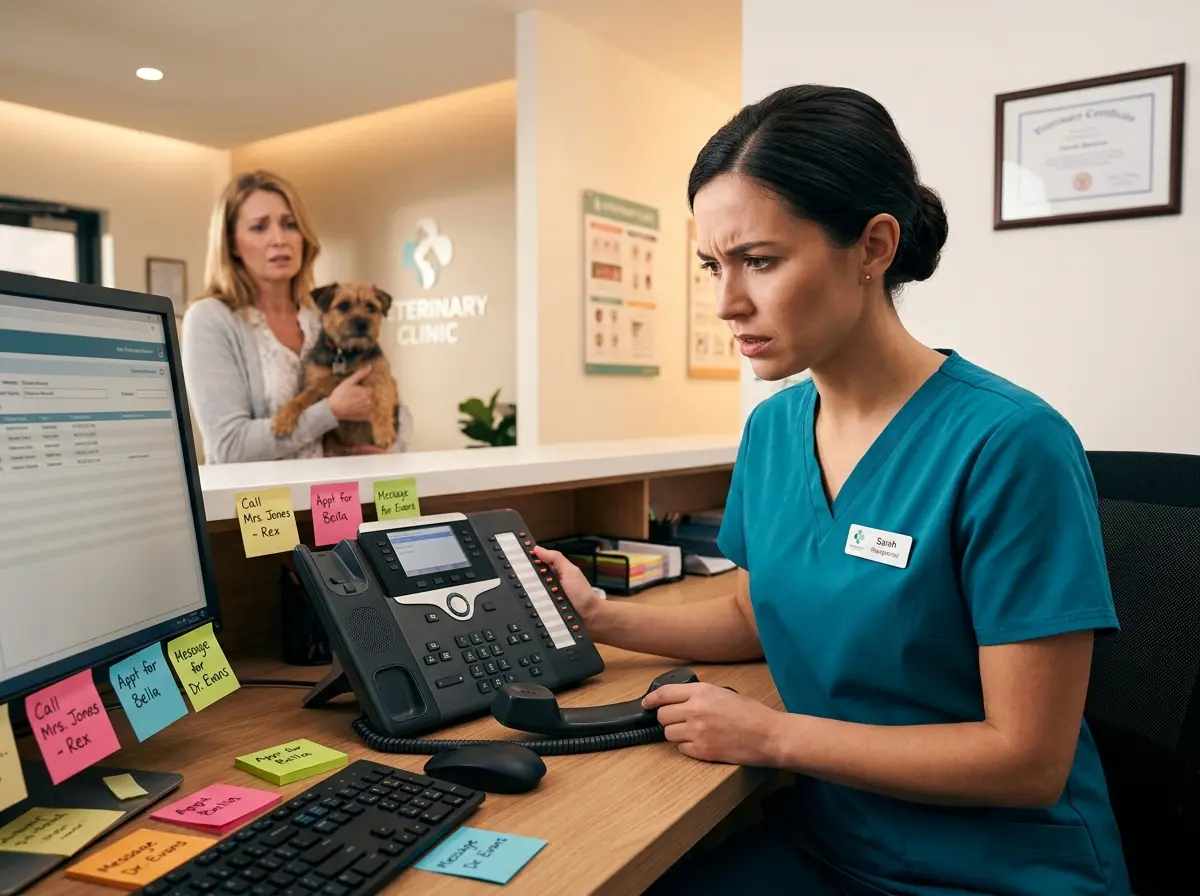
GPS tracking isn't a magic wand — it won't fix a poorly trained technician or a scheduling system held together with sticky notes and optimism. But when implemented thoughtfully and integrated into real dispatch workflows, it's one of the most high-impact operational investments an HVAC company can make. Faster response times, lower fuel costs, better customer communication, and the data to keep improving over time: these aren't small wins.
Here's your action plan to get started:
- Evaluate two or three GPS tracking platforms with free trials and involve your dispatchers in the decision — they'll be the primary users.
- Integrate your GPS system with your field service management software so dispatch decisions are driven by real-time data, not phone check-ins.
- Build a customer communication protocol around GPS-triggered updates so customers always know when to expect their technician.
- Set monthly reporting reviews to identify inefficiencies by zone, technician, and time of day — then act on what you find.
- Pair operational improvements with a review request process so your better service translates directly into better visibility and more inbound leads.
The HVAC companies winning in their local markets aren't necessarily the ones with the most technicians or the flashiest trucks. They're the ones that run tighter operations, communicate better, and consistently deliver on what they promise. GPS tracking is one of the clearest paths to getting there — and the customers sitting home waiting for a technician will absolutely notice the difference.