When the Phone Rings and Nobody Answers, Your Competition Says "Thank You"
Let's set the scene: it's a Tuesday afternoon, your lift is full, your technicians are elbow-deep in a transmission job, your service advisor is handling a frustrated customer at the front desk, and somewhere — probably three feet away from everyone — a phone is ringing. And ringing. And ringing. Then it stops. That was a potential customer. They've already Googled the next shop.
If you own or manage an auto repair shop, this scenario isn't hypothetical. It's Tuesday. It's also Wednesday, Thursday, and every Saturday morning when your shop is slammed and your staff is stretched thin. The unanswered call crisis is real, it's expensive, and most shop owners have accepted it as an unfortunate cost of doing business. It isn't. It's an actual cost — measurable in lost revenue, lost customers, and lost reputation.
This post breaks down exactly what unanswered calls are costing your shop, what you can do about it, and how to build a front-of-house operation that doesn't fall apart every time things get busy.
The Real Cost of Missed Calls in Auto Repair
The Numbers Don't Lie (Even When We Wish They Would)
Here's the uncomfortable math. Studies consistently show that 85% of customers whose calls go unanswered will not call back. They move on. Given that the average auto repair ticket runs anywhere from $150 to $800 or more depending on the service, a handful of missed calls per week adds up to tens of thousands of dollars in lost annual revenue. For a shop doing solid volume, that number can climb even higher when you factor in repeat business and referrals from customers who never got the chance to become customers.
And it's not just about the initial transaction. A customer who gets their oil change at your shop and has a great experience might come back for brakes, tires, a timing belt, and eventually bring their kid's first car in for an inspection. Lose them on the first call, and you've lost all of that future revenue too — not that your competitor is going to complain about it.
Why Auto Shops Are Especially Vulnerable
Auto repair is a service business where the busiest times are exactly the times when answering the phone becomes hardest. Morning drop-offs, lunch rushes, and end-of-day pickups create natural communication bottlenecks. Your service advisors are doing real, complex work — writing estimates, explaining repairs to anxious car owners, coordinating with technicians — and stopping mid-conversation to grab a ringing phone isn't just inconvenient, it's actually bad customer service for the person standing right in front of them.
Many shops try to solve this with voicemail, which is better than nothing but not by much. Research suggests that over 80% of callers will hang up rather than leave a voicemail, particularly younger customers who would genuinely rather drive across town than talk to a recording. Voicemail is not a solution. It's a polite way of telling someone you'll get back to them eventually — maybe.
The Reputation Ripple Effect
Here's something shop owners often overlook: unanswered calls don't just cost you that one job. They cost you your reviews. A customer who can't reach you doesn't typically think "well, they must be busy." They think "this place doesn't care about me," and that thought has a funny way of ending up as a one-star review mentioning poor communication. In an industry where trust is everything and customers are already a little anxious about handing over their vehicle, your accessibility is a direct signal of your professionalism.
How Smart Shops Are Solving the Problem — And How Stella Can Help
Technology That Works While Your Team Works on Cars
The most forward-thinking auto shops aren't hiring more front desk staff to handle phone volume — they're deploying AI tools that handle the communication layer so their human team can focus on what actually generates revenue. This is where Stella, the AI robot employee and phone receptionist, enters the picture in a genuinely useful way.
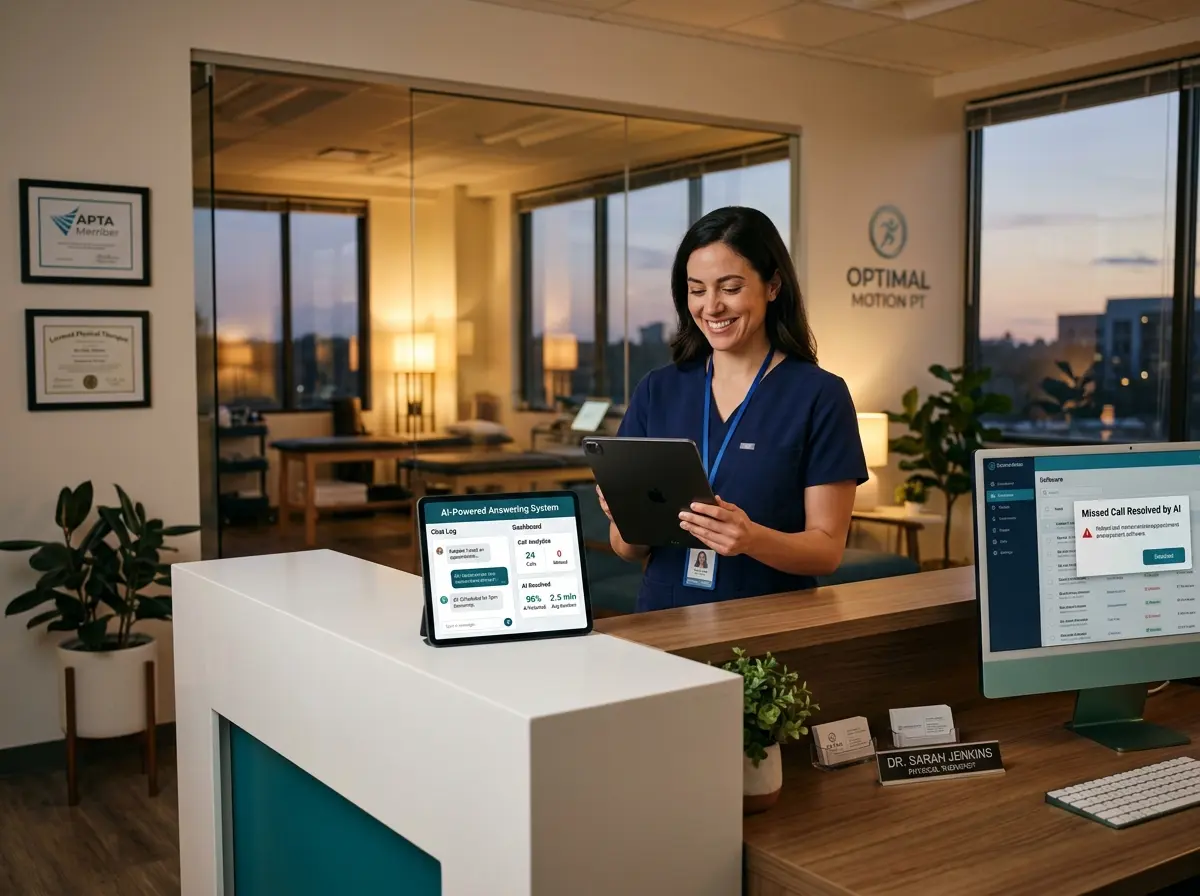
Stella answers every inbound call, 24 hours a day, 7 days a week, with the same knowledge your best service advisor would have — your services, your pricing, your hours, your current promotions, your policies. She can handle appointment inquiries, answer common questions, collect customer information through conversational intake forms, and forward calls to a human when the situation genuinely requires it. For shops with a physical location, she also operates as an in-store kiosk, greeting walk-in customers proactively so your service advisors aren't pulled in three directions at once. Her built-in CRM automatically captures customer details from every interaction, so you're not losing lead information to a sticky note on someone's monitor.
At $99 a month with no upfront hardware costs, she costs less than a few hours of missed labor — and she never calls in sick on a Saturday.
Building a Communication System That Doesn't Break Under Pressure
Audit Your Current Call Handling (Honestly)
Before you can fix the problem, you need to know the actual scope of it. Most shop owners are surprised when they dig into the data. Start by checking your phone system's missed call logs for the past 30 days. If your system doesn't track that, consider that a problem in itself. Look for patterns: are calls dropping during specific hours? On particular days? After hours? Understanding when and why calls are being missed tells you exactly where to direct your solution.
It's also worth mystery-shopping your own shop. Call in during a busy Friday afternoon and see what happens. You might be pleasantly surprised. You might also finally understand why your Google reviews keep mentioning that nobody picks up the phone.
Train Your Team on Communication Triage
Even with great technology in place, your human staff needs a clear protocol. Who is the designated phone handler during peak hours? What's the escalation path when that person is tied up? Is there a script or at least a framework for the most common call types — appointment requests, status updates, pricing questions, and complaints? These don't need to be elaborate, but they do need to exist and be practiced.
The goal isn't to turn your service advisors into call center agents. It's to make sure that when a human does pick up the phone, the interaction is smooth, professional, and quick. Every minute your advisor spends explaining what a coolant flush is over the phone is a minute they're not spending with the customer whose car is on the lift.
Leverage After-Hours Opportunities
One of the most overlooked revenue opportunities in auto repair is the after-hours caller. These are people who remembered their car issue at 9 PM and decided to do something about it. They're motivated, they've already made the mental decision to get the work done, and they're ready to book. Without any system in place, you lose them instantly. With an AI receptionist handling calls around the clock, you capture that appointment before your competitor even opens in the morning.
Consider promoting your 24/7 availability explicitly — on your website, your Google Business Profile, your voicemail greeting (for the rare times it's even needed), and your social media. "We answer every call, any time" is a genuine competitive differentiator in an industry where most shops still have a recorded message playing at 5:01 PM.
Quick Reminder About Stella
Stella is an AI robot employee and phone receptionist built for businesses exactly like yours — always on, always professional, and always ready to handle the next call or walk-in customer without needing a break or a benefits package. She answers phones 24/7, greets in-store customers proactively from her kiosk, collects intake information, and keeps your CRM updated automatically. For auto shops dealing with communication bottlenecks, she's worth a serious look.
Stop Letting Ringing Phones Drive Customers Away
The unanswered call crisis in auto repair is solvable. It requires acknowledging that communication is part of your service offering — not an afterthought — and building systems that support it even when your team is at full capacity doing the actual work of fixing cars.
Here are your actionable next steps:
- Audit your missed calls from the last 30 days and identify your highest-risk time windows.
- Establish a clear phone handling protocol with your team, including escalation paths and common call scripts.
- Implement an AI phone receptionist to cover gaps — especially after hours, during rush periods, and on weekends.
- Promote your availability across your Google Business Profile, website, and social channels to differentiate from competitors who are still letting callers hit voicemail.
- Track the results — monitor appointment volume, call capture rates, and new customer acquisition month over month to see the impact.
Your competitors are busy not answering their phones right now. That's actually a gift — but only if you decide to do something different. The shops that win in this industry aren't always the ones with the best technicians or the fanciest equipment. They're the ones that make it easy for customers to say yes. And that starts with picking up the phone.