Introduction: Because "We'll Figure It Out" Is Not a Medical Protocol
Let's be honest — if your med spa's patch testing protocol currently lives somewhere between "we ask clients if they have sensitive skin" and "we just hope for the best," it's time for a serious conversation. Patch testing isn't just a nice-to-have checkbox on an intake form. It's a clinical safeguard, a legal shield, and — perhaps most importantly — one of the clearest signals you can send to clients that your business actually cares about their wellbeing beyond their credit card number.
With the med spa industry growing rapidly — projected to exceed $47 billion globally by 2030 — the competition for client trust is fiercer than ever. Clients are increasingly savvy. They research treatments, read reviews, and ask hard questions. A well-documented, consistently applied patch testing protocol doesn't just protect them from adverse reactions; it differentiates your business as a professional, trustworthy establishment in a market full of cut-rate competitors who treat safety as an afterthought.
This post will walk you through what a formal patch testing protocol actually looks like, why it matters more than you might think, and how to implement one without turning your front desk into a paperwork graveyard.
Understanding Patch Testing: More Than Slapping a Bit of Product on Someone's Arm
What Patch Testing Actually Involves
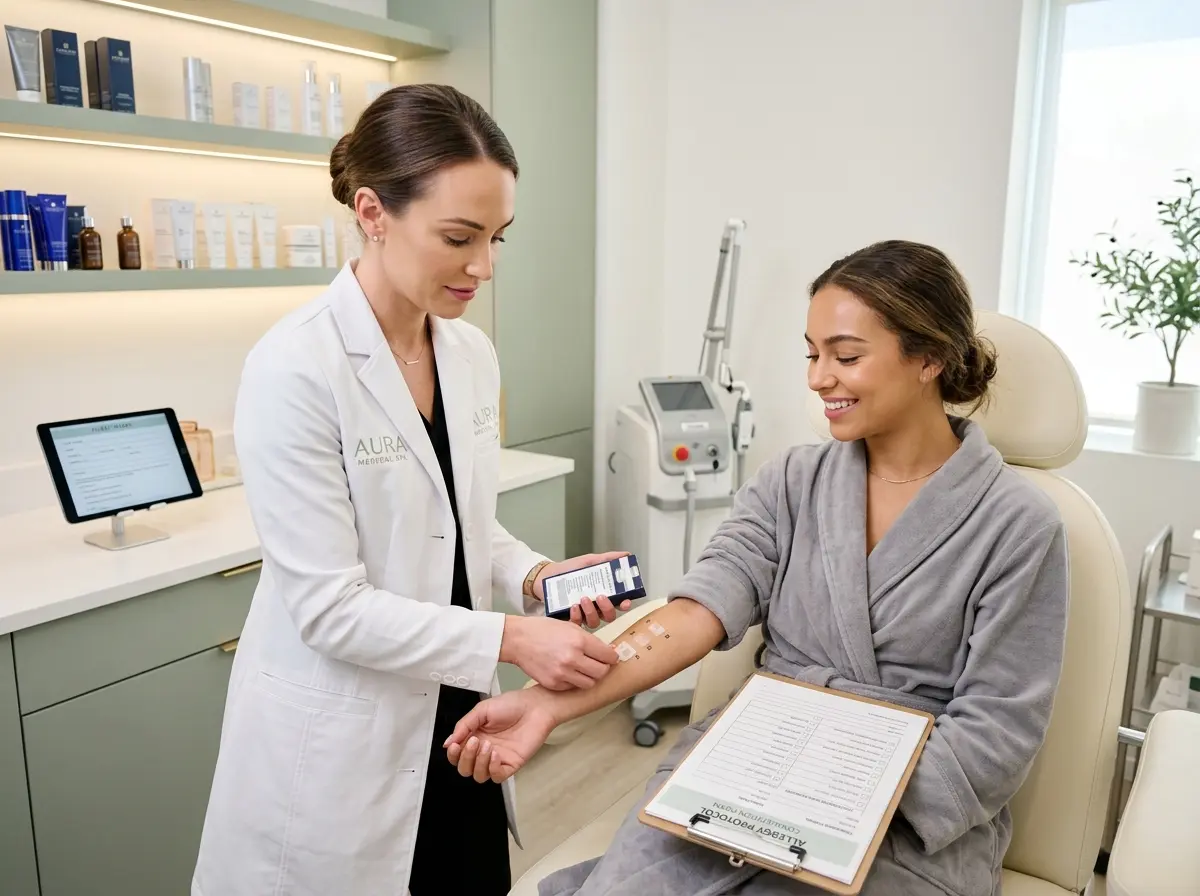
A proper patch testing protocol is a structured, repeatable clinical process — not a casual conversation held while someone is already half-reclined in a treatment chair. At its core, patch testing involves applying a small amount of a product or substance to a controlled area of skin (typically behind the ear or on the inner forearm), allowing sufficient time for a reaction to develop, and documenting the outcome before proceeding with a full treatment.
The key word there is documented. A patch test that isn't recorded might as well not have happened — at least from a liability standpoint. Your protocol should specify which products require testing, what the observation window is (commonly 24–48 hours), what constitutes a passing result, and what happens if a reaction occurs. Every single step should be written down, signed off on by the client, and stored in their file.
Which Treatments Should Require Patch Testing
Not every service carries the same risk profile, but you'd be surprised how many treatments warrant a patch test that spas routinely skip. Chemical peels, laser treatments, tinting services, lash lifts, certain facials involving active ingredients like retinoids or AHAs, microneedling serums, and any treatment involving new product formulations should all be flagged in your protocol.
A smart approach is to tier your treatments by risk level and apply patch testing requirements accordingly. Low-risk services might require a verbal allergy screening. Moderate-risk treatments warrant a documented patch test. High-risk procedures — especially those involving chemical agents or devices — should include patch testing plus a full medical intake review. Building this tiered system into your onboarding process makes it manageable rather than overwhelming.
Legal and Ethical Dimensions You Can't Ignore
Here's the part nobody loves to talk about but everybody needs to hear: the legal exposure from skipping patch testing is very real. Adverse reactions — even minor ones — can result in client complaints, negative reviews, regulatory scrutiny, and in serious cases, lawsuits. Informed consent forms are valuable, but they are not a substitute for an actual testing protocol. Courts and licensing boards don't look kindly on businesses that waved a consent form in someone's face and then skipped the safety step entirely.
Beyond the legal risk, there's the ethical dimension. Your clients are trusting you with their skin, their health, and their appearance. Formalizing your patch testing protocol is simply the right thing to do — and doing the right thing, consistently and transparently, is also excellent for business.
How Streamlined Client Intake Makes Compliance Effortless
The Front Desk Bottleneck Is Real — And Fixable
One of the most common reasons med spas have inconsistent patch testing protocols isn't negligence — it's chaos. Front desks are busy, staff turn over, and manual intake processes fall apart under pressure. If your protocol depends entirely on a human remembering to hand a client a form and explain the patch testing requirement, you've built a safety system with a very human-sized hole in it.
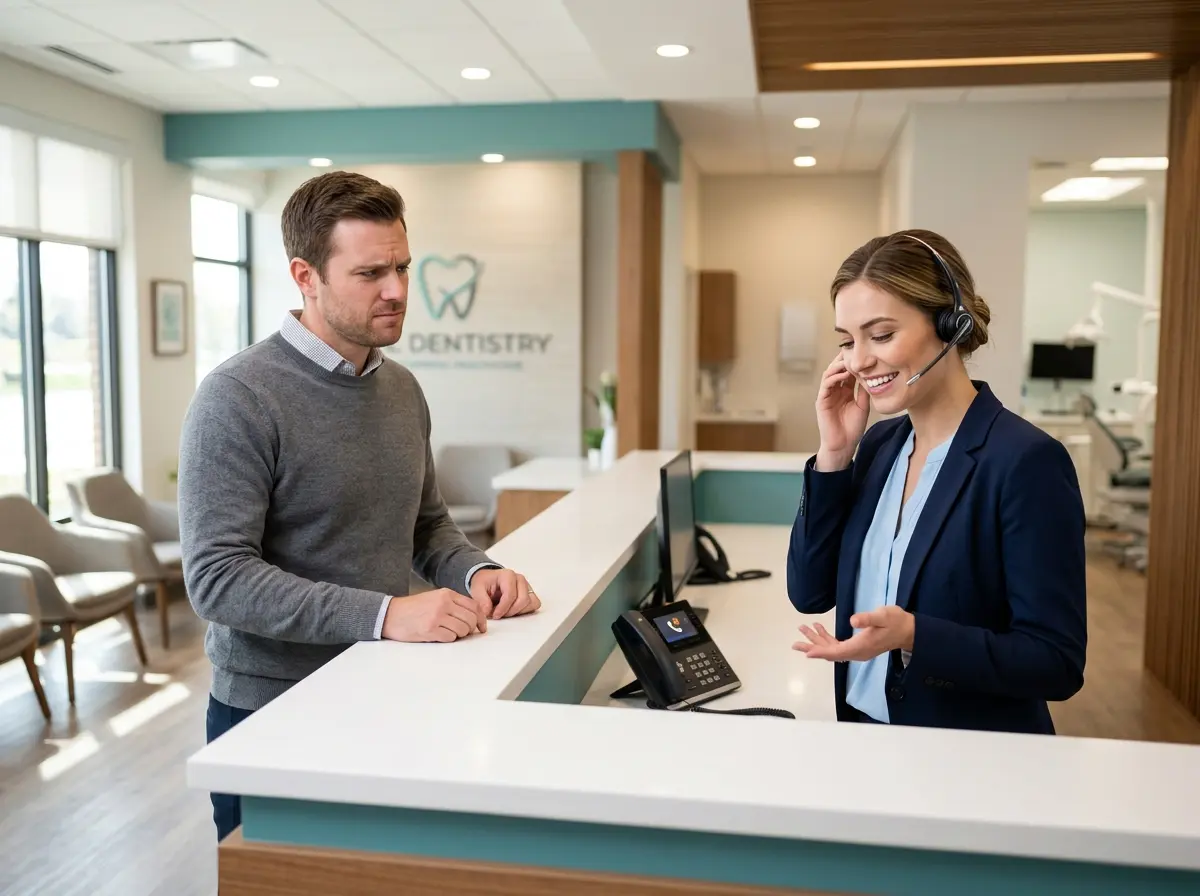
This is where Stella — the AI robot employee and phone receptionist — becomes genuinely useful for med spa owners. Stella can handle client intake conversationally, whether someone is calling to book an appointment or walking through your door. She collects client information through built-in intake forms and stores it directly in her CRM with custom fields, tags, and AI-generated client profiles. That means patch testing flags, allergy disclosures, and consent statuses can be captured and documented consistently — every time, without relying on a harried receptionist to remember the script. Her in-store kiosk presence can prompt walk-in clients through the intake process, while her 24/7 phone answering capability ensures no after-hours booking slips through without the right information being collected upfront.
Building a Protocol That Actually Gets Followed
Writing the Protocol: Keep It Specific, Not Vague
A protocol that says "perform patch test when appropriate" is not a protocol. It's a suggestion, and suggestions get ignored when things get busy. Your written protocol needs to define exactly which treatments require a patch test, what product and concentration is used for testing, where on the body the test is applied, how long the observation period is, what a positive or negative result looks like, and what the next steps are in each scenario.
Assign a staff member — ideally a lead esthetician or clinical director — to own the protocol document and review it at least annually. Every new hire should be trained on it before touching a client, and that training should be documented too. Yes, this sounds like a lot of paperwork. It is. Welcome to running a medical business responsibly.
Client Communication: Make It a Feature, Not a Friction Point
Here's a reframe that might help you sell this internally and externally: patch testing is a premium service signal. When you explain to a client that your spa requires a patch test before certain treatments, you're communicating that you take their safety seriously — and that separates you from the discount competitors down the street who'll do anything to get someone in the chair faster.
Train your team to present patch testing confidently, not apologetically. Scripts help. Something like: "Before we proceed with your treatment, we do a quick patch test — it's part of our standard care protocol and ensures we customize your service safely." That framing positions safety as a benefit, not a burden. Clients who hear this usually leave more impressed, not more annoyed.
Tracking, Auditing, and Improving Over Time
A protocol is only as good as its compliance rate. Build in regular internal audits — monthly spot checks of client files to confirm patch test documentation is present and complete. Look for patterns: are certain staff members consistently missing the step? Are specific treatments the most frequent offenders? Use that data to retrain, revise, or restructure the process.
Over time, your patch testing records also become a valuable asset. If a client ever disputes a reaction, you have clear documentation. If you're applying for professional liability insurance, a documented safety protocol can actually improve your coverage terms. And if you ever decide to expand or franchise your concept, having formalized clinical protocols already in place makes that process dramatically smoother.
Quick Reminder About Stella
Stella is an AI robot employee and phone receptionist available for just $99/month — no upfront hardware costs, no complicated setup. She greets clients in-store, answers calls around the clock, and handles intake, upselling, and customer information management so your human staff can focus on delivering exceptional treatments. For med spas juggling client safety protocols, appointment scheduling, and staff management all at once, having a reliable front-of-house presence that never calls in sick is not a luxury — it's a practical business decision.
Conclusion: Safe Clients Are Loyal Clients
Implementing a formal patch testing protocol isn't a glamorous project. It won't trend on social media, and your clients probably won't write a five-star review specifically praising your allergy screening process. But here's what they will do: trust you. Return to you. Refer their friends to you. And in a service industry built on relationships and reputation, that trust is the entire ballgame.
Here's how to move forward this week:
- Audit your current state. Pull five recent client files from services that should require patch testing. Is the documentation there? Be honest with yourself.
- Draft or revise your protocol document. Be specific, tiered, and thorough. Assign ownership to a clinical lead.
- Retrain your team. Even experienced staff benefit from a refresher, especially when it comes with updated scripts and clear expectations.
- Systematize your intake process. If your current intake process depends on human memory and paper forms, explore digital or AI-assisted solutions that enforce consistency.
- Schedule a quarterly audit. Put it on the calendar right now, before you close this tab and immediately forget.
Your clients are placing a significant amount of trust in your expertise every time they walk through your door. A formal patch testing protocol is one of the most concrete ways to honor that trust — and to protect the business you've worked hard to build. Start today, document everything, and watch how a simple safety standard quietly becomes one of your strongest competitive advantages.