The New Patient Journey Is Broken — and You Probably Already Know It
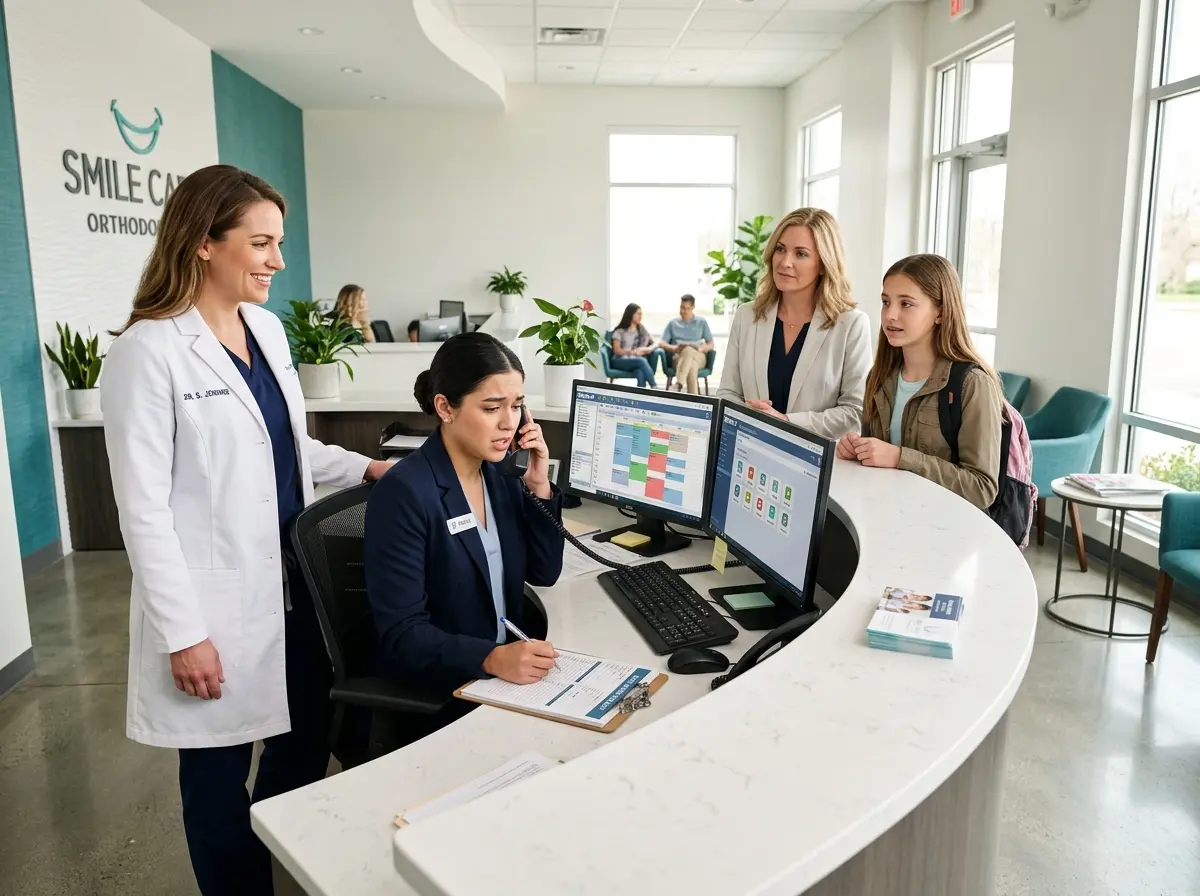
Let's be honest: the first impression your orthodontic practice makes on a prospective patient rarely matches the polished before-and-after photos on your website. Someone calls to ask about Invisalign, gets put on hold for four minutes, and then speaks with a front desk coordinator who is simultaneously checking in a patient, answering another line, and trying to remember where she put the new patient intake forms. Welcome to orthodontics.
Here's the uncomfortable truth — your clinical skills are probably excellent. Your treatment plans are thoughtful, your results are real, and your patients who actually make it through the door tend to love you. The problem isn't what happens in the chair. It's everything that happens before the patient ever sits down in it.
The new patient process — from first contact to scheduled consultation to completed paperwork — is where orthodontic practices hemorrhage potential revenue every single day. And most practice owners either don't realize it's happening or assume it's just the cost of doing business. It isn't. Let's talk about why your intake process feels like a relay race where half the runners don't show up.
Where Most New Patient Pipelines Quietly Fall Apart
The First Contact Problem: Missed Calls Are Missed Revenue
According to research from the dental and orthodontic industry, up to 40% of calls to dental and specialty practices go unanswered during business hours. After hours? That number climbs even higher. Every missed call is a prospective patient who just moved on to the next orthodontist in their Google search — probably the one ranked right below you.
The frustrating part is that most of those callers aren't calling with a complex clinical question. They want to know if you accept their insurance, how long treatment typically takes, whether you offer payment plans, and when you have availability for a consultation. These are not difficult questions. They just require someone — or something — to actually be there to answer them.
Many practices respond to this problem by adding more front desk staff, which is expensive, inconsistent, and still leaves the after-hours gap completely unaddressed. Others set up voicemail systems that patients almost never leave messages on, because nobody wants to leave a voicemail in 2024 and wonder if anyone will actually call back.
The Intake Form Fiasco
Congratulations — a prospective patient made it through the phone call gauntlet and scheduled a consultation. Now they receive an email with a PDF intake form they're supposed to print out, fill in by hand, scan, and email back. Or worse, they're told to "just come a few minutes early" to fill it out in the waiting room while their toddler dismantles a magazine rack.
Manual intake processes are a nightmare for everyone involved. They slow down your front desk team, they create data entry errors when staff transcribe handwritten forms, and they delay your clinical team from reviewing patient information before the appointment. Worst of all, they signal to new patients — right from the start — that your practice may not be as organized as you'd like them to believe.
A streamlined, conversational intake process that collects insurance information, chief concern, treatment history, and contact preferences before the patient walks through the door isn't a luxury. It's a basic operational improvement that pays for itself almost immediately.
The Follow-Up Black Hole
Here's a scenario that plays out in orthodontic practices everywhere: a prospective patient calls, gets some general information, says they'll "think about it and call back," and then... nothing. No follow-up from the practice. No record of the inquiry. No second attempt to re-engage them.
That patient might have been a perfect candidate for comprehensive treatment. They might have had a spouse and two kids who also needed braces. But because there was no system to capture their information, tag them appropriately, and trigger a follow-up, they've vanished — and you didn't even notice they were gone.
How the Right Tools Can Quietly Fix All of This
Automating First Contact Without Losing the Human Touch
This is where technology genuinely earns its keep. Stella, an AI robot employee and phone receptionist, is designed to handle exactly the kind of repetitive, high-stakes first contact that your front desk team is currently managing imperfectly. She answers calls 24/7, responds to questions about your services, payment options, insurance acceptance, and consultation availability — all using real knowledge about your specific practice. She can collect new patient intake information conversationally over the phone, and her built-in CRM automatically creates a contact profile with AI-generated summaries, custom tags, and notes so your team has full context before they ever interact with that patient themselves.
For practices with a physical location, Stella also operates as an in-office kiosk — greeting walk-ins, answering questions in the waiting area, and helping patients feel attended to even when your front desk coordinator is elbow-deep in insurance verifications. It's not a replacement for your human team. It's the layer that makes your human team more effective.
Building a New Patient Process That Actually Converts
Design the Experience Backward from the Consultation
The most effective new patient processes are designed in reverse. Start with the consultation itself and ask: what information does my clinical team need to have a productive, personalized conversation with this patient? Then build your intake process to collect exactly that information — no more, no less — before the patient arrives.
This means your intake forms should capture the patient's chief concern (crowding, spacing, bite issues, cosmetic goals), their treatment timeline expectations, their insurance carrier and member ID, and their preferred communication method. When your orthodontist walks into that consultation room already knowing these things, the appointment feels tailored and professional. Patients notice. Acceptance rates go up.
Create Clear Handoff Points Between Systems and People
One of the most common sources of chaos in orthodontic intake processes is the absence of clear handoff protocols. Who is responsible for following up with an unscheduled inquiry? At what point does a lead get flagged for a personal call from the treatment coordinator? What happens when a new patient completes intake forms but doesn't confirm their appointment?
Document these handoffs explicitly. Your front desk team should know exactly what triggers a follow-up call, what gets logged in your patient management system, and who owns each stage of the process. This isn't micromanagement — it's the difference between a predictable conversion pipeline and a chaotic system where things fall through the cracks because everyone assumed someone else was handling it.
Stop Treating Unconverted Inquiries as Dead Leads
An unconverted inquiry is not a closed door — it's a patient who wasn't ready yet. Orthodontic treatment is a significant financial and time commitment, and many prospective patients need weeks or even months of consideration before they're ready to move forward. If your practice has no mechanism for staying in contact with these patients during that consideration period, you're essentially handing them off to your competitors and wishing them well.
A basic re-engagement sequence — a personalized follow-up call at two weeks, a helpful email about financing options at four weeks, and a check-in at eight weeks — can meaningfully increase your consultation-to-start conversion rate. Pair this with a CRM that keeps track of where each prospective patient is in their decision process, and you have a system that generates starts from inquiries that your current process would have quietly abandoned.
Quick Reminder About Stella
Stella is an AI robot employee and phone receptionist that answers calls around the clock, collects patient intake information through conversational forms, and manages contact records through a built-in CRM — all for $99 a month with no upfront hardware costs. For orthodontic practices, she's the always-available front desk presence that makes sure no inquiry goes unanswered and no prospective patient falls through the cracks. She handles the repetitive, time-sensitive communication work so your human team can focus on the patients who are already in your chairs.
Your New Patient Process Can Be Better — Starting This Week
The gap between the orthodontic practice you're running and the one you want to run is almost never clinical. It's operational. It's the missed calls, the paper intake forms, the unconverted inquiries sitting forgotten in someone's email inbox. These are solvable problems, and none of them require a major overhaul to fix.
Start by auditing one week of incoming calls. How many were answered? How many went to voicemail? Of those, how many actually left a message, and how many of those were followed up on within 24 hours? The numbers may be humbling, but they'll tell you exactly where to focus first.
From there, look at your intake process and ask honestly whether it would impress you if you were a first-time patient. If the answer is no, simplify it and move as much of it online — or into a conversational AI flow — as possible. Then build out your follow-up protocols so that every inquiry is tracked, every unconverted lead gets a second chance, and your treatment coordinators are spending their time on high-value conversations instead of administrative cleanup.
You've spent years building clinical expertise and a practice worth choosing. Make sure the front door matches what's behind it.