Introduction: The Beautiful Chaos of a Multi-Generational Team
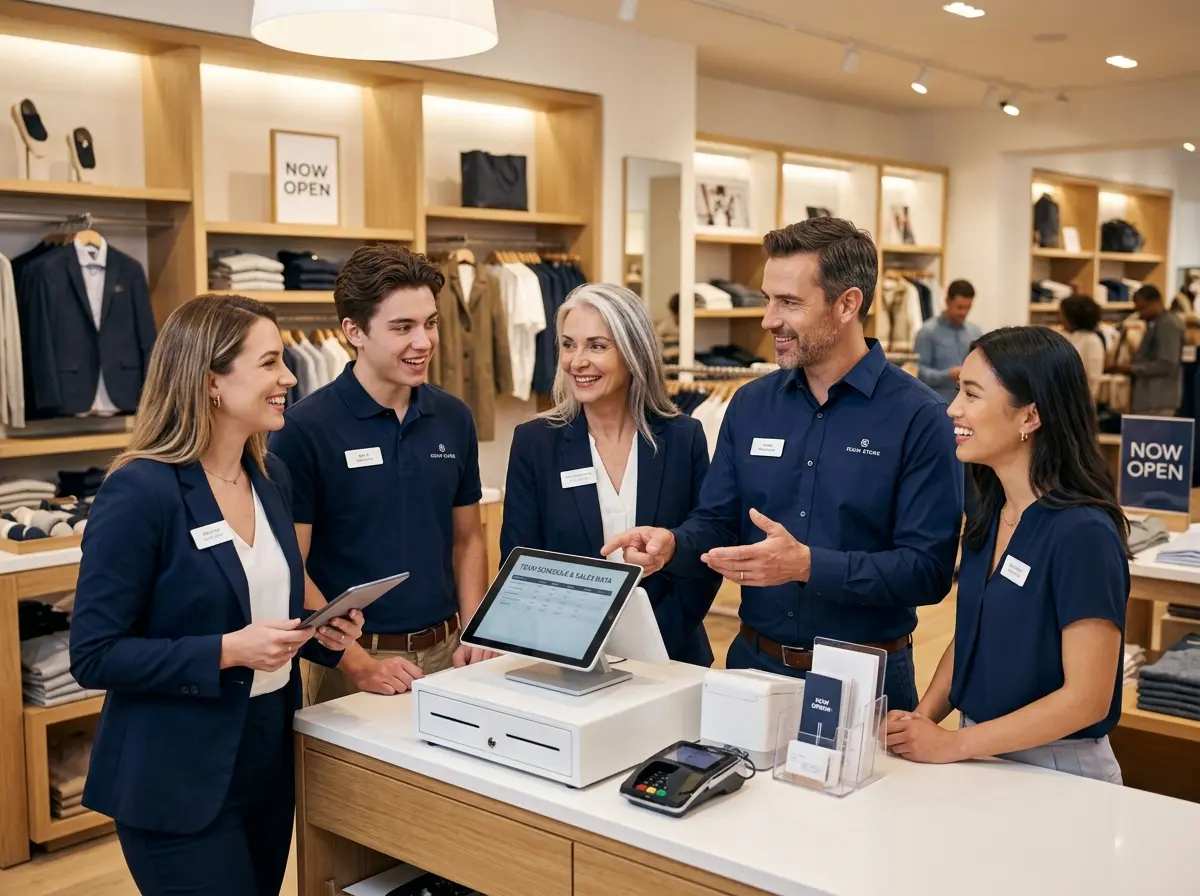
Picture this: your 22-year-old associate is explaining TikTok trends to a customer while your 58-year-old shift supervisor quietly mutters something about "kids these days" under her breath — and somehow, together, they just made the sale. Welcome to the wonderful, occasionally bewildering world of managing a multi-generational retail team.
Today's retail floor is a living timeline. You might have Baby Boomers who've been folding sweaters since before the internet existed, Gen Xers who invented hustle culture before it had a name, Millennials who want meaningful work and a decent latte, and Gen Z employees who will absolutely call you out on Instagram if your values don't match your actions. Managing this spectrum isn't just a scheduling challenge — it's practically a sociological experiment.
But here's the good news: a well-managed multi-generational team isn't a liability. It's one of your greatest competitive advantages. Different generations bring different strengths — institutional knowledge, tech fluency, emotional intelligence, and fresh perspectives. The key is learning how to conduct this orchestra without anyone walking off stage. Let's break it down.
Understanding Who's Actually on Your Team
Know the Generational Breakdown (Without the Stereotypes)
Before you can manage across generations, you need a rough map of the terrain. Generally speaking, your workforce likely spans Baby Boomers (born 1946–1964), Generation X (1965–1980), Millennials (1981–1996), and Generation Z (1997–2012). According to the Bureau of Labor Statistics, all four generations are currently active in the workforce — which means your break room conversations are more diverse than most United Nations meetings.
The trap most managers fall into is leaning too hard on generational stereotypes. Yes, broad patterns exist, but your 60-year-old cashier might be more tech-forward than your 25-year-old stock associate. Treat generational awareness as a starting point for understanding, not a personality diagnosis. Use it to inform your communication style and training approaches — not to put people in boxes and label them accordingly.
Identify the Strengths Each Generation Brings to Retail
Here's where it gets genuinely exciting. Baby Boomers and Gen Xers often bring deep product knowledge, customer relationship skills, and a reliability that newer employees are still building. Millennials tend to excel at multitasking, brand storytelling, and bridging the gap between old-school service and digital expectations. Gen Z employees are your native digital communicators — they understand social proof, online customer behavior, and authenticity in ways that can genuinely sharpen your store's edge.
A smart retail manager doesn't just tolerate this mix — they deliberately deploy it. Put your seasoned staff in mentorship roles. Let younger employees lead on social-facing initiatives or tech adoption. Cross-generational pairing during shifts isn't just feel-good management theory; it's a practical way to transfer knowledge in both directions and build team cohesion.
Reducing Friction So You Can Focus on Managing People
Let Technology Handle the Repetitive Stuff
One underrated source of workplace tension in multi-generational retail teams is the unequal burden of repetitive tasks. When your most experienced employees are constantly interrupted to answer basic customer questions or handle phone calls, it creates frustration — and frankly, it's a waste of their expertise. This is where Stella, the AI robot employee and phone receptionist, quietly becomes one of your best management tools.
For your physical location, Stella stands inside your store as a friendly, human-sized kiosk that proactively greets customers, answers questions about products, services, hours, and promotions, and even upsells without pulling your staff away from what they do best. On the phones, she answers calls 24/7, collects customer information through conversational intake forms, and forwards calls to human staff only when genuinely needed. When every generation on your team is freed from fielding the same five questions on repeat, they can focus on the higher-value interactions that actually require human judgment and relationship-building. That's a win for morale across the board.
Communication Strategies That Actually Work
Adapt Your Communication Style, Not Your Standards
Here's a management truth that applies whether you're leading a team of three or thirty: your standards stay the same, but how you communicate them should flex. Different generations genuinely have different communication preferences — and ignoring that is the express lane to unnecessary conflict.
Baby Boomers and many Gen Xers often prefer direct, in-person conversations or phone calls for important matters. Millennials tend to appreciate written follow-up and clear context — they want to understand the why, not just the what. Gen Z employees are perfectly comfortable with digital communication, but they also crave authenticity and transparency more than any previous generation. A text or team messaging app isn't lazy management to them — it's just efficient. The mistake is picking one communication style and forcing it on everyone. Use a combination of team meetings, written updates, and one-on-ones to make sure no one feels left out or talked over.
Create a Feedback Culture That Works in Both Directions
Multi-generational teams thrive when feedback flows both ways — and this is the part that makes some experienced managers slightly uncomfortable. Your younger employees have genuinely valuable observations about customer behavior, product presentation, and process inefficiencies. Your job is to build a culture where that input is welcomed without undermining the authority and experience of your senior staff.
Structured feedback channels help enormously here. Consider a brief weekly team check-in where every voice gets a moment — not just the loudest ones. Pair this with one-on-one conversations where employees of all ages can share concerns privately. Recognition also matters deeply across generations, though what feels meaningful differs. A public shout-out energizes some employees; a quiet acknowledgment from a manager means more to others. Ask your team how they like to be recognized. Groundbreaking advice? Maybe not. But almost no one actually does it.
Mentorship That Goes Both Ways
Traditional mentorship flows from experienced to newer employees — and that absolutely still has value. Your seasoned staff carry institutional knowledge, customer relationship wisdom, and an understanding of your business's history that simply cannot be Googled. But the modern retail environment also calls for reverse mentorship, where younger employees share digital skills, social media fluency, and fresh customer perspectives with their more experienced colleagues.
Formalizing this — even loosely — sends a powerful message: everyone on your team has something worth teaching and something worth learning. It builds mutual respect, reduces the "us vs. them" generational friction, and creates a learning culture that makes your business more adaptable. Pair a veteran with a newer hire on a joint project and watch the dynamic shift. You might be surprised how quickly the eye-rolling stops when people realize they actually need each other.
Quick Reminder About Stella
Stella is an AI robot employee and phone receptionist that greets customers in-store, answers phones 24/7, and handles the repetitive questions that slow your team down — all for just $99/month with no upfront hardware costs. She's easy to set up and never calls in sick, requests a schedule change, or needs a performance review. While you're busy managing your very human, wonderfully complex multi-generational team, she's handling the front lines without missing a beat.
Conclusion: Your Generational Mix Is a Feature, Not a Bug
Managing a multi-generational retail team is genuinely one of the more complex leadership challenges in small business — but it's also one of the most rewarding when you get it right. The businesses that figure this out don't just reduce turnover and improve morale; they build teams that are more resilient, more creative, and better equipped to serve a diverse customer base.
Here's your action plan to start this week:
- Audit your communication approach. Are you communicating in a way that actually reaches everyone on your team, or defaulting to one style and hoping for the best?
- Identify cross-generational pairing opportunities. Look at your current scheduling and find at least one place to deliberately pair experienced and newer staff for knowledge transfer.
- Reduce the repetitive task burden. Evaluate what's eating your team's time and attention — and consider how tools like Stella can handle the routine so your people can focus on the remarkable.
- Ask your team how they want to be recognized. Seriously, just ask. It takes two minutes and pays dividends for months.
The generational mix on your retail floor isn't a management headache to be solved — it's a strategic asset waiting to be unlocked. Treat it that way, and your team will surprise you.