When "Oops, My Tooth!" Can't Wait Until Monday
Picture this: It's 7:30 on a Saturday evening. A parent is frantically Googling "pediatric dentist emergency near me" because their seven-year-old just took a baseball to the mouth and now there's a tooth sitting in a cup of milk. They find your practice — great! They call your number — also great! And then... voicemail. Not great. Not great at all.
Dental emergencies in children don't politely schedule themselves between 9 AM and 5 PM on weekdays. They happen at soccer practice, during birthday parties, and at precisely the moment your receptionist has stepped away for lunch. For pediatric dental practices, a dedicated emergency line isn't just a nice-to-have — it's a critical part of delivering the kind of care that keeps families coming back for years and referring everyone they know. If your practice doesn't have one, you're not just missing calls. You're missing trust.
Let's talk about why a dedicated dental emergency line matters, how to set one up effectively, and how to make sure it actually works when it's needed most.
The Real Cost of a Missed Dental Emergency Call
It's Not Just One Patient — It's an Entire Family Relationship
In pediatric dentistry, you're not treating a single patient. You're building a relationship with an entire household. When a panicked parent calls your practice during a dental emergency and gets nothing but a generic voicemail, they're not just going elsewhere for that one visit — they're reconsidering their loyalty to your practice entirely. According to industry data, acquiring a new dental patient costs anywhere from $200 to $500, and yet a missed emergency call — something that costs virtually nothing to address properly — can undo all of that investment in seconds.
Children who experience dental trauma, sudden tooth pain, or a broken bracket at inconvenient hours need immediate guidance even if an in-person visit isn't possible right away. A quick phone conversation can reassure a panicked parent, provide basic first-aid instructions, and help them determine whether the situation requires an ER visit or can wait until morning. That conversation? It's worth its weight in five-star Google reviews.
Liability and Clinical Considerations
Beyond patient experience, there's a clinical and ethical dimension here that deserves serious attention. Dental emergencies — avulsed teeth, severe infections, significant oral trauma — can have lasting consequences if mismanaged in the first few hours. As a provider, having a clear, accessible channel for emergency guidance isn't just good business practice. It's part of your duty of care to your patients.
A dedicated emergency line with clear protocols tells parents exactly what to do and when, and it signals to your community that your practice takes its responsibilities seriously. Dental boards and professional associations consistently recommend that practices have after-hours emergency contact options in place. If your current setup is a voicemail box that gets checked on Monday morning, it may be time for a serious upgrade.
Setting Up an Emergency Line That Actually Works
How Stella Can Help Manage Your Practice's Phone Presence
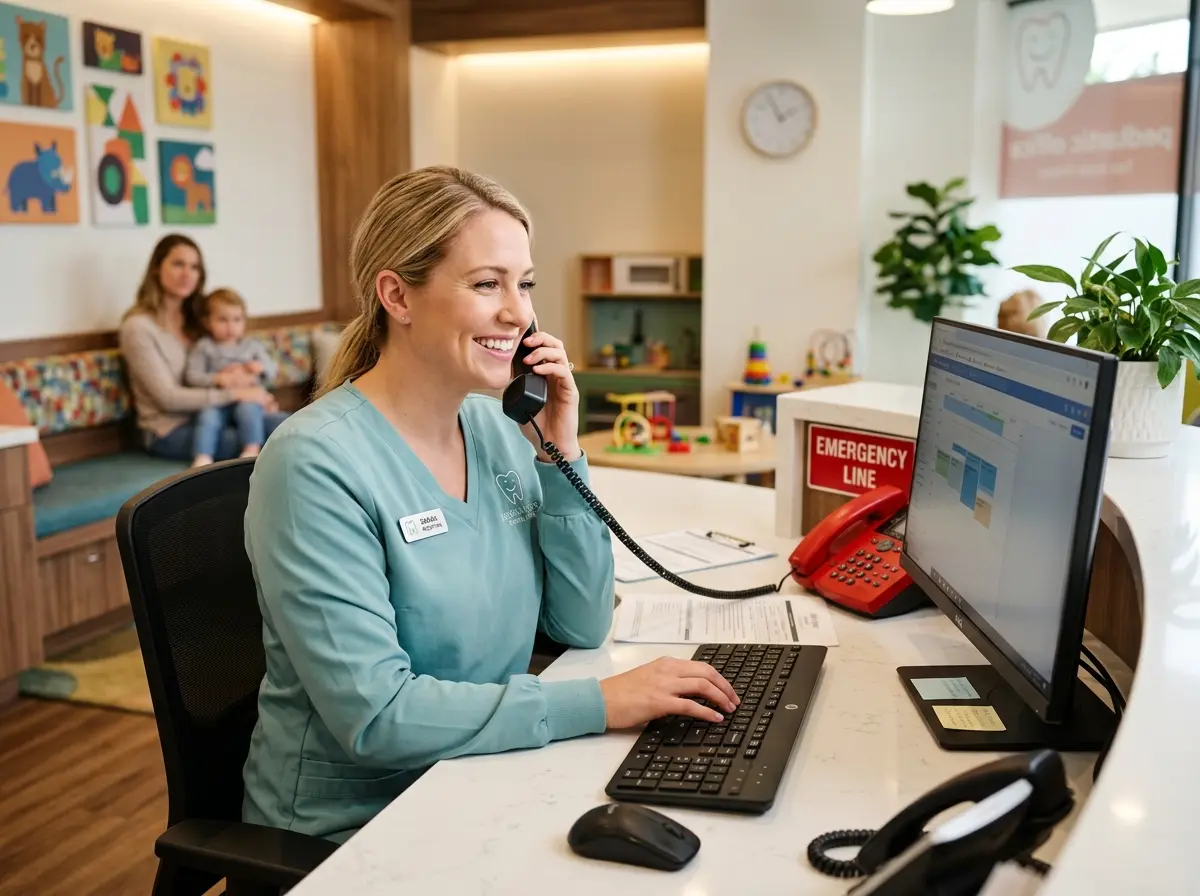
Here's where modern technology earns its keep. Stella — an AI robot employee and phone receptionist — is built to answer calls around the clock, every day of the year, with the same professional consistency your best front-desk staff bring on their finest Monday mornings. For a pediatric dental practice, this means parents calling after hours aren't met with silence or confusion. They're met with a calm, knowledgeable voice that can triage the situation, provide scripted first-aid guidance, collect patient information through conversational intake forms, and escalate to a human staff member when the situation genuinely demands it.
Stella's built-in CRM means that when a parent calls in a panic about a dental emergency, their child's information — name, age, existing patient status, known allergies — can be captured and organized automatically. AI-generated call summaries and push notifications to managers mean your on-call dentist isn't blindsided when they pick up a forwarded emergency call. They already know what they're walking into. That kind of seamless handoff is what separates a good emergency protocol from a great one.
Building the Right Emergency Protocol for Your Practice
Define What Counts as an Emergency (And Make Sure Everyone Knows It)
Not every call that comes in after hours is a true dental emergency, and your team — and your emergency line — needs to be able to tell the difference. A toothache that's been bothering a child for three days is uncomfortable and worth addressing promptly, but it's not the same as an avulsed permanent tooth, which has about a 30-minute window for the best chance of successful reimplantation.
Your emergency line protocol should clearly distinguish between situations that require immediate action (avulsed or intruded teeth, significant oral lacerations, suspected jaw fractures, severe swelling that may indicate abscess), situations that need same-day or next-day urgent appointments (broken teeth with exposed pulp, lost crowns or fillings causing pain), and situations that can be triaged for the next available opening. Train your staff on these categories, script your emergency line responses accordingly, and make sure whatever system handles after-hours calls is equipped with this information so it can guide callers appropriately.
Promote Your Emergency Line — Loudly and Often
Having an emergency line that nobody knows about is only marginally better than not having one at all. Your dedicated emergency number should appear prominently on your website's homepage, in your patient welcome packets, on appointment reminder cards, and in your email signature. Consider adding a brief mention of your emergency line to post-appointment communications: "If your child experiences any dental concerns between visits, our emergency line is available 24/7 at [number]."
This kind of proactive communication does two things. First, it gives parents the information they need before an emergency happens, so they're not frantically searching during a crisis. Second, it reinforces your practice's reputation as one that genuinely cares about its patients beyond office hours. That's a differentiator worth marketing.
Train Your Team and Test Your System Regularly
Even the best emergency protocols are only as strong as the people and systems executing them. Schedule quarterly walkthroughs with your team to review your emergency call procedures, update scripts as needed, and make sure contact forwarding and on-call schedules are current. Do a test call every few months — actually dial your emergency line from an outside number and see what happens. You might be surprised at what you find.
Gather feedback from patients who have used your emergency line. A simple follow-up message asking how the experience went can yield valuable insights and, occasionally, a glowing review that writes itself. The goal is a system that works flawlessly the first time, every time — because in a dental emergency, there's rarely a second chance to make a good impression.
Quick Reminder About Stella
Stella is an AI robot employee that works as both an in-office kiosk receptionist and a 24/7 phone answering solution — all for $99 a month with no upfront hardware costs. She answers calls, collects patient information, forwards urgent situations to your team, and keeps your practice looking professional even when the lights are off. For pediatric dental practices managing high call volumes and after-hours emergencies, she's the kind of reliable presence that doesn't call in sick or forget to check the voicemail.
Take Action Before the Next Emergency Happens
The best time to set up a dedicated dental emergency line was probably when you first opened your practice. The second-best time is right now — before another family calls during a crisis and ends up on hold with your competitor down the street.
Start with these actionable steps this week:
- Audit your current after-hours call experience. Call your own practice number after hours and document exactly what a patient experiences. If it's not reassuring and helpful, it's time to make changes.
- Define your emergency triage categories and create clear scripts for each scenario. Involve your clinical team so the guidance is medically sound.
- Set up or upgrade your emergency line with a solution that can handle after-hours volume intelligently — whether that's an AI-powered receptionist, an answering service, or a structured on-call rotation with proper forwarding.
- Update all patient-facing materials to prominently feature your emergency contact information.
- Schedule a protocol review every quarter to keep everything current and functional.
Your patients' families trust you with their children's smiles. That trust doesn't pause for weekends, holidays, or after-hours. A dedicated, well-managed emergency line is one of the most straightforward ways to honor that trust — and to ensure that when the moment of panic arrives, your practice is the calm, competent voice on the other end of the line.