You Can't Price What You Haven't Costed
Let's set the scene: You've spent months perfecting your signature dish. Customers love it. Your Instagram is popping. The restaurant is buzzing. And then, three months in, you sit down with your accountant and discover that your bestselling item has been quietly draining your bank account with every single order. Congratulations — you've been paying customers to eat your food.
This is not a hypothetical. It happens to restaurant owners more often than anyone in the industry likes to admit. The culprit? Skipping the unglamorous but absolutely essential step of formal recipe costing before setting menu prices. It's the financial equivalent of building a house without a blueprint — sure, it might stand for a while, but eventually something is going to collapse.
Recipe costing isn't just an accounting exercise for people who enjoy spreadsheets at midnight (though, if that's your thing, we respect it). It's the foundation of every profitable menu decision you'll ever make. Without it, you're essentially guessing — and in the restaurant business, guessing is an expensive hobby.
What Recipe Costing Actually Is (And Why It Matters More Than You Think)
The Anatomy of a Recipe Costing Sheet
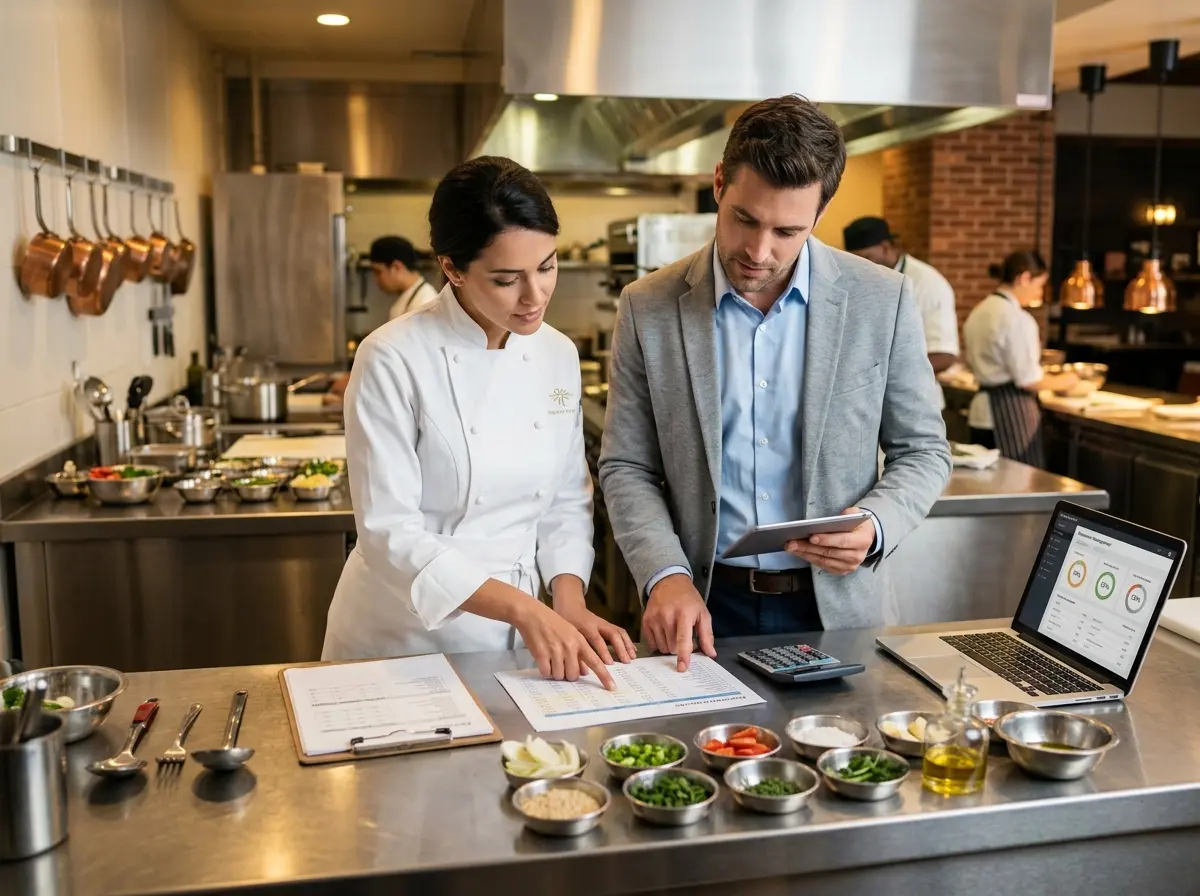
A formal recipe costing sheet is a detailed document that breaks down every single ingredient in a dish — down to the last pinch of salt and drizzle of olive oil — and assigns a real dollar cost to each component. It accounts for the quantity used per serving, the unit cost based on what you actually pay your suppliers, and any yield loss from trimming, cooking, or prep waste.
Here's what a proper recipe costing sheet should include:
- Ingredient name and unit of measure (ounces, grams, cups, etc.)
- Purchase price per unit, pulled directly from your supplier invoices
- Usable yield percentage — because that beautiful 10-pound beef tenderloin won't give you 10 pounds of servable meat
- Actual cost per serving after accounting for yield loss
- Total recipe cost for one portion
- Target food cost percentage and the resulting recommended menu price
Most restaurant operators target a food cost percentage somewhere between 28% and 35%, though this varies by concept, cuisine type, and market. A fine dining restaurant might comfortably operate at 38% because their margins are recovered through higher price points and beverage programs. A fast-casual spot might need to stay closer to 25%. Without a costing sheet, you genuinely have no idea which category you're in.
The Hidden Costs That Quietly Wreck Your Margins
Even experienced restaurateurs are sometimes surprised by what formal costing reveals. Yield loss is one of the biggest offenders. When you buy a case of avocados, you're not serving a case of avocados — you're serving the usable flesh after peeling, pitting, and discarding anything that's bruised or overripe. That shrinkage has a cost, and if it's not baked into your pricing, your guacamole is subsidizing your customers' chips.
Portioning inconsistency is another silent margin killer. If your recipe calls for four ounces of protein but your line cooks are casually plating five, that 25% overrun compounds across hundreds of covers per week. Recipe costing forces you to standardize, and standardization protects your profits. It also creates a better, more consistent guest experience — which is a bonus your customers will appreciate even if they never know why their steak tastes exactly the same every visit.
Don't overlook the small stuff either. Cooking oils, garnishes, sauces, and condiments might seem trivial per portion, but across a full menu and a full week of service, they add up faster than a brunch ticket printer running behind on a Sunday.
Supplier Prices Change — And So Should Your Costs
Recipe costing isn't a one-and-done exercise. Ingredient prices fluctuate with seasons, supply chains, and the general chaos of the modern world. The chicken breast you costed in January may cost 15% more by April. If your menu prices are locked in and your costing sheets are gathering digital dust, you're absorbing that increase silently. Building a habit of reviewing costing sheets quarterly — or any time a key supplier price changes significantly — is what separates reactive restaurant owners from proactive ones.
Running a Smarter Front-of-House While You Work on the Back-End
Freeing Up Your Team to Focus on What Actually Requires a Human
Here's the honest truth: recipe costing takes time. Real, focused, uninterrupted time — the kind that's nearly impossible to find when you're also managing a dining room, fielding phone calls about reservations, answering questions about your hours and menu, and trying to remember if you confirmed that large party booking from last Tuesday.
This is where Stella, the AI robot employee and phone receptionist, quietly earns her keep. Stella handles the constant front-of-house noise — greeting walk-in customers, answering phones 24/7, promoting your current specials, responding to common questions about your menu, hours, and policies — so your human staff can focus on service and you can carve out the time to run your numbers properly. She stands inside your restaurant engaging customers proactively, and she answers every phone call with the same knowledge and consistency she brings in person. When you're trying to build sustainable profit margins, having a reliable front-line presence that doesn't require a break, a schedule, or a pep talk is genuinely useful.
Turning Your Cost Data Into Smart Menu Pricing
How to Calculate Your Menu Price From a Costing Sheet
Once you have your total recipe cost per serving, the math is straightforward. Divide your recipe cost by your target food cost percentage to arrive at your minimum menu price. For example: if a dish costs you $6.50 to produce and you're targeting a 30% food cost, your minimum menu price is $6.50 ÷ 0.30 = $21.67. Round up to $22 or $23 depending on your market and concept, and you've got a defensible price with a real number behind it.
From there, you can layer in competitive analysis — what are similar dishes selling for in your market? — and perceived value. A beautifully plated dish with premium ingredients and a compelling menu description can often command a higher price than the raw math requires, which is where menu engineering starts to get interesting.
Menu Engineering: Stars, Plowhorses, Puzzles, and Dogs
Recipe costing feeds directly into a broader strategy called menu engineering, which classifies every menu item by two variables: profitability and popularity. The classic matrix breaks items into four categories:
- Stars — High profit, high popularity. These are your heroes. Protect them, promote them.
- Plowhorses — Low profit, high popularity. Customers love them, but they're not making you money. Consider portion adjustments or modest price increases.
- Puzzles — High profit, low popularity. Great margins if you can move them. Try repositioning, better descriptions, or server recommendations.
- Dogs — Low profit, low popularity. Have an honest conversation about why these are still on your menu.
You cannot run this analysis without accurate food cost data. Recipe costing isn't just about knowing what to charge — it's about understanding which items are actually building your business and which ones are quietly working against it.
Building a Costing Habit Into Your Operations
The best time to build costing sheets is before you launch a menu item. The second best time is right now. Start with your top ten sellers — the items that move the most volume — because those are where pricing errors have the greatest financial impact. Work your way through the full menu methodically, and then establish a review cycle tied to your supplier invoice cadence. Many operators find that a simple shared spreadsheet or a dedicated recipe costing software tool (such as MarketMan, BlueCart, or even a well-structured Excel template) keeps the process manageable without requiring a full-time analyst.
A Quick Reminder About Stella
Stella is an AI robot employee and phone receptionist built for businesses like yours. She greets customers in person at your location, answers every phone call around the clock, promotes your specials, and handles the routine front-of-house questions that pull your staff away from more important work — all for $99/month with no upfront hardware costs. While you're focused on building the operational systems that make your restaurant actually profitable, Stella keeps the front door covered.
Start Costing Before You Start Pricing — Every Time
The restaurants that survive long enough to become institutions aren't necessarily the ones with the most talented chefs or the trendiest concepts. They're the ones that understand their numbers. Recipe costing is one of the most fundamental financial disciplines in the food service industry, and yet it remains one of the most commonly skipped steps — usually because it feels tedious compared to the creative work of building a menu.
Here's your actionable starting point: this week, pick your five highest-volume menu items and build a formal costing sheet for each one. Pull your most recent supplier invoices, calculate your usable yield on each ingredient, and compare the resulting food cost percentage to what you thought it was. You may be pleasantly surprised. You may be considerably less pleased. Either way, you'll have real data — and real data is the only foundation worth building a pricing strategy on.
From there, commit to a quarterly review cycle, integrate costing into your new item development process, and use that data to run even a basic version of menu engineering on your full offering. It doesn't have to be complicated. It just has to be done.
Your margins will thank you. Your accountant will thank you. And your future self, who is not paying customers to eat your food, will absolutely thank you.