Introduction: The Pre-Shift Meeting That's Costing You Money (By Not Happening)
Let's be honest — how many of your pre-shift meetings currently consist of a manager speed-reading the specials off a sticky note while servers check their phones? If that sounds uncomfortably familiar, you're leaving serious money on the table every single night. And no, we're not talking pocket change. We're talking about the difference between a $38 check average and a $55 one.
Here's the uncomfortable truth: your servers are your salespeople. They just don't always know it — and more importantly, they don't always act like it. A well-trained server who understands the menu deeply, believes in the specials genuinely, and knows how to guide a guest toward a better experience (and a higher ticket) is worth their weight in gold. The vehicle for creating that server? A structured, purposeful pre-shift training meeting.
Pre-shift training isn't glamorous. It's not a new POS system or a flashy marketing campaign. But it is one of the highest-ROI investments you can make as a restaurant owner, and it costs you almost nothing except a little intention and about 15 minutes before service begins.
What Great Pre-Shift Training Actually Looks Like
It's Not a Monologue — It's a Conversation
The biggest mistake managers make during pre-shift meetings is treating them like a one-way broadcast. Manager talks, servers nod, everyone disperses. Done. Except nothing was retained, nothing was practiced, and your server just told table four they "think" the risotto is vegetarian. (It's not. There's pancetta in it.)
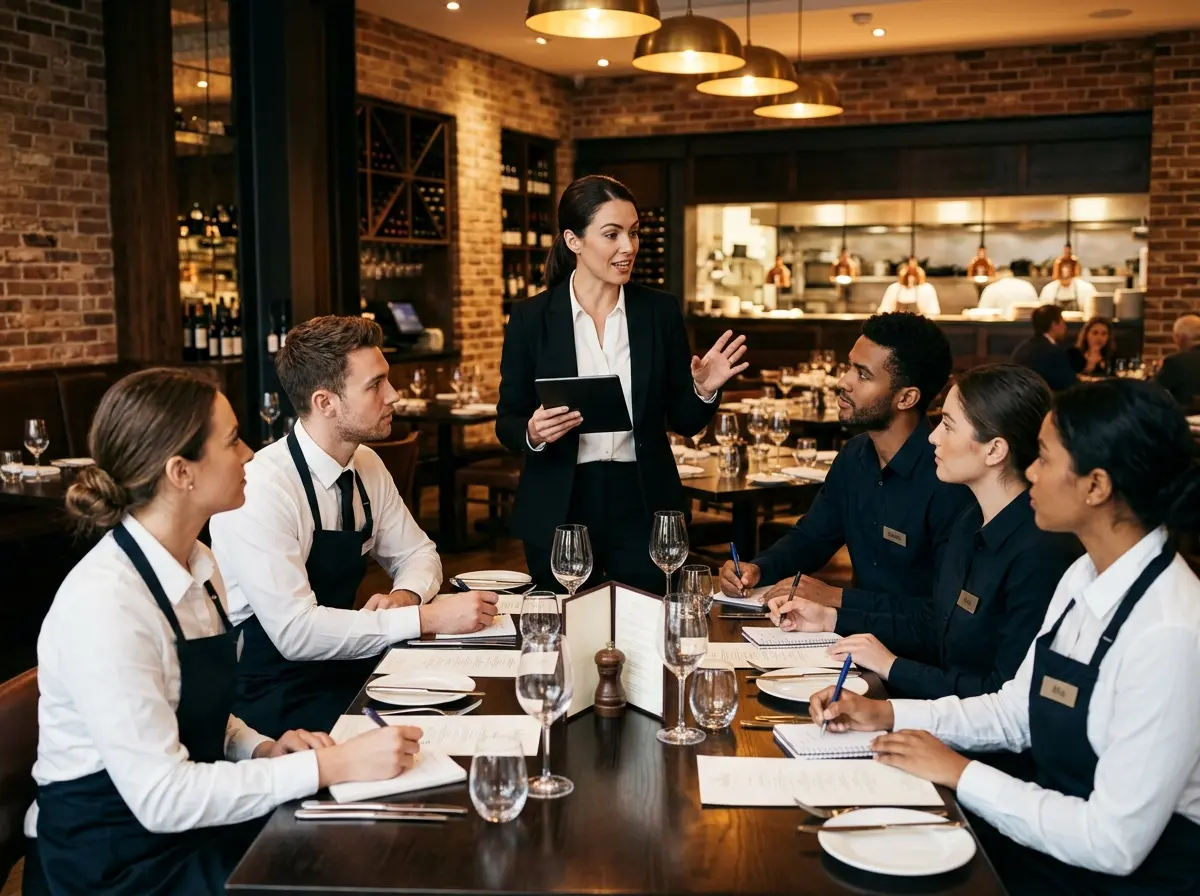
Effective pre-shift training is interactive. It involves asking servers questions, having them taste the specials, and letting them practice describing dishes out loud. When a server physically says the words "our chef is featuring a seared duck breast with a cherry demi-glace and roasted fingerling potatoes," they're dramatically more likely to say it confidently at the table. Muscle memory isn't just for athletes — it's for salespeople too.
Encourage your managers to run the meeting like a quick rehearsal. Ask servers to pitch the specials to each other. Role-play common objections. "I'm not that hungry" is an invitation to suggest a beautifully paired appetizer and half-portion entrée — not a cue to just hand over the menu and disappear.
What to Cover (And What You're Probably Skipping)
A strong pre-shift meeting covers more than just the day's specials. Here's what should be on the agenda every single shift:
- Tonight's specials — with descriptions, key ingredients, and suggested pairings
- 86'd items — so servers aren't selling something the kitchen ran out of two hours ago
- High-margin items to push — cocktails, appetizers, desserts, and specialty beverages
- Table or section updates — any large parties, VIPs, or guests with dietary restrictions already noted
- A brief upsell focus — pick one thing each shift. Tonight it's dessert. Tomorrow it's the craft cocktail menu. Keep it simple and focused.
That last point is often skipped entirely. Giving your team one specific upsell goal per shift creates focus without overwhelm. If every server sells one additional dessert per table tonight, do the math on what that means for your nightly revenue. The numbers get interesting fast.
Training Servers to Tell Stories, Not Recite Menus
Guests don't connect with ingredient lists. They connect with stories. "This is our chef's grandmother's recipe" or "we source these oysters from a small farm about two hours north of here" creates an emotional hook that makes the dish more appealing — and more memorable. Train your servers to be storytellers, not spec sheets.
This takes practice, and that's exactly what pre-shift time is for. Have servers share one compelling fact or story about a featured item before every service. Over time, this becomes second nature, and your guests will notice the difference between a server who's genuinely enthusiastic and knowledgeable and one who's just taking orders.
A Quick Word on Tools That Can Pick Up the Slack
Letting Technology Handle What It Does Best
Pre-shift training makes your floor team sharper — but even the sharpest team has limits. Phones ring during the dinner rush. Walk-ins have questions your host is too slammed to answer. Regulars want to know about tonight's specials before they even leave the house. That's where Stella quietly becomes one of your most valuable team members.
Stella is an AI robot employee and phone receptionist that stands inside your restaurant and engages guests proactively — answering questions about the menu, promoting current specials, and even upselling before your server ever reaches the table. She also answers your phones 24/7, so when someone calls at 10 PM to ask about your hours or whether you take reservations, there's always a professional, knowledgeable voice ready to respond. While your team focuses on delivering a great in-person experience, Stella handles the noise without missing a beat.
Turning Pre-Shift Habits Into Long-Term Check Average Growth
Making It Consistent, Not Occasional
Here's where most restaurants fail: they run a great pre-shift meeting on a Thursday because the GM happened to be in a good mood, and then it quietly disappears for the rest of the week. Consistency is everything. A single great meeting is a fluke. Fifty great meetings in a row is a culture shift.
Build a simple template your managers can follow every day. It doesn't need to be elaborate — a one-page sheet that covers specials, focus upsell, 86'd items, and one piece of service feedback from the previous shift. Rotate the responsibility among your management team so it doesn't fall on one person's shoulders. When pre-shift training is embedded into your operational rhythm, it stops feeling like a chore and starts feeling like preparation.
Consider tracking your check averages weekly and correlating them to shifts where structured pre-shift meetings happened versus nights they didn't. The data will make the case better than any motivational speech. Restaurant operators who implement consistent pre-shift training report check average increases of 10–20% within the first 60 days — not because the food changed, but because the conversation around it did.
Incentivizing the Right Behaviors
Knowledge without motivation only goes so far. If you want your servers to actively upsell, give them a reason to care beyond the obvious tip benefit — which, by the way, many servers don't instinctively connect to upselling. Make it explicit. A server who upsells a $12 cocktail instead of a $6 soda just increased their tip basis on that item by $6. Across a four-top, that adds up quickly.
Create friendly competitions. "Whoever sells the most desserts tonight gets to pick their section tomorrow." Run a monthly award for highest average check. Celebrate the wins publicly. When upselling becomes part of the culture and not just a management mandate, you've won the hardest battle.
Using Feedback Loops to Refine Your Approach
Pre-shift training should be a living process, not a static one. At the end of each week, review what worked. Which specials sold out fastest? Which upsell focus yielded the most results? Which servers are consistently outperforming their peers in check averages, and what are they doing differently?
Bring those insights back into the next week's training. Let your top performers share their language and techniques. Create a culture of learning where being great at selling is celebrated as a skill — because it is. The restaurants that treat service excellence as a craft, not just a shift, are the ones that build loyal guests and healthy margins.
Quick Reminder About Stella
Stella is an AI robot employee and phone receptionist built for businesses like yours — she greets guests in person, promotes specials, answers questions, and handles phone calls around the clock on a simple $99/month subscription. While your team focuses on delivering exceptional table service, Stella keeps the front-of-house experience sharp without adding to your payroll stress. She doesn't call in sick, she doesn't forget the specials, and she never needs a pre-shift meeting.
Conclusion: Fifteen Minutes That Change Everything
The math here is not complicated. A restaurant doing 80 covers a night with an average check of $42 generates $3,360 in revenue. Move that average to $50 with better server training and focused upselling, and you're looking at $4,000 — every single night. That's over $200,000 in additional annual revenue, and it starts with a 15-minute meeting before service.
So here's your action plan. This week, audit your current pre-shift process — or acknowledge that one doesn't really exist yet. Build a simple daily template. Pick one upsell focus per shift. Have servers practice their specials out loud. Track your check averages. Repeat.
It won't happen overnight, but it will happen. The restaurants that invest in their people's product knowledge and sales confidence aren't the ones hoping for a good night — they're the ones building good nights, one pre-shift meeting at a time. Start tomorrow. Your check averages are waiting.