Your Voicemail Is Costing You Clients — And It Doesn't Even Care
Picture this: a frantic pet owner's dog just ate something suspicious off the kitchen floor. It's 7:45 PM on a Tuesday. They grab their phone, heart racing, and dial your veterinary clinic. And what do they get? "You've reached Paws & Claws Veterinary Clinic. Our office hours are Monday through Friday, 8 AM to 5 PM. Please leave a message after the tone."
Beep.
That client didn't leave a message. They called the next clinic on Google, who answered, booked the appointment, and now has a loyal customer for life — complete with annual wellness visits, dental cleanings, and the occasional "my cat is acting weird" follow-up call. Meanwhile, your voicemail sat there, completely unbothered, doing absolutely nothing.
Here's the uncomfortable truth: your voicemail isn't a communication tool. It's a politely worded dead end. And in a world where pet owners expect instant answers and seamless service, a generic recording is doing real damage to your bottom line. Let's talk about why — and more importantly, what you can do about it.
The Hidden Costs of Missed Calls in Veterinary Practices
Most clinic owners know missed calls are bad. What they don't fully appreciate is how bad — and how quietly the losses accumulate over time. This isn't just about one anxious dog owner finding another vet. It's about compounding revenue loss, damaged reputation, and a client experience that starts on the wrong foot before anyone even walks through your door.
The Numbers Don't Lie
Studies have shown that 85% of callers who reach voicemail will not call back. In a veterinary context, where calls often involve time-sensitive health concerns, that number likely skews even higher. Pet owners experiencing a perceived emergency aren't going to patiently wait for a callback during your office hours — they're going to find someone who picks up.
Consider the lifetime value of a single veterinary client. Between routine wellness exams, vaccinations, dental care, diagnostics, and specialty services, a loyal client with even one pet can represent thousands of dollars in revenue over several years. Multiply that by every missed call in a given month, and suddenly that voicemail isn't just annoying — it's expensive.
After-Hours Calls Are Peak Opportunity, Not an Inconvenience
There's a persistent myth in veterinary practice management that after-hours calls are a burden to be managed rather than an opportunity to be seized. In reality, the pet owner calling at 8 PM is often more motivated, more emotionally invested, and more likely to become a long-term client than someone casually browsing your website at noon.
They're calling because they care. They're calling because something is happening right now. And if your clinic is the one that shows up for them in that moment — even just by providing helpful information, answering a basic question, or confirming an appointment option — you've built trust that no marketing campaign can replicate.
It's Not Just After Hours
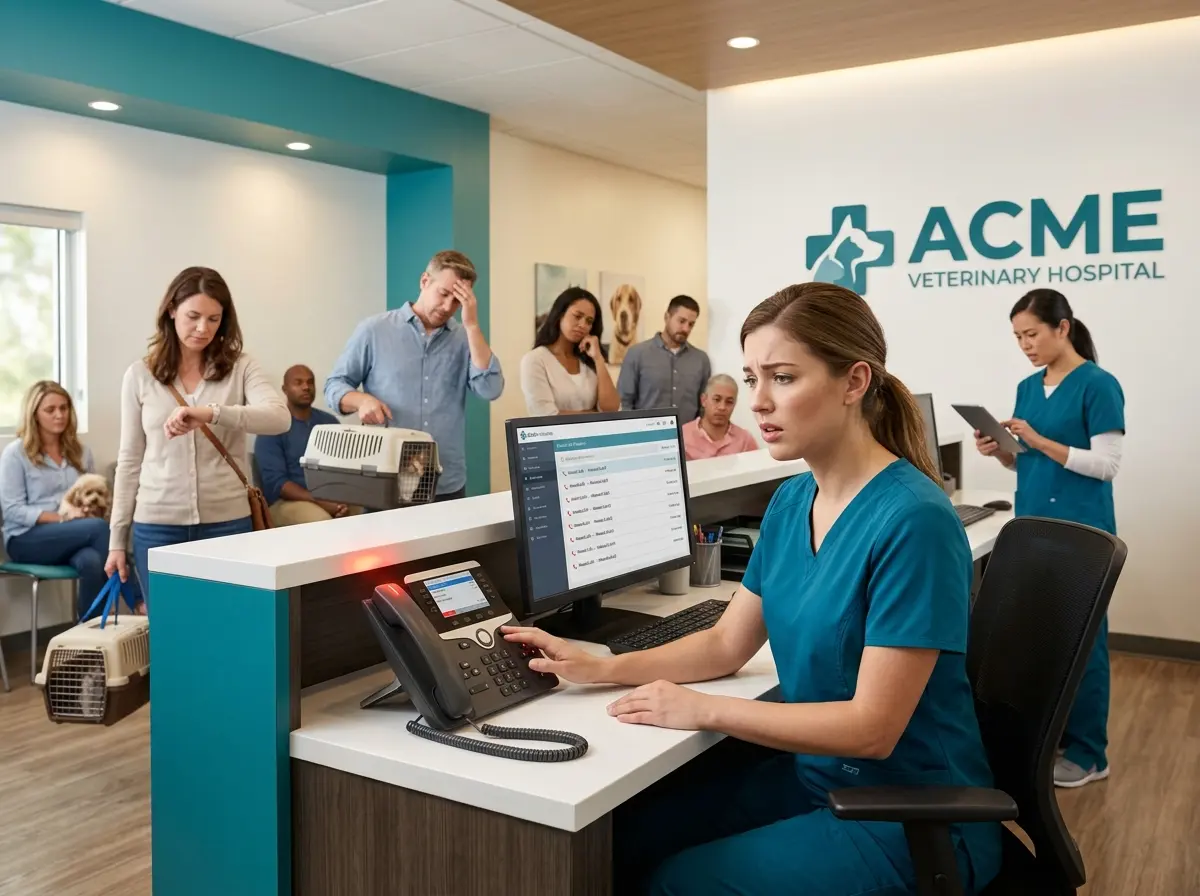
Here's another uncomfortable reality: voicemail wins even during business hours. Your front desk staff are doing three things at once — checking in a patient, answering questions from the lobby, and trying to locate a chart. The phone rings. Nobody picks up. Voicemail. The client who was simply calling to reschedule an appointment is now wondering if your clinic is disorganized, understaffed, or just doesn't care. First impressions are stubborn things.
A Smarter Front Desk Starts With Smarter Tools
The good news is that the solution to your voicemail problem doesn't require hiring additional staff, extending your hours, or cloning yourself. It requires rethinking what a "receptionist" can be in 2024.
How Stella Can Transform Your Client Communication
Stella is an AI robot employee and phone receptionist designed to handle exactly the kinds of interactions that currently fall through the cracks at your clinic. She answers phone calls 24/7 — nights, weekends, holidays — with the same knowledge and professionalism as your best human staff member, minus the burnout and scheduling conflicts.
When a client calls after hours worried about their dog, Stella answers. She can share your clinic's hours, explain your services, collect the caller's information, and even take a detailed voicemail with an AI-generated summary pushed directly to your phone as a notification — so you wake up to a clear, organized summary of who called and why, not a jumbled 90-second audio file you have to replay twice. For clinics with a physical location, she also stands inside the lobby as an in-person kiosk, greeting walk-ins proactively and answering questions so your front desk staff can focus on patient care rather than fielding the same questions about flea prevention or appointment availability for the fifteenth time that day. Her built-in CRM and conversational intake forms mean client information is captured cleanly and automatically — no clipboards, no manual data entry, no gaps.
What Great Veterinary Client Communication Actually Looks Like
Fixing your phone problem is only half the battle. The clinics that build genuinely loyal client bases do so by delivering a communication experience that feels consistent, responsive, and human — even when the humans are busy doing the important medical work they went to school for.
Consistency Builds Trust
Clients don't just want answers — they want the same good experience every single time they interact with your clinic. When your Monday morning receptionist is cheerful and knowledgeable, but Wednesday afternoon is a different story because you're short-staffed and stressed, that inconsistency erodes confidence. The most successful practices treat client communication as a system, not a personality-dependent event. Standardized responses to common questions, clear protocols for after-hours inquiries, and predictable follow-up timelines all contribute to a reputation for reliability.
Proactive Communication Is a Competitive Advantage
Most veterinary clinics are reactive communicators — they respond when contacted and hope clients remember to call when something comes up. The practices that stand out are the ones that reach out first. Appointment reminders, wellness visit nudges, follow-ups after procedures — these touchpoints don't just improve health outcomes for patients, they dramatically improve retention and referrals from clients who feel genuinely cared for rather than just processed.
This doesn't have to be labor-intensive. Automated systems can handle the cadence while your team handles the nuance. The key is having a communication infrastructure that works whether you're in the building or not.
Every Touchpoint Is a Marketing Moment
Your phone interaction isn't just a logistical exchange — it's a marketing moment. A client who calls to ask about heartworm prevention and gets a friendly, informative response is more likely to book an appointment, more likely to add on a wellness package, and more likely to recommend your clinic to a neighbor whose new puppy needs a vet. Conversely, a client who reaches voicemail and hangs up without leaving a message will probably not be recommending you to anyone.
Think about every client interaction as an opportunity to reinforce why your clinic is the right choice. That mindset shift — from communication as a chore to communication as a competitive tool — is what separates good practices from great ones.
Quick Reminder About Stella
Stella is an AI robot employee and phone receptionist built for businesses just like yours — she answers calls around the clock, greets customers in person at your location, and keeps your client information organized automatically. At $99/month with no upfront hardware costs and an easy setup process, she's available whenever your human team isn't — which, let's be honest, is more often than any of us would like to admit.
Stop Letting Your Voicemail Run Your Practice — Here's What To Do Next
If you've made it this far, you already know your voicemail situation needs attention. The question isn't whether to fix it — it's how quickly you can get there. Here's a practical path forward:
Start by auditing your current missed call rate. Most phone systems or service providers can give you data on unanswered calls. If you don't know how many calls are going to voicemail each week, you're managing a problem you can't see. Get the numbers. They will almost certainly be more alarming than you expect.
Map your after-hours call patterns. When are clients calling and not getting through? If a significant chunk of your missed calls happen between 5 PM and 9 PM, that's a solvable problem — not a fact of life. Understanding when the gaps occur tells you where to focus your solution.
Upgrade your communication infrastructure. This means replacing or supplementing your voicemail with a system that actually engages callers rather than dismissing them. Whether that's an AI receptionist, an answering service, or a redesigned staffing model, the goal is the same: no motivated client should hit a dead end when they're trying to reach you.
Train your team on communication standards. Technology can handle a lot, but your human staff still sets the tone. Make sure everyone on your team — front desk, technicians, even the doctors — understands how client communication reflects on the practice and has clear guidelines for handling common scenarios.
Your voicemail has been your worst employee for long enough. It shows up every day, takes zero initiative, drives away clients, and asks for absolutely nothing in return — because it contributes absolutely nothing in return. It's time to replace it with something that actually works as hard as you do.
Your clients — and your revenue — will thank you.