Introduction: The Invisible Salesperson You're Ignoring
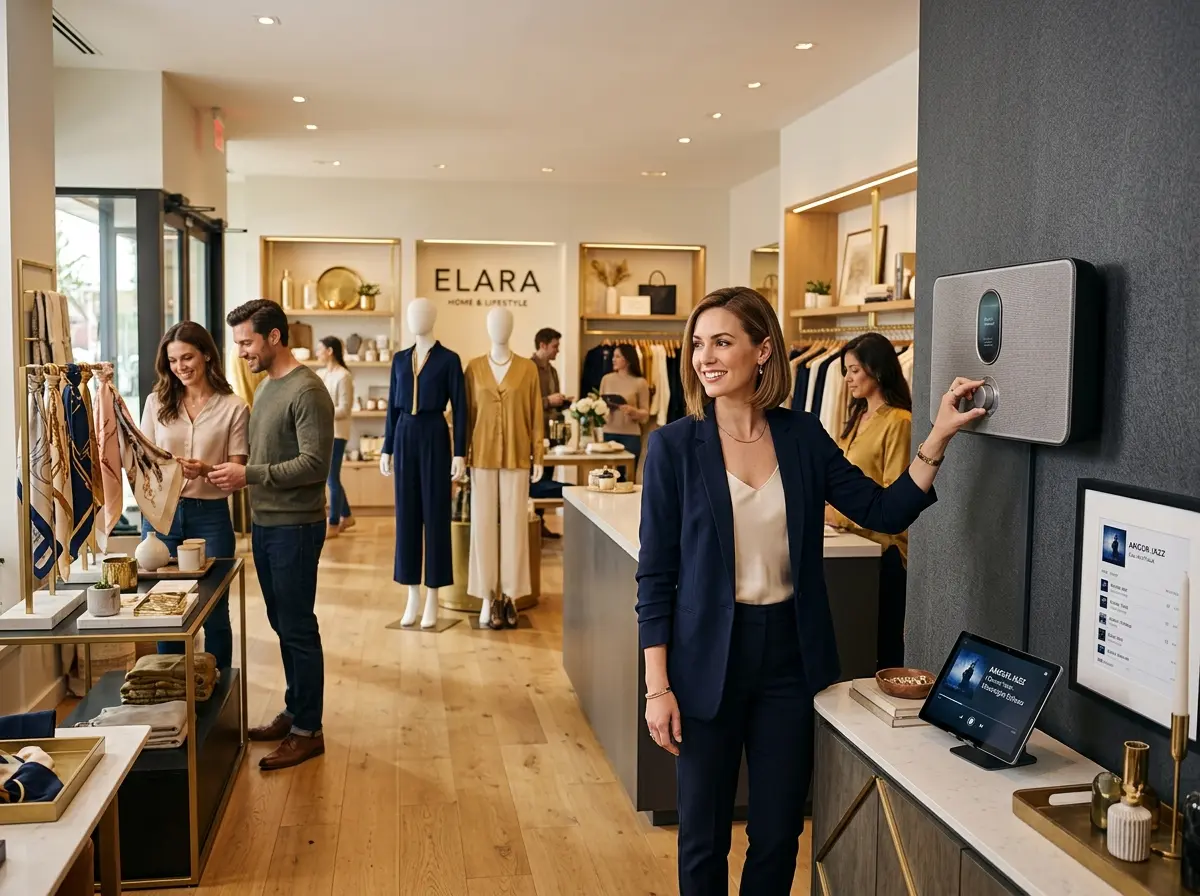
You've spent thousands of dollars on your store layout, lighting, signage, and product displays. You've trained your staff, optimized your pricing, and obsessed over your inventory. But there's a silent force working in your store right now — either for you or against you — that most business owners treat as an afterthought: your music.
Yes, that playlist you threw together five years ago and never touched again. That's the one.
Here's the thing: music isn't just background noise. It's an active participant in your customer's experience, influencing how long they stay, how much they spend, and whether they feel like coming back. Research published in the Journal of Retailing found that music tempo, volume, and genre all directly affect consumer behavior — sometimes dramatically. Shoppers in stores playing slow-tempo music spent 38% more time browsing and made significantly larger purchases than those in stores with fast-tempo tracks.
That's not magic. That's science. And if you're not intentional about your store's soundtrack, you're essentially leaving money on the table while your playlist shuffles to something wildly inappropriate for a Tuesday afternoon. Let's talk about how to fix that.
The Psychology of Sound: Why Music Moves (and Spends) People
Tempo Controls the Traffic Flow
Think of your store's music tempo as a volume knob for urgency. Fast-paced music — think 120+ BPM — subconsciously signals to customers that they should be moving quickly. That might work in a fast-food environment where turnover is the game, but in a boutique, a spa, or a home goods store? You're essentially playing "hurry up and leave" on repeat.
Slower tempo music (around 60–80 BPM) naturally encourages customers to slow down, look around more carefully, and — critically — add more items to their baskets. A landmark study by Dr. Charles Areni and David Kim demonstrated that slow classical music in a wine shop led customers to purchase significantly more expensive bottles compared to top-40 pop music. Same products. Same prices. Different soundtrack, different results.
Volume: The Goldilocks Problem
Volume is where many retailers get it badly wrong in both directions. Too loud, and customers can't think straight — or have a conversation with your staff — so they leave faster than intended. Too quiet, and the store feels awkward and clinical, like a dentist's waiting room without the outdated magazines.
The sweet spot is conversational background volume: loud enough to fill the space and create atmosphere, quiet enough that customers don't feel the need to shout their questions. As a general rule, if your staff is regularly raising their voices over the music, it's too loud. If customers look around uncomfortably when they walk in, it might be too quiet.
Genre and Brand Alignment: Does Your Music Match Your Vibe?
Here's where things get genuinely fascinating — and where a lot of retailers unconsciously sabotage themselves. Genre sends a powerful signal about your brand identity. Playing hip-hop in an upscale jewelry store or classical music in a skateboard shop creates a jarring cognitive dissonance that customers might not consciously identify, but absolutely feel.
Genre alignment with your brand can reinforce the customer's sense that they belong in your store, which increases dwell time and purchase confidence. A surf shop playing indie beach vibes, a yoga studio playing ambient acoustic sets, or a local coffee shop playing mellow jazz — these aren't accidents. They're branding decisions that work on a subconscious level. Take some time to honestly audit whether your current playlist actually reflects the experience you want customers to have.
Smarter Customer Experiences Start Before the Playlist
While You're Optimizing the Ambiance, Let Someone Handle the Front
Here's a practical reality: even the most perfectly curated playlist won't save you if customers walk in and feel ignored, or if your phones go unanswered during a busy Saturday rush. That's where Stella comes in. Stella is an AI robot employee and phone receptionist designed specifically for business owners who want a consistently professional, engaging customer experience — without the overhead of additional staff. In-store, she greets every customer who walks through the door, answers product questions, promotes current deals, and handles the small interactions that tend to pull your human staff away from more complex tasks.
Stella also answers phone calls 24/7 with the same knowledge she uses on the floor — so while you're busy fine-tuning the ambiance of your store, she's making sure no lead slips through the cracks on the phone line either. At just $99/month with no upfront hardware costs, she's a remarkably practical addition to any retail operation.
Building a Strategic Playlist: Practical Steps for Retail Owners
Map Your Music to Customer Journey Stages
Not all parts of your store serve the same purpose, and your music strategy should reflect that nuance. Consider thinking about your soundtrack in layers:
- Entry zones: Upbeat, welcoming energy that makes customers feel immediately comfortable. This is your first impression — treat it accordingly.
- Browsing areas: Slower, more relaxed tempos that encourage exploration and longer dwell time. This is where purchase decisions are made.
- Checkout areas: Slightly brighter, more upbeat tracks that create a positive ending to the experience without dragging out the line.
If your layout doesn't allow for zone-specific audio, at minimum consider creating different playlists for different times of day. Early morning shoppers typically respond well to calm, relaxed music, while after-work crowds often engage better with slightly more energetic tracks that match their current mood.
Time-of-Day and Seasonal Intentionality
Your 10 AM crowd and your 5 PM crowd are not the same people with the same mindset, and your music shouldn't treat them that way. Early-day shoppers are often in browsing, discovery mode — they respond well to calm, ambient music that invites exploration. Evening shoppers may be tired after work and either want something energizing or something soothing depending on your specific clientele.
Seasonality matters enormously as well. Retail stores that lean into seasonal music — tastefully and not excessively — create stronger emotional associations with their brand during peak periods. The key word there is "tastefully." Nobody wants to hear holiday jingles on loop starting in October. Nobody.
Licensing: The Part Nobody Wants to Think About
This section exists because someone has to say it: you cannot legally play Spotify or Apple Music in your store without a commercial license. Personal streaming subscriptions are licensed for personal, non-commercial use. Playing them in a business setting — even a small one — technically violates copyright law and can result in fines that will make you wish you'd just paid for a proper business music service.
Services like Soundtrack Your Brand, Cloud Cover Music, and Rockbot are specifically designed for commercial retail use. They offer licensed music libraries, curated mood-based playlists, and even scheduling tools. They're not expensive, they're legal, and some of them give you surprisingly granular control over exactly the kind of brand experience you want to create. This is not the place to cut corners.
Quick Reminder About Stella
Stella is a human-sized AI robot kiosk and phone receptionist built for businesses of all types — retail, restaurants, salons, gyms, medical offices, and more. She greets in-store customers, answers questions, promotes deals, and handles phone calls around the clock, all for $99/month with no upfront costs. While you focus on crafting the perfect customer experience, Stella makes sure every interaction — in person or on the phone — is handled professionally and consistently.
Conclusion: Turn Up the Right Volume on Your Strategy
Your store's soundtrack is one of the most underutilized tools in retail — and the good news is that it's also one of the most accessible. You don't need a massive budget or a music degree. You need intentionality, a few smart decisions, and a willingness to actually update that playlist from 2019.
Here's a simple action plan to get started:
- Audit your current music. Does it match your brand identity, your customer demographic, and the atmosphere you want to create? Be honest.
- Check your licensing situation. If you're using a personal streaming account, fix that today.
- Map your playlists to the customer journey. Create at least a morning, midday, and evening playlist variation to start.
- Watch your dwell time and average transaction value over the next 30 days after making changes. The data will tell you if it's working.
- Get your front-of-house experience dialed in beyond just music. If your customers are being greeted, helped, and engaged — both in-store and over the phone — everything else works better together.
Music is cheap. Lost customers are not. Treat your store's soundtrack like the sales tool it actually is, and you might be surprised how much of a difference the right song at the right volume can make to your bottom line.