Introduction: Why Your Waiting Room Shouldn't Look Like a Ghost Town
Let's be honest — you didn't spend years studying biomechanics and mastering the art of spinal adjustments just to sit around waiting for patients to magically appear. Yet here you are, with an appointment book that has more gaps than a teenager's wisdom teeth situation, wondering how to grow your practice sustainably. Sound familiar?
High school sports teams are one of the most underutilized patient pipelines in chiropractic. Think about it: hundreds of young athletes in your community, performing physically demanding activities five days a week, often with zero professional musculoskeletal support. They're getting tackled, sprinting, jumping, twisting, and doing all the glorious things that eventually lead someone to book a chiropractic appointment. The question isn't whether these athletes need you — they absolutely do. The question is whether you're positioned to be the chiropractor they think of when their back decides to stage a protest.
Building a genuine partnership with a local high school sports program isn't just good marketing. It's good medicine, good community involvement, and — yes — good business. This guide will walk you through exactly how to make it happen, from your first conversation with a coach to turning young athletes into loyal, long-term patients (who also happen to have parents, by the way).
Laying the Groundwork: Building Relationships Before You Build a Pipeline
Starting the Conversation the Right Way
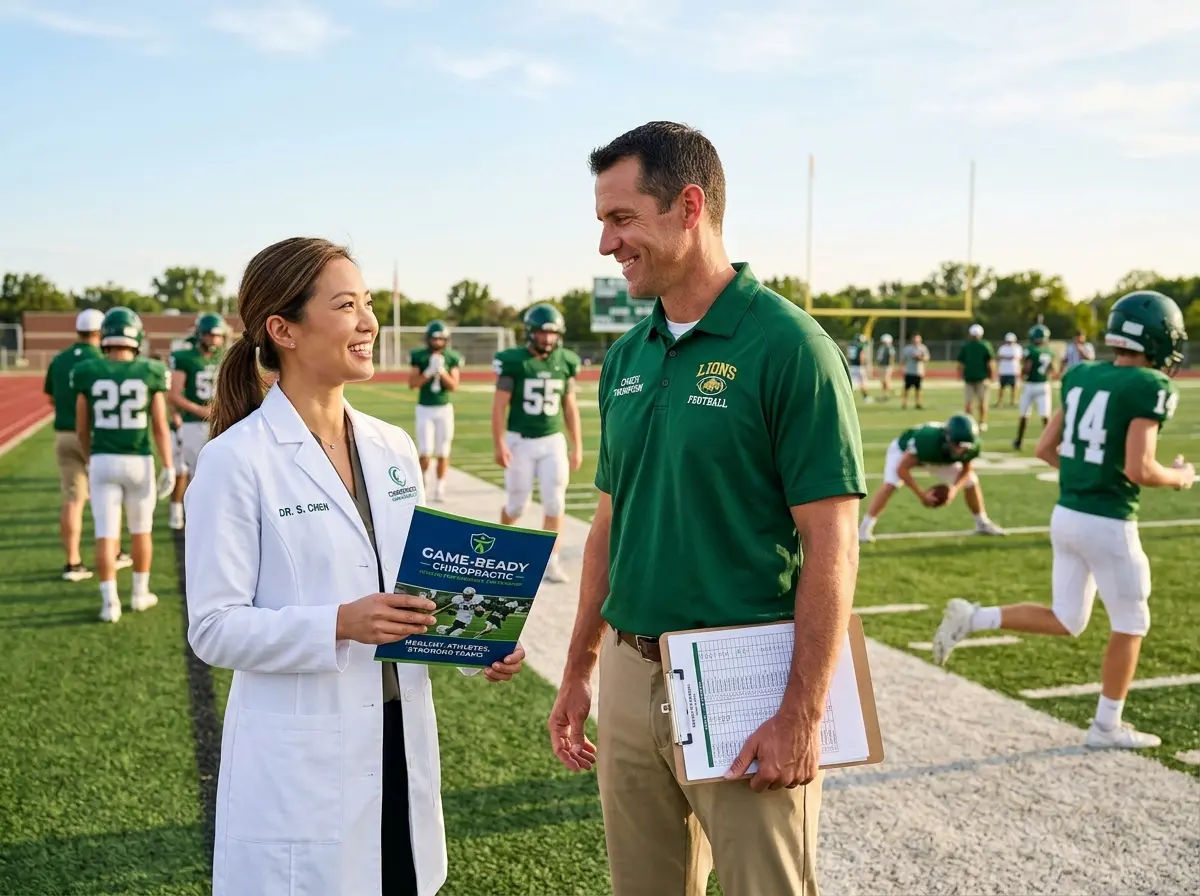
Showing up to a school athletic office with a stack of business cards and a discount coupon is not a partnership strategy — it's a recipe for being politely shown the door. Coaches and athletic directors are protective of their athletes, perpetually busy, and deeply skeptical of anyone who smells like a sales pitch. Your first move needs to be about giving, not getting.
Reach out to the athletic director first. A simple, professional email or phone call expressing genuine interest in supporting student athlete wellness goes a long way. Offer something of value with no strings attached — a free workshop on injury prevention, a presentation on stretching techniques, or even a complimentary on-site screening day. According to the American Chiropractic Association, musculoskeletal conditions account for a significant portion of sports-related injuries among adolescents, which means you have real, tangible expertise to offer. Lead with that expertise, not your appointment booking link.
Identifying the Right Sports Programs to Target
Not all sports partnerships are created equal. Football, wrestling, soccer, cross country, swimming, and track programs tend to generate higher volumes of musculoskeletal complaints than, say, the chess team (though we're sure chess has its own repetitive strain issues). Start by targeting one or two high-injury sports and build your reputation there before expanding.
Consider proximity too. A school three minutes from your clinic is far more practical for follow-up care than one across town. Athletes are more likely to come in for appointments if the commute doesn't require a planning committee. Think strategically about which programs give you the best combination of need, volume, and accessibility.
Formalizing the Partnership
Once you've built some rapport and delivered value, it's time to make things official. A simple memorandum of understanding or partnership agreement doesn't need to be a legal thriller — it just needs to outline what you're each committing to. You might agree to provide monthly educational sessions and discounted initial consultations, while the school agrees to display your information in their athletic training room and mention your practice in their program newsletters. Clear expectations on both sides prevent the partnership from fizzling out after the first month when everyone gets busy.
Running Your Practice Smarter While You're Out Building Partnerships
Don't Let Your Phone Go Unanswered While You're Courtside
Here's the practical problem nobody talks about: when you're spending time at school events, doing screenings, and building relationships in the community, who's minding the phones back at your clinic? A missed call from a new patient is a missed patient — full stop. That's where Stella, the AI robot employee and phone receptionist, becomes genuinely useful for a chiropractic practice. Stella answers every call 24/7, handles questions about services, hours, and policies, collects new patient intake information through conversational forms, and ensures no potential young athlete or their parent ever hits a voicemail and hangs up.
Beyond phone answering, Stella's in-office kiosk presence means that when new patients walk in after being referred by a teammate or coach, they're greeted professionally and immediately — even if your front desk is momentarily occupied. She can also help manage patient contacts through her built-in CRM, so you can tag and track how patients found you (sports program referral, team screening, coach recommendation) and measure exactly how well your partnership is performing. That's not just convenient — that's data-driven practice management.
Converting Athletes Into Loyal Patients (And Winning Over Their Parents)
The Athlete Visit Is Just the Beginning
When a student athlete comes in for the first time — whether it's because of a referral from their coach, a discount you offered through the school, or a screening event you hosted — your job is to deliver an exceptional experience that turns a one-time visit into an ongoing relationship. Young patients are actually wonderful in this regard: if you help them feel better and perform better, they are fiercely loyal and they talk. Word of mouth among high school athletes travels at the speed of a group chat.
Make sure your intake process for young patients is smooth and welcoming. Many teenagers are nervous about healthcare visits, especially for something like chiropractic that their parents might not fully understand yet. Take time to explain what you're doing, why it helps, and how it connects to their athletic performance. Frame everything in terms they care about — faster recovery, better flexibility, staying on the field. You're not just treating a complaint; you're optimizing a young athlete's potential.
The Parent Factor: Your Secret Weapon
Here's something every chiropractor targeting high school athletes needs to understand: the athlete walks in, but the parent writes the check and schedules the appointments. If you win over the parent, you've potentially gained an entire family's healthcare loyalty. Parents of high school athletes are often highly engaged, proactive about their child's health, and — here's the kicker — they often have the same kinds of musculoskeletal complaints their kids do. A parent who brings in their teenager for a sports adjustment and then casually mentions their own chronic lower back pain is an opportunity wrapped in a carpool schedule.
Create deliberate touchpoints with parents. Send them educational content about youth sports injury prevention. Include them in follow-up communication after their child's visits. Consider hosting a parent-focused evening at your clinic where you discuss how chiropractic supports young athletes — these events tend to convert parents from skeptics to patients surprisingly fast.
Staying Visible and Relevant Throughout the Season
Partnerships fade when they're not maintained. Show up to a few games during the season. Check in with the athletic trainer periodically. Offer a mid-season wellness check for athletes who participated in your initial screening. Send the coach a brief note after a big win. None of this costs you much, but all of it keeps you top of mind. The goal is to become a genuine, familiar presence in the school's athletic ecosystem — not a vendor who shows up once in August and disappears until next year's sign-up season.
Quick Reminder About Stella
Stella is an AI robot employee and phone receptionist that works at your front desk as a human-sized kiosk and answers your phones 24/7 — so your practice keeps running professionally whether you're adjusting patients or attending a Friday night football game. At just $99/month with no upfront hardware costs, she's one of the more sensible investments a growing chiropractic practice can make. Think of her as the front desk staff member who never calls in sick and never misses a new patient inquiry.
Conclusion: Your Next Steps Toward a Packed Appointment Book
Building a high school sports team partnership isn't a quick fix — it's a strategic investment that pays dividends in patient volume, community reputation, and genuine goodwill. Done right, it creates a self-sustaining referral ecosystem where coaches recommend you, athletes trust you, and parents become patients themselves.
Here's your practical action plan to get started:
- Research your local high schools and identify which sports programs have the highest injury rates and the most athletes. Start with one school and one sport.
- Reach out to the athletic director with a value-first offer — a free screening event or injury prevention workshop, no sales pitch attached.
- Formalize the relationship with a simple written agreement that clarifies mutual commitments and keeps both parties accountable.
- Deliver consistently throughout the season — show up, stay visible, and keep providing value beyond just clinical appointments.
- Build systems to capture referrals — make sure your phones are answered, your intake process is smooth, and new patients are tracked so you can measure what's working.
Young athletes are an underserved patient population with real musculoskeletal needs, enthusiastic word-of-mouth tendencies, and families who are often looking for exactly the kind of provider you can be. The only thing standing between you and a thriving sports partnership is making the first move. Go introduce yourself. Bring your expertise. Leave the business card stack at home — at least for the first visit.