The Art of the Upsell: Turning a Basic Clean Into a Premium Experience
Let's be honest — your customers called you because they don't want to scrub their own grout. They're already halfway to saying yes to more. The question is whether you're making it easy for them to say yes to the right things, or whether you're leaving serious money on the table every time a technician wraps up a standard clean and heads for the door.
Upselling in the home cleaning industry isn't about being pushy or salesy. It's about genuinely helping customers understand what their home actually needs — and then offering the solution before they even think to Google a competitor. Deep cleans, carpet treatments, post-construction cleanup, move-out packages, refrigerator interior cleaning — these are high-margin services that customers absolutely want. They just need a little nudge, and more importantly, they need to be asked at the right moment.
The cleaning businesses that grow consistently aren't necessarily the ones with the lowest prices or the flashiest vans. They're the ones that have systems — for communication, for follow-up, for presenting upgrades naturally and professionally. This post breaks down exactly how to build those systems so your upsells feel helpful rather than desperate.
Understanding When and Why Customers Say Yes
The Psychology Behind Upgrading a Cleaning Package
Customers are remarkably open to spending more money — as long as the timing is right and the value is obvious. Research from the Harvard Business Review consistently shows that it costs five times more to acquire a new customer than to retain and upsell an existing one. In a service business like cleaning, where trust is the foundation of every repeat booking, you already have the hardest part handled. Your customer let you into their home. That's not a small thing.
The key psychological trigger here is momentum. When a customer has just scheduled a cleaning — or better yet, just watched your team do excellent work — they're in a positive, action-oriented mindset. That's the moment to mention the deep clean that would tackle those baseboards they've been ignoring since 2019. That's when the carpet treatment pitch lands best. Interrupting a random Tuesday afternoon three weeks later? Not so much.
Identifying Your Best Upsell Opportunities
Not all upsells are created equal. Some services are natural add-ons that complement a standard clean beautifully, while others are better positioned as standalone seasonal offerings. Here's how to think about your menu:
- Booking-time upsells: Deep clean packages, inside-oven or inside-fridge cleaning, and window washing are easy to present during the initial booking conversation. The customer is already mentally investing in a clean home — adding $50–$100 more is a small leap.
- On-site upsells: When a technician notices significant buildup in grout lines, pet hair embedded in carpets, or a neglected laundry room, that's a real-time opportunity to recommend a specialty treatment. Train your team to observe and mention, not pressure.
- Post-service follow-up upsells: After a successful clean, a follow-up message referencing what was noticed — "We noticed your upholstery could use some love — interested in a fabric treatment next visit?" — converts at surprisingly high rates.
Building a Tiered Service Menu That Does the Selling for You
One of the most effective structural changes you can make to your business is creating a clear, tiered service menu. Think Good / Better / Best. A standard recurring clean is the baseline. A deep clean is the middle tier. A full specialty treatment package — carpets, upholstery, inside appliances, baseboard detail — is the premium option.
When customers see three options side by side, they naturally anchor to the middle tier. It feels responsible without feeling indulgent. Price your tiers accordingly, and make sure the value difference between each tier is immediately obvious in plain language — not industry jargon. "We clean surfaces" versus "We clean surfaces and sanitize inside your oven, refrigerator, and microwave" is a very different pitch.
How Smart Tools Help You Upsell Without the Awkwardness
Letting Technology Handle the Consistent Pitch
Here's an uncomfortable truth: your staff is inconsistent. Not because they're bad employees — they're human. Some days the upsell pitch lands perfectly; other days it gets skipped entirely because the technician is running behind or the customer seemed rushed. That inconsistency costs you revenue you'll never even know you lost.
This is where Stella, the AI robot employee and phone receptionist, becomes genuinely useful for cleaning businesses. When customers call to book — which, let's face it, plenty of people still do — Stella answers 24/7 and handles the entire intake conversation with the same energy and polish every single time. She can present your tiered service menu, mention current promotions on deep cleans or specialty treatments, and ask the right qualifying questions to recommend the appropriate package. She collects customer information through conversational intake forms and stores everything in her built-in CRM, so your team always knows what was discussed before they ever walk through the front door.
For cleaning businesses with a physical location or showroom, Stella's in-store kiosk presence means walk-in customers get the same proactive, informed pitch — without pulling your staff away from scheduling or operations. The upsell happens naturally, professionally, and without anyone forgetting to mention the carpet treatment special.
Training Your Team to Upsell Like Professionals (Not Salespeople)
Scripts That Feel Like Conversations
The word "script" makes most cleaning technicians immediately uncomfortable, and understandably so — nobody wants to sound like a telemarketer while someone watches them mop a kitchen floor. But a script doesn't have to be robotic. Think of it as a framework: a few natural phrases that your team can adapt to the situation while still reliably covering the key points.
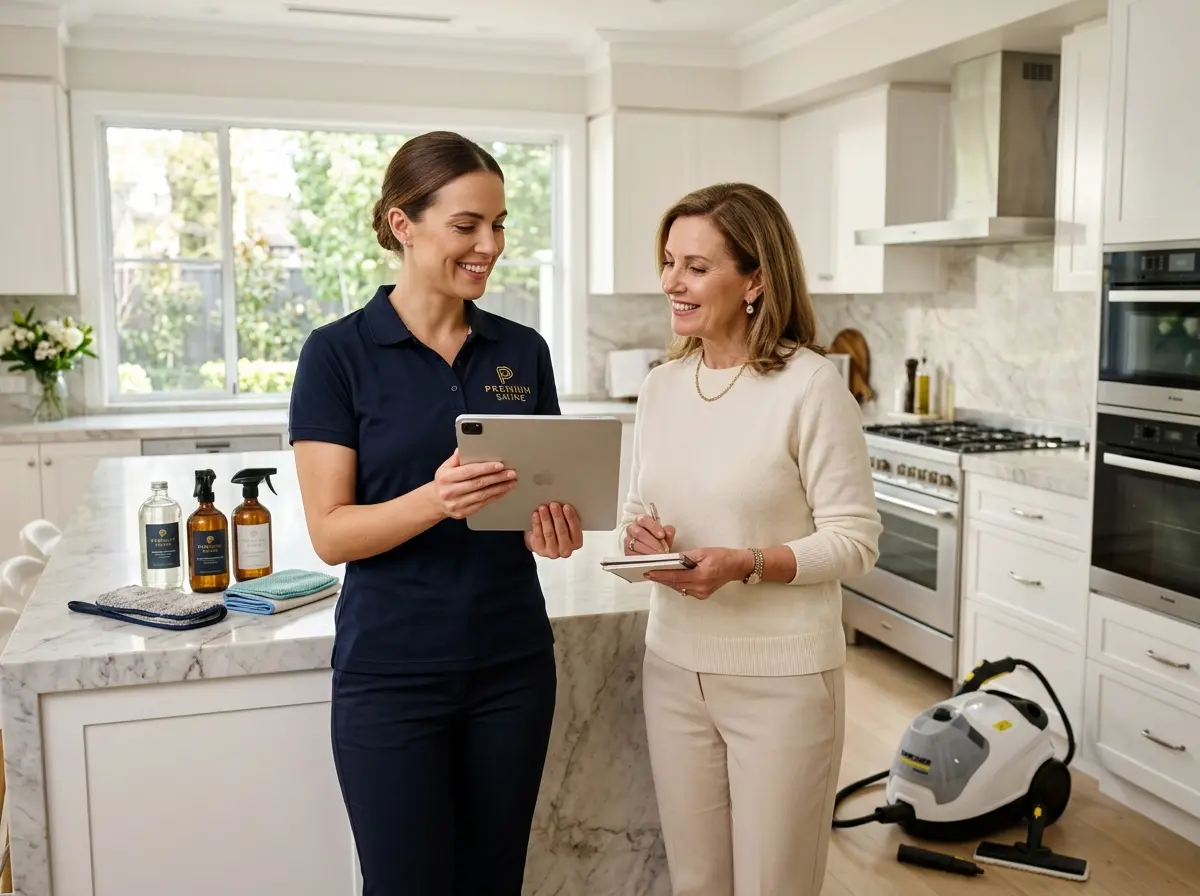
For example, an on-site observation upsell might sound like: "I noticed the grout along your bathroom tile is pretty heavily stained — that's something our specialty grout treatment can usually get looking a lot better. Would you like me to add that to today's service or schedule it for your next visit?" That's not pushy. That's genuinely helpful. Train your team on two or three variations of this kind of observation-based offer, and you'll see add-on revenue climb within the first month.
Seasonal Campaigns That Create Natural Demand
If you're not running seasonal deep clean campaigns, you are absolutely leaving money on the table — and your competitors may already be picking it up. Spring is the obvious one, but consider post-holiday (January is a goldmine for deep cleans after weeks of entertaining), pre-summer (outdoor entertaining season prep), and back-to-school (families getting the house in order after a chaotic summer). Each of these is a built-in cultural moment where customers are already thinking about a fresh start. Your job is simply to show up with the right offer at the right time.
Promote these campaigns through email, text follow-ups after regular cleans, and make sure anyone who calls during a campaign period hears about it immediately. Consistency across every touchpoint — phone, in-person, digital — is what separates a campaign that performs from one that fizzles.
Using Customer History to Personalize the Pitch
Generic upsells are forgettable. Personalized ones are compelling. If your CRM tracks that a customer books a standard clean every four weeks but has never added an oven cleaning, that's a targeted opportunity — not a mass email blast. A message that says "It's been six months since your last deep clean — ready to schedule one before the holidays?" feels like attentive service, not spam. Build these touchpoints into your process and you'll find that customers appreciate the reminder rather than resenting the ask.
Quick Reminder About Stella
Stella is an AI robot employee and phone receptionist that works 24/7 — answering calls, greeting customers, promoting your services, and collecting booking information without ever needing a coffee break. At just $99/month with no upfront hardware costs, she's built for small and mid-sized businesses that want a professional, consistent customer experience without the overhead of additional staff. Whether you need someone to handle after-hours booking calls or proactively mention your seasonal deep clean special, Stella shows up every single time.
Start Upselling Smarter, Not Harder
The path to higher revenue in your cleaning business doesn't require a massive overhaul — it requires consistency, the right systems, and a team (human and AI) that presents your full range of services with confidence every single time. Here's your action plan:
- Audit your current service menu. Does it clearly communicate the value difference between tiers? If not, rewrite it in plain language before the week is out.
- Train your technicians on observation-based upsells. Give them two or three natural phrases and role-play the conversation once. That's genuinely all it takes to make a measurable difference.
- Build seasonal campaigns into your annual calendar now. Don't wait until January to plan the January deep clean push. Have the emails, the talking points, and the booking incentives ready in advance.
- Implement a CRM that tracks customer history so your follow-up feels personal rather than generic.
- Consider automating your phone intake and promotional pitches so no upsell opportunity slips through the cracks, regardless of who answers the phone or what time a customer calls.
Your customers already trust you enough to hand you a key to their house. Offering them a cleaner oven or fresher carpets isn't an imposition — it's genuinely good service. Build the systems that make that offer consistently, and the revenue will follow.