When "We're Fully Booked" Becomes Your Most Expensive Phrase
Picture this: It's a Saturday afternoon during the holiday rush. Your spa is packed, your staff is hustling, and the phone won't stop ringing. A potential client calls, you tell them you're fully booked, and they hang up — only to book an appointment at your competitor down the street. Congratulations, you just donated a customer. And a tip. And probably a five-star review that could have been yours.
Peak-time capacity management is one of those deceptively simple problems that can quietly hemorrhage revenue if left unaddressed. The good news? A well-designed waitlist system can turn "sorry, we're full" into "we have an opening — can you come in at 3?" without adding chaos to an already hectic day. This guide will walk you through how to build a waitlist strategy that keeps your tables — or in this case, your treatment tables — full, your clients happy, and your revenue where it belongs: maximized.
Understanding the Waitlist Opportunity at Your Spa
Why Most Spas Leave Revenue on the Table (Literally)
According to industry data, the average no-show rate for spa appointments hovers between 10% and 20%. Add last-minute cancellations to that number and you're potentially looking at nearly a quarter of your peak-time slots going unfilled on any given busy day. That's not just unfortunate — that's a revenue leak that compounds every weekend, every holiday season, every Valentine's Day and Mother's Day when demand is at its absolute highest.
Most spa owners respond to this in one of two ways: they either shrug and accept it as the cost of doing business, or they implement a vague "call us if something opens up" system that relies entirely on their front desk staff remembering to do exactly that while simultaneously checking in clients, answering questions, and managing everything else. Neither approach is a strategy. They're just organized chaos with a pretty robe on.
The Anatomy of a Smart Waitlist System
An effective spa waitlist system isn't just a list of names on a clipboard. It should function as an active, dynamic pipeline for filling gaps in your schedule. Here's what that looks like in practice:
- Capture intent immediately. When a caller or walk-in learns you're fully booked, that's the moment to offer waitlist enrollment — not as a consolation prize, but as a genuine opportunity. Phrase it confidently: "We do have a waitlist for that day, and spots open up more often than you'd think. Can I add you?"
- Collect the right information upfront. Know which services they want, what times work for them, and whether they have flexibility. A client who wants a 90-minute deep tissue and is only free between 10 AM and noon is a very different waitlist candidate than someone who can come in anytime.
- Set clear response expectations. Let clients know how you'll contact them and how long they have to confirm an opening. A two-hour confirmation window is reasonable; a two-minute window is not.
- Prioritize intelligently. Not all waitlist clients are equal. Long-standing regulars, clients flexible with timing, and those who booked higher-revenue services should move up the queue accordingly.
Timing Is Everything: Predicting Your Gaps
Smart waitlist management starts before the cancellations even happen. Review your historical booking data to identify patterns — which days see the most last-minute cancellations, which service types get dropped most often, and which therapists or treatment rooms tend to have the highest no-show rates. Once you understand the rhythm of your gaps, you can begin building a waitlist that's sized appropriately for each peak period rather than scrambling reactively when a slot opens up unexpectedly at 11 AM on a Saturday.
Letting Technology Do the Heavy Lifting
Automate the Outreach, Save the Sanity
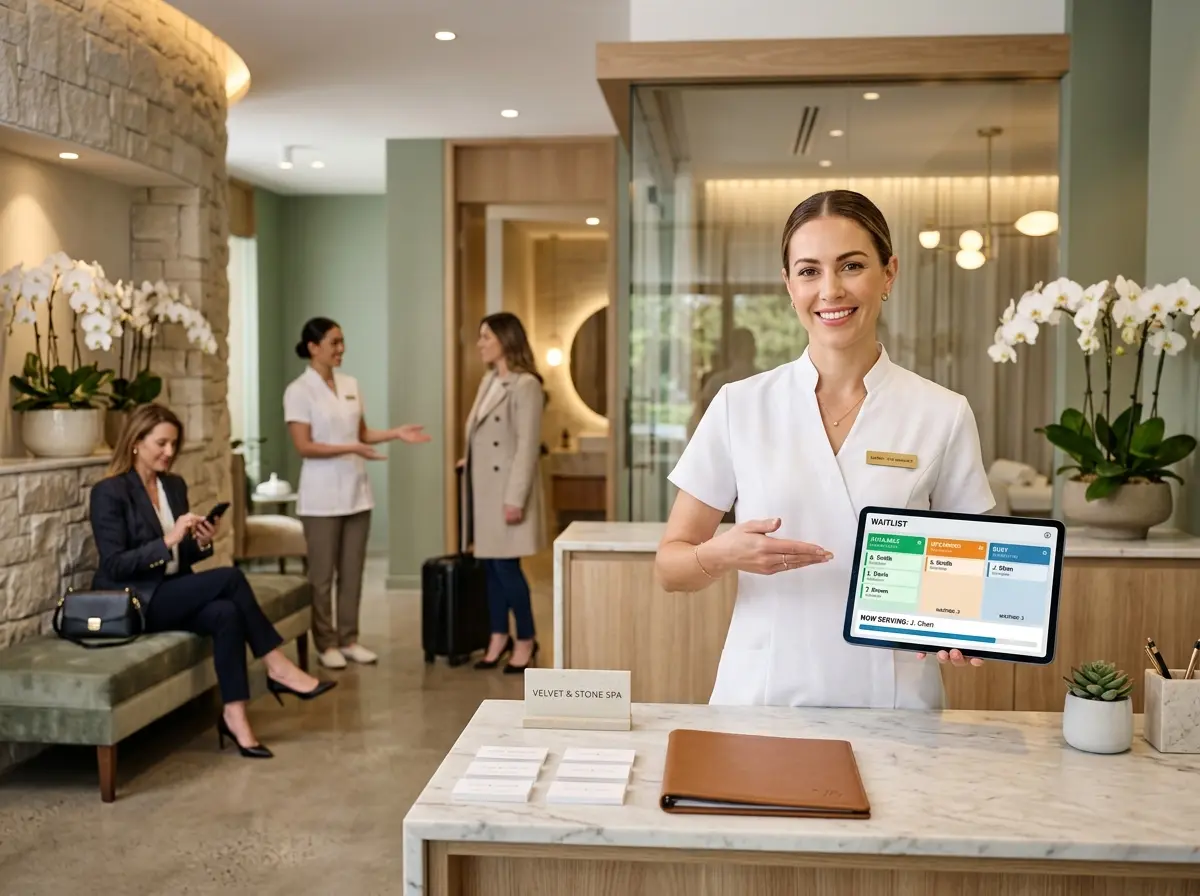
One of the most effective upgrades a spa can make is automating waitlist notifications. When a cancellation comes in, your system should immediately trigger outreach to the next eligible client on your list — via text or email — with a clear call to action and a time limit to confirm. This removes the burden from your front desk staff entirely and ensures that no opening goes uncontacted simply because someone forgot or got pulled into another task.
This is also where Stella can genuinely shine for spa owners. Stella is an AI robot employee and phone receptionist that can handle inbound calls around the clock — including capturing waitlist interest from callers who discover you're fully booked. Rather than simply taking a message or losing the caller entirely, Stella can collect their information through a conversational intake form right on the call, log it directly into her built-in CRM, and tag the contact for follow-up. For spas with a physical location, Stella's in-store kiosk presence means walk-in clients who learn a service isn't available can be added to the waitlist on the spot, without pulling a staff member away from their current task. She doesn't take breaks and she doesn't forget to follow up — which, if we're being honest, is more than can be said for most of us on a busy Saturday.
Turning Waitlist Clients Into Loyal Regulars
The Experience Matters, Even From the Waitlist
Here's something most spa owners overlook: how a client feels while they're on your waitlist shapes how they feel about your brand. A client who waits two weeks and gets a thoughtful, timely notification the moment a slot opens is going to feel valued. A client who waits two weeks, hears nothing, and eventually calls you — only to be told "oh, we filled that" — is going to feel like an afterthought. Guess which one leaves the glowing review and which one leaves the one-star rant.
Consider sending a brief, warm message to waitlisted clients acknowledging their spot and letting them know you haven't forgotten them. It costs almost nothing and significantly reduces the likelihood that they'll book elsewhere while waiting. A simple "You're on our list and we'll reach out as soon as we have an opening — we appreciate your patience!" goes a long way toward building the kind of client relationship that survives the occasional scheduling frustration.
Convert Waitlist Wins Into Booking Habits
Every time you successfully move a client from your waitlist into a confirmed appointment, you have a golden opportunity — and most spas squander it by doing absolutely nothing. When a client gets off your waitlist and comes in, that's the moment to encourage them to book their next appointment before they leave. Make it easy: offer them priority access or a small incentive for booking in advance. A client who's experienced the frustration of being waitlisted is highly motivated to avoid that situation next time, which makes them the ideal candidate for locking in their spot early.
Use Waitlist Data to Optimize Your Scheduling
Your waitlist is also a feedback loop that most spa owners completely ignore. If your waitlist for Saturdays is consistently 15 people deep but your Tuesdays look like a ghost town, that's data. Consider whether extended Saturday hours, additional staffing, or even a second location makes economic sense. If a specific service — say, couples massages or hot stone treatments — consistently drives the most waitlist demand, think about whether you're allocating enough of your schedule to accommodate it. Your waitlist isn't just a holding pen; it's a real-time indicator of unmet demand, and savvy owners treat it accordingly.
Quick Reminder About Stella
Stella is an AI robot employee and phone receptionist that helps spas and other businesses greet walk-in customers, answer calls 24/7, collect client information, and manage contacts — all for just $99/month with no upfront hardware costs. She's always on, always professional, and never puts a client on hold to go deal with something else. For busy spas navigating peak seasons and waitlist chaos, she's the kind of support that actually shows up every day.
Building a Waitlist Strategy That Works All Year Long
Running a successful waitlist program isn't a one-time setup — it's an ongoing process that gets sharper as you learn more about your clients and your business. Here's a practical checklist to get started and keep improving:
- Audit your current booking data. Identify your peak days, your highest no-show service categories, and your average lead time for cancellations. This is your baseline.
- Set up a formal waitlist intake process. Whether it's through your booking software, a phone intake form, or your front desk, make sure every declined booking results in a waitlist offer — every single time.
- Define your confirmation window and stick to it. Decide how long a waitlisted client has to confirm an opening and communicate that clearly when they sign up.
- Automate what you can. Use your booking platform, CRM, or AI tools to handle notification and follow-up so your staff can stay focused on the clients who are actually in the building.
- Review and adjust seasonally. Your holiday waitlist strategy should look different from your summer strategy. Build in a review cadence so your system evolves as your demand does.
At the end of the day, a well-run waitlist is the difference between a spa that's "always fully booked" and a spa that maximizes every hour it's open. Your peak times are precious, finite, and in demand — treat them like it. With the right systems, the right communication, and a little help from technology that doesn't call in sick, you can turn your busiest days from stressful capacity puzzles into reliable, revenue-generating machines. Now go fill those treatment rooms.