The First Impression You're Probably Getting Wrong
Let's be honest: when was the last time you really thought about your host stand? Not just glanced at it while rushing through the dining room, but actually considered what it's doing — or more likely, not doing — for your restaurant's customer experience?
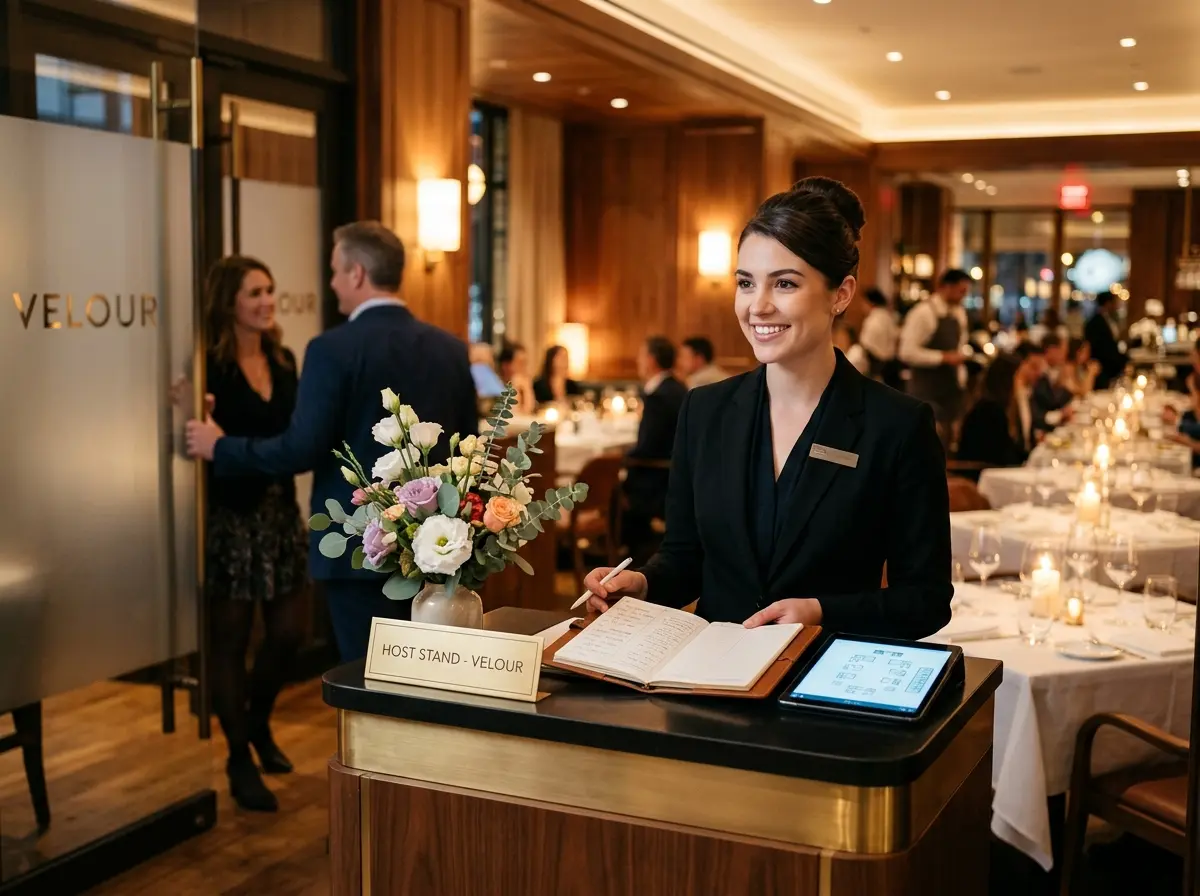
Your host stand is, quite literally, the first thing guests interact with when they walk through your door. It sets the tone for the entire dining experience. And yet, for most restaurants, it's either unstaffed at critical moments, staffed by someone who's simultaneously juggling phones and a waitlist, or "managed" by a laminated sign that says "Please Seat Yourself." Inspiring stuff.
The host stand isn't just a traffic cop for tables. It's a brand touchpoint, a sales opportunity, a communication hub, and a guest relationship tool — all rolled into one spot near the door. The restaurants that understand this are quietly winning on hospitality while their competitors wonder why their reviews keep mentioning "felt ignored when we walked in." This post is about fixing that, and doing it in a way that's actually sustainable.
What Your Host Stand Is Actually Supposed to Do
It's Your Brand's Handshake
Think about what happens in the first 30 seconds after a guest walks into your restaurant. They scan the space, they form an impression, and they decide whether they made a good choice coming here. That decision — made before they've tasted a single bite of food — is almost entirely shaped by the host experience.
A warm, knowledgeable greeting signals that your restaurant is competent and cares about its guests. A distracted host who barely looks up from a seating chart sends a very different message. According to research from Cornell's Center for Hospitality Research, the greeting and seating experience is one of the top predictors of overall guest satisfaction scores — even more impactful than the food in some cases. Wrap your head around that for a moment.
Your host stand should feel like a proper handshake: confident, warm, and immediate. It should communicate your restaurant's personality before the menu ever does.
It's a Revenue Opportunity in Disguise
Here's a perspective shift that might sting slightly: your host stand is one of the few places in the restaurant where you have a captive audience and zero pressure. Guests are standing there, waiting, with nothing to do. They're actually open to information right now.
This is the perfect moment to mention tonight's specials, highlight a new cocktail menu, promote an upcoming event, or let them know about your loyalty program. Hosts who are trained to naturally weave in these mentions — not in a pushy, scripted way, but conversationally — can meaningfully impact check averages and return visit rates. A simple "Just so you know, we just launched a prix fixe menu tonight that's been really popular" plants a seed that often blooms at the table.
Most restaurants leave this entirely to chance, hoping that servers will do the upselling work. Some do. Many don't. But the host stand? That's a missed opportunity that costs you nothing to fix.
It's the Nerve Center of First-Contact Communication
Walk into most busy restaurants on a Friday night and you'll see the same scene: one overwhelmed host simultaneously greeting walk-ins, answering a ringing phone, managing a digital waitlist, and trying to remember that table 14 has a birthday. It's chaos dressed up as operations.
The phone call problem alone is significant. Calls during peak hours often go unanswered, or get answered by a flustered host who can't give the caller proper attention. Reservations get botched. Questions about hours or menus go unanswered. Potential guests hang up and call the place down the street. This isn't a staffing failure — it's a systems failure, and it's fixable.
How Technology Can Take the Pressure Off Your Host Stand
Letting Your Host Focus on What Humans Do Best
The irony of the overwhelmed host situation is that the tasks drowning them — answering repetitive phone questions, reciting specials, confirming hours — are exactly the kinds of things that don't require a human touch. What does require a human touch is reading the room, remembering that a regular prefers a corner booth, and making a nervous first-time guest feel immediately welcome.
Stella is an AI robot employee and phone receptionist designed to handle exactly this kind of frontline communication load. As a friendly, human-sized kiosk that stands inside your restaurant, Stella greets guests, answers questions about the menu, promotes specials, and engages walk-bys — all without needing a break, a shift change, or a pep talk. On the phone side, she answers calls 24/7 with the same knowledge she uses in person, handles common inquiries, and forwards calls to human staff when the situation actually calls for it.
The result? Your human host gets to be a host again, instead of a human switchboard. And at $99/month with no upfront hardware costs, it's less than what most restaurants spend on napkins in a week.
Making Your Host Stand Work Harder Without Burning Out Your Team
Train for Conversation, Not Just Traffic Flow
Most host training programs focus on the logistics: how to use the waitlist software, how to seat tables in rotation, how to handle a reservation conflict. These things matter. But they're table stakes, not competitive advantages.
The restaurants that get hospitality right train their hosts to have genuine conversations. This means knowing the menu well enough to answer questions enthusiastically, understanding current promotions and being excited about them, and having a mental playbook for common situations like long waits or large party logistics. A host who can confidently say "The short rib tonight is incredible — our chef has been making it since Tuesday" is worth more than a host who can navigate a seating chart blindfolded.
Consider doing brief, weekly host huddles before service where you share what's new, what's 86'd, and what stories are worth telling tonight. It takes ten minutes and pays dividends in guest experience all evening.
Use the Waiting Moment Strategically
If your restaurant has a wait on busy nights — and if you're doing things right, it should — that waiting period is an underutilized asset. Guests who are standing around waiting are not just inconvenienced; they're available. They're checking their phones, looking around, and forming opinions.
Consider what you're putting in that space. Is there something to look at, read, or interact with? A well-placed display highlighting your seasonal menu, upcoming events, or loyalty program can turn a 15-minute wait into a marketing moment. Some restaurants hand out small tasting bites or drinks during the wait — a move that consistently generates positive reviews and social media posts. The wait doesn't have to be dead time. It can be the beginning of a great experience if you're intentional about it.
Capture Guest Information Early and Use It
Here's something most restaurants completely ignore: the host stand is one of the best places to start building a guest relationship database. When guests check in for a reservation or join a waitlist, there's a natural opportunity to confirm contact information, note preferences, and flag special occasions. This data, if actually used, transforms repeat visits from "oh, welcome back" to "Mr. Henderson, great to see you again — we've got your usual corner table ready."
Personalization at this level isn't just nice — it's a documented driver of loyalty and word-of-mouth. Guests who feel remembered come back more often and bring friends. The collection doesn't have to be invasive or formal; a simple, friendly exchange during check-in is enough to start building a profile that your team can reference on future visits.
Quick Reminder About Stella
Stella is an AI robot employee and phone receptionist that works inside your restaurant as a friendly kiosk presence and answers your phones around the clock — so your team never has to choose between greeting a walk-in and picking up a ringing line. She handles questions, promotes specials, and keeps things running smoothly whether you're slammed on a Saturday night or closed on a Monday morning. She's the frontline support your host stand has always needed but never had.
Your Host Stand Deserves a Strategy, Not an Afterthought
The good news is that improving your host stand experience doesn't require a renovation, a rebrand, or a significant budget. It requires intention. Start by auditing what's actually happening at your host stand right now — not on your best night, but on a typical busy Friday. Is every guest greeted within 30 seconds? Are phones being answered consistently? Are specials being mentioned proactively? Are you capturing any guest information at all?
From there, build a simple host training outline that covers not just logistics but conversation. Identify two or three promotional talking points your hosts should know cold each week. Consider what you're doing with wait time — both the physical environment and the human interaction during it. And seriously evaluate whether your current setup is asking one person to do five jobs simultaneously, because if it is, you're not getting the best version of any of them.
The restaurants that consistently earn loyal guests and glowing reviews aren't doing anything magical. They're just taking the moments everyone else ignores — like the 45 seconds between walking in the door and sitting down — and making them count. Your host stand is one of those moments. It's time to treat it like it matters, because to your guests, it already does.