The Restaurant Industry Has a Problem (And No, It's Not the Food)
Let's be honest — running an independent restaurant is not for the faint of heart. You're managing a revolving door of staff, juggling food costs that seem to increase every time you blink, fielding phone calls about whether you're open on Labor Day, and somehow still finding time to make sure the food is actually good. It's a lot. And the brutal truth is that the big chain restaurants — the ones with corporate budgets, dedicated marketing teams, and enterprise-level technology — have always had an unfair advantage over the little guy.
Until now.
Artificial intelligence is no longer a luxury reserved for companies with a Silicon Valley zip code and a venture capital bankroll. It's here, it's affordable, and it's quietly becoming the single biggest competitive advantage available to independent restaurant owners who are smart enough to grab it before their competitors do. The question isn't really whether AI will transform the restaurant industry — it already is. The question is whether you'll be leading that transformation in your market, or watching someone else do it from across the street.
This post breaks down exactly why AI matters for your restaurant right now, what it looks like in practice, and how you can start using it without needing a technology degree or a bottomless budget.
The Real Costs Quietly Draining Your Restaurant
The Hidden Price of Missed Calls and Interrupted Staff
Here's a scenario that probably sounds familiar: it's 6:30 on a Friday evening, your dining room is packed, your staff is in the weeds, and the phone is ringing. Again. Someone wants to know if you take reservations. Someone else wants to know your hours. A third caller wants to place a to-go order that will take ten minutes to walk through because they can't decide between the salmon and the pasta. Meanwhile, your host is now distracted, your manager just had to step away from the floor, and the guests who walked in while no one was watching the door are standing there wondering if anyone knows they exist.
This isn't a minor inconvenience — it's a compounding operational problem. Studies suggest that restaurants miss up to 30% of incoming calls during peak hours, and a significant portion of those callers simply hang up and call a competitor. Every unanswered call is a potential reservation, a to-go order, or a new regular customer that you'll never know you lost.
Turnover Is Expensive, and It's Not Getting Better
The restaurant industry has one of the highest employee turnover rates of any sector — hovering around 75% annually in normal times, and spiking even higher in the post-pandemic labor market. Every time a front-of-house employee leaves, you're spending time and money on recruiting, onboarding, and training, only to do it again six months later. It's exhausting, and it puts a ceiling on how consistently professional your customer experience can actually be.
AI doesn't call in sick. It doesn't quit to take a job two blocks away for an extra dollar an hour. It doesn't have an off night because of a bad breakup. These aren't small things — for an independent restaurant operating on thin margins with a lean team, consistency and reliability are everything.
The Guest Experience Gap You Might Not Know You Have
Independent restaurants have an enormous advantage over chains in one area: personality and genuine hospitality. But that advantage evaporates the moment a guest walks in and isn't greeted, waits too long for basic information, or calls and gets voicemail during business hours. The experience gap isn't just about food quality anymore. Guests expect attentive, informative, and responsive interactions — and the restaurants that deliver those experiences consistently are the ones that earn five-star reviews and repeat visits.
How AI Tools Like Stella Are Leveling the Playing Field
This is where things get genuinely interesting for independent operators. Stella is an AI robot employee and phone receptionist designed specifically for businesses like yours — and she's the kind of tool that used to exist only in the imagination of restaurant owners who wished they had a corporate support staff.
In-store, Stella operates as a friendly, human-sized AI kiosk that greets customers who walk by, answers questions about your menu, specials, and policies, promotes current deals, and even upsells and cross-sells — all without taking up a staff member's attention. She's essentially a knowledgeable team member who is always on, always enthusiastic, and never in a bad mood. For a busy restaurant, that kind of consistent, proactive guest engagement can meaningfully improve the customer experience during high-volume periods when your human team is stretched thin.
On the phone side, Stella answers calls 24/7 with the same knowledge she uses in person. She handles common questions, collects customer information through conversational intake forms, forwards calls to staff based on conditions you configure, and delivers AI-generated voicemail summaries with push notifications straight to your managers. No more missed calls during dinner rush. No more playing phone tag with customers who tried to reach you at 10 PM. Her built-in CRM also lets you track customer interactions, tag contacts, and build profiles that give you real insight into who your guests are and what they care about.
At $99/month with no upfront hardware costs, Stella isn't a corporate-budget tool — she's built for the independent operator who needs real results without a complicated implementation process.
Practical Ways Independent Restaurants Can Win with AI Right Now
Use AI to Promote Specials and Drive Upsells Automatically
One of the most underutilized revenue opportunities in any restaurant is the upsell — and it's not because owners don't know it works, it's because staff are busy and it doesn't always happen consistently. AI changes that equation entirely. Whether it's an AI tool suggesting a wine pairing when a customer asks about the dinner menu, or proactively mentioning a limited-time special to every guest who engages with your in-store kiosk, automation makes upselling systematic rather than situational. When every customer interaction includes a well-timed recommendation, the cumulative revenue impact adds up fast.
Turn Customer Data into Smarter Business Decisions
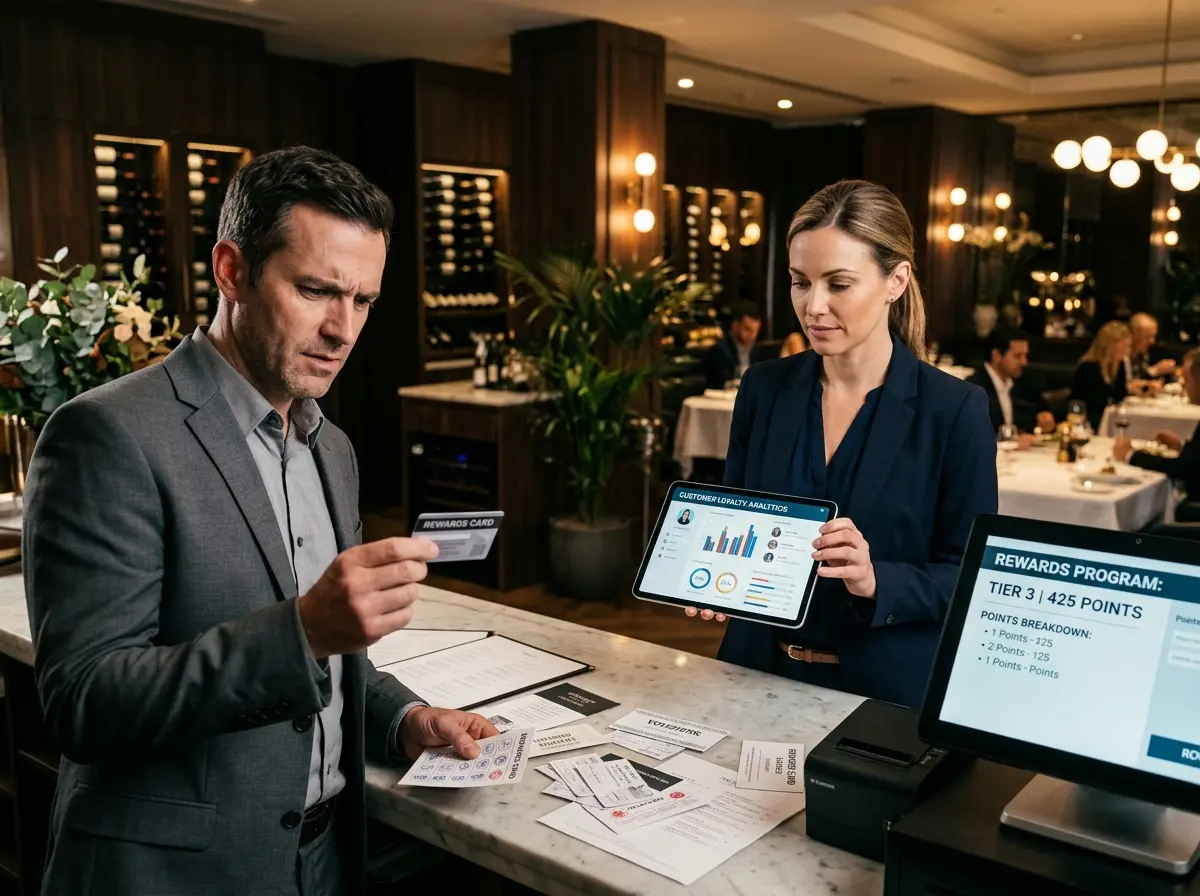
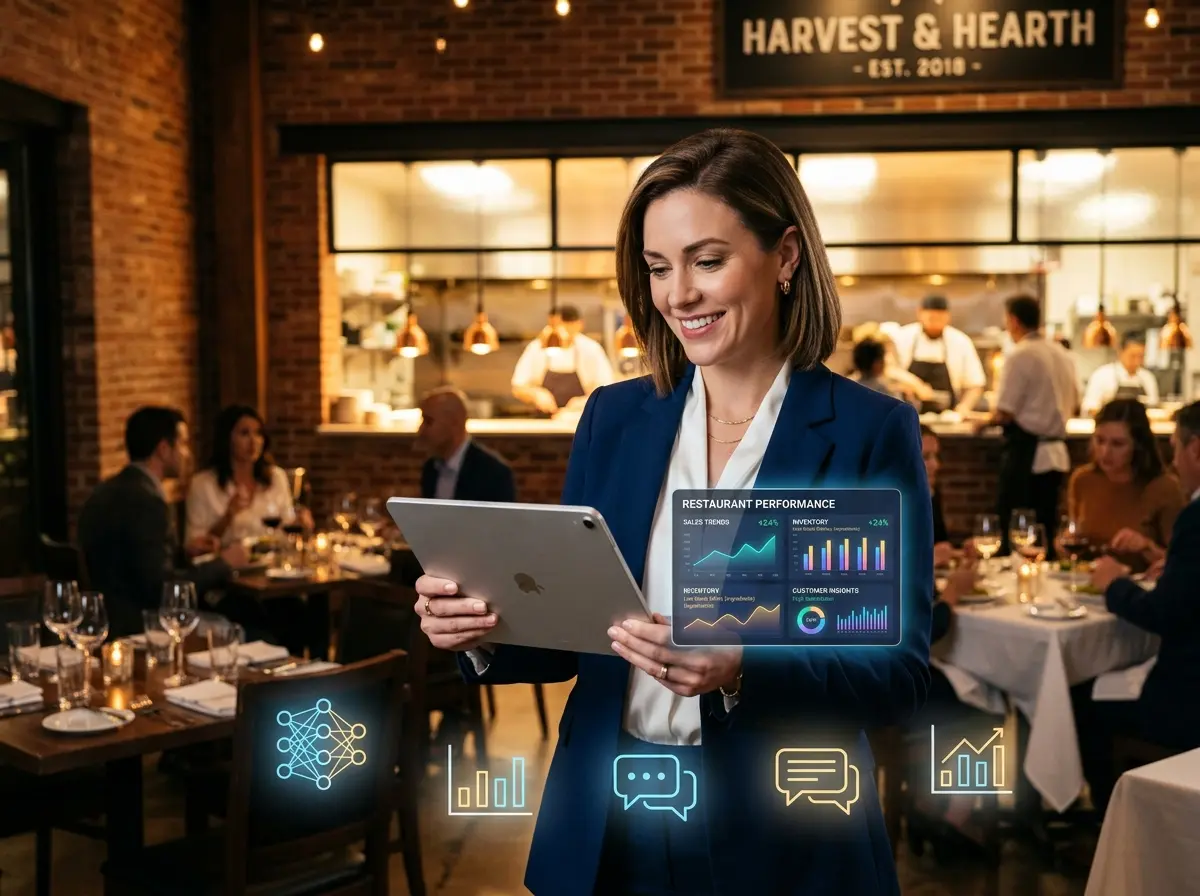
Independent restaurant owners often make decisions based on gut instinct — which is admirable, and sometimes exactly right, but it leaves a lot of money on the table. AI tools that track customer interactions, log inquiry patterns, and measure which promotions are generating the most engagement give you something more valuable than intuition: actual data. You can learn which menu items generate the most questions, which promotions drive the most call volume, and which times of day your customer engagement spikes. That information changes how you staff, how you market, and how you plan.
Beyond promotions, understanding your customers at an individual level — their preferences, their history with your restaurant, their contact information collected through natural conversation — allows you to build loyalty in a way that feels personal rather than transactional. That's a competitive advantage that no chain can easily replicate.
Create a Guest Experience That Earns Reviews and Repeat Business
Online reviews are the currency of the modern restaurant industry. A steady stream of genuine five-star reviews on Google and Yelp does more for your restaurant than most paid advertising campaigns. The fastest path to great reviews is a consistently great experience — and consistently great experiences happen when guests feel welcomed, informed, and well taken care of from the first moment of contact to the last.
AI tools help you close the gaps in that experience. When a guest calls at 9 PM to ask about your Sunday brunch hours and gets a helpful, friendly response instead of a voicemail, that's a touchpoint that builds trust. When a walk-in customer is greeted proactively and gets accurate information about your current specials without having to flag down a server, that's a moment that earns goodwill. These small wins, repeated consistently across hundreds of interactions, are what separate the restaurants guests return to from the ones they forget.
Quick Reminder About Stella
Stella is an AI robot employee and phone receptionist built for businesses that want a reliable, professional presence without the overhead. She greets and engages customers in person as a human-sized kiosk, answers phone calls around the clock, manages customer contacts through a built-in CRM, and promotes your offerings — all for $99/month with no upfront hardware costs. If you haven't looked into what she can do for your restaurant specifically, it's worth five minutes of your time.
The Window Is Open — But It Won't Be Forever
The independent restaurants that thrive over the next decade won't necessarily be the ones with the best food (though that certainly helps). They'll be the ones that combine great food with smart operations, consistent guest experiences, and a willingness to adopt tools that give them a real edge. AI is that tool right now — and the advantage it offers is most powerful when you're one of the first in your market to use it, not one of the last.
Here's what you can do today:
- Audit your missed calls. Check your voicemail or call logs and honestly assess how many inquiries you're losing during peak hours. The number may surprise you.
- Identify your biggest operational friction points. Where are your staff most frequently interrupted? Where does the guest experience break down under pressure? Those are your highest-value targets for AI assistance.
- Explore AI tools built for your scale. You don't need an enterprise platform with a six-month implementation timeline. Solutions like Stella are designed to be up and running quickly, at a price point that makes sense for an independent operation.
- Think about the long game. AI isn't just a fix for today's problems — it's infrastructure for the kind of scalable, consistent guest experience that builds a lasting brand.
The big chains have been using technology to outmaneuver independent operators for years. The difference now is that the same caliber of technology is available to you, at a fraction of the cost, with none of the corporate bureaucracy required to actually use it. That's not a small thing — that's a genuine shift in the competitive landscape.
The only question left is what you're going to do with it.