Pour Decisions: Why Your By-the-Glass Menu Is Leaving Money on the Table
Let's be honest — your by-the-glass menu is doing a lot of heavy lifting. It's approachable, it's flexible, and it's the reason that couple on their third date didn't turn around and walk out when they saw your bottle prices. But here's the thing: while your glass pours are keeping seats warm, they might also be quietly sabotaging your revenue per table. A well-executed bottle upsell doesn't just increase your average check — it transforms a casual Tuesday night into an experience worth repeating. And yet, so many wine bars leave this opportunity completely untapped, hoping customers will just figure it out on their own. Spoiler: they won't.
The math is actually pretty compelling. When a party of two orders two glasses each at $15 a glass, you're looking at $60. A bottle of that same wine? Often priced at $55–$70 — and it delivers a better perceived value for the guest, better margin efficiency for you, and a built-in reason to stay longer and order food. Everyone wins. The trick, of course, is getting your team (and your systems) to make that suggestion at exactly the right moment, in exactly the right way.
This guide is your playbook for turning glass drinkers into bottle buyers — without being pushy, without being awkward, and without accidentally making your guests feel like they wandered into a used car lot.
The Art of the Bottle Suggestion (Without the Cringe)
Timing Is Everything — And Most Bars Get It Wrong
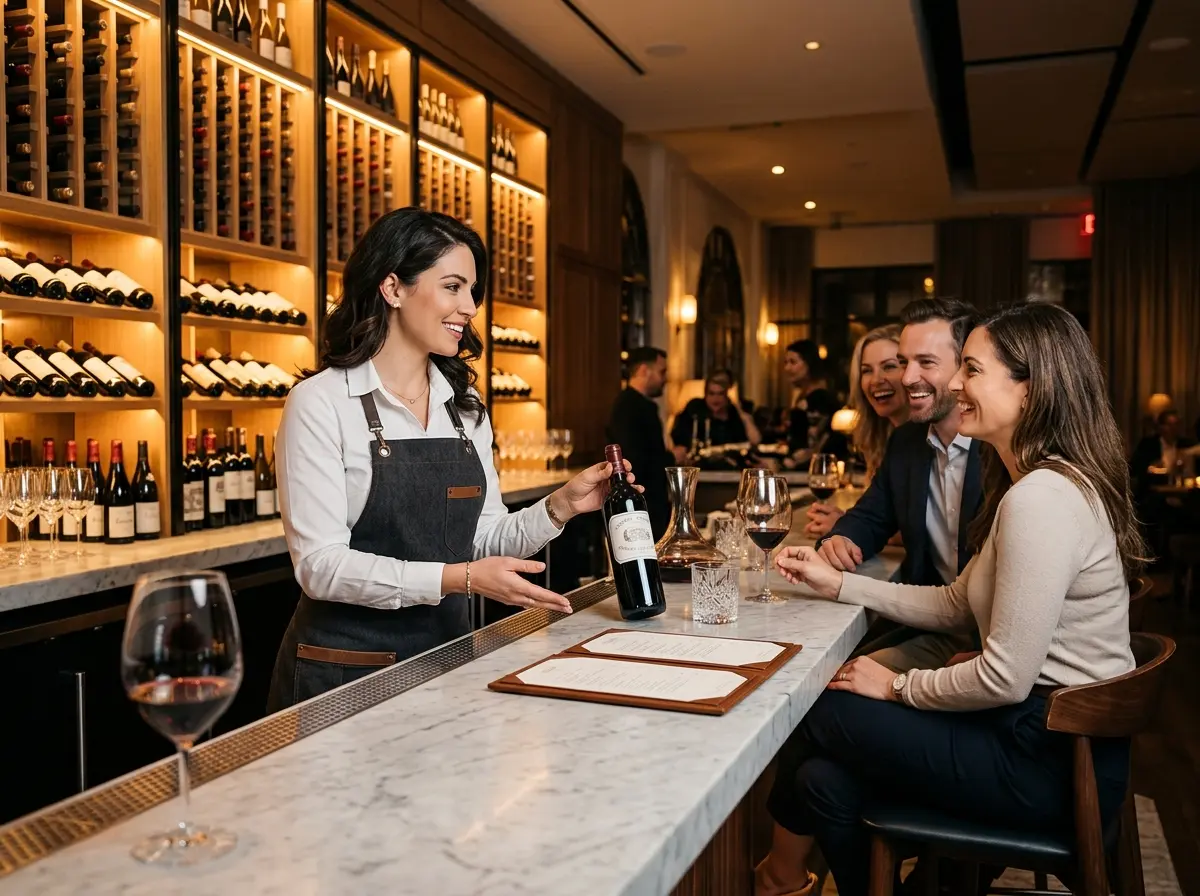
The single most common mistake wine bar staff make is waiting too long to introduce the bottle option. By the time a guest has already committed to a glass in their mind, the upsell feels like an afterthought or — worse — a correction. The ideal window is during the initial order, framed not as a sales pitch but as a helpful observation. Something like, "You're both going for the Côtes du Rhône — you know, a bottle actually works out to about the same price as three glasses each, and you get to keep the rest at the table." That's not upselling. That's math. Guests appreciate math.
Training your team to identify two-or-more-glass scenarios and flag them immediately is the single highest-ROI training investment you can make this quarter. Build it into onboarding, reinforce it in pre-shift meetings, and yes — track it. If you're not measuring how often your staff successfully converts a glass order to a bottle, you're flying blind.
Language That Sells Without Selling
The words your staff use matter enormously. There's a meaningful difference between "Would you like a bottle instead?" and "A lot of our guests find the bottle to be the better deal if you're planning to stay a while — want me to grab one?" The second version does three things: it provides social proof, it assumes a positive intent (they're staying!), and it makes the staff member feel like an insider guide rather than a cashier chasing a higher ticket.
Consider creating a small laminated cheat sheet — yes, an actual physical card — with two or three bottle pitch phrases that staff can memorize and rotate. Keep it behind the bar. Refresh it seasonally. You'd be amazed how much consistency improves when your team isn't improvising from scratch every single time.
Anchoring Your Menu to Do the Work Automatically
Smart menu design is the silent salesperson you never have to train. When your by-the-glass menu displays pricing in a way that visually invites comparison — say, listing the glass price alongside a subtle "bottle available" note — you plant the seed before your staff even opens their mouth. Even better, consider adding a small callout on the menu itself, something like "Bottle: $58 (saves you a glass)" next to your most popular pours. It's transparent, it's charming, and it works.
The psychological principle at play here is called price anchoring — when guests see a reference point, they naturally evaluate whether the upgrade makes sense. Your job is simply to make the math obvious. When they can see that two glasses already covers half the bottle cost, the decision often makes itself.
Let Technology Handle the Groundwork
Your Staff Has Enough on Their Plates — Literally
Here's an uncomfortable truth: your best upselling opportunity sometimes happens before a guest even sits down. It happens when someone calls to ask about your wine list, your bottle selection, whether you do flights, or whether you carry that one Barolo they read about. If that call goes to voicemail, or if a distracted staff member gives a half-answer while juggling four tables, that opportunity is gone.
This is where Stella — an AI robot employee and phone receptionist — earns her keep in a wine bar setting. She answers every call with consistent, informed enthusiasm, can tell callers exactly which bottles are available, highlight current bottle specials, and even nudge the conversation toward reservations. She also stands as a physical kiosk presence inside your venue, greeting walk-ins and proactively mentioning promotions — including, yes, that bottle deal you've been trying to push all week. The result is a front-of-house presence that never forgets the script and never has a bad shift.
Building a Bottle-First Culture on Your Floor
Incentivize the Behavior You Want to See
If bottle upsells aren't happening as often as you'd like, the problem might not be skill — it might be motivation. Staff who feel like they're doing you a favor by upselling, rather than genuinely helping guests, will always underperform. A small, straightforward incentive program can shift that dynamic entirely. It doesn't need to be complicated: a weekly leaderboard tracking bottle conversions, with a modest gift card or comp meal for the top performer, can create a culture where the upsell becomes a friendly competition rather than a chore.
Even more powerful is tying bottle upsell recognition to your team meetings. Call out wins publicly. Share the story of the server who turned a two-glass order into a $90 bottle sale and a return reservation. People repeat behavior that gets noticed.
Feature Bottles Strategically Throughout the Experience
Bottle upselling isn't a one-moment opportunity — it's a thread you can weave through the entire guest experience. Consider these touchpoints:
- On arrival: A table card or chalkboard sign that highlights a "bottle of the week" with a brief tasting note and the glass-to-bottle savings callout.
- During the first round: The server's opening pitch — natural, brief, and focused on value rather than volume.
- At the food order: A pairing suggestion that naturally leads to a bottle recommendation. "That charcuterie board is going to want a bottle — can I suggest the Grenache?").
- Mid-meal check-in: If they're on their second glass, a simple "Ready for a bottle?" is completely warranted and often welcomed.
Track, Adjust, and Repeat
You can't improve what you don't measure. If your POS system allows it, start tagging bottle sales and cross-referencing them with server, day of week, and table position. You'll likely find patterns you didn't expect — maybe your Thursday team converts at twice the rate of your Saturday team, or certain sections of the bar dramatically outperform others. That data is gold. Use it to retrain, reposition, or at the very least, stop wondering why your revenue fluctuates so unpredictably.
Monthly reviews of your glass-to-bottle conversion rate don't need to be a big production. Even a simple spreadsheet tracked consistently over 90 days will give you enough signal to make smarter decisions about staffing, training, and menu design.
A Quick Reminder About Stella
Stella is an AI robot employee and phone receptionist that works inside your wine bar as a kiosk and answers your phones 24/7 — for just $99/month with no upfront hardware costs. She greets guests, promotes your specials, answers questions about your wine list, and never calls in sick on a Saturday. If you're already putting effort into upselling strategy, she's the kind of consistent, reliable support that makes sure none of that effort falls through the cracks.
Start Pouring More into Every Visit
Upselling bottles from a glass menu isn't about squeezing more money out of your guests — it's about offering them more value while simultaneously improving your margins. When done well, it feels like hospitality, not salesmanship. The guest leaves having discovered something they loved, stayed longer than they planned, and saved a few dollars in the process. You close out the night with a meaningfully higher average check and a team that feels confident and motivated.
Here's what you can do this week to start moving the needle:
- Audit your menu — add glass-to-bottle comparison pricing on your three top sellers.
- Run a 15-minute training — give your team two or three bottle pitch phrases to practice before Friday's shift.
- Start tracking conversions — even informally, by server and by shift.
- Create one bottle incentive — even a $20 gift card for weekly top converter changes behavior fast.
- Plug the phone gap — make sure every call about your wine list is answered knowledgeably, every time.
The bottle was there all along. You just needed a system to help guests see it. Now go sell some wine — the good stuff.