So You Built a Referral Program. Why Is Nobody Using It?
Here's a scenario that might feel familiar: You spent time designing a referral program, printed out some cards, told your front desk staff to mention it, and then... crickets. A few patients nodded politely, the cards sat in a pile near the door, and your referral numbers barely moved. Meanwhile, your competitor down the street seems to have a waiting room full of new faces every week.
Referral programs are one of the highest-ROI marketing tools available to chiropractic practices. According to Nielsen, 92% of consumers trust recommendations from people they know over any other form of advertising. Your happiest patients are essentially a walking, talking marketing team — the problem is most practices never give them a real reason to show up to work.
The difference between a referral program that collects dust and one that actually drives new patients isn't luck — it's design. A well-structured incentive program removes friction, makes patients feel genuinely appreciated, and gives them something worth talking about. This guide walks you through how to build exactly that, step by step, so your patients start doing the marketing you've been trying to do yourself.
Designing a Referral Program Worth Talking About
Choose Incentives That Actually Motivate People
The cardinal sin of most chiropractic referral programs is offering an incentive so underwhelming that patients forget about it before they reach their car. A $5 account credit sounds nice on paper, but it's not going to inspire someone to text their coworker about their back pain. You need to offer something that creates a genuine moment of excitement.
Effective incentive structures for chiropractic practices typically fall into a few categories. Service-based rewards — like a free adjustment, a free massage add-on, or a complimentary consultation — tend to perform exceptionally well because they bring the referring patient back into your office, deepening the relationship. Tiered rewards are another powerful option: refer one friend and get a discount, refer three and get a free service, refer five and get a premium package. Tiered systems tap into the same psychology as loyalty programs — people love leveling up.
Cash discounts work, but they can subtly cheapen the perceived value of your services. A $30 account credit feels less exciting than "a free 30-minute therapeutic massage," even if the dollar value is identical. Frame your incentives in terms of experiences, not transactions.
Make the Referral Process Embarrassingly Simple
If a patient has to fill out a form, remember a code, track down a card, and then explain the whole thing to their friend — you've already lost them. The referral process should be so easy it feels almost too simple. Here's what that looks like in practice:
- Unique referral links: Send patients a personalized link via text or email they can forward with one tap.
- Pre-written text messages: Provide a suggested message patients can copy and send — something friendly and natural, not a corporate press release.
- Simple tracking: New patients should just mention a name at booking, or click the personalized link. No complicated codes, no paperwork.
- Instant confirmation: When a referral is received, notify the referring patient immediately so they feel the reward is real and coming.
Friction is the enemy of participation. Every extra step you add cuts your conversion rate. Audit your current process and ask yourself honestly: could a slightly distracted, busy adult complete this in under two minutes? If the answer is no, simplify it.
Time Your Ask Strategically
Timing matters enormously. Asking a new patient to refer friends on their first visit is like proposing marriage on a first date — enthusiastic, but premature. The ideal moment to make your referral ask is right after a patient experiences a genuine win: their pain is noticeably reduced, they've hit a milestone in their care plan, or they've just expressed unsolicited gratitude.
Train your team to recognize these moments and respond naturally. A simple, "We're so glad you're feeling better — we'd love to help more people like you. Have you heard about our referral program?" plants the seed without feeling pushy. You can also automate this timing with post-visit follow-up emails or texts sent 24–48 hours after a positive appointment outcome.
Using Technology to Keep the Program Running Itself
Automate the Follow-Up So Nothing Falls Through the Cracks
The biggest operational failure in most referral programs isn't the incentive structure — it's the follow-up. Referrals get mentioned, then forgotten. Rewards get promised, then never delivered. New patients show up and nobody links them back to the referring patient. Over time, patients stop participating because they don't trust that the system actually works.
This is where a little technology goes a long way. Use your practice management software or a CRM to tag referring patients, track reward status, and trigger automated follow-up messages. When a referred patient books their first appointment, a confirmation should automatically go out to the referring patient: "Great news — your friend just booked! Your free adjustment credit has been added to your account." That single touchpoint reinforces trust and motivates future referrals.
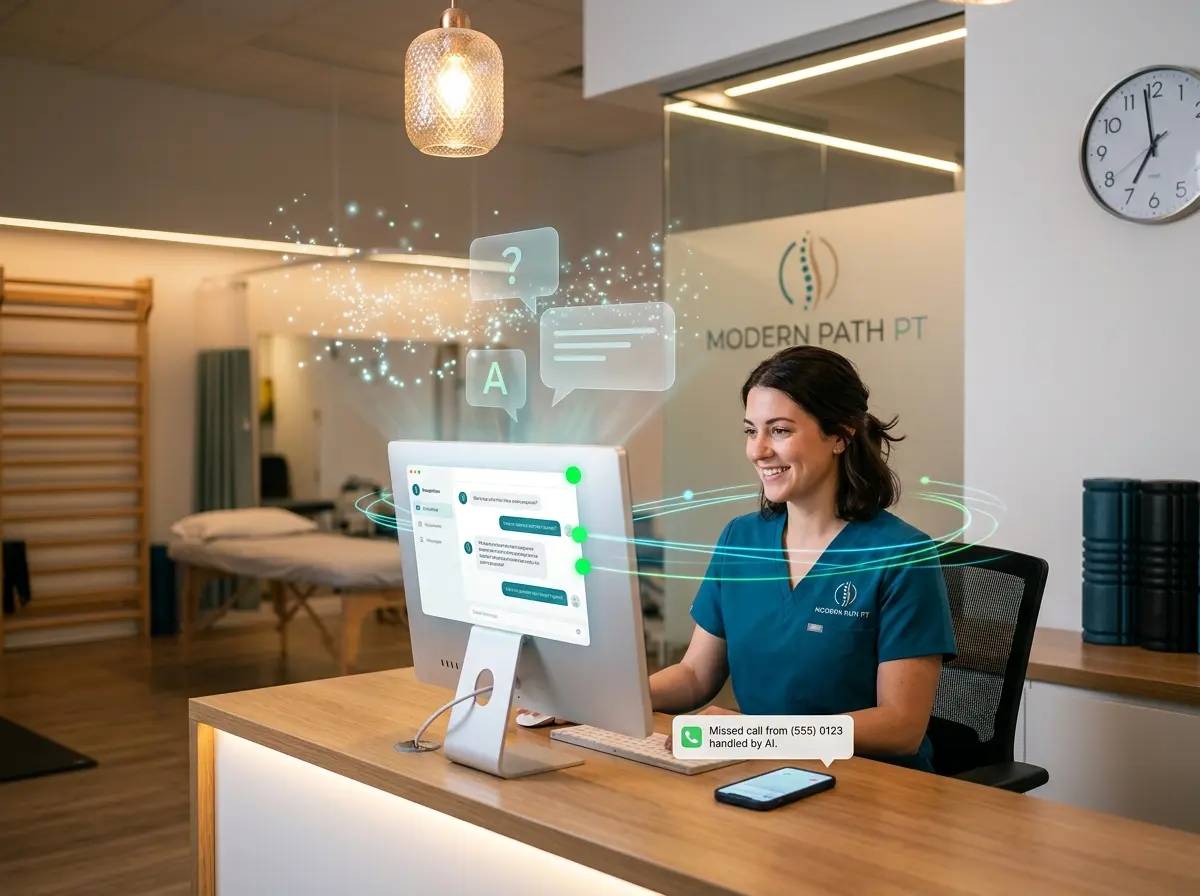
This is also where Stella can quietly become one of your most useful team members. Stella's built-in CRM lets you manage patient contacts with custom fields, tags, and AI-generated profiles — making it easy to track who referred whom, what rewards are pending, and which patients are most engaged with your program. Her conversational intake forms can capture referral information during phone calls or at the kiosk the moment a new patient reaches out, so no referral ever goes untracked. And since Stella answers your phones 24/7, she can also promote your referral program to callers naturally, just like a well-trained front desk staff member would — without ever taking a lunch break or forgetting to mention it.
Promoting Your Program So Patients Actually Know It Exists
Build Awareness at Every Touchpoint
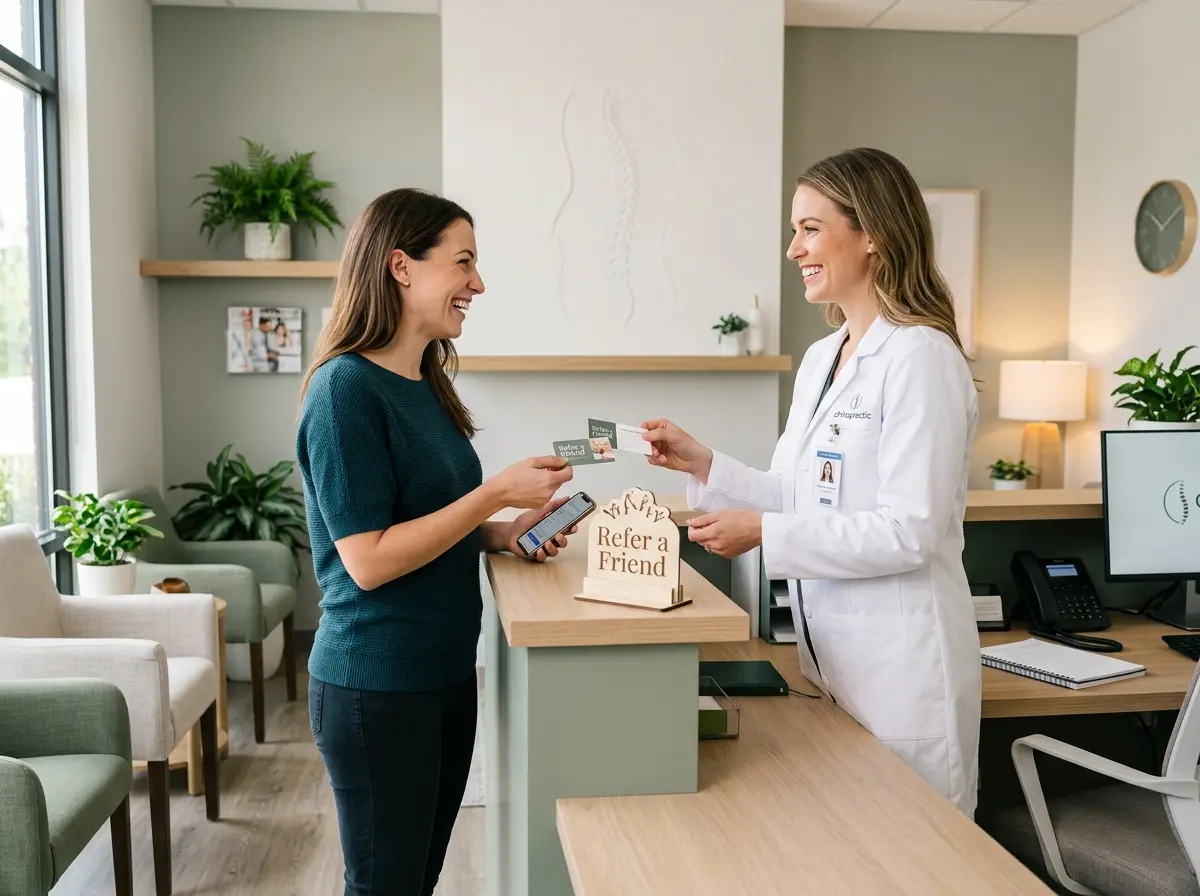
You'd be shocked how many patients have no idea a referral program exists, simply because nobody told them consistently. Awareness isn't a one-time announcement — it's an ongoing presence across every patient touchpoint. Your referral program should be visible in your waiting room, mentioned during checkout, included in appointment confirmation emails, and highlighted in your patient newsletter. If you send post-visit follow-up texts, include a brief line. If patients follow you on social media, post about it occasionally with a patient success story (with permission, of course).
Don't rely on your front desk team to remember to mention it every single time. Humans are wonderfully fallible, especially during a busy afternoon. Build the program into scripts, automated emails, and your intake process so that reminders happen with or without manual effort.
Celebrate Referrals Publicly (and Personally)
People respond powerfully to recognition. When a patient refers someone, acknowledge it. A handwritten thank-you card is a five-minute investment that patients genuinely remember. A small "referral spotlight" in your email newsletter — with permission — celebrates the culture of community you're building. Even a quick personal mention at their next visit ("Hey, we heard you referred your neighbor — thank you so much!") creates a moment that reinforces the behavior.
You're not just running a marketing program. You're building a reputation as a practice that treats patients like people, not appointment slots. That kind of culture is self-reinforcing: patients who feel appreciated refer more people, who become patients who feel appreciated, who refer more people. You get the idea.
Review and Refresh the Program Regularly
A referral program isn't a set-it-and-forget-it machine. Review your numbers quarterly. How many referrals are you receiving? Which patients are your top referrers? Are new patients actually converting after being referred, or are they booking and not following through? Use this data to tweak your incentives, adjust your messaging, or introduce limited-time bonus offers to re-energize participation. A "Double Referral Month" where rewards are temporarily doubled can create a meaningful spike in activity — and gives you something new to communicate to your patient base.
A Quick Word About Stella
Stella is an AI robot employee and phone receptionist built for businesses like yours — available as a friendly in-office kiosk that greets and engages patients, and as a 24/7 AI phone receptionist that handles calls, answers questions, promotes your services, and collects patient information. She runs on a straightforward $99/month subscription with no upfront hardware costs, is easy to set up, and never has a bad day. For chiropractic practices managing patient relationships and referral tracking, she's a genuinely useful addition to any front office operation.
Start Small, Stay Consistent, and Let the Program Work
Building a referral program that actually gets used doesn't require a massive budget or a marketing degree. It requires a compelling incentive, a frictionless process, consistent promotion, and reliable follow-through. Get those four things right and your happiest patients will start doing work you've been trying to do on your own.
Here are your immediate next steps:
- Audit your current referral process — if you have one — and identify the biggest point of friction or failure.
- Define or redesign your incentive so it's genuinely exciting, experience-focused, and clearly communicated.
- Set up automated tracking and follow-up so every referral is captured, credited, and confirmed without relying on human memory.
- Add referral program mentions to every patient touchpoint — from your waiting room to your post-visit texts.
- Review results quarterly and adjust based on what the numbers are telling you.
Your patients are already talking about you — to their friends, their family, their coworkers with mysteriously bad posture. The only question is whether your referral program gives them a good reason to make the introduction. Build something worth sharing, make it easy to participate, and then get out of the way. The results might actually surprise you.