Introduction: Because "Just Answer the Phone" Is Not a Business Strategy
Running a veterinary clinic is no small feat. Between managing appointments, calming anxious pet owners, keeping up with medical records, and somehow convincing Mr. Whiskers that the thermometer is not his enemy, your front desk staff has a lot on their plate. And yet, the phone keeps ringing — often at the worst possible moment.
Here's a stat worth chewing on: missed or mishandled phone calls are one of the top reasons veterinary clients switch practices. In an industry built entirely on trust (you are the person keeping their beloved golden retriever alive, after all), a fumbled phone interaction can quietly cost you clients you didn't even know you were losing.
The solution isn't to hire more staff and hope for the best. It's to create a Call Handling Standard Operating Procedure (SOP) — a clear, repeatable system that ensures every caller is greeted consistently, routed correctly, and never left wondering if they've accidentally reached a black hole. Whether you're a solo vet with a small team or managing a multi-location practice, a call handling SOP is the operational backbone your front desk has been desperately missing. Let's build one.
The Anatomy of a Great Call Handling SOP
Define Your Call Categories First
Not all calls are created equal. Before you can write a single script or flowchart, you need to understand what kinds of calls your clinic actually receives. For most veterinary practices, calls fall into a handful of predictable buckets: appointment scheduling, prescription refill requests, general inquiries (hours, services, pricing), urgent or emergency situations, and follow-ups on existing cases.
Each of these categories requires a different response — and a different level of urgency. An appointment request can wait thirty seconds on hold. A pet experiencing labored breathing cannot. Your SOP must explicitly define these categories and establish clear protocols for each one. Document them, name them, and make sure every team member can recite them in their sleep (or at least while fielding their fifteenth call before noon).
Write Scripts — But Make Them Human
Scripts get a bad reputation because most of them sound like they were written by someone who has never spoken to another human being. Your call scripts should feel warm, professional, and specific to your clinic's personality. Start with the basics: a standard greeting that includes the clinic name, the receptionist's name, and an offer to help. Something like, "Thank you for calling Maplewood Animal Hospital, this is Sarah — how can I help you and your furry family member today?" is infinitely better than a flat "Hello, hold please."
From there, write branching scripts for each call category. Include language for putting callers on hold (with their permission), transferring calls, and closing out a conversation professionally. The goal isn't to robotize your staff — it's to give them a reliable framework so they're never improvising through a stressful call with a panicked pet owner.
Establish Clear Escalation Protocols
One of the most common failure points in veterinary call handling is the escalation gap — that awkward moment when a receptionist isn't sure whether to transfer a call, take a message, or quietly panic. Your SOP needs to close that gap with explicit escalation rules. Define exactly which situations require immediate transfer to a veterinarian or technician, which can be handled with a callback within a set timeframe, and which are best resolved by leaving a detailed voicemail for the appropriate staff member.
For example: any call describing signs of poisoning, difficulty breathing, seizures, or trauma should be flagged as an emergency and escalated immediately — no exceptions, no "let me check if someone's available." Build that urgency into your SOP language, and train your team on it regularly. Lives — tiny, furry, very beloved lives — may genuinely depend on it.
Technology That Pulls Its Weight at the Front Desk
Let Automation Handle the Routine, So Your Team Can Handle the Rest
Here's where we get to talk about working smarter rather than just harder. A significant portion of the calls your clinic receives every day are routine — hours, directions, vaccination schedules, whether you carry a specific flea medication. These are questions your receptionist could answer in her sleep, but they still consume real time and real attention that could be better spent elsewhere.
This is exactly where Stella earns her keep. Stella is an AI robot receptionist that answers phone calls 24/7 using the same knowledge she'd use in person — your services, pricing, hours, policies, and current promotions. She can handle routine inquiries without pulling a human staff member away from a patient or a live appointment. For your clinic's physical location, she also functions as an in-store kiosk presence, greeting clients as they walk in and proactively engaging them — so your front desk isn't simultaneously managing the waiting room and the phone queue.
Stella also collects caller information through conversational intake forms and logs everything in a built-in CRM with custom fields, tags, and AI-generated profiles — meaning your team has context before they even pick up a transferred call. She takes voicemails when needed, summarizes them with AI, and sends push notifications to managers. At $99/month with no upfront hardware costs, she's considerably cheaper than turnover.
Training, Testing, and Keeping Your SOP Alive
Train Like It Matters — Because It Does
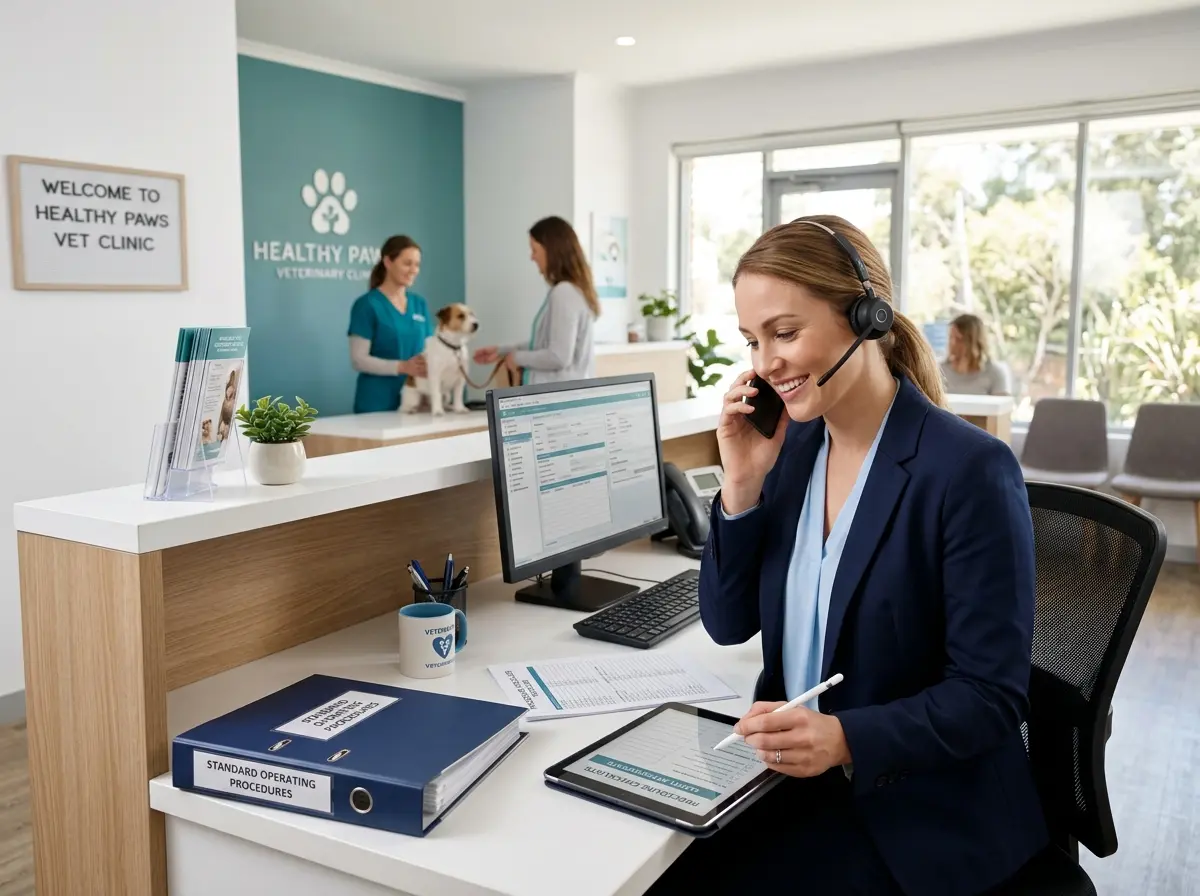
Writing a call handling SOP and printing it out to collect dust in a binder is a time-honored tradition in small business operations. Don't do that. Your SOP is only as valuable as your team's ability to actually use it, which means training needs to be deliberate, ongoing, and a little more engaging than "please read this document and sign at the bottom."
Run role-playing exercises with new hires before they ever touch the phone. Record real calls (with appropriate consent and compliance considerations) and use them as teaching tools in team meetings. Create a quick-reference version of the SOP — a single laminated card or a pinned document in your practice management software — so staff can glance at it during a call without scrolling through ten pages of procedures. Make it accessible, make it visual, and revisit it at least twice a year to ensure it still reflects how your clinic actually operates.
Measure What's Happening and Adjust Accordingly
If you're not tracking call-related data, you're essentially flying blind over a mountain range and hoping for the best. At minimum, your clinic should be monitoring call volume by time of day, average hold and wait times, missed call rates, and how frequently calls are being escalated or misrouted. Most modern practice management systems and phone platforms offer some version of this reporting, and the insights are genuinely useful.
If you notice a spike in missed calls between 11 a.m. and 1 p.m., that's your data telling you to adjust staffing or implement overflow coverage during that window. If escalation rates are higher than expected, that might signal a training gap or a script that isn't giving staff enough guidance. Review the numbers quarterly, bring them to team meetings, and treat your SOP as a living document that improves over time rather than a one-time project you can check off the list.
Build in Quality Checkpoints
Sustainability is the quiet goal of any good SOP. Build periodic quality checks directly into your operational calendar — a monthly five-minute call audit, a quarterly SOP review, or a simple feedback mechanism where staff can flag scripts that aren't working in practice. Your receptionists are on the front lines of these conversations every single day, and their input is genuinely invaluable. The best SOPs in any industry are co-created with the people who actually use them.
Quick Reminder About Stella
Stella is an AI robot employee and phone receptionist designed to support businesses exactly like yours — handling calls around the clock, greeting clients in person at the kiosk, managing intake, and keeping your CRM organized without lifting a finger (she doesn't have fingers, but you get the idea). She's available for $99/month, requires no upfront hardware investment, and is ready to work the moment you set her up. For a veterinary clinic where every minute of staff attention matters, she's worth knowing about.
Conclusion: Build It Once, Benefit From It Every Single Day
A well-designed call handling SOP is one of the highest-return investments a veterinary practice can make — not because it's glamorous, but because it silently prevents a hundred small failures from compounding into big ones. It protects your client relationships, reduces stress on your team, ensures emergencies are handled with appropriate urgency, and gives your clinic a professional, consistent voice regardless of who picks up the phone.
Here's where to start: block out two hours this week to audit your current call categories and write your first set of scripts. Don't aim for perfection — aim for documented and trainable. From there, build your escalation protocols, schedule your first training session, and identify at least one technology tool (AI-assisted or otherwise) that can absorb routine call volume and give your team breathing room.
Your clients love their pets fiercely and they chose your clinic to help take care of them. Every call they make to you is an extension of that trust. Make sure the experience on the other end of the line is worthy of it.