So You Want to Sell More Jewelry — Have You Tried Actually Knowing Your Customers?
Here's a scenario that plays out in jewelry stores every single day: A customer walks in, browses for twenty minutes, buys a pair of earrings, and walks out. Three months later, their anniversary is coming up, they need a gift, and they end up at your competitor because — well — they forgot you existed. You, meanwhile, have no idea who they were, what they liked, or that you just lost a $600 sale.
Welcome to the accidental invisibility of most jewelry retail experiences.
Private clienteling — the art of building personal, ongoing relationships with your best customers — has long been the not-so-secret weapon of luxury jewelry houses like Tiffany, Cartier, and Van Cleef. The good news? You don't need a flagship on Fifth Avenue to pull it off. You just need a system, a strategy, and the willingness to actually remember people's names (or at least have something that does it for you).
Done right, private clienteling can double your repeat business, dramatically increase average transaction value, and turn one-time buyers into loyal advocates who send their friends to you. Let's talk about how.
Building the Foundation: Know Who's Walking Through Your Door
Private clienteling starts with data — not the creepy kind, but the genuinely useful "what does this person love and when do they shop" kind. The stores that do this well aren't necessarily the biggest or fanciest. They're just the most intentional.
Capture Customer Information from the First Visit
If you're not collecting customer information during every transaction, you're essentially running a business with amnesia. At minimum, you should be capturing a name, email address, phone number, and any relevant preferences or life details the customer volunteers — anniversary dates, birthstones, whether they prefer gold or silver, whether they're shopping for themselves or someone else.
The trick is making this feel natural and helpful, not clinical or intrusive. Train your staff to weave intake questions into conversation: "Do you want me to keep a note of her ring size so you're not guessing next time?" Nobody says no to that. It's a service, not a data grab.
Build Profiles That Actually Mean Something
A name and email address alone won't get you far. The real power of clienteling comes from rich customer profiles — notes about style preferences, purchase history, budget range, important dates, and even personality quirks that help your staff reconnect with them instantly on a return visit.
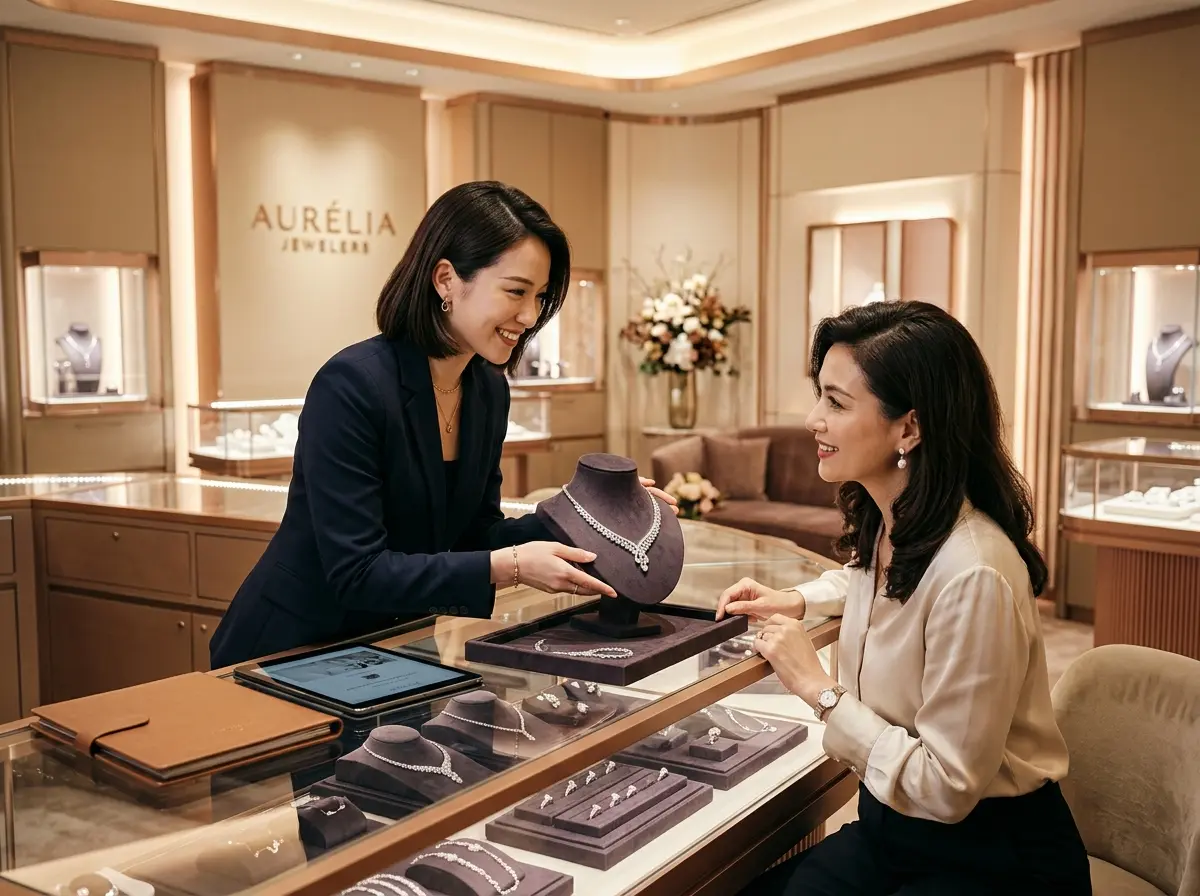
Think of it this way: if a customer comes in six months after their first visit and your salesperson can say, "Welcome back! Are you still loving those sapphire drop earrings? We just got in a matching pendant that would be stunning with them" — that customer is not shopping anywhere else for the rest of their life. That's the power of a profile done right.
Segment Your Clients for Smarter Outreach
Not all customers are equal, and your time isn't unlimited. Once you have solid profiles, segment your client list — by purchase frequency, average spend, upcoming occasions, or product preferences. Your top 20% of buyers likely represent 60–80% of your revenue. These are the people who deserve a personal phone call or a handwritten note, not just a mass email blast. Segmentation lets you be thoughtful without being overwhelmed.
How the Right Tools Make Clienteling Effortless
Look, nobody got into the jewelry business because they love managing spreadsheets. If your clienteling system lives in a messy notebook or a cobbled-together Excel file, it's going to collapse the moment things get busy — which is exactly when you need it most.
Let Technology Handle the Remembering
Stella, the AI robot employee and phone receptionist, is surprisingly well-suited to help jewelry stores start building clienteling infrastructure from day one. As an in-store kiosk, she greets customers proactively, answers product and policy questions, and collects customer information through natural, conversational intake forms — so your sales staff can stay focused on closing and building rapport rather than playing secretary. As a phone receptionist, she answers every call 24/7, captures caller details, and funnels everything into a built-in CRM with custom fields, tags, notes, and AI-generated customer profiles. That means when a customer calls to ask about a repair or check on a custom order, their information is being tracked, organized, and ready for follow-up without anyone lifting a finger. For a jewelry store serious about clienteling, that kind of automated foundation is genuinely valuable.
Turning Data Into Revenue: The Art of the Personal Outreach
Collecting customer information is the setup. The payoff comes when you use it to reach out in ways that feel personal, timely, and genuinely helpful — rather than the usual spray-and-pray marketing emails that get deleted before the subject line is finished.
Master the Occasion-Based Follow-Up
Jewelry is almost always tied to a moment — a birthday, an anniversary, a graduation, a proposal. If you know those dates for your clients, you have a marketing superpower. A well-timed personal message or phone call two to three weeks before a significant occasion — "Hi, Mr. Thompson, your anniversary is coming up next month and we just received some beautiful new pieces in your wife's preferred style" — converts at an extraordinary rate compared to cold outreach. People aren't just buying jewelry; they're buying the relief of not having to figure it out themselves. Be that solution.
According to industry data, repeat customers spend 67% more than new customers on average, and occasion-triggered outreach is one of the highest-converting tactics in luxury retail. The math is not subtle.
Create Exclusive Experiences That Make Clients Feel Special
Private clienteling isn't just about remembering birthdays — it's about making your best customers feel like they belong to something. Consider hosting exclusive after-hours shopping events for your top clients, offering first access to new collections before they hit the floor, or providing complimentary services like jewelry cleaning, appraisal consultations, or custom design sessions. These experiences cost relatively little but create an emotional connection that no discount campaign can replicate.
A small jewelry store in Nashville reportedly doubled their holiday season revenue over two years simply by hosting an annual "VIP Preview Night" for their top 50 clients — complete with champagne, a trunk show, and early access to holiday inventory. Total cost? A few hundred dollars. Return? Tens of thousands. Exclusivity, it turns out, is extremely affordable when it's genuine.
Follow Up After Every Purchase — Every Single Time
This one is shockingly underused. A simple follow-up call or personal message two weeks after a purchase — just to make sure the customer loves what they bought, or to share care instructions for a particular piece — creates an impression that most retail experiences never bother to make. It opens the door to addressing any concerns before they become complaints, and it plants the seed for the next purchase naturally. No hard sell required. Just genuine attention.
Quick Reminder About Stella
Stella is an AI robot employee and phone receptionist that works in your store as a friendly, knowledgeable kiosk and answers your phones 24/7 with no breaks, no turnover, and no bad days. For jewelry stores building a clienteling practice, she's particularly useful for capturing customer data through conversational intake, managing contacts in her built-in CRM, and ensuring every call and every walk-in gets a professional, consistent first impression — all for $99 a month.
Start Small, Be Consistent, and Watch the Compounding Effect
Private clienteling can feel overwhelming if you try to implement everything at once. The good news is that you don't have to. The stores that do this best didn't overhaul everything overnight — they started with one intentional habit and built from there.
Here's a practical place to begin:
- This week: Audit your current customer data. How much do you actually know about your repeat buyers? Where are the gaps?
- This month: Implement a consistent intake process — in-store, online, and over the phone — so every new customer interaction adds to your CRM.
- This quarter: Identify your top 20 clients and reach out personally before their next likely purchase occasion. Make it warm, specific, and human.
- This year: Build out a calendar of touchpoints, events, and exclusive offers that keep your best clients engaged year-round.
Private clienteling isn't a campaign. It's a culture — one where your customers feel seen, remembered, and valued in a way that most retail experiences simply don't bother to deliver. In a world of algorithm-driven ads and anonymous online checkout, a jewelry store that genuinely knows its customers isn't just competitive. It's irreplaceable.
And irreplaceable businesses, as it turns out, don't have to worry much about doubling their sales. They just do.