The Revolving Door Problem (And Why It's Costing You More Than You Think)
Let's paint a familiar picture. A patient walks into your physical therapy clinic with chronic lower back pain. You do a thorough evaluation, build a solid treatment plan, and over the course of six to eight weeks, you help them make real, measurable progress. They thank you profusely, maybe leave a five-star review, and then... disappear. Six months later, they're back — in the same pain, starting from square one, wondering why their progress didn't last.
This cycle isn't just frustrating — it's a missed opportunity on both sides. For your patient, it means unnecessary suffering and setbacks. For your clinic, it means inconsistent revenue, unpredictable scheduling, and a patient roster that churns rather than compounds. Chronic pain doesn't resolve in eight weeks. So why are so many physical therapy clinics still operating as though it does?
The answer, more often than not, is the absence of a structured chronic pain management track — a defined, long-term care pathway designed to retain patients, sustain their outcomes, and build the kind of loyal relationships that keep your clinic genuinely thriving. Let's talk about how to build one, why it matters, and how to stop leaving both results and revenue on the table.
Building a Chronic Pain Program That Actually Works
Define the Track Before You Market It
One of the most common mistakes clinics make is attempting to retain chronic pain patients without a clearly defined program structure. "Come back as needed" is not a retention strategy — it's wishful thinking. A real chronic pain management track should have named phases, expected timelines, measurable milestones, and a clear value proposition that patients can understand before they even start.
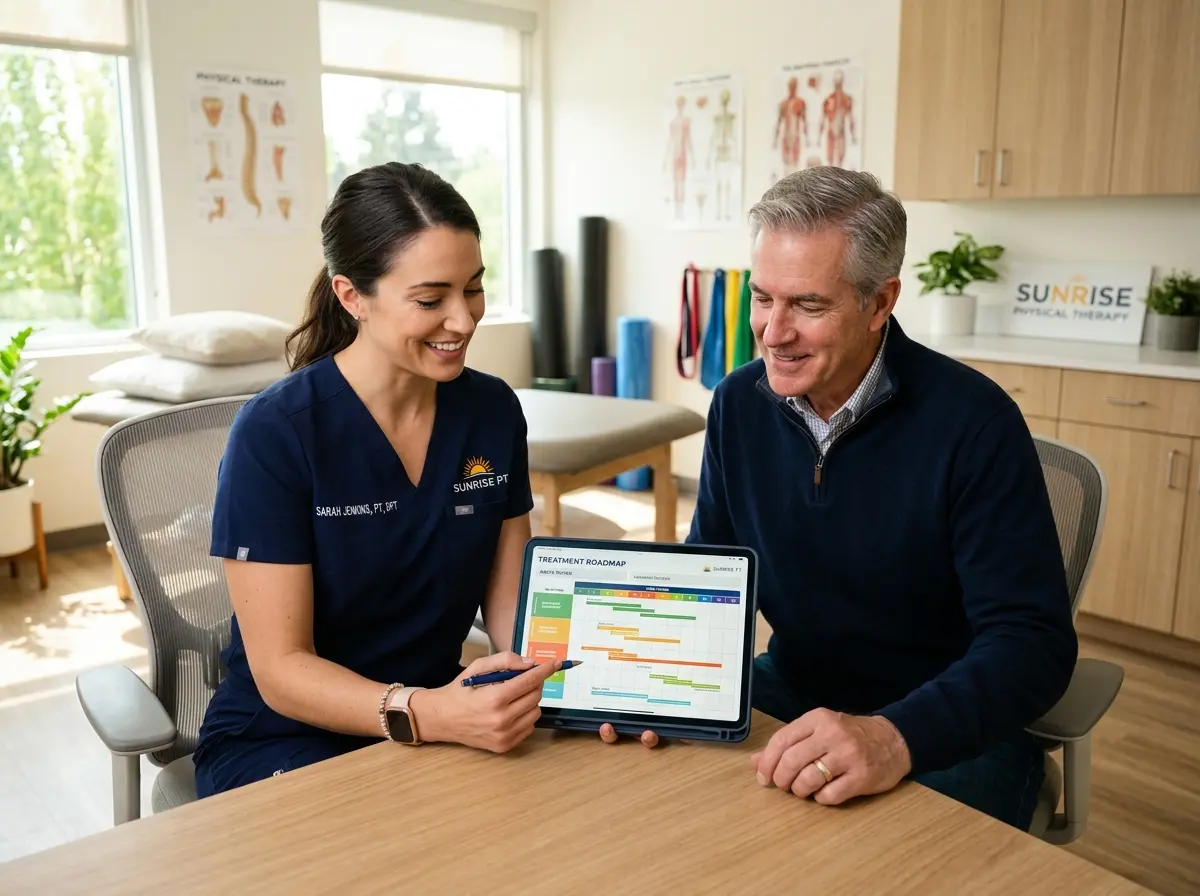
Consider structuring your program in three phases: an Active Treatment Phase (weeks one through eight, focused on assessment and intensive intervention), a Progressive Management Phase (months two through six, with reduced visit frequency but continued monitoring and home program development), and a Maintenance and Prevention Phase (ongoing, monthly or bimonthly visits paired with telehealth check-ins and self-management coaching). This kind of visible structure helps patients commit psychologically — they can see the journey, not just the next appointment.
Research consistently shows that patients who understand their care plan are significantly more likely to adhere to it. A structured track communicates that you have a plan, that you're invested in their long-term wellbeing, and that progress is a process — not a promise delivered in six sessions.
Make Pain Education a Core Deliverable
Chronic pain is deeply misunderstood by most patients — and frankly, by many clinicians who were never trained to communicate about it effectively. Pain neuroscience education (PNE), when delivered well, has been shown in multiple studies to reduce pain intensity, improve physical function, and increase patient engagement with long-term care. It belongs inside your structured track, not as an afterthought, but as a deliberate deliverable.
Build in dedicated education touchpoints throughout your program. This doesn't have to mean hour-long lectures. A ten-minute conversation about central sensitization during a session, a short handout explaining the difference between hurt and harm, or a brief video resource shared between visits — these compound over time. Patients who understand why they're in pain, and why recovery is nonlinear, are far less likely to give up when progress feels slow. And they're far more likely to stay in your program rather than bouncing between providers looking for a quick fix that doesn't exist.
Leverage Outcome Tracking to Prove (and Improve) Your Value
If you're not systematically measuring patient outcomes at regular intervals, you're essentially flying blind — and so are your patients. Standardized outcome measures like the Oswestry Disability Index, the PSFS, or the PROMIS pain interference scale give you objective data to show progress, identify plateaus, and make clinical decisions based on evidence rather than intuition alone.
More importantly, outcome data makes your value visible. When a patient sees a graph showing their functional improvement over six months, they don't ask whether they still need to come in. They ask when their next appointment is. Build scheduled outcome reassessments into your track at 30, 60, and 90-day intervals, and make reviewing those results a meaningful part of each milestone visit. Patients who see their progress retain better. Full stop.
Streamlining Patient Intake and Follow-Up Without Burning Out Your Staff
First Impressions and Ongoing Communication Matter More Than You Think
Even the most brilliantly designed chronic pain program will underperform if the patient experience around it feels clunky. Slow intake processes, unanswered phone calls during busy clinic hours, and missed follow-up touchpoints erode trust before your clinical team even has a chance to demonstrate their skills. This is where having the right support infrastructure becomes genuinely important — and where technology can carry some of the load your front desk simply wasn't built to handle alone.
Stella, the AI robot employee and phone receptionist, can help physical therapy clinics manage the operational side of patient communication without adding headcount. For clinics with a physical location, Stella's in-store kiosk presence greets patients proactively and provides information about available programs, services, and promotions — including your chronic pain management track. On the phone, Stella answers calls 24/7, handles intake questions, and collects patient information through conversational intake forms, all feeding into a built-in CRM with AI-generated contact profiles. That means fewer missed calls, faster intake, and cleaner data — without burning out your front desk team before noon.
Retention Strategies That Keep Chronic Pain Patients Engaged Long-Term
Create a Community, Not Just a Caseload
Chronic pain is isolating. Patients who deal with persistent pain often feel misunderstood by their families, dismissed by other providers, and frankly exhausted by the endless search for answers. Your clinic has an opportunity to be the place that gets it — and that community feeling is one of the most powerful retention tools available to you.
Consider hosting monthly group sessions for chronic pain patients: a guided movement class, a pain education workshop, or even a casual check-in group facilitated by one of your therapists. These don't have to be elaborate or expensive. They do have to be consistent and intentional. Patients who feel connected to your clinic — not just to their individual therapist — are far more resilient when their primary provider is unavailable, when scheduling gets complicated, or when progress temporarily stalls. Community creates loyalty that individual therapeutic relationships alone cannot sustain.
Use a Maintenance Membership Model to Stabilize Revenue and Commitment
Here's an uncomfortable truth: most patients will deprioritize physical therapy the moment they feel "good enough." A structured maintenance membership changes that equation. Instead of waiting for pain to spike before booking, patients on a maintenance plan are already committed to regular visits — and so is your revenue.
A simple maintenance membership might include two visits per month, access to your group programming, a quarterly outcome review, and priority scheduling — all for a fixed monthly fee. Price it to reflect value, not just time. Clinics that have implemented membership models for chronic pain patients consistently report improved retention rates, more predictable monthly revenue, and higher patient satisfaction scores. It also dramatically reduces the "I'll call when things get bad again" mentality that leads to the revolving door problem you started with.
Automate the Touchpoints That Fall Through the Cracks
Your therapists are excellent clinicians. They are probably not excellent at remembering to send a follow-up message three weeks after a patient's last visit, or flagging when someone hasn't rebooked after their maintenance session. That's not a character flaw — it's a capacity issue. The solution is systematized follow-up that doesn't depend on anyone remembering to do it manually.
Build automated communication touchpoints into your chronic pain track: a check-in message at the two-week mark between visits, a reminder when a patient hasn't rebooked within a defined window, a birthday acknowledgment, a seasonal flare-up reminder tied to relevant education content. These small, consistent touches accumulate into a patient experience that feels genuinely attentive — because operationally, it is. The goal is to make sure no chronic pain patient ever feels forgotten between appointments, because patients who feel forgotten find somewhere else to go.
A Quick Reminder About Stella
Stella is an AI robot employee and phone receptionist designed to help businesses like physical therapy clinics stay responsive, professional, and organized without the overhead of additional staff. She greets patients at your kiosk, answers calls around the clock, manages intake through conversational forms, and keeps your CRM updated automatically — all for $99 a month with no upfront hardware costs. She doesn't call in sick, doesn't need a lunch break, and never puts a potential patient on hold until they give up and call someone else.
Your Next Steps Start Today
Building a structured chronic pain management track isn't a small project, but it doesn't have to be an overwhelming one either. Start by auditing your current patient journey: where do chronic pain patients drop off, what touchpoints are missing, and what would a clear three-phase program look like in your clinic's context? From there, layer in outcome tracking, education components, and a maintenance offering — and make sure your operational infrastructure can support the communication demands that long-term retention requires.
The clinics that thrive over the next decade won't be the ones who treat the most acute injuries. They'll be the ones who figured out how to genuinely serve patients with complex, long-term needs — and built the systems to do it consistently, compassionately, and profitably. Chronic pain isn't going anywhere. The question is whether your patients will stay with you to manage it, or wander off to find someone who made the effort to build a program worth staying for.
Build the track. Keep the patients. Grow the clinic. It really is that straightforward — even if getting there takes a little work.