Introduction: The Restaurant That Couldn't Run Without You (Sound Familiar?)
Let's paint a picture. It's your day off — your well-deserved day off — and your phone buzzes at 11:47 AM. The prep cook has a question about the soup. At 12:15 PM, the server needs to know if the patio is open. By 2:00 PM, you've unofficially worked a full shift from your couch in sweatpants. Congratulations. You now manage a restaurant that technically employs other humans but functionally cannot tie its own shoes without you.
Sound familiar? You're not alone. According to a Toast Restaurant Technology Report, over 60% of independent restaurant owners say they feel they can never fully step away from day-to-day operations. The culprit, more often than not, isn't lazy staff or bad luck — it's the absence of a clear, comprehensive operations manual.
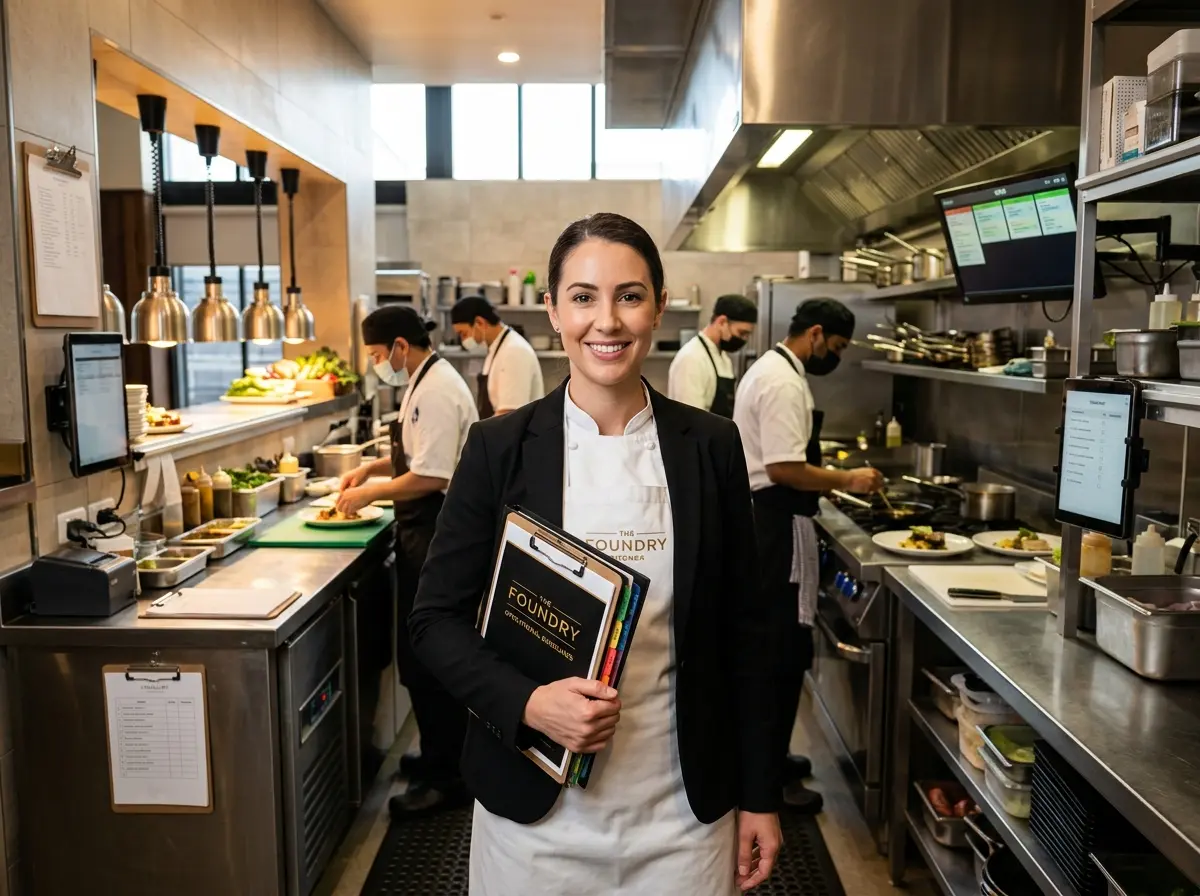
An operations manual is essentially the brain of your restaurant written down so that you don't have to be the brain every single minute of every single day. It documents your systems, your standards, and your expectations — transforming tribal knowledge into transferable, repeatable processes. When done right, it means your restaurant runs smoothly whether you're standing in the kitchen or sitting on a beach somewhere. This guide will show you exactly how to build one.
The Foundation: What to Document and Why
Start With What Only You Know
The first and most critical step in building an operations manual is a brutally honest audit of everything that currently lives only in your head. Every time a staff member comes to you with a question, that's a gap in your documentation. Every time a customer complaint surfaces because "we didn't know we were supposed to do it that way," that's another gap. Start keeping a running list for one week — just jot down every question asked, every decision you make, and every process you touch. By Friday, you'll have a roadmap of exactly what needs to be documented.
Common areas restaurant owners forget to document include how to handle a disgruntled customer, what to do when a key ingredient is 86'd mid-service, how to open and close the POS system, and what the plating expectations are for every dish. These aren't glamorous things to write down, but they're the difference between a team that can handle a Saturday dinner rush without you and one that melts down the moment something goes sideways.
Structure Your Manual Around Core Operational Areas
A useful operations manual isn't a 200-page PDF that nobody reads. Think of it as a living document organized into clear, accessible sections. A strong restaurant operations manual typically covers the following core areas:
- Front of House (FOH) Procedures: Greeting standards, table management, upselling expectations, complaint handling, and end-of-shift duties.
- Back of House (BOH) Procedures: Prep schedules, food safety protocols, recipe standards, portion control, and cleaning checklists.
- Opening and Closing Checklists: Step-by-step tasks for both FOH and BOH, including cash handling and alarm procedures.
- Staff Management: Scheduling policies, call-out procedures, dress code, performance expectations, and disciplinary guidelines.
- Emergency Protocols: What to do in the event of equipment failure, a health emergency, or an unusually angry Yelp reviewer storming in.
Organizing your manual around these pillars makes it easy for staff to find what they need quickly — which means they'll actually use it instead of calling you on your day off.
Make It Readable, Not Lawyerly
Here's where many restaurant owners go wrong: they write their operations manual like a legal contract or a government form. Nobody wants to read that. Write it the way you'd explain things to a new, smart employee on their first day. Use plain language, include photos or short videos where helpful, and avoid jargon unless you define it. Tools like Google Docs, Notion, or dedicated platforms like Restaurant365 or Trainual make it easy to build visual, searchable manuals that are far more likely to get used. If your manual has a table of contents and hyperlinks, you're already ahead of 80% of your competitors.
Putting Technology to Work in Your Front-of-House Operations
Let AI Handle the Repetitive Stuff So Your Team Can Focus on Hospitality
One thing that sneaks into operations manuals — and eats up enormous staff bandwidth — is handling routine customer inquiries. What are your hours? Do you take reservations? What's gluten-free on the menu? Is the patio open today? These are questions your staff answers dozens of times per day, both in person and over the phone. Documenting how to handle these interactions is smart. Automating them is smarter.
This is where Stella, the AI robot employee and phone receptionist, fits naturally into a restaurant's operational toolkit. Stella can stand inside your restaurant as a physical AI kiosk, greeting every customer who walks in, answering questions about your menu, specials, and promotions, and freeing up your floor staff to focus on delivering the actual dining experience. On the phone side, Stella answers calls 24/7 — handling inquiries, promoting current deals, and forwarding calls to human staff only when truly necessary. For restaurants that collect reservations or event inquiries over the phone, Stella's conversational intake forms and built-in CRM make capturing and organizing that customer information effortless. At just $99/month with no upfront hardware costs, it's the kind of operational upgrade that pays for itself quickly.
Building Systems That Actually Get Used
Train Your Team With the Manual, Not After It
An operations manual only works if your team knows it exists and actually refers to it. The biggest mistake restaurant owners make is handing a new hire the manual on day one and expecting them to absorb it independently, then never mentioning it again. Instead, weave the manual into your onboarding process from the start. Walk through relevant sections during training shifts. Quiz staff casually on key procedures. Reference specific manual sections when giving feedback — "Hey, page 12 covers exactly how we handle that situation" is far more powerful than just telling someone what to do in the moment.
Consider assigning different sections of the manual to experienced team members who "own" those areas. Your head server owns the FOH section. Your sous chef owns BOH protocols. This creates accountability and ensures the manual stays current as processes evolve. It also builds leadership within your team — which is a beautiful side effect of good documentation.
Build In a Regular Review Cycle
Menus change. Policies evolve. That one prep technique you swore by two years ago has since been replaced by something better. Your operations manual needs to keep up. Build a formal review cycle into your calendar — quarterly for fast-changing sections like menu and promotions, annually for foundational policies. Date-stamp every revision so staff always know they're working from the current version.
A stale operations manual is almost worse than no manual at all, because it breeds confusion and erodes trust in the document itself. When staff notice that the manual references a dish you discontinued eight months ago, they start to wonder what else is out of date — and eventually stop consulting it altogether. Keep it current, and it will keep your restaurant running smoothly.
Document the "Why," Not Just the "What"
The most effective operations manuals don't just tell staff what to do — they explain why. When a server understands that the reason you always offer a complimentary bread basket within five minutes of seating is because guest satisfaction scores correlate directly with early touchpoints, they're more likely to follow through consistently. When your kitchen team understands that portioning standards aren't just about cost control but about delivering a consistent guest experience, those standards get respected rather than resented. Context transforms compliance into genuine commitment, and genuine commitment is what keeps your restaurant running when you're not watching.
Quick Reminder About Stella
Stella is an AI robot employee and phone receptionist designed to work inside your business and answer calls around the clock — so your team stays focused on what they do best. She greets customers, promotes specials, handles routine questions, and delivers a consistently professional presence without ever calling in sick or asking for a raise. At $99/month with no complicated setup, she's one of the easiest operational wins a restaurant owner can make.
Conclusion: Build the Manual, Buy Back Your Time
Here's the truth: building an operations manual is not glamorous work. It takes time, effort, and a willingness to sit down and document things you've been doing on autopilot for years. But the payoff — a restaurant that functions at a high level without requiring your constant presence — is absolutely worth it.
Start small and build momentum. Here's a practical sequence to get moving:
- This week: Spend 30 minutes writing down every question your staff asked you this week. That list is your first documentation priority.
- This month: Draft your opening and closing checklists and one core procedure document (FOH or BOH — pick one).
- This quarter: Complete a full draft of all major sections, introduce it formally during a team meeting, and assign section ownership to key staff members.
- Ongoing: Schedule quarterly and annual reviews to keep everything current.
The restaurant that runs without you isn't a fantasy — it's a documented system away from reality. Write the manual. Build the systems. Delegate with confidence. And maybe, just maybe, you'll finally get to enjoy that day off without a single text about the soup.