From "Just a Haircut" to a Full-Blown Beauty Empire (Sort Of)
Picture this: a salon owner opens her doors, books appointments back-to-back, and at the end of the month wonders why her revenue looks suspiciously similar to what it was six months ago. She's busy — really busy — but busy and profitable are, unfortunately, not the same thing. Sound familiar?
Here's the thing about service-based businesses, especially salons: the hardest part isn't getting a customer through the door. It's getting that customer to spend more while they're already there, already trusting you, already with their credit card mentally in hand. The add-on strategy — layering complementary services, products, and experiences onto a core offering — is one of the most underutilized growth levers in the beauty industry. And frankly, in most service businesses in general.
This isn't about being pushy or turning your reception desk into a late-night infomercial. It's about strategically building a menu of services and products that naturally complement each other, so your clients leave feeling like they got the full experience — and you leave with a healthier bottom line. Let's talk about how one-service salons have transformed into full beauty destinations, and how you can too.
Building the Foundation: What a Smart Add-On Strategy Actually Looks Like
Before we get into the fun part, let's be clear: an add-on strategy is not just throwing a retail shelf in the corner and hoping someone grabs a shampoo on their way out. That's wishful thinking dressed up as a business plan. A real add-on strategy is intentional, tiered, and tied directly to what your clients are already coming in for.
Start With What Your Clients Already Want (They're Telling You)
Every client who sits in your chair or walks through your door is signaling something. The woman asking about frizz control after every blowout? She's a candidate for a keratin treatment or a take-home smoothing kit. The client who books a manicure every two weeks but mentions her dry cuticles every single time? She's practically begging for a paraffin add-on. The key is training yourself — and your team — to hear these signals as opportunities rather than just conversation.
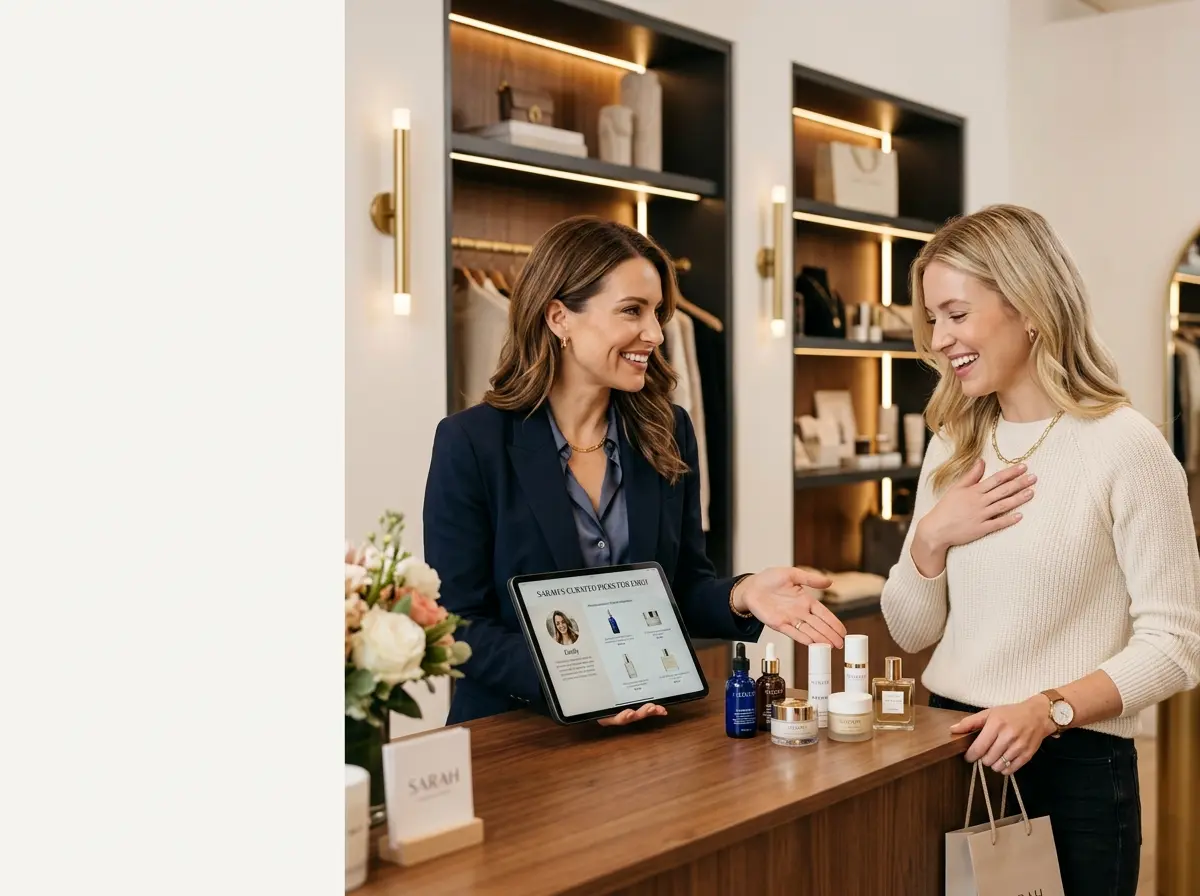
Start by auditing your most popular services and asking: what does this client need before, during, or after this service? Build your add-on offerings around those natural extensions. A haircut client might love a scalp massage. A color client might respond well to a deep conditioning treatment. These aren't upsells in the aggressive sense — they're completions of an experience your client is already halfway into.
The Tiered Menu: Good, Better, Best
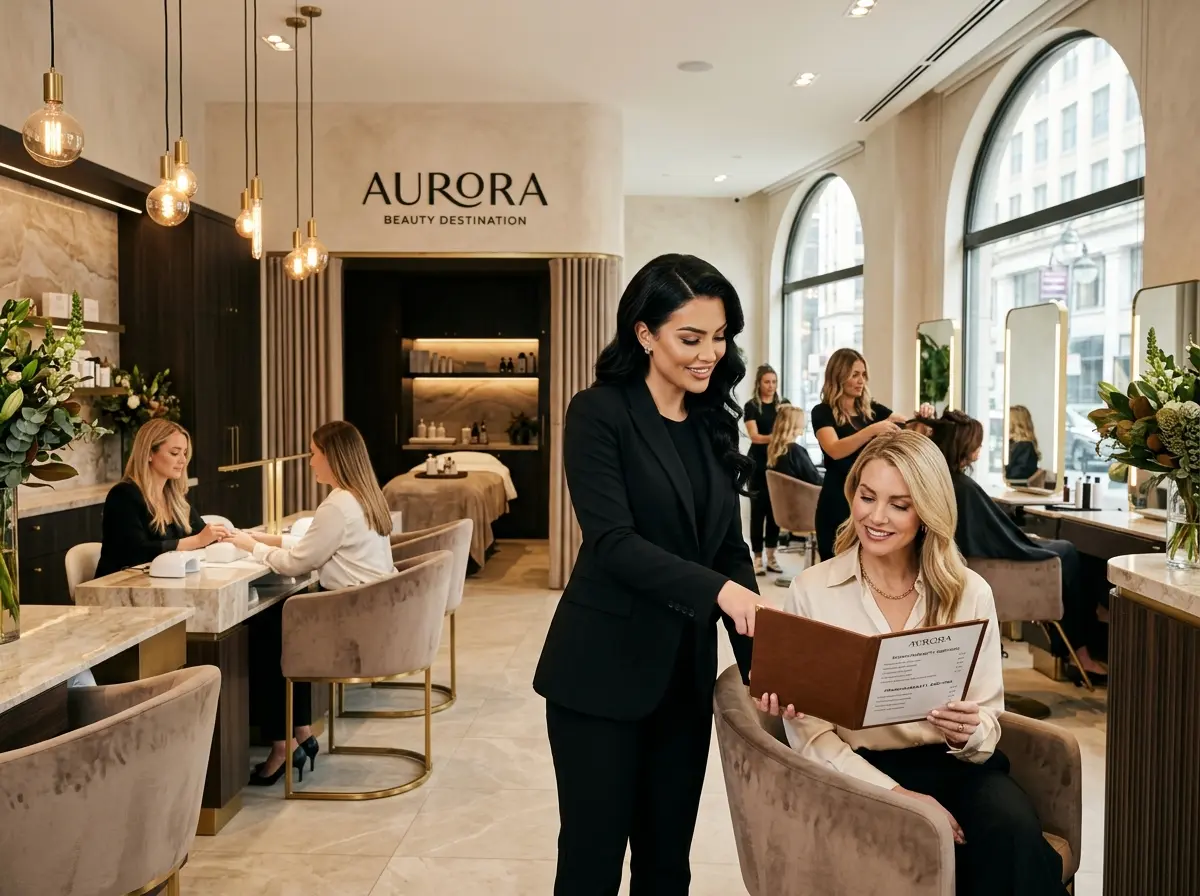
One of the most effective structural approaches is the tiered service menu. Rather than offering a single flat option, you give clients a ladder to climb. A basic blowout, a blowout with a scalp treatment, and a blowout with a scalp treatment plus a take-home styling kit priced as a bundle. Research consistently shows that when people are given three options, they tend to gravitate toward the middle — which, if you've built your pricing correctly, is still significantly more than your base service alone.
According to a study by McKinsey, businesses that actively implement cross-selling and upselling strategies see revenue increases of 10–30% without acquiring a single new customer. For a salon doing $15,000 a month, that's potentially an extra $1,500 to $4,500 just from clients who were already coming in anyway. That's not a trivial number. That's a new piece of equipment, a part-time employee, or a very nice business owner vacation.
Using Technology to Promote Add-Ons Without Annoying Anyone
Here's where things get interesting — and where a lot of salon owners leave serious money on the table. Promoting add-ons doesn't have to fall entirely on your staff, who are, ideally, focused on actually doing the services they were hired to do. Technology can carry a significant chunk of that promotional weight, especially when it comes to greeting, informing, and engaging clients at the right moments.
Let Your In-Store Presence Do the Talking
Stella, the AI robot employee and phone receptionist, is particularly well-suited for this exact challenge. As a friendly, human-sized kiosk stationed inside your salon, Stella proactively greets every client who walks by and can naturally introduce them to current promotions, seasonal add-ons, or bundled service packages — all without pulling your stylists away from a foil or a precision cut. She can answer questions about services, explain what a scalp treatment actually does, and highlight whatever special you're running this month, consistently and without forgetting to mention it on a busy Saturday afternoon.
Stella also handles phone calls 24/7, so when a client calls after hours wondering whether you offer lash extensions or if there's a package deal for color and cut, she's got the answer ready — not a voicemail that gets checked sometime Tuesday. That kind of always-on, knowledgeable presence quietly promotes your expanded service menu every single day, even when you're not there to do it yourself.
Executing the Strategy: Making Add-Ons Feel Natural, Not Forced
The biggest fear most salon owners have about add-on strategies is coming across as salesy. And honestly, that fear is valid — because a clumsy upsell really does feel awful for everyone involved. But there's a significant difference between a desperate pitch and a confident recommendation, and that difference lives almost entirely in timing and framing.
Train Your Team on the Language of Recommendations
The words matter enormously. "Do you want to add a deep conditioning treatment?" is a yes/no question that most people will answer with "no" out of habit. But "I noticed your ends are a little dry — I'd love to add a conditioning mask today, it'll make a real difference in how your color holds" is a professional recommendation rooted in observation. It's the difference between a waiter asking if you want dessert and a sommelier explaining which wine pairs perfectly with what you just ordered.
Invest time in scripting natural recommendation language for your top five add-on opportunities. Role-play it with your team until it doesn't feel like a script anymore. When done well, clients don't feel sold to — they feel cared for. And clients who feel cared for come back, refer friends, and yes, buy the retail product on the way out.
Retail as an Extension of the Service, Not an Afterthought
Retail sales are the sleeping giant in most salons. The industry average for retail as a percentage of total salon revenue sits somewhere around 10–15%, but experts suggest it should be closer to 20–30% for a well-run operation. The gap between those numbers represents a fundamental mindset issue: most stylists think of retail as selling, when they should think of it as prescribing.
When a stylist finishes a color service and hands the client a specific shampoo with a brief explanation of why it'll protect the investment they just made in their hair, that's not a sales pitch — that's professional follow-through. Build retail recommendations into your service process as a standard step, not an optional one. The results, both for client satisfaction and for your revenue numbers, tend to speak for themselves.
Package Deals and Memberships: The Loyalty Play
Once you've established a strong add-on culture, the next evolution is packaging. Bundles and memberships accomplish two things simultaneously: they increase average transaction value and they create predictable, recurring revenue — which is basically the Holy Grail for any service business. A "Color Club" membership that includes a monthly root touch-up, a quarterly deep conditioning treatment, and a discount on retail products gives clients a reason to stay loyal and gives you revenue you can actually plan around. Everybody wins, and nobody had to have an awkward conversation about it.
Quick Reminder About Stella
Stella is an AI robot employee and phone receptionist designed for businesses exactly like yours — she stands in your salon as a proactive kiosk, engages walk-ins, promotes your services and specials, and answers your phones around the clock for just $99 a month with no upfront hardware costs. She's the team member who never calls in sick, never forgets to mention the monthly special, and is always ready to make a great first impression on every client who walks through the door or calls after hours.
Your Next Steps: Turning Strategy Into Revenue
The add-on strategy isn't complicated — but it does require intention. Here's a practical roadmap to get started without overhauling everything at once:
- Audit your top five services and identify one or two natural add-ons for each. Start there. Don't try to build a spa menu overnight.
- Build a tiered pricing structure for at least your most popular service so clients have a clear upgrade path.
- Script and practice recommendation language with your team until it feels conversational, not robotic.
- Integrate retail recommendations as a standard close to every service, not an optional extra.
- Explore a membership or package model for your most loyal clients to lock in recurring revenue.
- Let technology handle the awareness layer — promoting your services, answering questions, and keeping your add-ons top of mind even when your team is heads-down in a full appointment book.
The salon that started as "just a haircut" place didn't become a full beauty destination by accident. It got there because the owner stopped thinking about each service as a standalone transaction and started seeing every client visit as a full experience waiting to be built. That shift in perspective — more than any single tactic — is what separates a busy salon from a truly profitable one.
You've already done the hard work of building a client base that trusts you. Now it's time to make sure they know everything you can do for them.