Why Your HVAC Business Is Leaving Money (and Fresh Air) on the Table
Let's be honest — most HVAC companies are sitting on a goldmine and don't even know it. You show up, fix the furnace, replace the filter, maybe upsell a maintenance plan, and head to the next call. Efficient? Sure. Profitable as it could be? Not even close.
Indoor air quality (IAQ) assessments are one of the most underutilized upsell opportunities in the HVAC industry, and the timing has never been better. According to the EPA, Americans spend approximately 90% of their time indoors, where air pollutants can be two to five times higher than outdoor levels. Customers are increasingly aware of allergens, VOCs, humidity problems, and airborne contaminants — they just don't know who to call about it. Spoiler: it should be you.
This guide walks you through how to build a legitimate, profitable IAQ assessment offering, how to price it, how to present it, and how to make sure it actually sells — without feeling like you're pushing something nobody wants. Because when done right, you're not pushing anything. You're solving a real problem people didn't know they had.
Building an IAQ Assessment Worth Selling
What Should an IAQ Assessment Actually Include?
Before you can sell something confidently, you need to know exactly what you're selling. An indoor air quality assessment isn't just poking around someone's ductwork and nodding thoughtfully — it's a structured evaluation that delivers real, actionable insights to the homeowner or business owner.
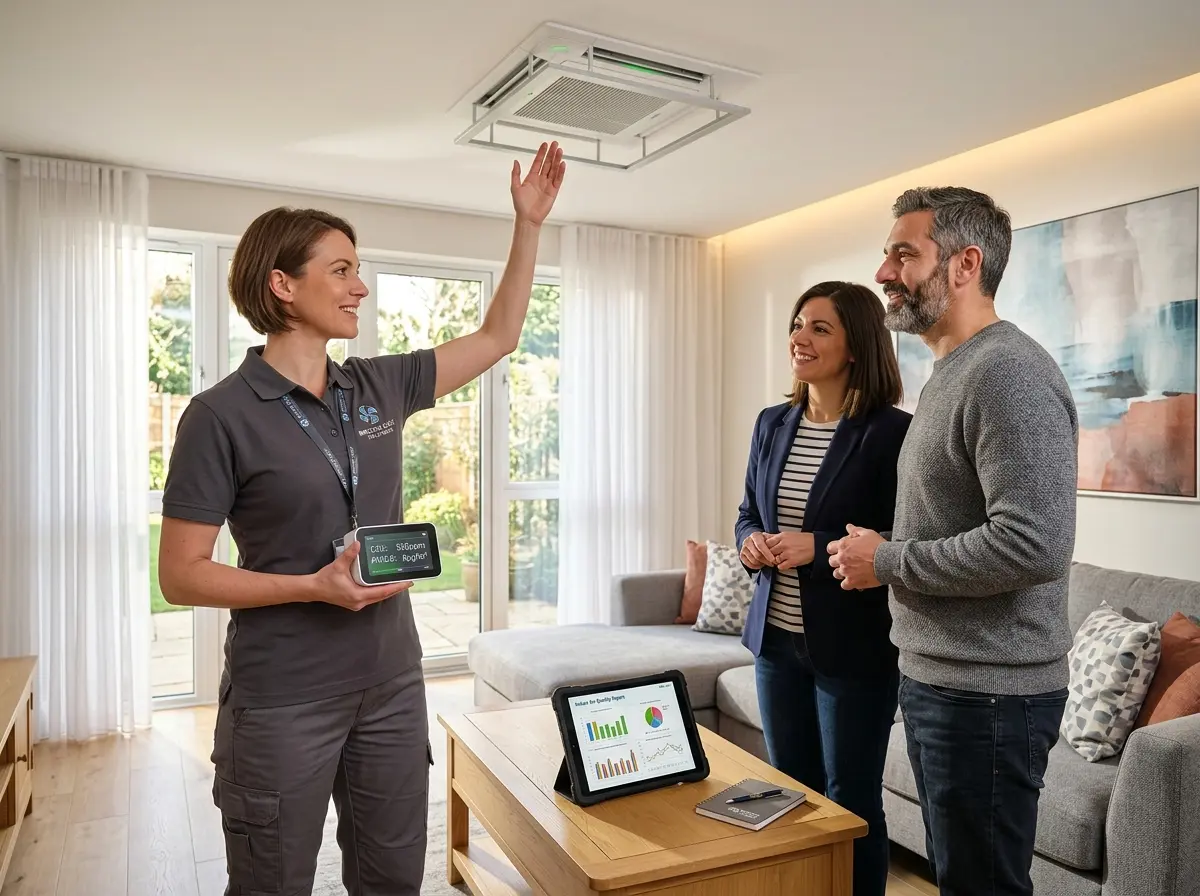
A solid IAQ assessment typically covers several key areas: airflow and ventilation analysis, humidity and moisture levels, particulate matter and pollutant screening, and an inspection of the HVAC system itself for mold, debris, or contamination. Depending on your equipment and service tier, you might also test for carbon monoxide, radon, or specific VOCs. The point is that you come in with a checklist, you leave with findings, and the customer gets a written report they can actually understand.
The written report is not optional. It's what transforms your visit from "the HVAC guy looked around" into a professional consultation — and it's what justifies your pricing and drives follow-up service sales.
Tiered Service Packages: Give Customers a Choice
Not every customer will want the full white-glove IAQ experience, and that's fine. Creating tiered assessment packages lets you capture more of the market while still moving customers toward higher-value options. Consider something like this:
- Basic IAQ Check ($79–$99): Humidity reading, visual HVAC inspection, basic air quality screening, and a one-page summary report. Great as an entry-level add-on during routine maintenance visits.
- Standard IAQ Assessment ($149–$199): Everything in the basic tier, plus particulate testing, carbon monoxide check, duct inspection, and a full written report with recommendations.
- Premium IAQ Consultation ($299–$399): Comprehensive testing including VOC screening, mold risk evaluation, full HVAC system analysis, and a detailed remediation plan with product recommendations.
The key is making sure each tier has a clear value proposition. Customers who pick the basic option should feel like they got a deal. Customers who pick premium should feel like they made a smart investment. And your technicians should know exactly what each tier involves so there's no awkward improvisation on-site.
Training Your Technicians to Sell Without Being Salespeople
Here's the thing about upselling in a trade business: customers hate feeling sold to, but they love getting expert advice. The difference is delivery. Your technicians don't need a sales script — they need a natural, honest way to bring up IAQ concerns when they're actually relevant.
A simple framework works well here. When a technician notices something during a routine visit — excessive dust buildup in ducts, high humidity readings, an older home with no ventilation upgrades — they mention it conversationally: "Hey, I noticed your humidity levels are a bit elevated. That can sometimes lead to mold risk or make allergies worse. We actually offer a quick air quality check if you'd want to know more." That's not a pitch. That's a recommendation from a professional, and it lands completely differently.
Role-play these conversations in team meetings. Make it normal. When technicians are comfortable bringing it up, conversion rates go up — and so does customer trust.
Using Smart Tools to Present and Promote IAQ Services
Let Technology Do the Heavy Lifting for You
Promoting a new service like IAQ assessments means making sure every customer touchpoint — phone calls, walk-ins, follow-ups — consistently delivers the message. That's a lot to ask of a small team that's already juggling dispatch, service calls, and invoicing.
This is where Stella, the AI robot employee and phone receptionist, becomes genuinely useful for HVAC companies. On the phone, Stella can answer calls 24/7, answer questions about your IAQ assessment packages, and even collect customer information through conversational intake forms — so by the time a human gets involved, the customer is already qualified and interested. For HVAC companies with a showroom or retail counter, Stella's in-store kiosk presence proactively engages walk-ins and promotes your current offerings, including any seasonal IAQ specials, without needing a staff member to remember to mention it every single time. She also logs interactions and customer data through her built-in CRM, which means you can track how well your IAQ promotion is actually performing without building a spreadsheet from scratch.
Pricing Strategies That Make IAQ Assessments a No-Brainer
Bundle It Into Maintenance Agreements
One of the most effective ways to get IAQ assessments into more homes is to stop selling them as a standalone product and start including them — or heavily discounting them — within your maintenance agreement packages. Customers who already trust you enough to sign a maintenance contract are your warmest audience. They've already said yes to ongoing service, which means they're pre-sold on the idea of proactive care.
Consider adding a complimentary basic IAQ check to your annual maintenance visit, then using the findings to recommend an upgrade to a more comprehensive assessment or specific IAQ products like UV air purifiers, whole-home dehumidifiers, or advanced filtration systems. This approach works because it removes the initial price objection entirely. Once a customer sees the results — even basic ones — curiosity and concern do the selling for you.
Seasonal Promotions and Follow-Up Campaigns
IAQ concerns spike during specific times of year: spring allergy season, summer humidity, back-to-school season when parents start worrying about what their kids are breathing, and winter when homes are sealed up tight. These are your natural marketing windows, and you should be using them deliberately.
Run limited-time IAQ assessment promotions tied to these seasons — "Spring Clean Air Special: IAQ Assessment for $99 through April 30" — and make sure your follow-up communication reinforces the offer. Customers who had a basic assessment six months ago are excellent candidates for a follow-up check or an upgrade to a fuller evaluation. A simple email or text campaign to your existing customer list, timed to seasonal triggers, can generate significant revenue with very little overhead.
Quick Reminder About Stella
Stella is an AI robot employee and phone receptionist that answers calls, greets customers, promotes services, and manages intake — all for just $99/month with no upfront hardware costs. She works around the clock so your HVAC business never misses a lead, even when your team is out on calls. If you're launching a new service like IAQ assessments and need consistent, professional promotion without adding headcount, she's worth a serious look.
Turn IAQ Into a Revenue Stream That Actually Sticks
Indoor air quality assessments aren't a gimmick — they're a genuine service that solves real problems for customers and creates real revenue for your business. The HVAC companies that are winning right now aren't just fixing equipment; they're positioning themselves as whole-home comfort experts. IAQ is a natural, credible extension of that role.
Here's your action plan to get started:
- Define your service tiers. Build out two or three clear IAQ assessment packages with set deliverables, pricing, and report templates. Don't launch until your team knows exactly what each tier includes.
- Train your technicians. Practice the natural, consultative language they'll use on-site. Make it a standard part of every service visit — not an optional afterthought.
- Bundle or discount for maintenance customers. Get your existing base involved first. Use basic assessments as a gateway to larger IAQ product sales.
- Schedule your seasonal promotions now. Map out at least two IAQ campaigns for the next 12 months and build the marketing materials in advance so you're not scrambling when the season hits.
- Audit your customer touchpoints. Make sure every way a customer can reach you — phone, in person, online — is consistently communicating your IAQ offerings.
The indoor air quality market is growing, customers are paying attention, and your competitors are mostly still just replacing filters. The window to differentiate is open — and unlike your customers' homes, the air inside your business opportunity is surprisingly clean.