The Waiting Game Nobody Wants to Play
Picture this: someone throws out their back on a Tuesday afternoon. They're in pain, they're desperate, and they finally decide to stop "walking it off" and call a chiropractor. They pick up the phone, call your office, and hear... hold music. Or worse, a voicemail. So they hang up and call the next chiropractor on Google's list. And just like that, you've lost a patient before they ever walked through your door.
In a world where people can order a pizza, book a flight, and refinance their mortgage without speaking to a single human being, the bar for convenience is high. Chiropractic practices that cling to the "call during office hours and we'll fit you in sometime next week" approach are quietly hemorrhaging new patients to competitors who make it easier to say yes. The fix isn't complicated — it's a new patient fast-track scheduling option, and if your practice doesn't have one, this article is your wake-up call (no hold music included).
Why New Patients Are a Special Breed (and Need Special Treatment)
They're Impatient — and That's Completely Normal
New patients are not like your loyal Wednesday regulars who've been coming in for three years and trust the process. New patients are often in pain, anxious, skeptical, and doing a lot of mental math about whether this is worth their time and money. Research consistently shows that the speed of the first response is one of the strongest predictors of conversion — studies have found that businesses responding to leads within five minutes are up to 100 times more likely to convert them than those who respond after 30 minutes. In chiropractic, this translates directly: the easier and faster you make it to book that first appointment, the more first appointments you're going to fill.
A fast-track option acknowledges this reality. It tells a prospective patient, "We see you, we know you're ready to act, and we're making this easy." That first impression sets the tone for everything that follows.
The Standard Intake Process Is a Friction Factory
Let's be honest about the traditional new patient experience. Call the office. Get transferred. Spell your name three times. Answer preliminary health questions while standing in a parking lot. Get told someone will call you back to confirm. Receive that callback at an inconvenient time. Call back again. Finally book something for eleven days from now. Fill out a paper form when you arrive. It's exhausting just to describe it.
Every one of those steps is a potential dropout point. A fast-track scheduling system collapses this process into something streamlined — ideally, a new patient can book their first appointment, provide basic intake information, and receive a confirmation in a single sitting, whether that's online, over the phone, or at a kiosk. Reducing friction isn't just a nice-to-have; it's a measurable driver of practice growth.
First Impressions in Healthcare Are Sticky
Chiropractic care is, by nature, relationship-driven. Patients who start their journey with a smooth, professional, no-hassle experience are primed to become long-term clients. Conversely, patients who fumble through a clunky onboarding process often arrive at their first appointment already slightly annoyed — which is not the mental state you want in someone who's about to let you adjust their spine. Your scheduling process is part of the patient experience, and it starts long before anyone lies down on your table.
How to Use Technology to Streamline Your Fast-Track System
Automate Intake Before the First Visit
One of the smartest moves a chiropractic practice can make is collecting intake information before the patient arrives — not with a clipboard and a pen after they've been waiting in your lobby for ten minutes. Conversational intake forms, whether delivered via phone or web, can gather health history, insurance information, the nature of the complaint, and preferred appointment times in a natural, guided way. This not only speeds up the in-office process but gives your clinical staff time to actually prepare for the appointment rather than scrambling at the front desk.
Stella, the AI robot employee and phone receptionist, is particularly useful here. She can answer calls around the clock, walk new patients through a conversational intake process, and capture their information directly into a built-in CRM — complete with AI-generated profiles, custom fields, and tags. For practices with a physical location, her in-store kiosk presence can even greet walk-in inquiries and begin the onboarding process on the spot. No staff interruptions, no dropped leads, no patients lost to voicemail at 7 p.m. on a Friday.
Building a Fast-Track System That Actually Works
Create a Dedicated New Patient Pathway
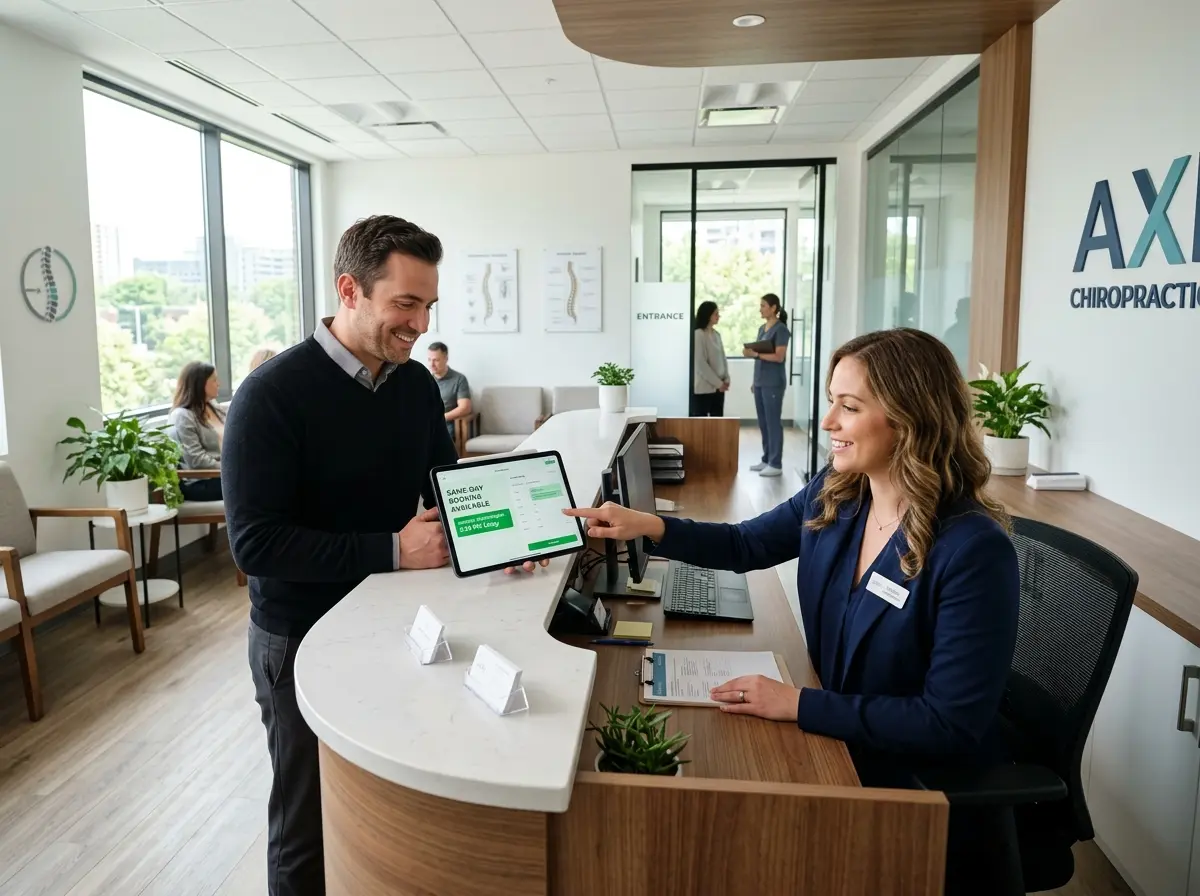
The foundation of an effective fast-track system is treating new patients as a distinct category with their own dedicated pathway — not just squeezing them into whatever slot opened up between existing patients. This means reserving specific appointment slots on your schedule exclusively for new patients, so there's always availability when someone is ready to commit. Nothing kills momentum faster than a prospective patient who's finally motivated to book and gets told the earliest opening is in two and a half weeks.
Promote this fast-track option prominently. Put it on your website, mention it in your phone greeting, and make sure your front desk staff leads with it when speaking to new callers. Language matters too — "new patient fast-track" or "priority new patient appointments" signals that you value their time and have built a process specifically for them. It's a small psychological cue that carries real weight.
Confirm, Remind, and Prepare — Automatically
Booking the appointment is only half the battle. New patients, who don't yet have a strong habit or loyalty to your practice, are significantly more likely to no-show or cancel at the last minute. An automated confirmation sequence — an immediate confirmation message, a reminder 48 hours before the appointment, and a same-day reminder — can dramatically reduce no-show rates, which industry data suggests average around 20% in healthcare settings. Some practices have cut that number nearly in half with consistent reminder workflows.
The pre-visit communication is also a chance to set expectations: what to wear, what to bring, how long the appointment will take, and what to expect during a first visit. Informed patients are calmer, more cooperative, and more likely to leave with a positive impression regardless of how the appointment itself goes.
Track, Measure, and Adjust
You can't improve what you don't measure. Once your fast-track system is live, track the metrics that matter: how many new patient inquiries come in per week, how many convert to booked appointments, how many of those show up, and how many book a follow-up. If your conversion rate from inquiry to booked appointment is low, the bottleneck is probably in the scheduling process itself. If show rates are low, you likely need stronger reminders or better pre-visit communication. Data tells you exactly where to focus your energy.
Over time, you'll also want to look at which acquisition channels are sending you the best new patients — Google, referrals, social media, walk-ins — and double down on those. A fast-track system paired with smart analytics creates a feedback loop that continuously improves your new patient pipeline.
Quick Reminder About Stella
Stella is an AI robot employee and phone receptionist that works 24/7 — greeting patients in person at your kiosk, answering calls after hours, collecting intake information, managing your CRM, and making sure no new patient inquiry slips through the cracks. At $99/month with no upfront hardware costs, she's one of the most cost-effective front desk upgrades a chiropractic practice can make. Think of her as the receptionist who never calls in sick, never puts someone on hold indefinitely, and never forgets to follow up.
Stop Leaving New Patients on the Table
The good news is that building an effective new patient fast-track system doesn't require a total overhaul of your practice. It requires intentionality: carving out dedicated scheduling slots, streamlining your intake process, automating your confirmation and reminder communications, and using the right tools to make sure no inquiry goes unanswered.
Here's where to start this week:
- Audit your current new patient experience. Call your own office as if you were a new patient and see what happens. You might be surprised — or mortified.
- Reserve fast-track slots on your schedule. Even three dedicated new patient appointments per day can make a meaningful difference in how quickly you can convert interest into revenue.
- Implement automated intake and reminders. Whether through your practice management software, a dedicated scheduling tool, or an AI-powered receptionist, get the manual friction out of the process.
- Promote the fast-track prominently. Make sure prospective patients know it exists — on your website, in your phone system, and in any advertising you run.
New patients are out there right now, in pain, searching Google, and ready to book with whoever makes it easiest. Make sure that whoever is you.