Welcome to the Chaos: Grooming Anxious Pets (and Surviving Their Owners)
Let's paint a picture. It's a Tuesday morning. You've got three appointments booked before noon, your groomer is elbow-deep in a golden retriever who apparently decided the blow dryer is the enemy, and your phone won't stop ringing. On the line? A client who wants to know — in extensive detail — whether you'll use the exact same lavender shampoo you used last time, because Biscuit didn't sleep well after the chamomile one. Biscuit is a twelve-pound Maltese. His owner has a spreadsheet.
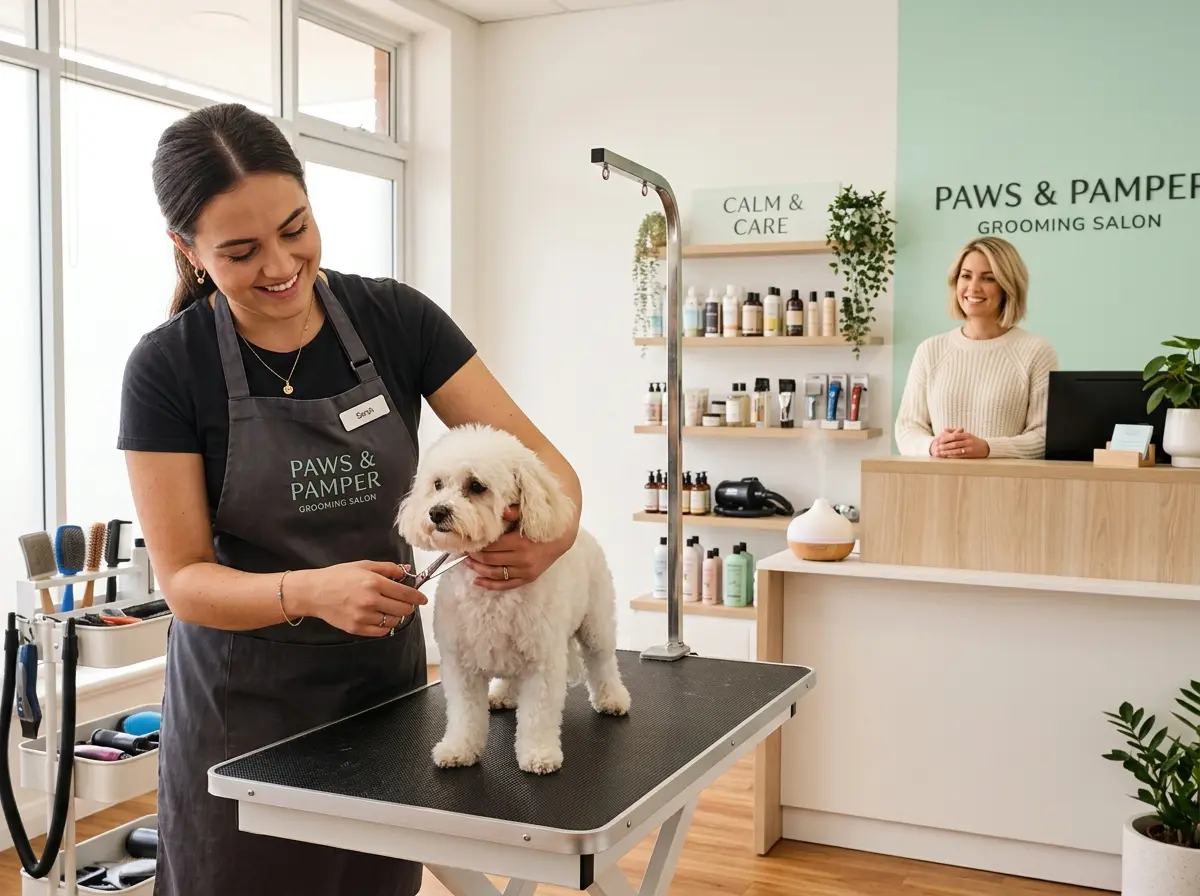
If you run a dog grooming shop, you already know that you're not just in the business of making pets look fabulous. You're in the business of managing anxiety — and often, it's not the dog who needs the most reassurance. Handling nervous pets and their equally nervous owners is practically a second job, and doing it well is what separates a thriving grooming business from a revolving door of one-time clients.
The good news? With the right systems, training, and a healthy sense of humor, you can turn your shop into a place where anxious pets and their people feel genuinely at ease — and keep coming back. Here's how.
Understanding the Anxious Pet: More Than Just Shaking and Sad Eyes
Before you can manage pet anxiety effectively, it helps to actually understand what's going on beneath the surface. A dog that growls during nail trims isn't being dramatic for sport — though it may feel that way at 9 a.m. on a Monday.
Recognizing the Signs Before They Escalate
Anxiety in dogs during grooming can look like many things: excessive panting, trembling, attempting to flee the table, refusing to stand still, or sudden "selective deafness" the moment you reach for the clippers. The key is catching stress signals early, before a mildly nervous dog becomes an actively unsafe situation for both the animal and your staff.
Common early stress signals include yawning (not because they're tired), lip licking, whale eye (that wide-eyed sideways glance), tucked tails, and low body posture. Training your groomers to read these cues isn't just good animal welfare practice — it's good business. A dog that has a traumatic grooming experience will not be a returning customer. Well, their owner will make sure of that.
Practical Techniques That Actually Work
There's a reason "fear-free grooming" has become more than just a buzzword in the pet care industry. Techniques borrowed from veterinary behavioral science — like desensitization, counter-conditioning, and the strategic deployment of high-value treats — have real, measurable results in reducing grooming-related stress.
Some practical approaches your team can implement right away:
- Slow introductions: Let nervous dogs sniff equipment before it's used on them. A blow dryer that's just sitting there is far less threatening than one that's suddenly roaring next to their ear.
- Break sessions into shorter chunks: For highly anxious dogs, a two-hour full groom can feel like an eternity. Offering shorter, more frequent "happy visits" or split appointments builds positive associations over time.
- Use calming aids strategically: Adaptil sprays, calming music (yes, dogs have preferences), and even the angle of lighting in your grooming area can make a meaningful difference.
- Reward relentlessly: High-value treats during and after grooming create positive associations. Keep a stash of options since every dog has opinions about snacks.
Knowing When to Refer Out
Sometimes, the most professional thing you can do is acknowledge your limits. For dogs with severe anxiety — those who are a safety risk to themselves or your staff — a conversation with the owner about veterinary-prescribed anti-anxiety medication before grooming appointments isn't admitting defeat. It's responsible, professional advice. Build relationships with local veterinarians and make those referrals with confidence. Owners will respect your expertise, and honestly, their vet will too.
Managing the Human Half of the Equation
Here's a truth that no one puts on their grooming school brochure: the pet is often the easier client. The owner, however, requires a different skill set entirely.
Communication Is Your Most Underrated Tool
Anxious pet owners are anxious because they care — which is actually a good thing, even when it doesn't feel that way. What they need, more than anything, is clear, consistent, and proactive communication. That means confirming appointments in advance, sending updates mid-groom if something comes up, and following up afterward with a quick summary of how the session went.
Building a reputation for communication is one of the fastest ways to earn trust and reduce the volume of "just checking in" phone calls you receive during peak hours. Studies show that businesses that proactively communicate with customers see significantly higher retention rates — and in a service industry built on repeat visits, retention is everything. Set expectations upfront: what your process looks like, how long it typically takes, and how you'll reach them if there's an issue. Spelled-out expectations are anxiety's kryptonite.
Streamlining Your Front-End Operations So You Can Focus on the Actual Dogs
Here's where we get practical about the part of your business that probably drives you the most quietly insane: the administrative side. Every minute your groomers spend answering phones or explaining your cancellation policy for the fourteenth time that week is a minute not spent doing the work you actually love.
Stella, the AI robot employee and phone receptionist, is built for exactly this kind of problem. For grooming shops with a physical location, Stella stands inside your store as a friendly, human-sized AI kiosk — greeting walk-ins, answering questions about your services, and even promoting current deals while your team focuses on the animals. She answers phone calls 24/7 with the same depth of knowledge she uses in person, meaning that owner who wants to know about the lavender shampoo situation can get a thorough, accurate answer at 10 p.m. on a Sunday without waking anyone up.
Stella also handles intake forms, collects customer information conversationally, and manages it all through a built-in CRM — so your team has context on every client before they walk through the door. No more scrambling to remember which dog has a skin condition or which owner requires a three-paragraph explanation before agreeing to anything. At $99/month with no upfront hardware costs, it's the kind of operational upgrade that pays for itself quickly in staff time alone.
Building a Loyal Client Base That Actually Stays
Getting a new client through the door is one thing. Getting them to come back — and to rave about you to every dog owner in their neighborhood — is the real prize. For grooming shops, loyalty is built on trust, consistency, and the occasional outstanding experience that makes someone feel seen.
Create a Welcoming Environment from the First Contact
Your client relationship starts before the dog ever sets a paw in your shop. It starts when someone finds you online, reads your reviews, or calls to ask about pricing. Make sure every touchpoint reflects the warmth and professionalism you'd want a new client to experience in person. Your phone greeting, your website, your response time to inquiries — all of it contributes to whether a first-time caller becomes a first-time appointment.
First impressions inside the shop matter just as much. A clean, calm environment with pleasant scents (good ones, not just "dog"), soft lighting, and a staff member who acknowledges each person who walks in goes a long way. Small details signal that you take your work seriously.
Offer Services That Address Anxiety Specifically
Consider adding or highlighting services tailored to nervous pets. A "gentle groom" package for anxious dogs, one-on-one appointments with no other animals present, or a "puppy's first groom" experience designed to be slow and positive can become meaningful differentiators in a competitive market. These aren't just nice-to-haves — they're opportunities to charge a premium for a genuinely specialized service, and owners of anxious pets will pay it gratefully.
Follow Up and Ask for Feedback
After each appointment, a quick follow-up message — even just a text asking how Biscuit is settling in — signals that you care beyond the transaction. It also opens the door to catching any concerns before they become a negative review. Actively requesting feedback from happy clients and making it easy for them to leave reviews on Google or Yelp is one of the simplest and most effective marketing strategies available to a local business. Word of mouth among pet owners is powerful, and a glowing review from a previously anxious owner is worth its weight in lavender shampoo.
Quick Reminder About Stella
Stella is an AI robot employee and phone receptionist designed to help businesses like yours run more smoothly without adding to your payroll headaches. She greets customers in-store, answers calls around the clock, and keeps your client information organized — all for $99/month. If your front desk feels like it's holding your business back, she's worth a look.
The Bottom Line: Calm Dogs, Happy Owners, Thriving Business
Running a successful grooming shop in today's market means more than knowing how to wield a pair of scissors. It means understanding animal behavior well enough to keep pets safe and comfortable, communicating with owners in a way that builds genuine trust, and running your operations efficiently enough that none of it feels like it's falling apart behind the scenes.
The grooming businesses that thrive long-term are the ones that treat every anxious pet as an opportunity to demonstrate their expertise, and every hovering owner as an opportunity to earn a loyal client for life. That's not always easy — especially on a Tuesday morning with a golden retriever and a ringing phone — but with the right practices in place, it's absolutely achievable.
Start small: pick one area from this post to focus on this week. Maybe it's training your team on early stress signals. Maybe it's tightening up your appointment communication process. Maybe it's finally doing something about the phone situation. Whatever it is, do it with intention — and remember that in this industry, the details are exactly what your clients are paying attention to. Even the ones with spreadsheets about shampoo.