Your Front-of-Store Is Either Making You Money or Wasting Your Space
Let's be honest — most pharmacy owners put enormous effort into filling prescriptions, managing inventory, and staying compliant with regulations. And rightfully so. But somewhere between the pharmacy counter and the front door, there's a goldmine that often goes completely untapped. That goldmine is your front-of-store retail space, and if it's just a quiet graveyard of greeting cards and dusty vitamin bottles, we need to talk.
The front-of-store section of an independent or retail pharmacy can account for a significant portion of overall revenue — sometimes up to 30–40% for well-optimized locations. Yet for many pharmacies, it functions more like a waiting room decoration than a sales floor. Customers walk in, pick up their prescription, and walk out — sometimes without even glancing at the shelves full of products that could genuinely help them.
The good news? Optimizing your front-of-store doesn't require a complete renovation or a team of retail consultants. It requires smart strategy, a bit of customer psychology, and — as we'll discuss — the right tools to engage customers while your staff stays focused on clinical work. Let's dig in.
Merchandising and Layout: The Silent Salesperson
Before you invest in promotions or technology, get your physical space working for you. The way products are arranged, lit, and presented can dramatically influence purchasing behavior. This isn't retail sorcery — it's science, and it works.
The Power of Traffic Flow and Product Placement
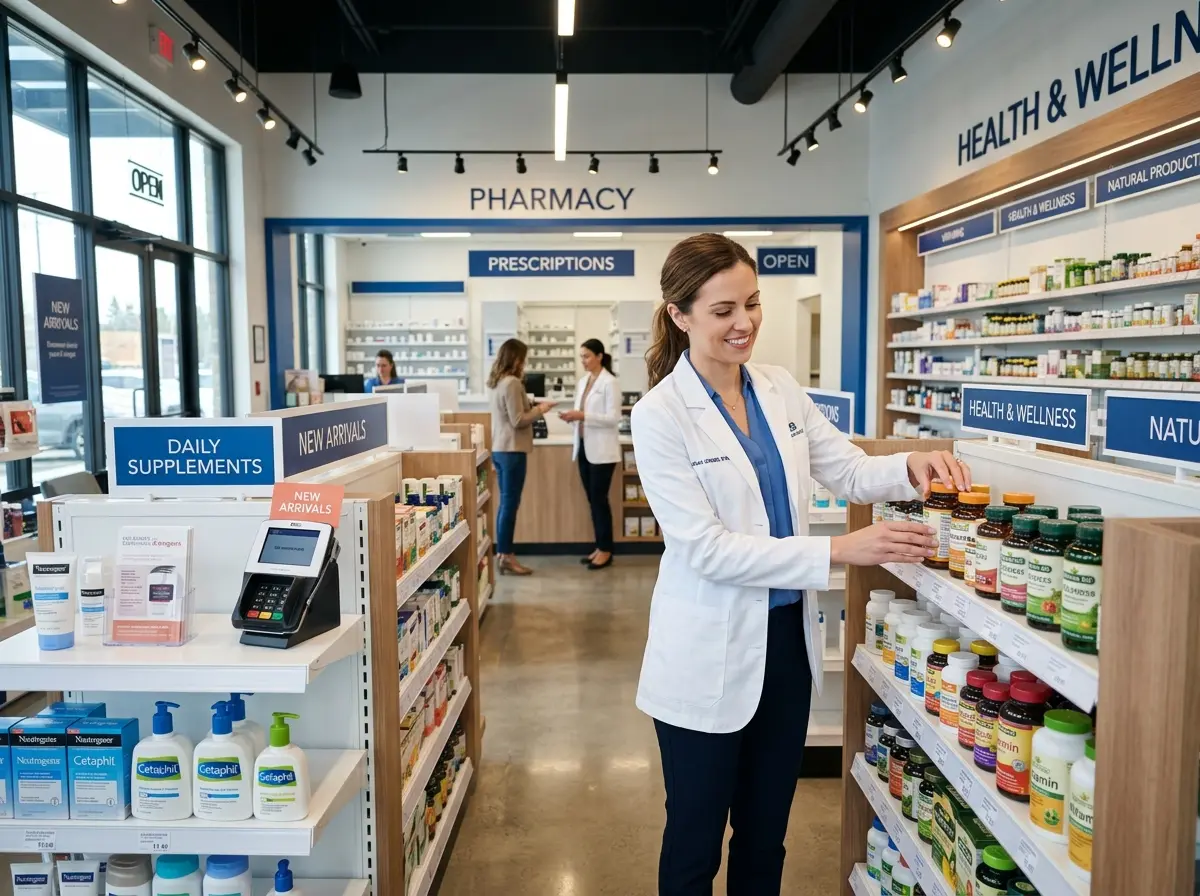
Your customers walk a predictable path. They come in, head toward the pharmacy counter, wait, pick up their prescription, and leave. Your job is to make that journey interesting. Place high-margin impulse items — think cold and flu remedies, vitamins, personal care products, and seasonal items — along the natural path customers travel. Eye-level shelving is prime real estate, so reserve it for your best-selling or highest-margin products.
Consider creating themed sections that align with health needs: a "Immune Support" zone near the entrance during cold season, a "Diabetes Care" section near the pharmacy counter for relevant patients, or a "Mom & Baby" display if your demographic supports it. Grouping related products together not only makes shopping easier — it quietly encourages customers to buy more than they planned.
Signage That Actually Communicates
Your signage should do more than label a shelf. It should educate, persuade, and occasionally remind customers that they probably forgot something they need. Clear, benefit-focused signage — "Supports Heart Health" rather than just "Fish Oil" — helps customers self-navigate and builds confidence in their purchasing decisions. Price tags are fine, but value statements are better.
Seasonal and promotional signage is especially powerful. A well-placed end-cap display with bold signage during allergy season, flu shot season, or back-to-school time can move a surprising amount of product. Update your displays regularly — not just for sales, but to signal to repeat customers that something new is always happening.
End Caps, Checkout Zones, and Waiting Areas
End caps (the displays at the end of aisles) are among the most valuable real estate in any retail environment. Use them for promotions, new arrivals, or high-visibility seasonal products. Studies have shown that end-cap placement can increase product sales by up to 30% compared to mid-shelf placement.
Don't overlook the checkout zone and prescription waiting area. These are moments when customers are stationary and open to browsing. Small, affordable impulse items — lip balm, hand sanitizer, travel-size products, snack bars, reading glasses — placed near the register or seating area can generate consistent add-on revenue without any effort from your staff.
Promotions and Customer Engagement Done Right
Running Promotions That Actually Drive Traffic (and Sales)
A promotion without visibility is just a discount. The most effective pharmacy promotions combine a compelling offer with consistent communication across in-store, phone, and digital channels. Whether it's a buy-two-get-one on vitamins, a seasonal flu shot discount, or a loyalty program reward, customers need to hear about it more than once and in more than one place.
Loyalty programs, in particular, are criminally underutilized in independent pharmacies. A simple points-based system tied to front-of-store purchases — not just prescriptions — gives customers a reason to browse and buy rather than just pick up and leave. Even a basic punch card for over-the-counter purchases can meaningfully increase repeat visits.
How Stella Can Help Engage Customers In-Store and On the Phone
Stella is an AI robot employee and phone receptionist that can genuinely change how a pharmacy engages with customers both in-store and over the phone. As a human-sized AI kiosk stationed at the front of your store, she proactively greets every customer who walks in, promotes current deals and seasonal offerings, and answers questions about products — all without pulling your pharmacist or technicians away from critical tasks. She can highlight your front-of-store promotions, suggest related products to customers, and keep the engagement going during busy periods when staff simply can't do it all.
Stella also answers your phones 24/7 with the same knowledge she uses in-store — so when a customer calls to ask about a promotion, your store hours, or whether you carry a specific product, they get an instant, accurate, professional answer. At just $99/month with no upfront hardware costs, she's a surprisingly affordable way to extend your team's reach without adding headcount.
Building Customer Loyalty and Repeat Business
Getting a customer through the door once is a win. Getting them to come back — and spend more each visit — is the real game. Pharmacies have a natural loyalty advantage that most retailers would envy: customers who fill prescriptions regularly are already coming back. Your job is to make the most of those repeat visits.
Personalization and Relevant Recommendations
Customers respond to relevance. A diabetic patient picking up insulin is a natural audience for glucose monitors, diabetic-friendly snacks, and foot care products. A new mother filling a pediatric prescription is likely interested in baby care essentials. Training your staff to make brief, thoughtful product suggestions at pickup can meaningfully boost front-of-store sales — but it has to feel helpful, not pushy.
Even without a full CRM system, you can create simple protocols: keep a short list of relevant product recommendations near the pharmacy counter for your most common prescription categories. Over time, as you invest in better customer data tools, you can make these recommendations more targeted and systematic.
Community Trust as a Competitive Advantage
Independent pharmacies have something chain stores genuinely struggle to replicate: community trust. Customers trust their local pharmacist in a way they simply don't trust a big-box cashier. Lean into this. Host informal health screenings, blood pressure check stations, or seasonal wellness events. Partner with local practitioners to co-promote complementary health products.
When customers see your pharmacy as a health resource — not just a place to pick up pills — they browse longer, ask more questions, and buy more. They also tell their neighbors, which remains one of the most powerful (and cheapest) marketing channels available to a local business.
Seasonal Merchandising Calendars and Consistent Refreshes
One of the simplest ways to drive repeat front-of-store purchases is to give customers a reason to look around every time they visit. A seasonal merchandising calendar — planned quarterly, executed monthly — keeps your displays fresh and gives regulars the sense that something new is always worth checking out. Cold and flu season, allergy season, summer sun care, back-to-school health kits, holiday gifting — there's always an angle. The pharmacies that struggle with front-of-store revenue are often the ones running the same display in October that they had in March.
Quick Reminder About Stella
Stella is an AI robot employee and phone receptionist designed to help businesses like yours stay engaged with customers without burning out your team. She works in-store as a proactive kiosk presence and answers your phones around the clock — handling questions, promoting specials, and representing your pharmacy professionally every hour of the day. At $99/month with no hardware costs and an easy setup, she's built for independent business owners who want big-business capabilities without the overhead.
Your Front-of-Store Revenue Is Waiting — Go Get It
Optimizing your pharmacy's front-of-store isn't glamorous work, but it's some of the highest-return work you can do. You already have the foot traffic. You already have the customer trust. You already have the products on the shelves. What you need is a deliberate strategy to connect all three — and the tools and systems to execute it consistently.
Here's where to start:
- Walk your store today as if you're a customer. What do you notice? What's easy to find? What's hidden? What's outdated?
- Audit your end caps and checkout zone. Are they generating revenue, or just collecting dust?
- Plan your next seasonal display before the season actually arrives — not the week after it starts.
- Build or refresh a loyalty program that rewards front-of-store purchases, not just prescriptions.
- Consider how you're engaging customers during their visit and while they wait — and whether your staff has the bandwidth to do it well every single time.
The front-of-store opportunity in pharmacy retail is real, it's significant, and it's available to any owner willing to approach it strategically. The pharmacies that thrive long-term aren't just the ones filling the most prescriptions — they're the ones that have turned their entire store into a compelling, engaging, and profitable customer experience. That's well within your reach.