When Leaving Money on the Table Becomes a Habit
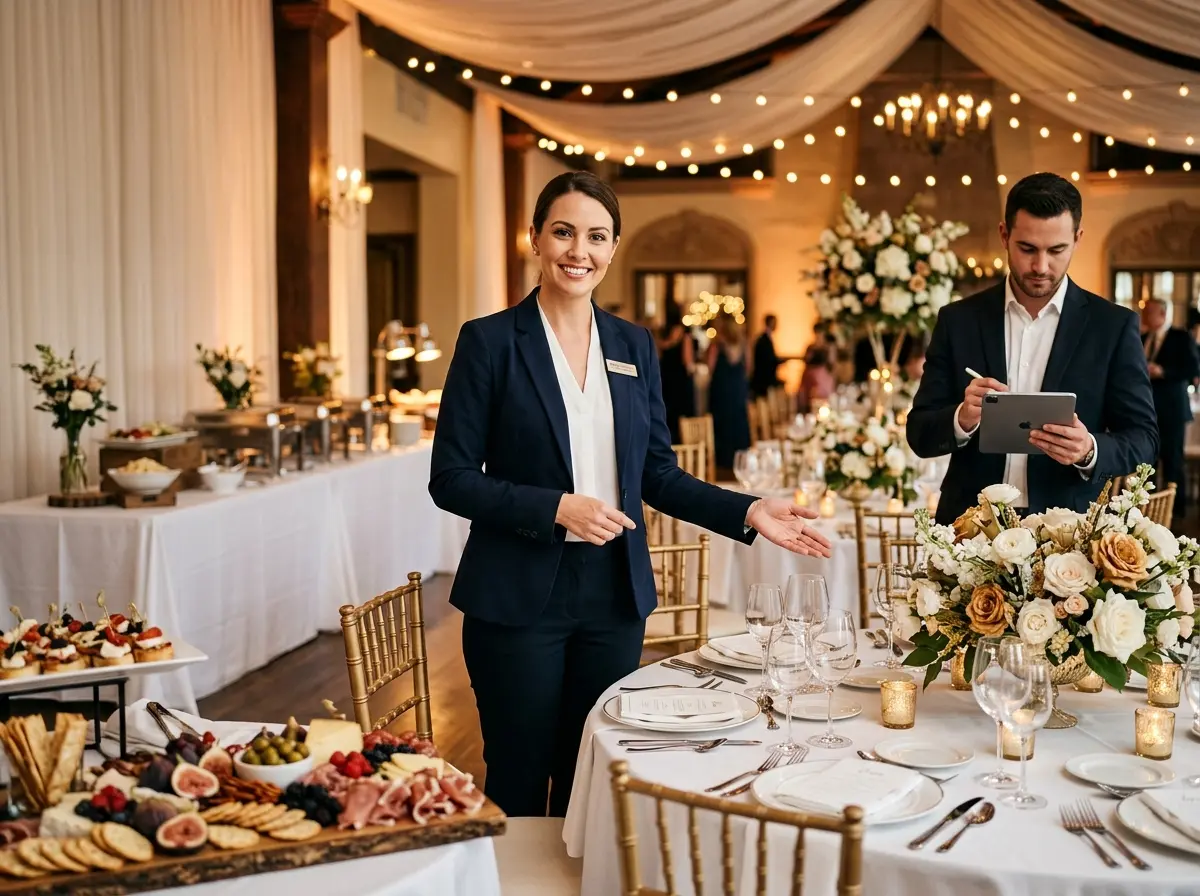
Let's be honest — most hotel owners are so focused on filling rooms that they forget about everything that happens after the guest checks in. You've already done the hard part: convinced a real, living human being to hand over their credit card for a night (or five) at your property. And then what? You hand them a key card, point vaguely toward the elevator, and call it a day.
Meanwhile, that guest is about to spend money — possibly a lot of it — on spa treatments, room service, local tours, and upgraded amenities. The only question is whether they'll spend it with you or with someone else who thought to ask. Cross-selling in the hospitality industry isn't a pushy sales tactic; it's a hospitality standard. Done right, it feels like a concierge who genuinely knows what you'd enjoy. Done poorly, it feels like being upsold a warranty at a car dealership.
One boutique hotel figured out how to do it right — and saw a 25% increase in average stay revenue as a result. No renovation. No rate hike. No miracle. Just smarter conversations at the right moments. Here's what they did, and how you can steal every bit of it.
The Cross-Selling Strategy That Actually Worked
Start With the Guest Journey, Not the Product Menu
Train Staff to Recommend, Not Recite
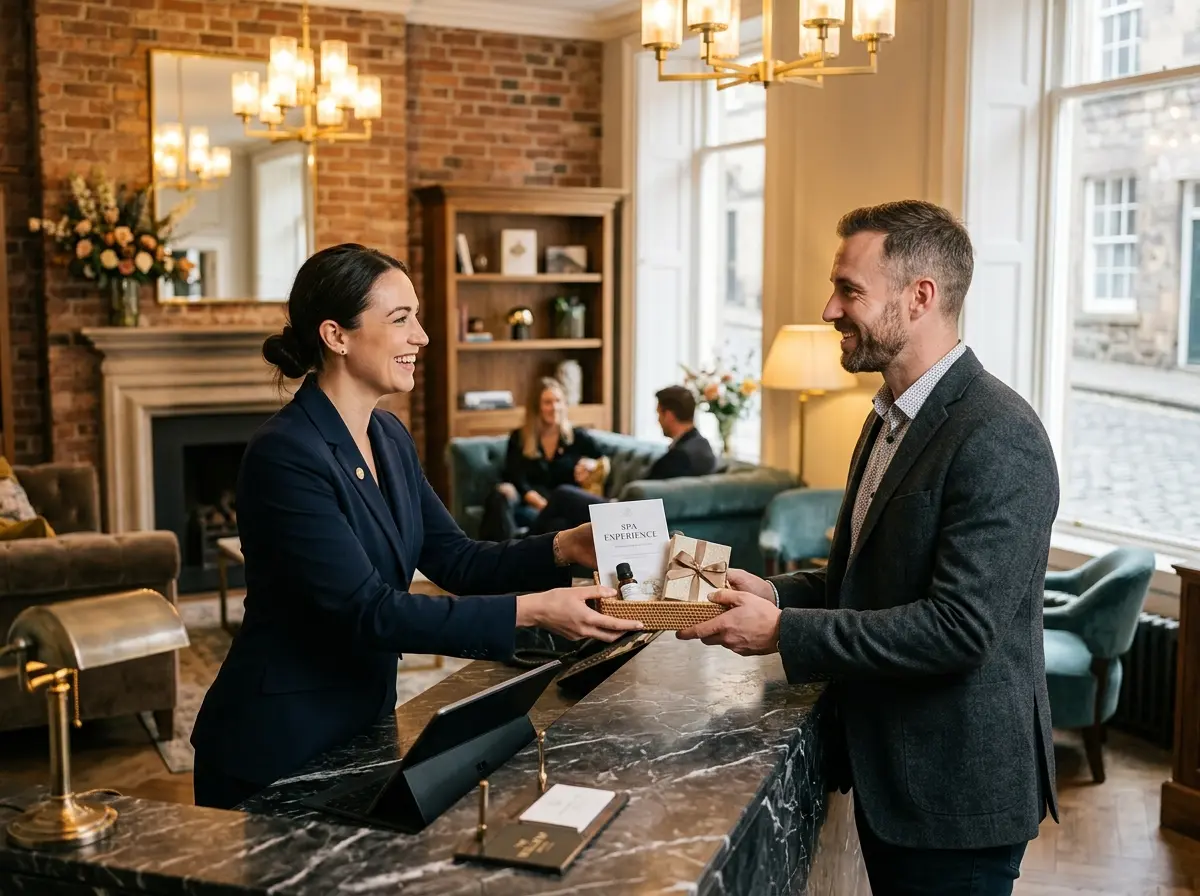
The hotel invested in brief but targeted training sessions — not sales training, but listening training. Staff were coached to pick up on cues: a guest mentioning a sore back, a couple celebrating an anniversary, a solo traveler asking about quiet spots in the area. Each cue became a natural entry point for a relevant recommendation. Conversion on cross-sell offers nearly doubled within two months of implementing this approach, before any other changes were made.
Bundle Strategically — and Price It Right
The hotel also rethought how it packaged add-ons. Rather than presenting services à la carte, they created three signature bundles designed around common guest personas: the Romantic Getaway, the Wellness Retreat, and the Adventure Package. Each bundle combined two or three services at a modest discount — enough to feel like a deal, not enough to undercut margins.
How Technology Can Carry More of the Load
Consistent Recommendations Without Relying on Staff Availability
This is where Stella, the AI robot employee and phone receptionist, can genuinely move the needle for hospitality businesses. Positioned at the lobby or check-in area as a kiosk, Stella proactively engages every guest who walks by — greeting them, surfacing relevant promotions, and recommending add-ons based on what she knows about current availability and your offerings. She doesn't get tired, she doesn't forget to mention the spa package, and she doesn't go on break during the Saturday afternoon check-in rush.
Stella also answers phone calls 24/7 — so when a guest calls the night before arrival to ask about parking, she can seamlessly mention that the Wellness Bundle is still available for their stay. No dropped calls. No "let me transfer you." No missed opportunity. For a boutique hotel trying to maximize every interaction, that kind of consistency is worth more than it might initially appear.
Measuring What's Working — and Doubling Down on It
Track Offer Acceptance by Touchpoint
Use Guest Feedback to Refine the Offer Mix
Revenue metrics tell you what's selling. Guest feedback tells you why — or why not. The hotel added a single question to its post-stay survey: "Were you offered any add-on experiences during your stay, and if so, how did that feel?" The responses were illuminating. Guests who felt recommendations were personalized rated their overall experience higher, regardless of whether they accepted the offer. Guests who felt bombarded with promotions rated their stay lower — even when they had a perfectly fine room.
This reinforced the core lesson: cross-selling in hospitality is a hospitality function first, a revenue function second. When guests feel like you're trying to enhance their experience, they welcome the suggestion. When they feel like you're trying to hit a quota, they remember it in their TripAdvisor review.
Set Revenue Benchmarks and Review Monthly
A Quick Reminder About Stella
Stella is an AI robot employee and phone receptionist that works in-person as a lobby kiosk and handles phone calls around the clock — for just $99/month with no upfront hardware costs. She's designed to greet guests, promote your offerings, answer questions, and cross-sell consistently without ever having a bad shift. For boutique hotels serious about revenue optimization, she's worth a conversation.
Your Next Steps Toward a 25% Revenue Lift
- Audit your current touchpoints. Where in the guest journey are you making (or missing) the opportunity to recommend relevant services?
- Build two or three signature bundles around your most popular service combinations and give them names that speak to guest personas, not just product lists.
- Train your team on cue-based recommendations — not scripts, but genuine attentiveness to what guests mention in passing.
- Start tracking offer acceptance rates by touchpoint so you know where to focus your energy.
- Review monthly and adjust your bundles and timing based on what the data shows.
Cross-selling done well isn't about squeezing more money out of your guests. It's about making sure that when they're ready to spend — and they will spend — they do it with you, on experiences that make their stay more memorable. That's good business. It's also just good hospitality.