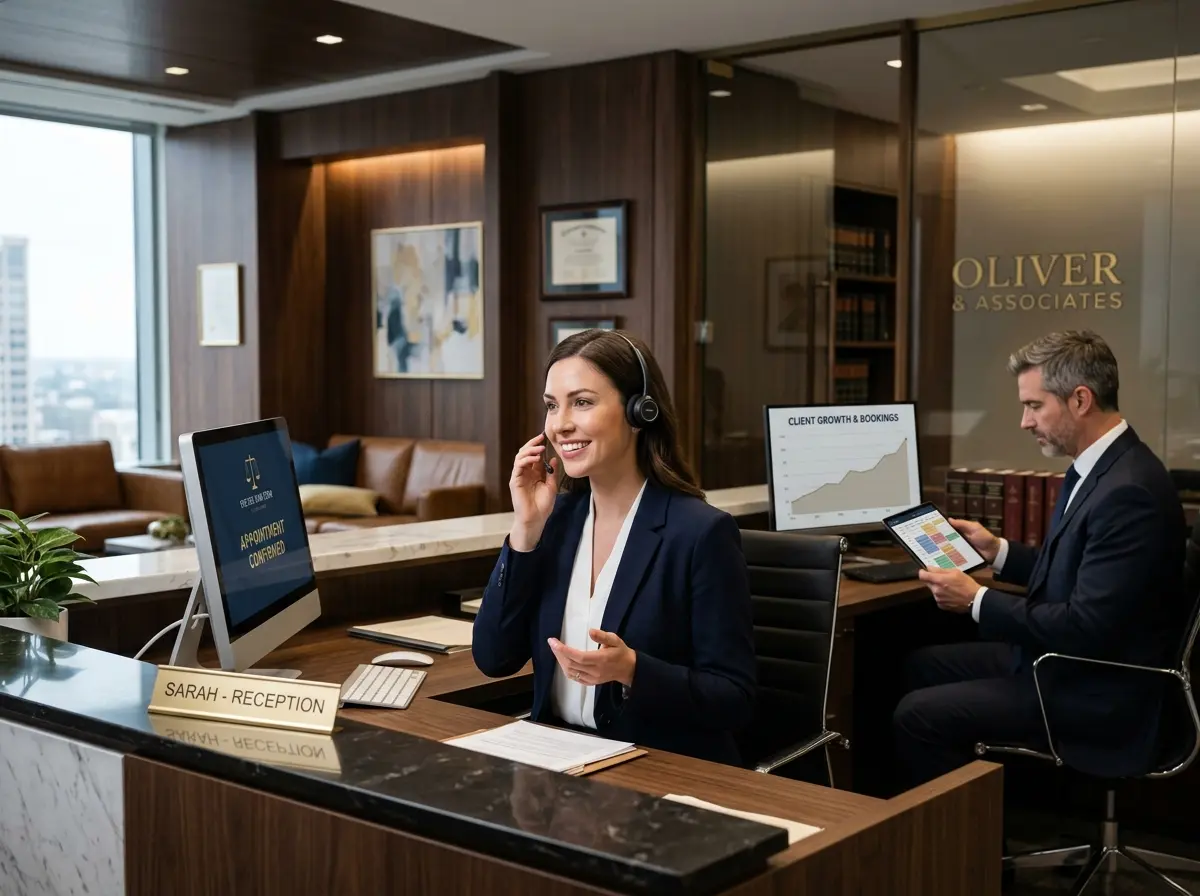
When "We'll Call You Back" Becomes "We Lost You Forever"
Picture this: A potential client is in a minor fender-bender, or dealing with a shady landlord, or — worst case — facing something genuinely serious. They need a lawyer. They pick up their phone, search for a local firm, and call the first number they find. It rings. And rings. And rings. Then: voicemail. They hang up and call the next firm on the list.
You just lost a client. Not because your attorneys aren't brilliant. Not because your fees are too high. Because nobody picked up the phone.
For law firms, missed calls aren't a minor inconvenience — they're a direct leak in the revenue pipeline. Legal consumers are notoriously impatient (understandably so — they're stressed), and studies suggest that nearly 80% of callers who reach voicemail simply hang up without leaving a message. They don't try again. They move on. So when one mid-sized law firm realized that their consult bookings were embarrassingly low despite solid web traffic and a strong reputation, they decided to investigate. What they found was both obvious and oddly easy to fix. Here's what happened — and what your firm can learn from it.
The Real Reason Clients Don't Book a Consultation
The Phone Gap Is Bigger Than You Think
Most law firms assume their intake process is fine. Receptionist at the front desk? Check. Voicemail set up? Check. A contact form on the website from 2016 that nobody monitors? Also check, unfortunately. The problem is that "fine" and "effective" are two very different things, especially when your potential clients are calling at 7:43 PM on a Tuesday because that's when they finally stopped panicking enough to pick up the phone.
After hours calls are not the exception in the legal industry — they're remarkably common. People don't get into accidents, receive termination letters, or discover their business partner has been quietly embezzling during business hours out of courtesy. They need help when they need help, and if your firm's phone system clocks out at 5 PM, you're essentially hanging a "Sorry, We're Closed" sign on your most urgent revenue stream.
The Intake Process Is Where Clients Disappear
Even when someone does get through to a live person, a clunky intake process can kill the conversion. If your receptionist is juggling three other calls, has to put a potential client on hold for four minutes, then fumbles through a manual intake form while apologizing for the wait — that caller is already mentally drafting an email to a competitor. First impressions in legal intake are brutally decisive.
The law firm in our case study — a general practice firm with four attorneys and a two-person admin team — discovered that their biggest problem wasn't marketing at all. Their Google reviews were solid. Their website ranked well locally. The issue was a combination of missed after-hours calls, inconsistent intake quality during busy periods, and a voicemail box that had become a black hole of lost opportunities. When they actually audited two months of call data, they found that over 40% of inbound calls went unanswered or to voicemail, and follow-up rates on those voicemails were poor at best.
The Fix That Actually Moved the Needle
The firm made one structural change: they implemented an AI phone receptionist to handle all inbound calls 24/7, conduct basic intake, and route qualified leads to attorneys or schedule callbacks. Within 90 days, their consultation bookings had tripled. Not doubled — tripled. They didn't hire more staff. They didn't revamp their website. They just stopped letting calls fall through the cracks and started capturing information from every single inquiry, regardless of when it came in.
The lesson here is almost frustratingly simple: if people are trying to reach you and you're not answering, no amount of great content or clever advertising will compensate for that gap.
How Modern AI Receptionists Are Changing Legal Intake
Not Your Father's Voicemail System
When most attorneys hear "AI phone receptionist," they picture a robotic voice reading from a script that makes callers want to hang up immediately. That's a fair concern — old-school IVR systems ("Press 1 for Personal Injury, Press 2 to regret calling") are the stuff of nightmares. But modern AI phone receptionists are a genuinely different animal.
Stella, for instance, is an AI robot employee designed for real business environments. As a phone receptionist, she handles inbound calls naturally, answers questions about your firm's practice areas, collects intake information conversationally, and can forward calls to human staff based on configurable rules — for example, routing urgent criminal defense inquiries directly to an available attorney while scheduling callbacks for general consultations. She also captures voicemails with AI-generated summaries and sends push notifications to managers, so nothing gets buried. Her built-in CRM allows your team to manage contacts, review AI-generated caller profiles, and track intake data without juggling separate tools. For law firms with physical offices, Stella's in-person kiosk presence means walk-in visitors get the same attentive, informed experience as callers — no front desk bottleneck required.
The practical upside is significant: your firm never misses a call, intake is consistent regardless of who's having a hectic day, and potential clients feel heard from the very first interaction — which, in legal services, sets the tone for the entire client relationship.
What a Better Intake Process Actually Looks Like
Speed and Consistency Are Everything
The legal intake process has one job: convert an anxious, evaluating prospect into a booked consultation before they call someone else. That means two things matter above all else — speed of response and consistency of experience. Speed because legal consumers, as mentioned, are not patient; and consistency because you can't afford your intake quality to vary based on whether your receptionist had a good morning or is drowning in paperwork.
Best-in-class intake processes share a few common traits. They answer every call, every time. They ask the right qualifying questions without making callers feel like they're filling out a tax form. They set clear expectations about next steps. And they capture enough information that when an attorney does follow up, they're walking into that conversation already informed — not starting from scratch.
The Questions That Actually Qualify a Lead
One underrated piece of the intake puzzle is knowing what to ask. Generic intake forms that collect a name, number, and "reason for calling" are better than nothing, but they leave your attorneys doing reconnaissance work that should already be done. A strong intake process for a law firm should capture the nature of the legal issue, any relevant deadlines or urgency, whether the caller has worked with an attorney before, and — critically — how they found your firm, so you can actually measure what marketing is working.
When this information is collected conversationally and automatically logged into a CRM before anyone on your team even picks up the phone, you've fundamentally changed the efficiency of your follow-up process. Attorneys can prioritize. Admins can triage. And no lead falls through the cracks because it arrived at 9 PM on a Friday.
Following Up Like You Mean It
Even the best intake system only works if follow-up is prompt and organized. The same research that shows callers don't leave voicemails also shows that firms who follow up within five minutes of an initial inquiry are significantly more likely to convert that lead compared to firms who follow up an hour later. This isn't just good practice — it's a genuine competitive differentiator in markets where multiple firms are competing for the same clients.
Building a follow-up workflow around your intake data — with clear ownership, timing expectations, and CRM tracking — transforms your phone system from a passive receiver into an active client acquisition tool. And once it's set up properly, it essentially runs itself.
Quick Reminder About Stella
Stella is an AI robot employee and phone receptionist that answers calls 24/7, handles intake conversationally, manages a built-in CRM, and — for firms with physical offices — greets walk-in visitors in person. She runs on a straightforward $99/month subscription with no upfront hardware costs and is designed to be up and running quickly. Think of her as your most reliable team member: no sick days, no bad Mondays, and never too busy to answer the phone.
Your Next Step Is Embarrassingly Simple
The law firm in this story didn't reinvent themselves. They didn't rebrand, fire anyone, or invest in a six-month marketing overhaul. They fixed one broken thing: the phone. They made sure every call was answered, every intake was consistent, and every lead was captured and followed up on with actual urgency. The result — tripled consultation bookings — followed naturally from that one structural improvement.
If you're a law firm owner reading this, here's your actionable checklist:
- Audit your call data. How many inbound calls are you missing? How many go to voicemail? How many voicemails actually get returned, and how quickly?
- Evaluate your after-hours coverage. If your phone system goes dark outside of business hours, you are actively handing clients to your competitors.
- Review your intake questions. Are you capturing enough information to qualify a lead and prepare an attorney for follow-up? Or are you collecting just enough to call someone back and start over?
- Measure your follow-up speed. Time from first contact to first human touchpoint. That number matters more than most firms realize.
- Consider an AI phone receptionist. Not as a replacement for your team, but as the first line of engagement that ensures nothing gets missed — ever.
The gap between law firms that are growing steadily and those that are perpetually wondering why their marketing "isn't working" is often not about marketing at all. It's about what happens after someone decides to reach out. Fix the phone, fix the intake, follow up fast — and then watch the numbers do something interesting.
Your clients are calling. The only question is whether you're answering.