When Your Front Desk Becomes a Black Hole for Time and Money
If you run a med spa, you already know the drill. Your licensed estheticians and nurses are elbow-deep in a treatment when the phone rings — again. Someone needs to know if you offer microneedling, what your cancellation policy is, and whether you have any openings this Thursday. Meanwhile, the intake forms from this morning are still sitting on the counter half-filled out, and your receptionist just called in sick. Again.
Administrative overhead is the silent killer of med spa profitability. You didn't invest in cutting-edge equipment and hire skilled clinicians just to spend half your operational budget on scheduling calls and answering the same five questions on repeat. And yet, here we are.
The good news? One forward-thinking med spa decided to stop accepting this reality as inevitable — and used AI automation to cut their administrative workload by 60%. This is their story, and more importantly, here's what you can learn from it.
The Administrative Burden That's Quietly Draining Your Spa
The Hidden Cost of Repetitive Tasks
Most med spa owners dramatically underestimate how much time their staff spends on low-value, repetitive tasks. Think about a typical day: answering phone calls about services and pricing, manually entering new client information, following up on incomplete intake forms, explaining promotions that are clearly listed on the website, and fielding voicemails that pile up after hours. According to industry estimates, front desk staff at med spas spend up to 40% of their working hours on tasks that could be automated or handled without human involvement.
That's not just a scheduling inconvenience — it's a significant cost. At an average hourly rate for a qualified front desk coordinator, you could be burning thousands of dollars monthly on work that doesn't require a human touch. Multiply that across a year and you're looking at a serious chunk of revenue that could go toward marketing, equipment upgrades, or simply keeping the lights on more comfortably.
The After-Hours Problem Nobody Talks About
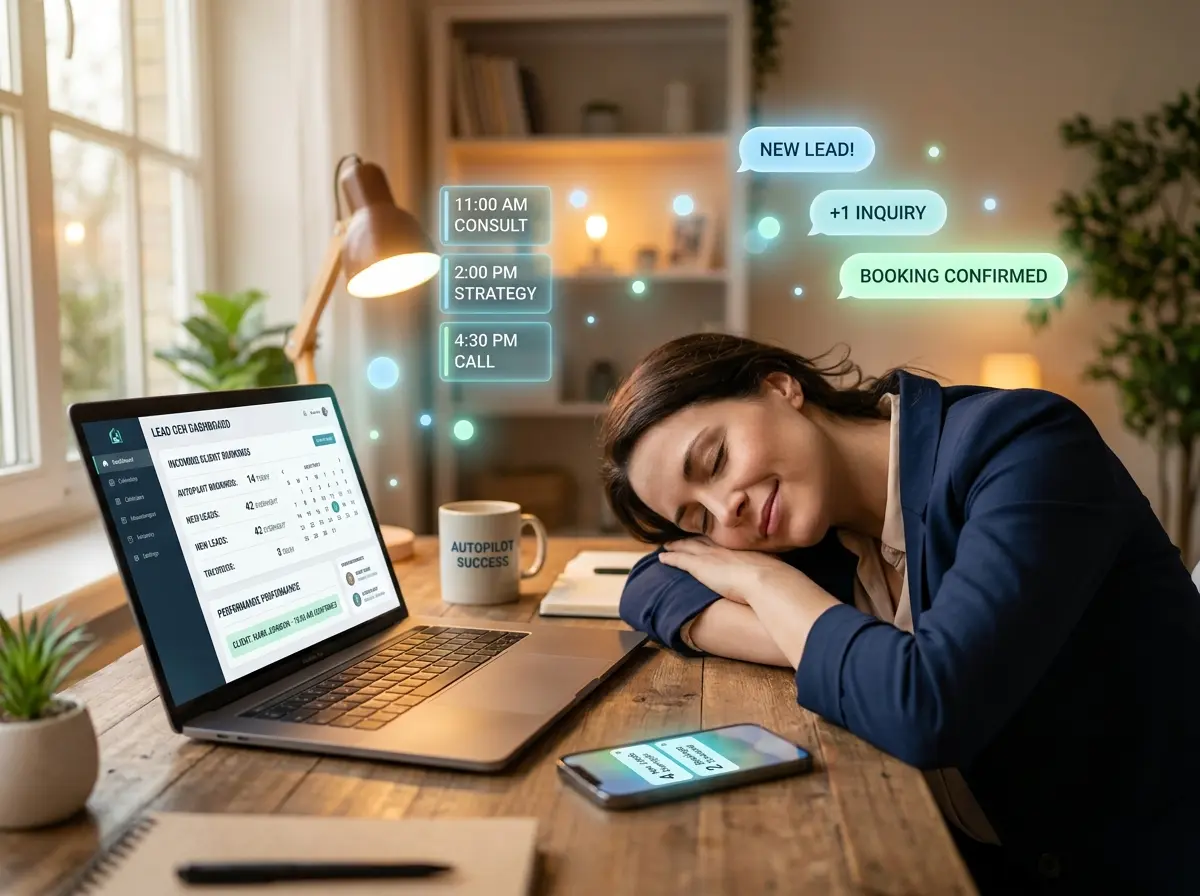
Here's a scenario that probably sounds familiar: a potential client gets curious about your laser hair removal packages at 9 PM on a Tuesday. They call, they get voicemail, and then they Google your competitor. You never hear from them again. You didn't lose that client because of your services or your prices — you lost them because nobody was available to answer a simple question.
Med spas are particularly vulnerable to after-hours lead loss because their clients are often busy professionals who research and make decisions outside of standard business hours. If your business goes dark at 6 PM, so does your revenue pipeline. This is one of the most common — and most fixable — gaps in med spa operations.
Intake Forms: The Paperwork Nobody Wants to Do
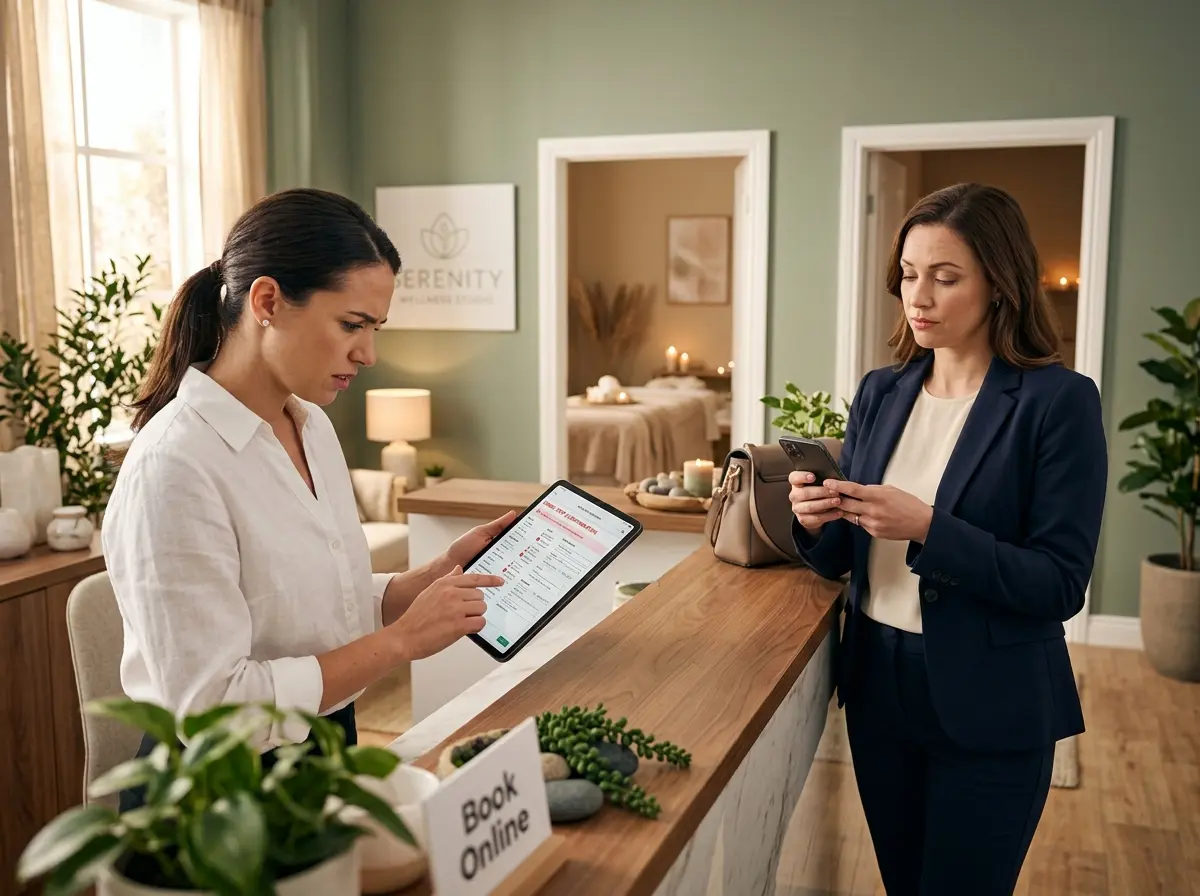
Patient and client intake forms are a regulatory and operational necessity in the med spa world. But the traditional process — handing someone a clipboard, waiting for them to fill it out, manually entering the data, and filing it somewhere — is outdated and error-prone. Incomplete forms delay treatments. Manual data entry introduces mistakes. And chasing clients for missing information wastes everyone's time. The form process alone can add 15–20 minutes of friction to every new client visit, which compounds quickly when you're seeing dozens of clients per week.
How AI Automation Actually Helped One Med Spa Turn Things Around
Automating the Front Desk Without Losing the Personal Touch
The med spa in question — a mid-sized operation offering injectables, laser treatments, and skincare services — was struggling with exactly the problems described above. Their single front desk coordinator was overwhelmed, their after-hours call abandonment rate was climbing, and their intake process was a source of constant client complaints. They needed a solution that could handle routine interactions professionally without making clients feel like they were talking to a generic phone tree.
Their answer was Stella, an AI robot employee and phone receptionist that handles both in-person and phone-based client interactions. Stella was deployed as a physical kiosk inside the spa's reception area and as a 24/7 AI phone receptionist. Almost immediately, the front desk coordinator's workload shifted. Clients walking in were greeted and engaged by Stella, who answered questions about services, explained current promotions, and helped with intake — without requiring staff involvement for every interaction.
On the phone side, Stella began handling incoming calls around the clock, answering questions about pricing, availability windows, and service details with the same knowledge and tone as an informed human staff member. Calls that genuinely required human attention were forwarded to the appropriate person based on configurable conditions. Voicemails were automatically summarized and pushed to the manager as notifications, so nothing fell through the cracks.
The result? A 60% reduction in administrative workload within the first two months. The coordinator was freed up to focus on higher-value tasks: managing complex scheduling, supporting clinicians, and providing the kind of warm, personalized service that actually differentiates a premium med spa.
Built-In CRM and Intake Forms: The Quiet Game-Changer
One feature that made a particularly large impact was Stella's built-in CRM and conversational intake forms. Instead of paper forms or disconnected digital tools, new client information was collected through natural conversation — over the phone, on the web, or at the kiosk — and automatically populated into client profiles. Each profile included custom fields, tags, notes, and AI-generated summaries that gave staff immediate context before a client ever walked into a treatment room. For a med spa dealing with health history, contraindications, and treatment preferences, having clean and complete intake data isn't just a convenience — it's a clinical advantage.
What a 60% Reduction in Admin Work Actually Looks Like in Practice
Reclaiming Staff Time for Revenue-Generating Activities
When you reduce administrative burden by 60%, the impact isn't just theoretical. It shows up in real, measurable ways. Staff who were previously chained to the front desk can be redeployed toward activities that actually grow the business. That might mean dedicating more time to upselling treatment packages during consultations, following up with lapsed clients, or supporting practitioners during busy periods. The coordinator at this particular med spa began handling client retention outreach — something that had been on the to-do list for months but never had a home in anyone's schedule.
There's also a morale dimension worth mentioning. Repetitive, low-complexity administrative work is a fast track to employee burnout. When your staff isn't buried in routine tasks, they show up more engaged, more patient with clients, and more invested in the overall experience your spa delivers. That's harder to quantify, but any seasoned business owner knows it's real.
Using Client Interaction Data to Make Smarter Business Decisions
One unexpected benefit of AI-assisted front desk operations is the data it generates. When interactions are handled through a system like an AI receptionist and CRM, you gain visibility into patterns that were previously invisible. Which services are clients asking about most often? Which promotions generate the most inbound inquiries? What time of day does call volume peak? What questions are going unanswered on your website?
This kind of insight allows med spa owners to make smarter decisions about staffing, marketing, and service development. If clients are consistently asking about a treatment you don't currently offer, that's a market signal. If a promotion is generating three times the usual inquiry volume, that's worth doubling down on. Administrative automation doesn't just save time — it creates an information advantage that reactive, manual operations simply can't match.
Scaling Without Proportionally Scaling Headcount
Perhaps the most strategically important benefit of AI automation for med spas is the ability to grow without a linear increase in administrative staffing costs. Adding a second location, extending operating hours, or launching a new service line used to mean hiring additional front desk staff immediately. With AI handling routine interactions, that equation changes. You can absorb significantly more client volume — including after-hours inquiries and multi-location traffic — without a corresponding increase in labor costs. For a business model where margins can be tight and labor is a primary expense driver, that flexibility is genuinely transformative.
Quick Reminder About Stella
Stella is an AI robot employee and phone receptionist designed to work both as a physical in-store kiosk and as a 24/7 AI phone receptionist for businesses of any size. She greets customers, answers questions, promotes services, collects intake information, manages a built-in CRM, and handles calls — all for $99/month with no upfront hardware costs. She doesn't take sick days, doesn't need training reminders, and never puts a client on hold to check with the back office.
Your Next Steps Toward a Leaner, Smarter Med Spa Operation
The med spa in this story didn't overhaul their entire business overnight. They identified their highest-friction administrative pain points — after-hours call handling, intake data collection, and routine front desk inquiries — and applied automation where it made the most immediate impact. The 60% reduction in administrative work was a consequence of deliberate, targeted decisions, not a wholesale technology transformation.
If you're ready to start thinking about this for your own practice, here's a practical framework to get moving:
- Audit your front desk time. For one week, track how your staff's hours are actually being spent. You'll likely be surprised by how much time goes to tasks that don't require human judgment.
- Identify your highest-volume, lowest-complexity interactions. These are your automation candidates — the questions and tasks that repeat daily and follow a predictable pattern.
- Prioritize after-hours coverage. If you're not capturing inquiries that come in outside of business hours, you're leaving revenue on the table every single night.
- Evaluate your intake process. If new client onboarding involves clipboards, manual data entry, or follow-up emails chasing missing information, there's a better way.
- Start with a solution that scales. The goal isn't just to solve today's problems — it's to build an operational infrastructure that supports growth without proportionally growing your overhead.
Administrative work will never be glamorous. But it doesn't have to be a drain on your time, your team, and your budget. The technology to fix it is available, affordable, and ready to work — even at 9 PM on a Tuesday when a potential client has questions and nobody's at the front desk to answer them.
The real question isn't whether AI automation can help your med spa. It's how much longer you can afford to operate without it.