The Consultation That Never Happened (And the One That Almost Didn't)
Picture this: It's 7:43 PM on a Tuesday. A potential client — let's call her Anxious Angela — has just been served divorce papers and desperately needs to speak with an attorney. She Googles solo family law attorneys in her area, finds your website, and calls your number. The phone rings. And rings. And rings. Then voicemail. Angela, being a human in the year 2024, does not leave a voicemail. She calls the next attorney on the list.
You, meanwhile, are at dinner with your family, blissfully unaware that a paying client just walked straight into your competitor's arms.
This is the quiet, invisible problem that plagues solo attorneys and small law firms everywhere. Not malpractice. Not bad reviews. Just missed calls. According to research by LexisNexis, roughly 42% of potential legal clients who can't reach a firm on the first try will move on to another attorney. That's not a lead generation problem — that's a lead evaporation problem. And the fix, as it turns out, doesn't require hiring a full-time receptionist, signing a lease on a call center, or sleeping with your phone taped to your face.
Why Solo Attorneys Are Uniquely Vulnerable to Missed Calls
You're Billing Hours, Not Answering Phones
The math of solo practice is brutal and beautiful at the same time. Every hour you spend answering phones, scheduling consultations, and explaining your fee structure to someone who will ultimately hire their cousin's friend who "went to law school for a year" is an hour you're not billing. And yet, if you don't answer that phone, you might never get the chance to bill at all.
Solo attorneys wear every hat in the building — rainmaker, lawyer, office manager, HR department of one, and occasionally, janitor. This means the phone answering function either falls to you personally (at the expense of billable work), to an overworked paralegal, or to nobody at all after 5 PM. None of these options are great.
After-Hours Is Prime Time for Legal Inquiries
Here's an inconvenient truth about when people decide they need a lawyer: it's rarely during business hours. Legal crises — DUIs, arrests, emergency custody situations, sudden business disputes — don't consult your office calendar before occurring. Studies have shown that a significant portion of legal service searches happen in the evenings and on weekends, precisely when solo practitioners are least available.
If your voicemail is the only thing standing between a distressed potential client and a consultation, you're not just losing business. You're leaving people without help they genuinely need. That's bad for them, bad for your revenue, and bad for your reputation — even if you never know it happened.
The Voicemail Trap
Attorneys often assume that a professional voicemail greeting solves the availability problem. It does not. Call abandonment rates for professional services are notoriously high — most callers hang up before the beep, and of those who do leave a message, a meaningful percentage never get called back in time to matter. The caller has moved on, found another option, or simply concluded that your firm isn't responsive enough to handle their case. First impressions in law are everything, and "please leave a message after the tone" is not the first impression that wins clients.
Outsourcing After-Hours Call Handling — Your Options
Traditional Legal Answering Services
The classic solution is a human answering service specializing in legal clients. These services employ real people who answer in your firm's name, gather basic intake information, and either patch calls through or relay messages. They work reasonably well, but they come with trade-offs: monthly costs can run anywhere from $200 to $500 or more depending on call volume, quality varies wildly between operators, and the intake information they collect is only as good as the script they're given. There's also the small matter of training — every time your fee structure changes or you add a new practice area, someone has to remember to update the answering service.
AI-Powered Phone Receptionists
The newer kid on the block — and the one increasingly making traditional answering services nervous — is AI-powered call handling. Modern AI phone receptionists can answer calls immediately (no hold music, no "your call is very important to us"), respond to common questions about your services, collect detailed intake information through natural conversation, and push instant notifications to your phone when something requires your attention. They don't call in sick. They don't get flustered by an aggressive caller. And they cost a fraction of what a human answering service charges.
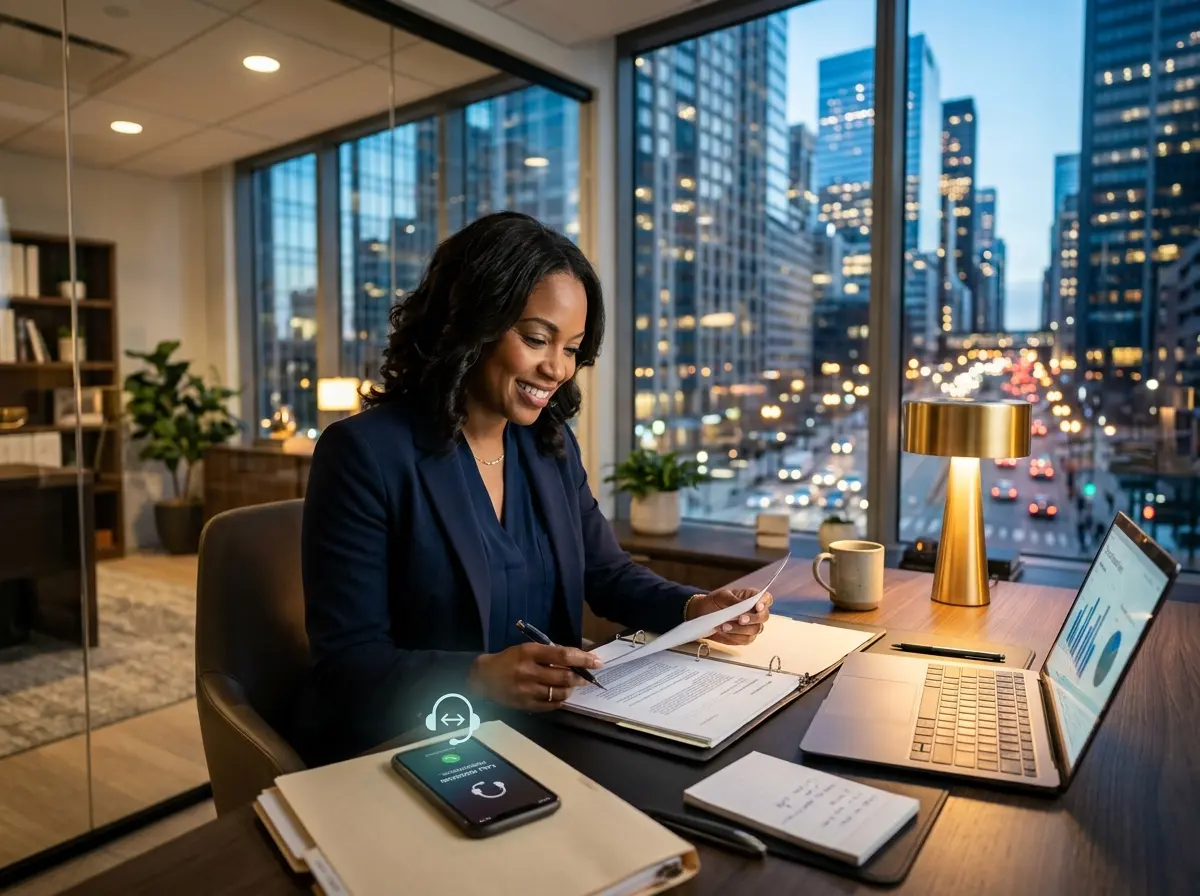
Stella, for example, handles exactly this kind of scenario for attorneys and other service-based professionals. She answers calls 24/7 with the same knowledge you'd give a seasoned receptionist, collects intake information conversationally, and sends AI-generated summaries directly to you — so when you wake up in the morning, you already know who called, why they called, and whether it's urgent. Her built-in CRM automatically creates contact profiles from those intake conversations, tagging and organizing client leads without any manual data entry on your part. For a solo attorney, that's not just convenient — it's a genuine competitive advantage.
What a Real After-Hours Intake System Should Actually Do
Collect the Right Information Upfront
A missed call is bad. A call that gets answered but collects useless information is almost worse, because it creates the illusion of progress. An effective after-hours intake system — whether human or AI — needs to gather the details that actually determine whether a caller is a qualified lead and what kind of urgency their situation warrants.
For a solo family law attorney, that might mean capturing the nature of the legal issue, whether any court dates are imminent, the caller's contact information, and how they heard about the firm. For a criminal defense attorney, urgency flags like "my client is currently in custody" need to trigger immediate escalation rather than a next-morning callback. Your intake process should be designed around your specific practice area, not a one-size-fits-all template.
Know When to Escalate — and When Not To
Not every after-hours call requires waking you up. A caller asking about your consultation fee can wait until morning. A client calling because they've just been arrested cannot. A well-configured after-hours system uses clear rules to distinguish between these situations — forwarding urgent calls to your cell immediately while routing non-urgent inquiries to a morning callback queue. This is the difference between being available and being accessible at all hours for everything, which is a fast track to burnout.
Follow Up Faster Than the Competition
Speed-to-response is arguably the single most important variable in legal client conversion. Research from the legal industry consistently shows that attorneys who follow up within minutes of an inquiry are dramatically more likely to sign the client than those who respond hours later. If your after-hours system is capturing intake information in real time and pushing it to your phone, you have the option to respond before your competitor even knows the lead exists. That's not just smart business — in a solo practice where every client counts, it can be the margin between a thriving firm and a struggling one.
Quick Reminder About Stella
Stella is an AI robot employee and phone receptionist built for businesses of all sizes — including solo law practices. She answers calls 24/7, handles intake conversations naturally, manages a built-in CRM, and keeps you informed without keeping you chained to your phone. At $99/month with no upfront hardware costs, she's the kind of team member that never asks for a raise and never misses a shift.
Your Next Steps Toward Never Missing a Consultation Again
If you've read this far, you've probably already mentally catalogued two or three consultations you suspect you missed this month alone. The good news is that this is a solvable problem, and solving it doesn't require a massive operational overhaul.
Start by auditing your current call handling. How many calls go unanswered after hours? What happens to them? Is your voicemail actually converting callers, or just catching them long enough to let them decide to call someone else? Be honest with yourself — the data here is rarely flattering, but it's useful.
Next, define what your after-hours system actually needs to do. Map out the questions a qualified intake should answer for your specific practice area. Identify which situations require immediate escalation and which can wait. This clarity makes it far easier to configure any answering solution — human or AI — to actually serve your practice.
Finally, pick a solution and implement it. Whether you choose a traditional legal answering service, an AI receptionist like Stella, or some combination of both, the worst option is continuing to let after-hours calls fall into the void. The attorney who answers — or whose system answers — wins the client. It really is that simple.
Anxious Angela is out there right now, Googling attorneys at 7:43 PM. The only question is whether your phone is ready for her.