Why Your Law Firm Is Leaving Referrals on the Table (And How Lunch Can Fix It)
Let's be honest — corporate legal work doesn't exactly market itself. You can't run a Super Bowl ad that says "Sue your vendor before they sue you!" and expect a standing ovation from the board. Corporate clients are sophisticated, deliberate, and notoriously loyal to whoever they already trust. Breaking into that circle takes more than a polished website and a LinkedIn profile that nobody reads.
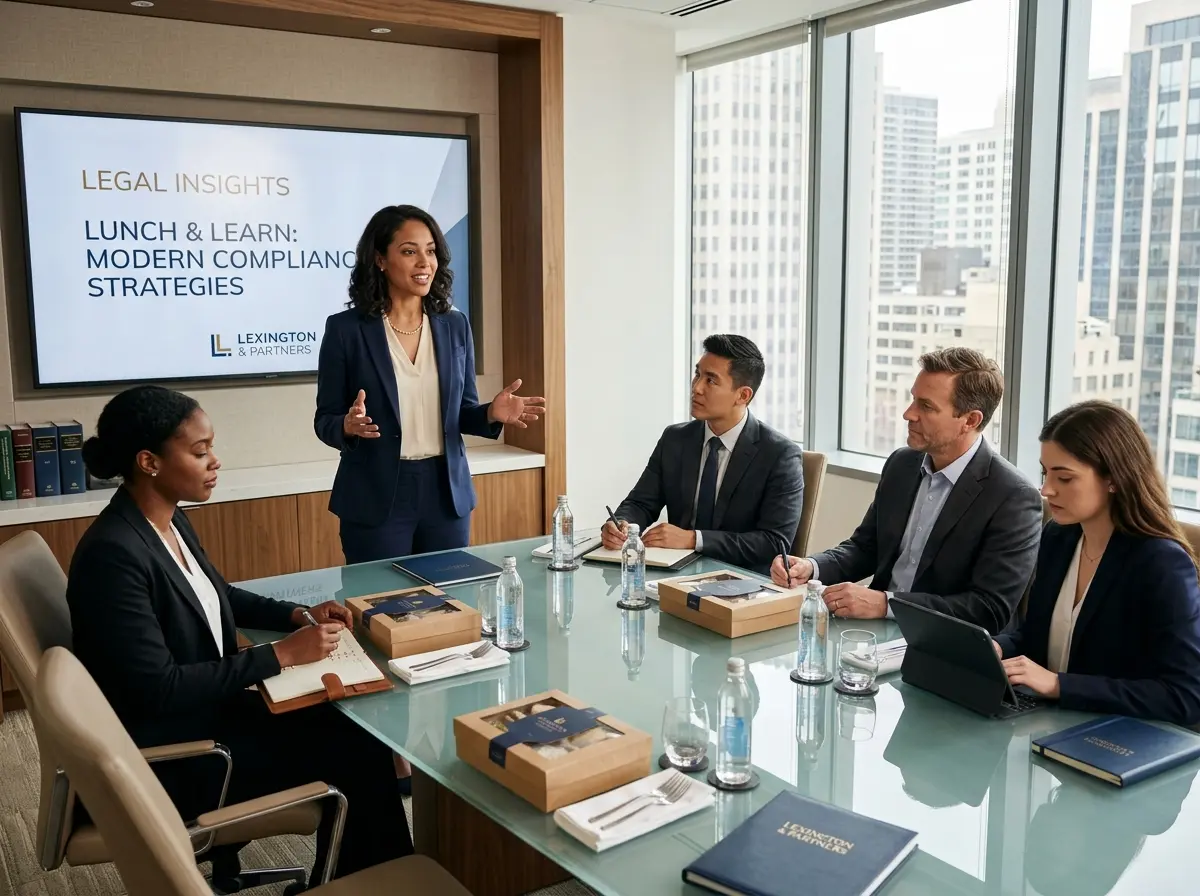
Enter the Lunch-and-Learn — arguably the most underutilized business development tool in a law firm's arsenal. The premise is beautifully simple: you feed people, you teach them something genuinely useful, and in return, they remember you the next time their CFO asks, "Do we have outside counsel we trust?" It's relationship-building disguised as a catered meal, and it works.
According to the Legal Marketing Association, referrals remain the number one source of new business for law firms of all sizes. The firms winning those referrals aren't necessarily the ones with the best attorneys — they're the ones who stayed top of mind. A well-run Lunch-and-Learn program does exactly that, consistently and scalably. This guide will show you how to build one from scratch.
Designing a Lunch-and-Learn Program That Actually Delivers
Choosing Topics That Make Corporate Contacts Say "Yes, I Need This"
The single biggest mistake law firms make with Lunch-and-Learn events is choosing topics that interest the lawyers — not the audience. Nobody in a corporate HR department is excited to hear a deep-dive into the legislative history of non-compete agreements. They are excited to hear "Five Employment Law Changes That Could Cost Your Company Money This Year." Same legal content. Completely different framing.
Target topics to the real-world pain points of whoever controls referrals at your target companies. Think HR directors, CFOs, operations managers, and in-house general counsel. Great topic areas include:
- Employment law updates relevant to their industry
- Contract pitfalls in vendor and supplier agreements
- Data privacy compliance (perennially terrifying for everyone)
- Mergers and acquisitions basics for growing companies
- Protecting intellectual property when hiring or expanding
The goal is to deliver information so immediately useful that attendees forward your follow-up email to three colleagues unprompted. That's free marketing, and it's worth more than any sponsored post.
Structuring the Session for Maximum Engagement
A Lunch-and-Learn should run between 45 and 75 minutes — long enough to be substantive, short enough that people don't start checking their phones before you finish the introduction. A proven structure looks like this: spend about 10 minutes building rapport and framing the problem, 30–40 minutes on practical, actionable content, and the remaining time on Q&A, which is often where the most valuable conversations happen.
Avoid the dreaded "wall of text" slide deck. Use visuals, real-world hypotheticals, and — if your state bar rules allow — anonymized case examples that make the legal stakes feel tangible. Bring a second attorney or a guest speaker when possible. Two voices break up the rhythm and signal that your firm has depth, not just one very well-fed partner with opinions.
Selecting the Right Audience and Getting Them in the Room
A Lunch-and-Learn with twelve highly relevant decision-makers beats a crowded seminar with a hundred unqualified attendees every single time. Be strategic. Partner with a local accounting firm, financial advisor, or business consultant to co-host — they already have the corporate relationships you're trying to build, and cost-sharing the catering budget is a genuinely pleasant bonus.
Target your invitations with surgical precision. LinkedIn is your friend here. Industry associations, chambers of commerce, and professional networks can all be pipelines for the right contacts. When someone RSVPs, treat that as the beginning of a relationship, not a box checked. Send a personalized confirmation, not a generic calendar invite that looks like it came from a 2009 ticketing system.
Running the Day-of Experience Without Dropping the Ball
First Impressions and Logistics That Reflect Your Firm's Brand
Here's an uncomfortable truth: corporate attendees will judge your firm's operational competence by how well you run a lunch. If the food is late, the AV doesn't work, and nobody knows where to sign in, they are absolutely making a mental note — and it is not a flattering one. Assign one non-presenting team member to own logistics entirely. That means food arrival, name tags, sign-in sheets, handouts, and making sure the projector actually connects to the laptop before guests arrive.
Consider this an opportunity to show — not tell — what working with your firm feels like. Organized, professional, and attentive to detail. Those adjectives are worth far more coming from a catered experience than from your website's "Why Choose Us" page.
This is also where technology can quietly do a lot of heavy lifting. Stella, the AI robot employee and phone receptionist, can handle intake forms for RSVPs and attendee information, capturing contact data conversationally — whether through your website or over the phone — and feeding it directly into a built-in CRM. If someone calls your firm to ask about an upcoming event, Stella answers 24/7, provides details, and logs the inquiry so nothing slips through the cracks. For a firm running multiple Lunch-and-Learns across different industries, that kind of organized contact management is genuinely invaluable.
Converting Attendees Into Referral Sources Over Time
The Follow-Up Strategy That Most Firms Completely Ignore
Congratulations — you ran a great Lunch-and-Learn. The food was excellent, the content was sharp, and several attendees handed you business cards with what appeared to be genuine enthusiasm. Now what? If your answer is "we send them a thank-you email and wait," you are in very good company and also leaving an enormous amount of business development on the table.
The follow-up is where referral relationships are actually built. Send a personalized thank-you within 24 hours — not a mass email blast, but individual notes that reference something specific from the conversation. Include a one-page summary of the session's key takeaways as a leave-behind they'll actually keep. Then, schedule a 90-day nurture sequence: a relevant legal update article at the 30-day mark, a check-in at 60 days, and an invitation to your next event at 90 days. Done consistently, this transforms a one-time lunch into an ongoing relationship.
Building a Referral Network, Not Just an Audience
The real payoff of a Lunch-and-Learn program isn't the immediate clients — it's the referral ecosystem you build over 12 to 24 months. Accountants, financial planners, bankers, and business consultants are all natural referral partners for corporate law firms because their clients regularly need legal help. When you educate and add value to these professionals consistently, they naturally think of you first when a client asks, "Do you know a good business attorney?"
Track every referral back to its source. If three different referrals over six months trace back to a single Lunch-and-Learn attendee, that person deserves a thank-you lunch of their own — and a conversation about how you can support their clients even more intentionally. Systematizing this tracking is what separates firms with a referral strategy from firms that just get lucky occasionally.
Scaling the Program Without Burning Out Your Team
One Lunch-and-Learn per quarter is a sustainable starting point. Two per quarter is ambitious but achievable. Weekly events are a fast track to attorney exhaustion and mediocre sandwiches. Build a repeatable playbook — topic selection criteria, invitation templates, run-of-show documents, follow-up sequences — so that each event gets easier to execute than the last. Delegate what can be delegated, automate what can be automated, and protect your attorneys' time for the content that only they can deliver.
A Quick Reminder About Stella
Stella is an AI robot employee and phone receptionist built for businesses like yours — available as an in-office kiosk and as a 24/7 phone answering solution. She handles calls, collects intake information, manages contacts through a built-in CRM, and keeps your firm's front-facing communications professional and organized while your team focuses on billable work. At $99/month with no upfront hardware costs, she's the kind of operational support that makes scaling a referral program feel a lot less chaotic.
Start Small, Stay Consistent, and Watch the Referrals Follow
Building a Lunch-and-Learn program that genuinely generates corporate referrals isn't complicated — but it does require intention, consistency, and a willingness to lead with value before you ever ask for anything in return. The firms that do this well don't see results after one event. They see results after six months of showing up, delivering useful content, and following up like the professionals they are.
Here's your action plan to get started:
- Identify your target audience — pick one or two industry verticals where you want to grow corporate relationships.
- Choose your first topic — something timely, practical, and immediately relevant to that audience's pain points.
- Find a co-host or venue partner — an accounting firm, financial advisor, or local business association can help you fill the room faster.
- Build your follow-up sequence before the event — don't wing the nurture strategy after the fact.
- Track everything — RSVPs, attendees, follow-up touchpoints, and referral sources. What gets measured gets improved.
The corporate clients you want are already out there, attending someone else's lunch. The only question is whether it's your firm's name on the napkins — or your competitor's.