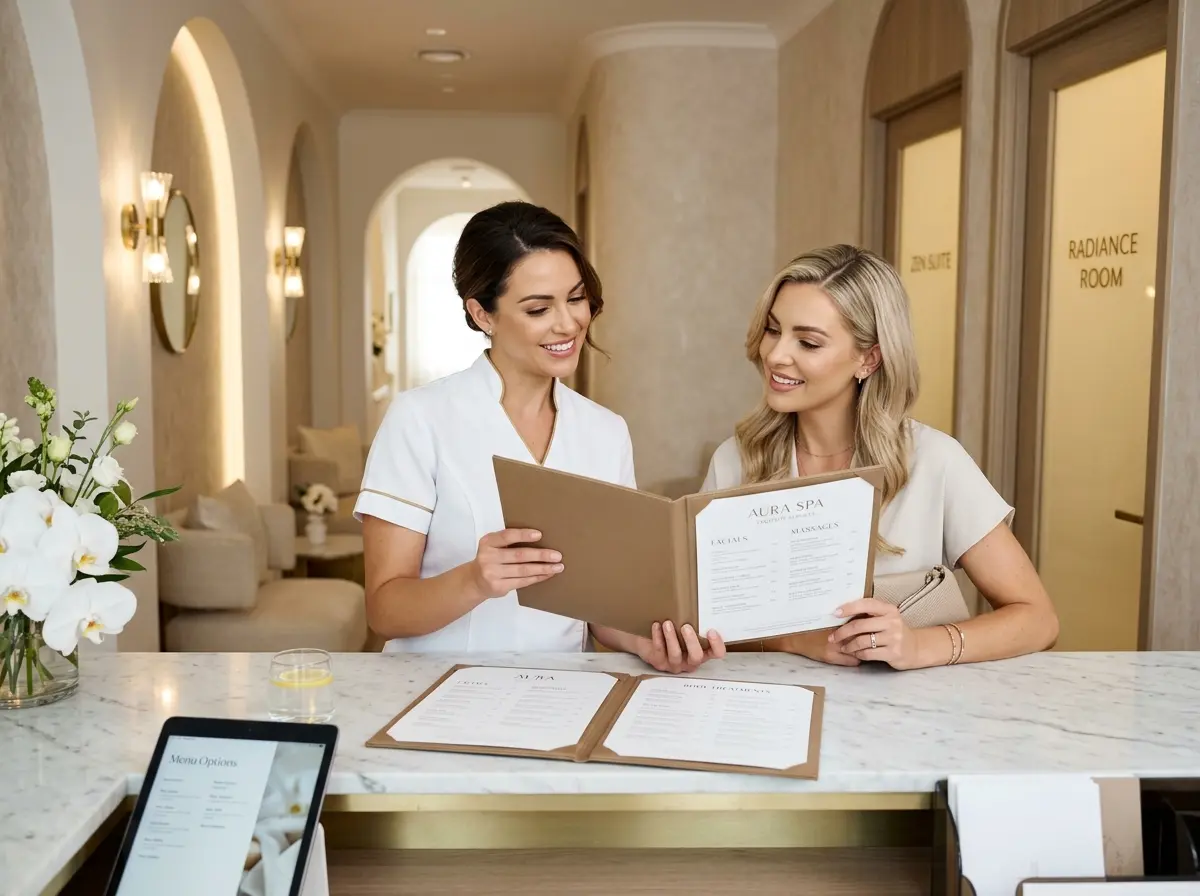
Your Menu Is Leaving Money on the Table (Literally)
Let's be honest — most spa and salon menus are the equivalent of handing a customer a phone book and wishing them luck. A wall of services, a column of prices, and absolutely zero guidance on what goes well together, what's worth upgrading, or why they should care about anything beyond the single treatment they booked. If your menu reads like a government form, it's not working hard enough for you.
Here's the thing: your service menu isn't just a price list. It's a sales tool — and if designed strategically, it can do a significant portion of your upselling for you before a single staff member says a word. Studies show that upselling can increase revenue per customer by 10–30%, yet most salons and spas leave that money sitting quietly on the reception desk, tucked inside a laminated folder nobody asked for.
The good news? Turning your menu into a self-contained upselling machine doesn't require a marketing degree or a complete rebrand. It requires intention, structure, and a few clever psychological nudges. Let's dig in.
Building a Menu That Sells Smarter, Not Harder
Lead With Outcomes, Not Just Service Names
Nobody walks into your spa thinking, "I'd love a 60-minute Swedish massage." They walk in thinking, "My shoulders feel like concrete and I haven't slept properly in two weeks." The distinction matters more than you might think. When your menu describes services in terms of what the client will feel or achieve rather than just what will technically happen to them, it creates an emotional connection that makes upgrading feel natural rather than pushy.
Compare these two descriptions:
- Before: "Deep Tissue Massage – 60 min – $95"
- After: "Deep Tissue Massage – Release chronic muscle tension and walk out standing two inches taller (or at least feeling like it). 60 min – $95. Add a targeted hot stone upgrade for $20 and thank yourself tomorrow."
The second version does several things at once: it speaks to the client's actual desire, it sets an expectation, and it introduces an upsell organically before the client has even sat down. Write every service description this way, and your menu starts having conversations on your behalf.
Use Tiered Packages to Make the Middle Option Irresistible
Behavioral economics has gifted the service industry with one of its most reliable tricks: the decoy effect. When you offer three tiers of a service — good, better, best — customers naturally gravitate toward the middle option. It feels like the sensible, non-extravagant choice, even if it's significantly more than they originally planned to spend.
Structure your core offerings into clear tiers wherever possible. A facial menu, for example, might offer a 30-minute Express Refresh, a 60-minute Signature Facial, and a 90-minute Luxury Revival. Price them so the middle option represents genuine value, and describe the top tier in a way that makes it feel like an occasional indulgence rather than a daily necessity. You're not pressuring anyone — you're simply giving people a comfortable path to spending a little more while feeling great about it.
Create Strategic "Add-On" Sections That Feel Like Personalization
One of the most effective upselling techniques in the spa and salon world isn't a package at all — it's the à la carte enhancement. A dedicated "Enhancements" or "Finishing Touches" section on your menu, priced between $10 and $40, gives clients the sense that they're customizing their experience rather than being sold something extra.
Think scalp treatments, collagen eye masks, aromatherapy upgrades, cuticle conditioning, or a quick brow tint added onto a facial appointment. Keep the descriptions short, the prices accessible, and the positioning aspirational. Frame them as thoughtful additions, not afterthoughts. When a client feels like they're building their own experience, they're far more likely to say yes — and to come back because they know exactly how to make their visit feel exactly right.
Let Your Front Desk (or Your Robot) Do the Heavy Lifting
Present the Menu Before They Arrive
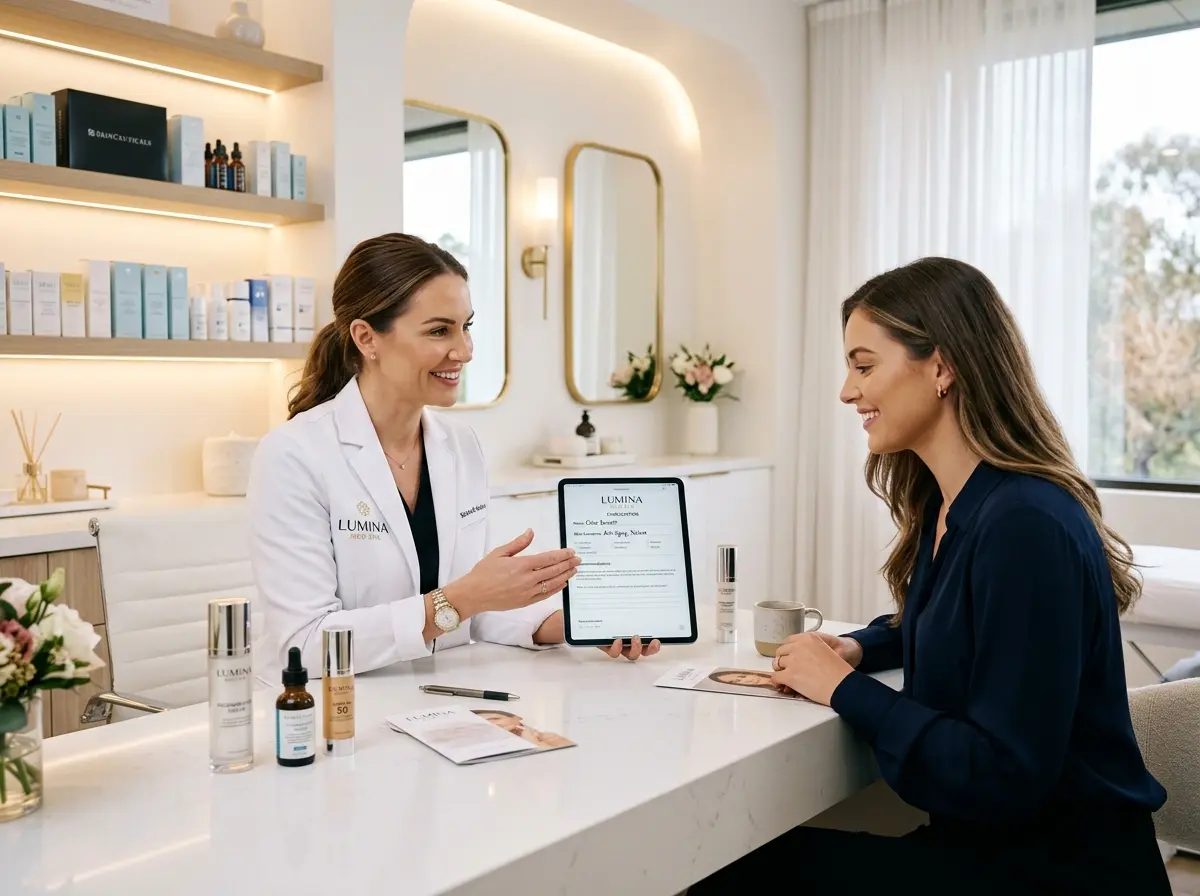
A well-designed service menu loses half its power if clients only see it when they're already sitting in the chair with a robe on. Getting your menu in front of clients before their appointment — through your booking confirmation email, your website, or a pre-visit text — gives them time to browse, consider, and arrive already thinking about that add-on they wanted to try.
This is also where your in-person and phone presence becomes a genuine asset. Stella, the AI robot receptionist, can greet walk-in clients at your front entrance and proactively introduce your current services, promotions, and seasonal add-ons before they even check in. On the phone side, she answers calls 24/7 and can walk callers through your service offerings, suggest relevant upgrades based on what they're booking, and collect intake information — all without pulling your staff away from clients. It's like having a knowledgeable, enthusiastic receptionist who never has an off day and never forgets to mention the hot stone upgrade.
Pricing Psychology That Works in Your Favor
Drop the Dollar Signs (Seriously)
This one sounds almost too simple to be real, but research from Cornell University found that removing the dollar sign from menu prices reduces the psychological "pain of paying" and leads customers to spend more. Listing a service as 95 rather than $95 creates a subtle but measurable difference in how clients process the cost.
While you're at it, avoid right-aligned price columns wherever possible. That format encourages clients to scan prices vertically and choose the cheapest option rather than reading each service description and making a value-based decision. Embed prices naturally at the end of each description so the client engages with the full offering before registering the number.
Anchor Your Prices Strategically
Anchoring is the practice of placing your most premium service prominently so that everything else on the menu feels reasonably priced by comparison. If the first service a client sees is your $250 Signature Luxury Experience, your $120 facial suddenly feels like a sensible, even conservative choice. You don't need to sell the premium service frequently — it simply recalibrates how clients perceive your entire price range.
Place your highest-value service near the top of its category, describe it with genuine enthusiasm, and let it do its psychological work quietly in the background. It's the equivalent of having a beautiful, expensive handbag displayed at the front of a boutique — most customers won't buy it, but everyone's perception of the store shifts the moment they see it.
Bundle Thoughtfully to Increase Average Transaction Value
Bundles work best when they feel curated rather than arbitrary. A "New Client Welcome Package" that pairs a haircut, blowout, and a complimentary scalp treatment at a modest discount gives first-time visitors an experience that showcases multiple revenue-generating services in a single visit. Done well, they leave having experienced services they didn't know they needed — and now they'll book them individually going forward.
The key is to bundle services that logically belong together and that introduce clients to offerings they might not have chosen independently. Think of it as a strategic first date for your service lineup. You want them to meet the whole family, not just the one they came to see.
Quick Reminder About Stella
Stella is an AI robot employee and phone receptionist built for businesses like yours. She stands inside your salon or spa as a friendly, human-sized kiosk, engaging walk-in clients and promoting your services and specials from the moment they step through the door — and she answers every phone call 24/7 with the same expertise. At just $99/month with no upfront hardware costs, she's one of the most affordable front-desk upgrades you'll ever make.
Your Menu Is a Salesperson — Start Treating It Like One
The most effective upselling doesn't feel like upselling at all. It feels like guidance, personalization, and being offered something genuinely worth having. When your service menu is structured around client outcomes, layered with strategic tiers and add-ons, priced with psychological intention, and supported by a consistent front-desk presence that reinforces the same messaging — it stops being a passive document and starts being an active revenue driver.
Here's where to start this week:
- Audit your current menu — read every description out loud and ask whether it speaks to a client's desire or just describes a service. Rewrite anything that sounds like a technical manual.
- Identify your top three services and build a simple good-better-best tier around each one where possible.
- Create a dedicated add-ons section with at least five enhancements priced between $15 and $35.
- Remove dollar signs and restructure your price presentation so clients read descriptions first.
- Get your menu in front of clients before they arrive through booking confirmations, your website, and your in-person or phone reception experience.
None of these changes require a designer, a consultant, or a particularly long afternoon. They require a fresh perspective on what your menu is actually capable of — and the willingness to let it do a little more of the selling for you. Your staff will thank you, your revenue will reflect it, and your clients will leave feeling like they made all the right choices entirely on their own.