Nobody Came to a Med Spa to Be Upsold — And Yet, Here We Are
Let's set the scene: your client is face-down on a treatment table, blissfully relaxed, probably thinking about absolutely nothing for the first time all week. Then a well-meaning staff member leans in and says, "Would you like to add a vitamin C booster for just $45 more?" Cue the record scratch. Suddenly your client isn't relaxed — they're doing mental math and wondering if this is a spa or a car dealership.
Here's the uncomfortable truth: add-on treatments are genuinely good for your clients. They often enhance results, address concerns your clients didn't even know they had, and make the overall experience more complete. But if the recommendation lands wrong — too salesy, too abrupt, too transactional — it can undermine the trust you've worked so hard to build. The goal isn't to stop recommending add-ons. The goal is to recommend them in a way that feels like your esthetician noticed something, cared enough to mention it, and left the decision entirely up to the client.
That distinction — between caring and selling — is everything in a med spa environment. And it's more about timing, framing, and training than it is about willpower or whether your team "has the gift of the gab." This post breaks down exactly how to make that shift.
The Psychology Behind Why Add-On Pitches Feel Uncomfortable
Your Clients Are Professionally Skeptical
Modern consumers are incredibly attuned to being sold to. They've sat through timeshare presentations, navigated checkout pages loaded with "you might also like" prompts, and been asked by every barista in America if they want a larger size. By the time someone walks into your med spa, their sales-radar is finely calibrated. The moment a recommendation feels like a script — especially during a vulnerable moment like a facial or a laser treatment — they mentally check out and the trust meter drops a few notches.
This doesn't mean you shouldn't make recommendations. It means the how matters enormously. Research consistently shows that customers are far more receptive to suggestions that feel personalized and observation-based rather than generic and promotional. "I noticed your skin is showing some dehydration around your cheeks — I think a hyaluronic booster would make a real difference today" lands very differently than "We have a booster add-on for $45 — interested?"
Timing Is Half the Battle
There's a reason no one wants to be asked if they'd like to supersize their meal after they've already paid and walked away. Timing in a med spa context works similarly — there are windows of opportunity where a recommendation feels natural, and windows where it feels predatory. The consultation phase, before the treatment begins, is almost always your best moment. Your client is engaged, their goals are top of mind, and they're in a decision-making headspace. Mid-treatment can work for certain low-pressure mentions, but post-treatment recommendations should focus on homecare and future visits rather than immediate upsells.
The Language of Care vs. The Language of Commerce
Swap your vocabulary and watch your conversion rates — and your client satisfaction — both improve. Language rooted in observation and benefit performs better than language rooted in features and price. Consider the difference:
- Commerce language: "We're running a special on our collagen add-on this month."
- Care language: "Based on what you've told me about your skin goals, I think adding a collagen infusion today would really help you see faster results."
One sounds like a flyer. The other sounds like a recommendation from someone who's been paying attention. Train your team to lead with observation, connect to the client's stated goals, and mention price only after the value has been clearly established. It's a small shift in sequencing that makes a significant psychological difference.
How Technology Can Help Your Team Do This Better
Setting the Stage Before the Appointment Even Starts
One of the underrated secrets to add-on success is preparation — specifically, making sure your team knows enough about each client before they walk through the door to have a genuinely informed, personalized conversation. That's where Stella, the AI robot employee and phone receptionist, can quietly do a lot of heavy lifting. When a client calls to book an appointment, Stella can handle the intake conversation naturally, collecting skin concerns, treatment history, and goals — all of which populate directly into her built-in CRM. By the time your esthetician sees that client, they already have context. That context is what makes the difference between a generic pitch and a thoughtful recommendation.
For clients who book online or walk in, Stella's in-store kiosk presence means she can greet them proactively, answer questions about current offerings, and even surface relevant promotions — all before a single human staff member is involved. This frees your team to focus on what they do best: delivering exceptional treatments and building genuine client relationships, rather than scrambling through intake forms at the front desk.
Building a Team Culture That Recommends With Confidence
Train Your Staff to Listen First
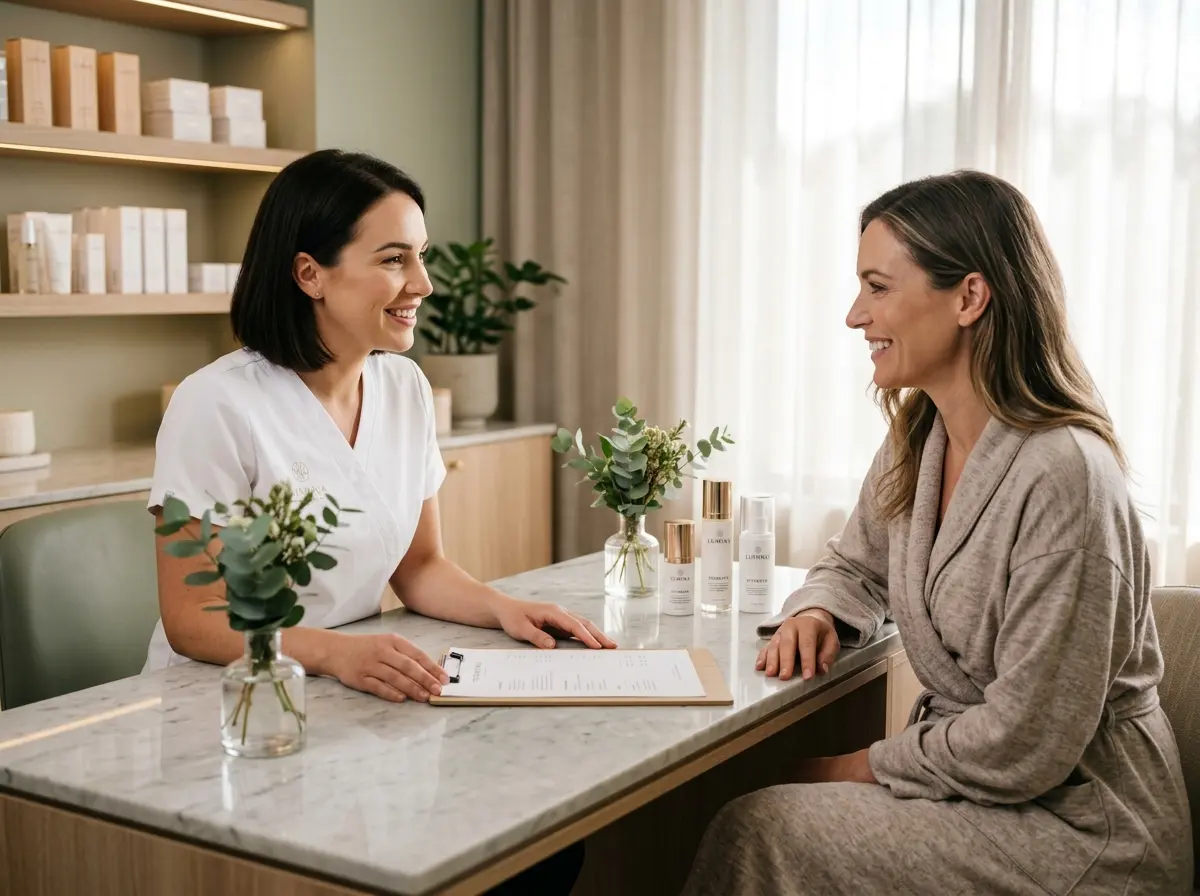
The most effective med spa teams aren't great at selling — they're great at listening. When a client mentions she's been stressed and her skin has been dull lately, that's not just small talk. That's an opening. Train your staff to treat consultations like diagnostic conversations, not orientation sessions. Encourage them to ask open-ended questions, repeat back what they've heard, and then connect their recommendations directly to what the client expressed. When the add-on recommendation emerges organically from the conversation rather than from a promotional script, clients don't feel sold to. They feel seen.
Role-play is an underused training tool in the spa industry. Run monthly scenarios where staff practice moving from a client's stated concern to a relevant add-on recommendation without it feeling abrupt. The goal is for it to feel as natural as a friend saying, "Oh, you should try this — I think you'd love it."
Create a Menu That Educates, Not Just Lists
Your treatment menu is doing more work than you think — or it should be. A menu that simply lists add-ons and prices gives clients no context for why they'd want them. A menu that briefly describes what each add-on addresses, who it's ideal for, and what kind of results to expect turns passive readers into curious, engaged decision-makers. Think of it less as a price sheet and more as a gentle guide. If a client reads "LED light therapy — ideal for clients experiencing redness, acne, or post-treatment sensitivity" before their appointment, the add-on recommendation during their consultation lands on prepared ground.
Follow Up in a Way That Reinforces the Relationship
Post-treatment follow-up is one of the most overlooked opportunities in med spas. A personalized message — referencing the treatment they had, checking in on how their skin is feeling, and gently suggesting a relevant add-on for their next visit — does something a mid-appointment pitch cannot: it demonstrates that your team was thinking about them after they left. That's the hallmark of a relationship-first business, and it's the kind of experience that generates referrals and loyal clients rather than one-time visitors.
Quick Reminder About Stella
Stella is an AI robot employee and phone receptionist designed to help businesses like med spas handle client interactions, intake, and promotion without overloading human staff. She greets walk-ins at her in-store kiosk, answers calls 24/7, and keeps client information organized through her built-in CRM — all for a flat $99/month subscription with no upfront hardware costs. She's basically the front desk employee who never calls in sick and never forgets a client's preferences.
Start Recommending Like You Mean It
The gap between a recommendation that converts and one that makes clients cringe isn't talent — it's intentionality. When your team is trained to listen carefully, speak from genuine observation, and recommend add-ons as extensions of the care they're already providing, the entire dynamic shifts. Clients stop feeling like revenue targets and start feeling like VIPs whose specific needs are being thoughtfully addressed. That's not just good ethics — it's good business.
Here's what to do this week: audit one consultation per staff member and give feedback specifically on the language they used when recommending add-ons. Was it observation-based or generic? Did it connect to the client's stated goals? Was it timed well? Small adjustments in those three areas alone will move the needle faster than any new promotional strategy.
Longer term, think about the full ecosystem — how clients are prepared before they arrive, how intake information is captured and shared with your team, and how follow-up communication reinforces the relationship after the appointment. Every touchpoint is an opportunity to demonstrate that your recommendations come from care, not commission. When clients believe that — and they will, if it's true — they'll say yes more often, stay longer, and bring their friends.
And that's the kind of growth that doesn't require a single awkward pitch.